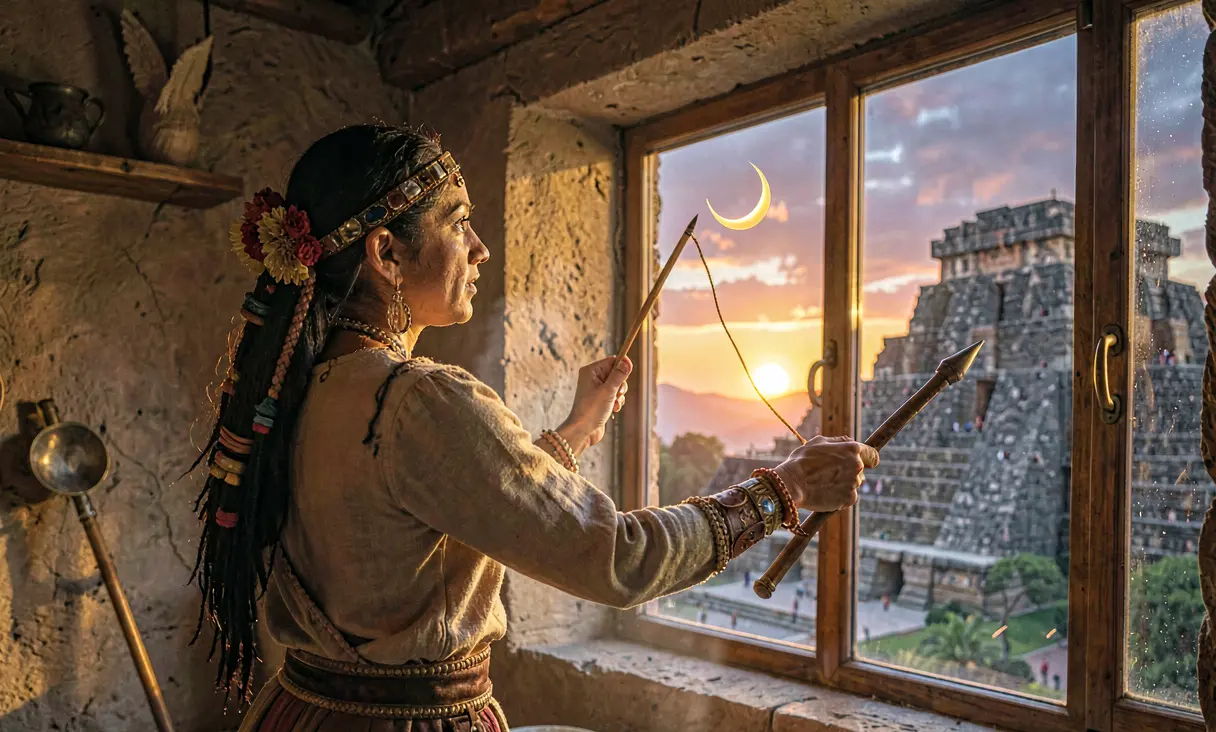
Construction of El Caracol Observatory at Chichen Itza
Built circa 850 CE at Chichen Itza, El Caracol is a unique circular observatory whose precise alignments tracked Venus and solar cycles, demonstrating the Maya's advanced integration of astronomy, arc
The Astronomical Imperative of the Terminal Classic
By the mid-9th century CE, Chichen Itza had emerged as the preeminent political and religious center in the northern Yucatán Peninsula, marking a pivotal shift from the southern lowland cities that were entering a period of decline. The city's leadership, likely a syncretic ruling class blending Maya traditions with influences from central Mexico, recognized that their authority was inextricably linked to cosmic order. In this era, known as the Terminal Classic, the construction of monumental architecture was not merely an act of piety but a sophisticated exercise in celestial mechanics. The Maya had long observed that the movements of celestial bodies dictated agricultural cycles, ritual timing, and even the legitimacy of kingship.
Architectural Innovation: The Birth of El Caracol
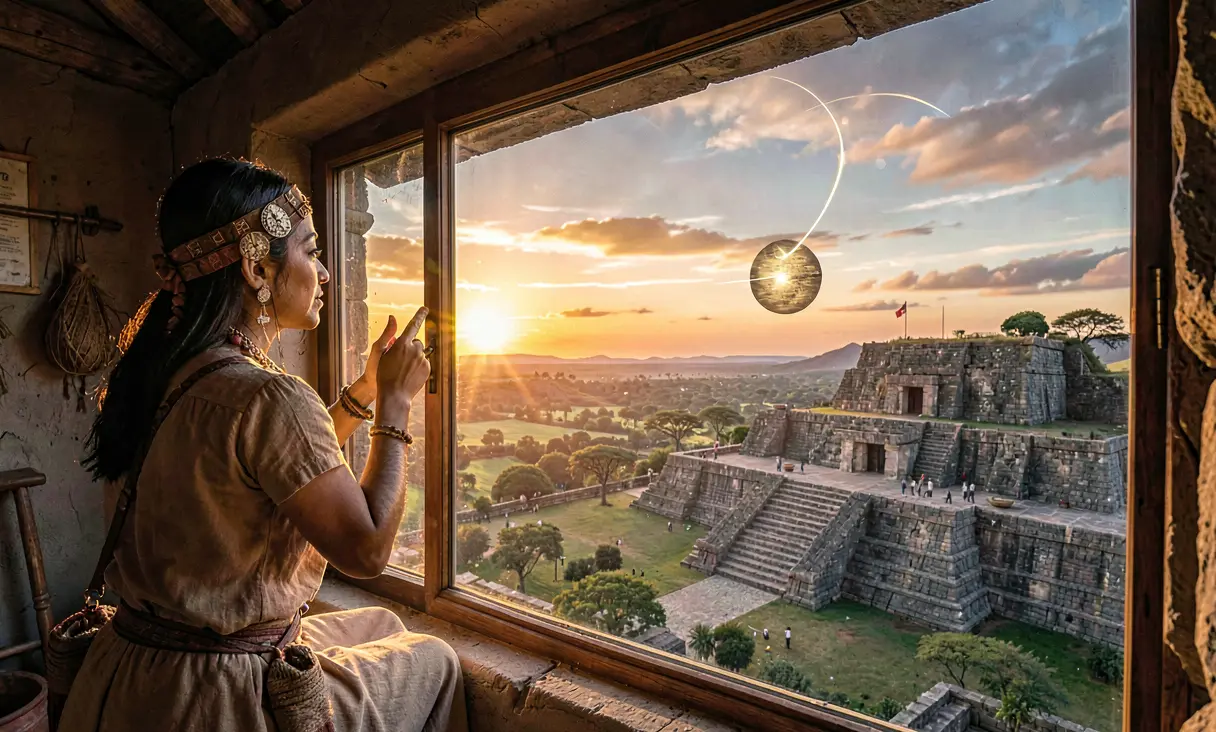
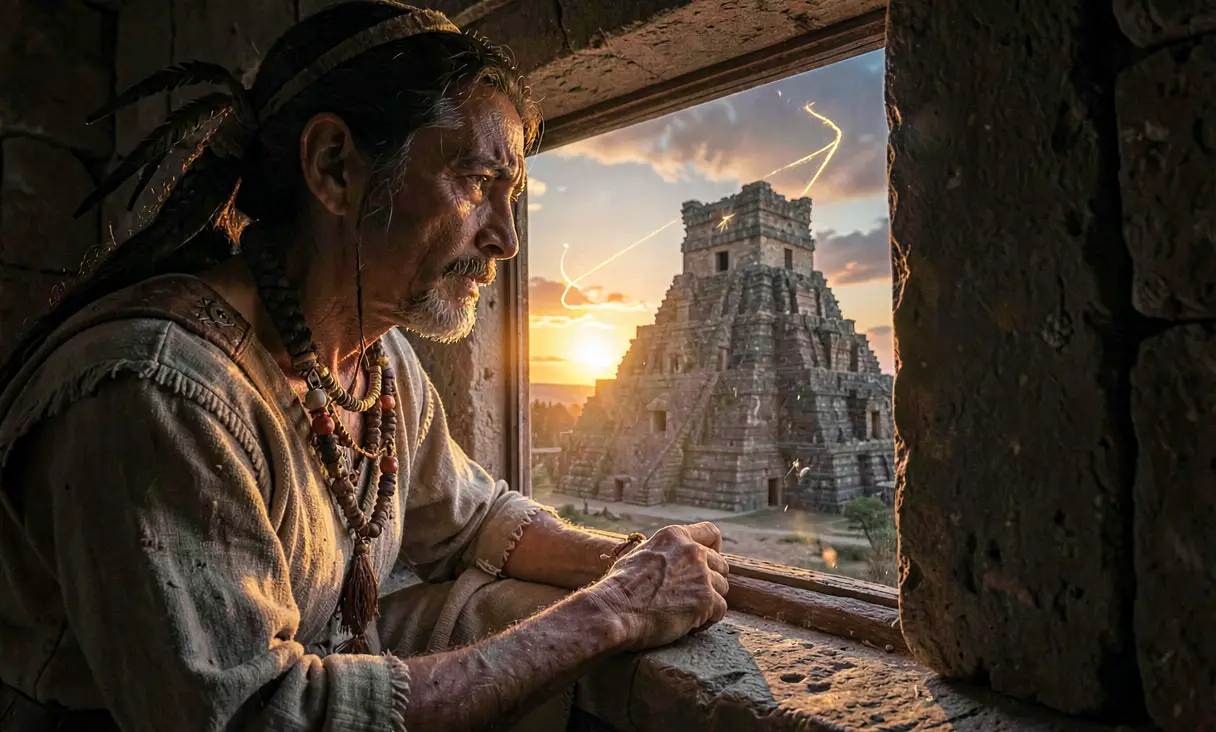
Constructed around 850 CE, El Caracol (The Snail) stands as a singular anomaly in Mesoamerican architecture. Unlike the rectangular pyramids and palaces that dominate the site, this structure features a circular tower atop a two-tiered platform, crowned by a domed room with four distinct windows. The name 'El Caracol' was bestowed by Spanish conquistadors due to the spiral staircase inside, but its original Maya designation remains lost to history. The building's orientation is not random; it is a precise instrument designed to track the horizon events of Venus, the sun during solstices and equinoxes, and the moon's extreme standstills. The alignment of the upper windows corresponds specifically to the southernmost and northernmost rising and setting points of Venus over its 584-day synodic cycle.
The Priest-Astronomers and the Cult of Venus
While no specific individual architect is named in the historical record, the construction implies the direction of a high-ranking priest-astronomer class. For the Maya, Venus was not merely a planet but a manifestation of Kukulkan (or Quetzalcoatl), a deity associated with war and renewal. The 584-day cycle of Venus was critical for determining the most auspicious dates for warfare; the heliacal rising of Venus often signaled the time to launch military campaigns against rival city-states like Uxmal or Tikal. These scholars utilized El Caracol as an observatory, tracking the planet's erratic path across the sky with a precision that modern calculations confirm was accurate within a few degrees, despite the lack of telescopic aids.
Engineering the Celestial Machine
The construction process required immense logistical coordination and mathematical sophistication. The tower's base aligns roughly 27.5 degrees west of north, a deviation that allows specific windows to frame the extreme northern and southern rising points of Venus. The lower platform features a series of doorways and niches that may have served as secondary observation points or ritual spaces for the priesthood. The spiral staircase itself is an engineering marvel, allowing observers to ascend rapidly to the viewing deck while maintaining structural integrity against the humid tropical climate. Every stone was placed with the intent of creating a permanent record of celestial motion, effectively turning the building into a calendar in stone.
Ritual Function and Political Integration
El Caracol was not an isolated scientific laboratory but the heart of a complex ritual system. The observations made from its windows were likely used to validate the divine right of the ruling elite, ensuring that their actions on earth mirrored the movements of the heavens. During the critical moments of Venus's cycle, ceremonies involving bloodletting and sacrifice would have been conducted at the base of the structure or in the adjacent Temple of the Warriors. This integration of astronomy into statecraft allowed Chichen Itza to project power, demonstrating to subject populations and rival cities that their leaders possessed secret knowledge of the cosmos.
Legacy as a Testament to Maya Science
As the Classic period waned and Chichen Itza eventually declined in the 12th century, El Caracol remained standing, a silent witness to centuries of celestial observation. Today, it is recognized by archaeoastronomers as one of the few dedicated observatories in pre-Columbian America, alongside the possible use of other structures like the Temple of Kukulcan's shadow effects. The precision of its alignments challenges older notions that ancient American civilizations lacked advanced scientific inquiry. El Caracol stands as enduring proof that the Maya synthesized architecture, mathematics, and theology to create a functional tool for understanding the universe.
Modern Relevance and Archaeological Insight
In contemporary scholarship, El Caracol serves as a primary case study for the intersection of science and religion in ancient societies. Recent laser scanning (LiDAR) and detailed photogrammetry have confirmed the original alignments, revealing that the structure's orientation has remained remarkably stable despite centuries of erosion and vegetation growth. The building continues to inspire debates regarding the extent of Maya astronomical knowledge, particularly concerning the moon's 18.6-year cycle. It remains a focal point for understanding how pre-industrial societies managed complex data sets without digital technology, relying instead on stone, geometry, and human ingenuity.
El Caracol demonstrates the advanced astronomical capabilities of the Maya civilization through its precise architectural alignments.
Where it happened
Chichen Itza, Mexico — see it on the interactive map →
Explore related history
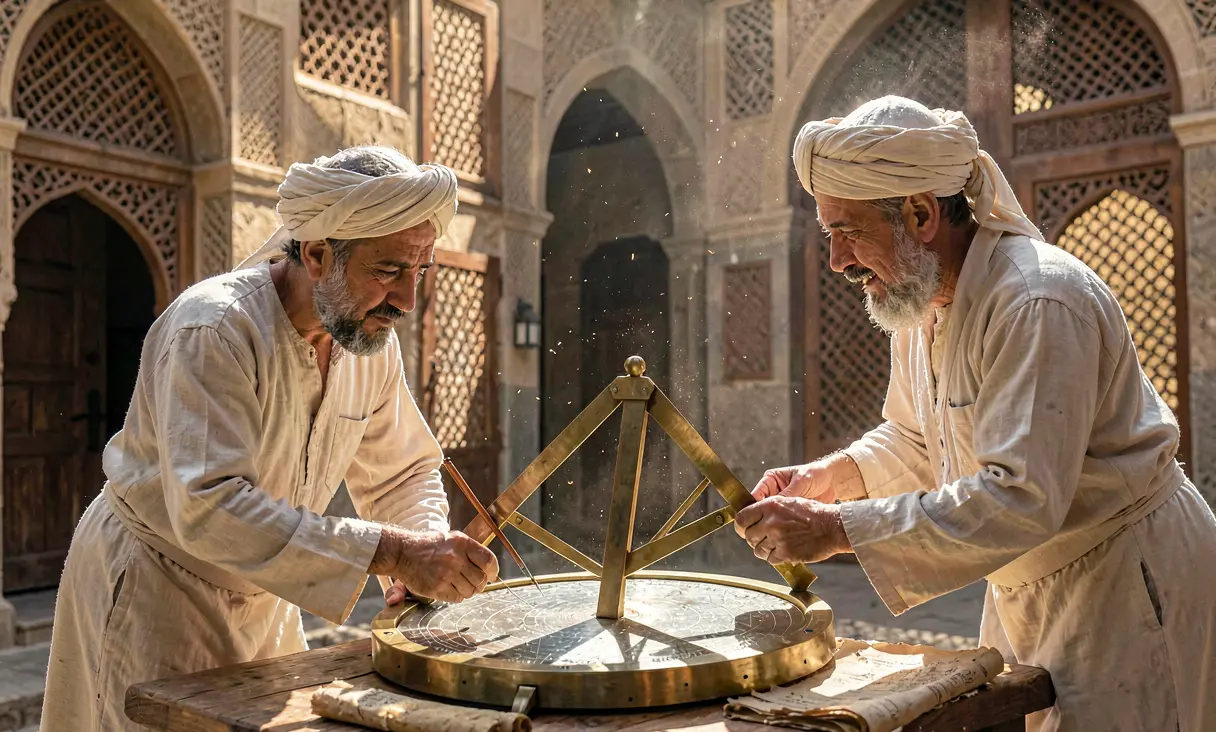 ScienceRefinement of the Astrolabe by Islamic Astronomersc. 900 CE · Baghdad, IraqPersian and Arab scholars perfect the astrolabe for navigation and timekeeping.
 ScienceComposition of the Mitakshara Law Codec. 1100 CE · Kalyan (modern Karnataka/India)Vijnaneshwara writes the Mitakshara, a seminal commentary on Hindu law that influences legal systems across India.
 ScienceMaya Astronomical Tables in the Dresden Codexc. 1200 CE · Yucatán Peninsula, MexicoMaya astronomers record precise calculations for Venus cycles and eclipses.
 TechnologyDiscovery of Gunpowder by Tang Dynasty Alchemistsc. 850 CE · Chang'an, ChinaTang alchemists accidentally discover gunpowder while seeking an elixir of immortality.
 ReligionEnd of Byzantine Iconoclasm843 CE · Constantinople, TurkeyEmpress Theodora restores the veneration of icons in the Byzantine Empire, ending a century-long theological conflict.
 ExplorationViking Settlement of Iceland874 CE · Reykjavik, IcelandNorse explorers led by Ingólfr Arnarson settle Iceland, establishing the first permanent European community in the North Atlantic.
Discussion
Loading…