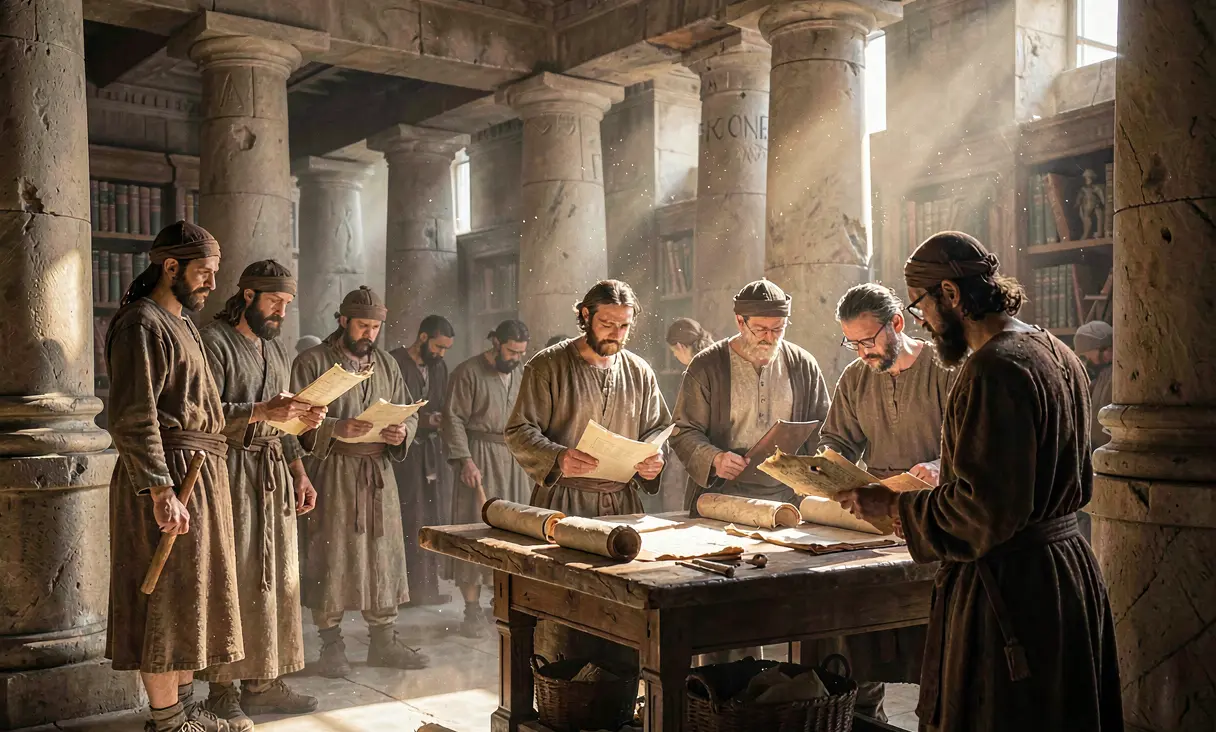
Founding of the Library of Alexandria
Founded by Ptolemy I around 283 BCE, this institution gathered the world's knowledge, enabling Euclid and Eratosthenes to revolutionize science before its gradual destruction erased countless unique t
The Hellenistic Vision
In the wake of Alexander the Great's conquests, his former general Ptolemy I Soter established a dynasty in Egypt that sought to legitimize its rule by becoming the new center of Greek culture. While Alexandria was founded around 331 BCE as a strategic port city on the Mediterranean, it lacked the intellectual prestige of Athens or the spiritual depth of Memphis. Around 283 BCE, Ptolemy I, and more actively his son Ptolemy II Philadelphus who succeeded him, conceived an unprecedented institution: a library designed not merely to store books, but to gather all human knowledge into one location. This initiative was driven by the Hellenistic ideal of syncretism, aiming to merge Greek rationalism with Egyptian antiquity and the wisdom of Persia and India.
The Mechanics of Collection
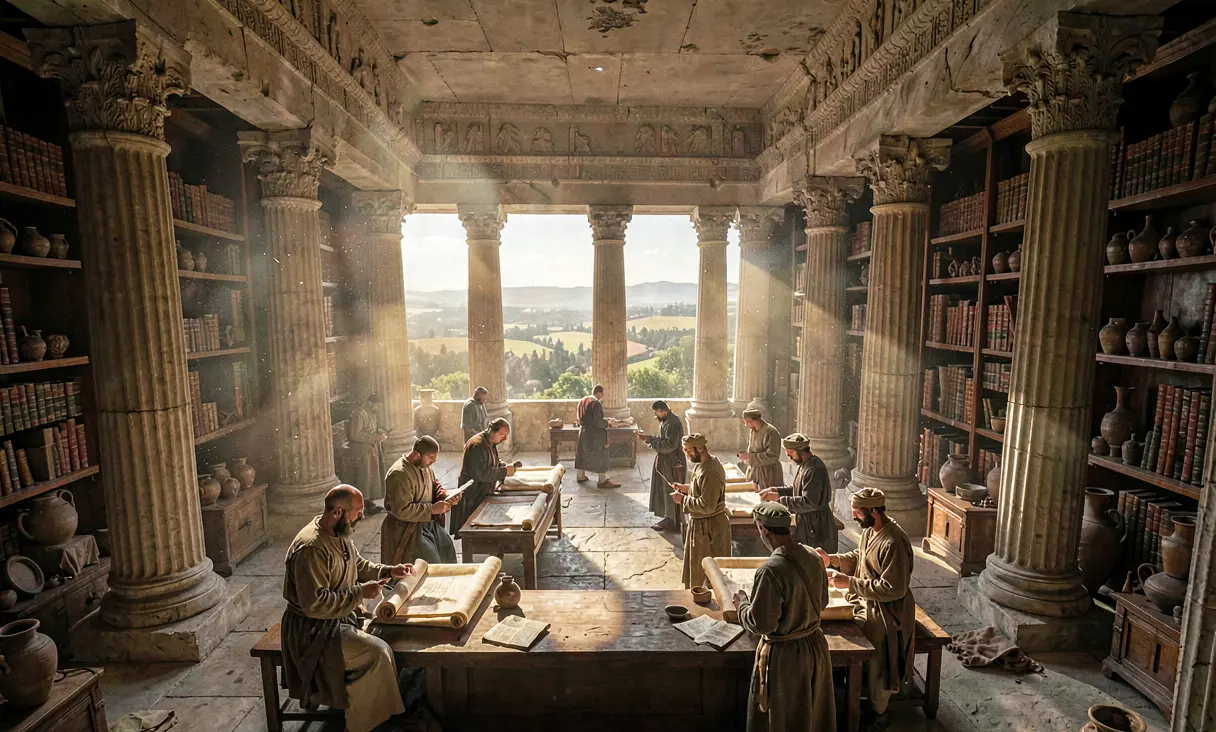
The Library's growth was fueled by aggressive acquisition strategies that bordered on imperial decree. A famous edict reportedly required all ships docking in Alexandria to surrender any scrolls found on board for copying; the originals were kept, and copies returned to their owners. This policy, combined with the purchase of rare texts from across the known world, allowed the institution to amass a collection estimated between 40,000 and 700,000 papyrus rolls over its peak centuries. The facility itself was part of the Mouseion, or 'Temple of the Muses,' an academic enclave featuring lecture halls, dining commons, and gardens where scholars lived as salaried employees of the state, free from the distractions of daily labor.
Giants of Scholarship
The Library attracted the greatest minds of antiquity, transforming Alexandria into a global hub for scientific inquiry. Euclid, active in the early 3rd century BCE, compiled his 'Elements' there, establishing the foundations of geometry that would endure for two millennia. Later, Eratosthenes, appointed as the third head librarian around 240 BCE, famously calculated the circumference of the Earth with remarkable accuracy using simple geometric principles and observations of shadows in Syene and Alexandria. In astronomy, Aristarchus proposed a heliocentric model of the solar system, while Callimachus developed the 'Pinakes,' the first comprehensive library catalog that organized knowledge by genre and author, creating a systematic method for information retrieval.
Translation and Synthesis
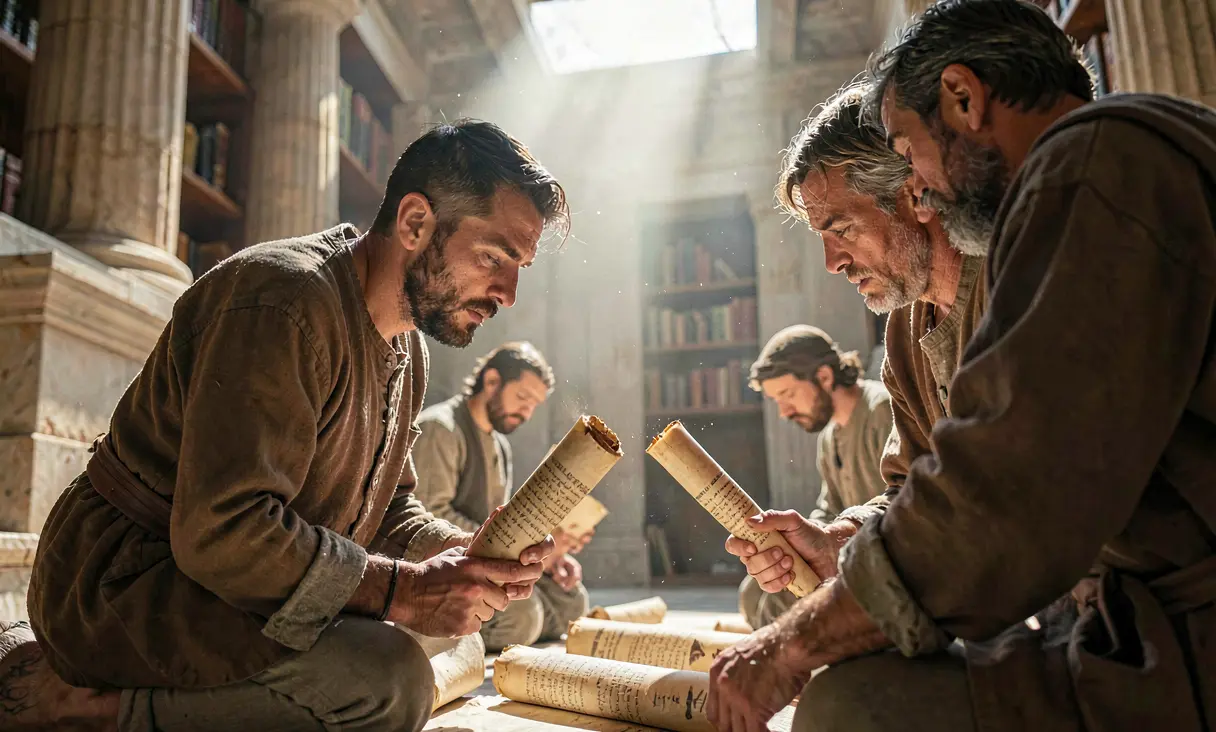
Beyond scientific discovery, the Library served as the primary engine for cross-cultural translation. The most monumental project undertaken was the Septuagint, the Greek translation of the Hebrew Bible, commissioned by Ptolemy II to include Jewish law in the royal collection. Scholars also translated medical texts from Egypt and philosophical works from India, creating a unique synthesis of Eastern and Western thought. This environment fostered rigorous debate and peer review; scholars did not work in isolation but engaged in daily discourse, correcting errors and refining theories through collective scrutiny. The result was an explosion of advancements in medicine, geography, mechanics, and literature that defined the Hellenistic age.
Decline and Fragmentation
The Library did not vanish in a single catastrophic event but suffered from a slow erosion over centuries. Political instability, religious conflicts between pagans, Christians, and Jews, and shifting imperial priorities gradually diminished its funding and influence. While Julius Caesar's fire in 48 BCE damaged the collection temporarily, later decrees by Christian emperors in the 4th century CE led to the closure of pagan institutions. The final blow is often attributed to the destruction of the Serapeum, a daughter library, in 391 CE under Patriarch Theophilus, though scholars debate whether the main Library had already been largely depleted or moved by that time.
Enduring Legacy
The loss of the Library of Alexandria represents one of history's greatest intellectual tragedies, with countless unique works in mathematics, astronomy, and literature lost forever. Yet, its methodology survived; the concept of a centralized research institution where scholars are supported by the state to pursue pure knowledge became the blueprint for modern universities and national archives. The scientific principles established there, from the geometry of Euclid to the measurements of Eratosthenes, formed the bedrock upon which the Islamic Golden Age and later the European Renaissance were built. Its spirit remains a symbol of humanity's relentless pursuit of universal understanding.
The Library of Alexandria was the ancient world's premier center for scholarship, preserving and advancing human knowledge across disciplines.
Where it happened
Alexandria, Egypt — see it on the interactive map →
Explore related history
 ScienceEstablishment of the Babylonian Astronomical Observatoriesc. 747 BCE · Babylon, IraqBabylonian priests begin systematic nightly recording of planetary movements and eclipses.
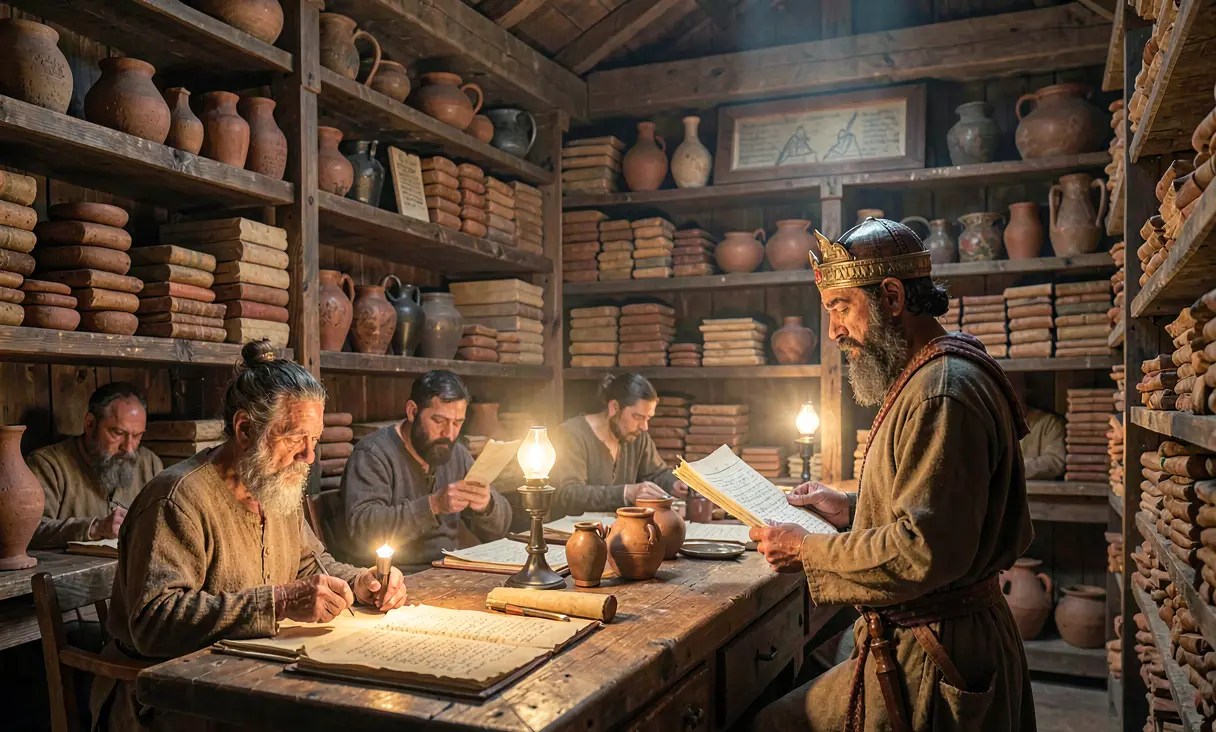 ScienceCompilation of Ashurbanipal's Royal Libraryc. 650 BCE · Nineveh (Mosul), IraqKing Ashurbanipal assembles the largest collection of cuneiform tablets in the ancient world.
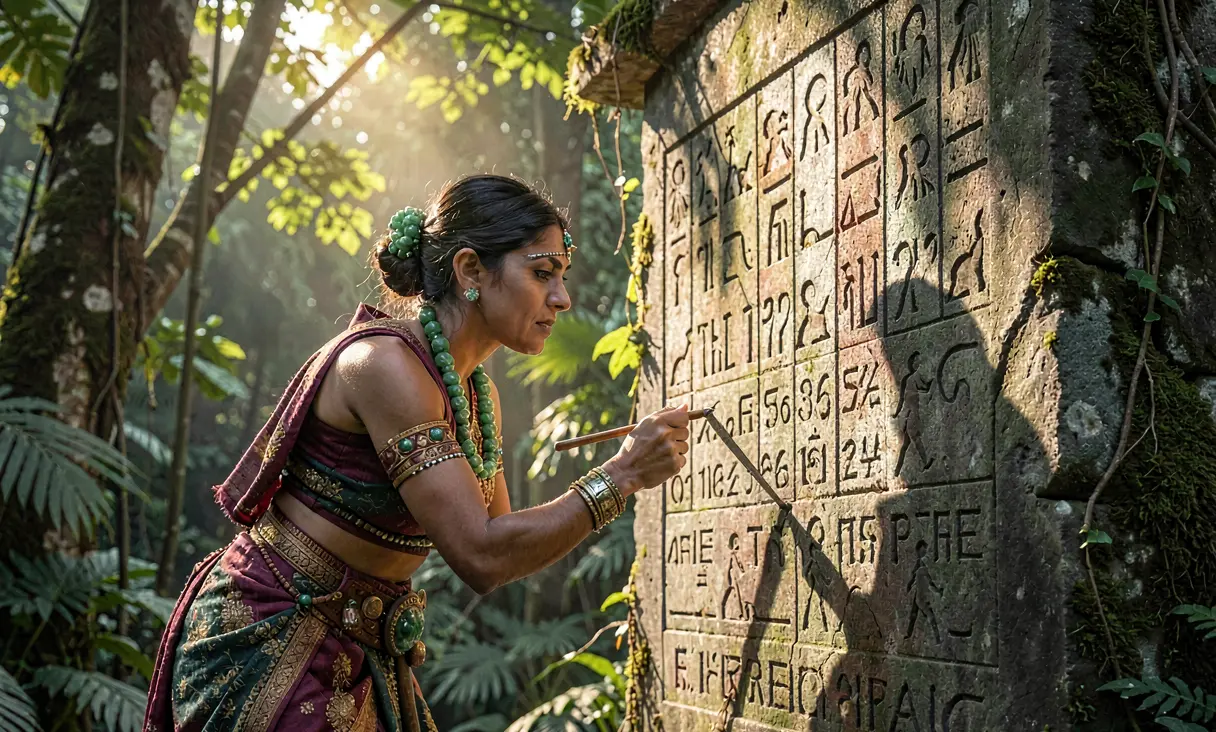 ScienceRefinement of the Maya Long Count Calendar Systemc. 361 BCE · Chiapa de Corzo, MexicoMaya scholars formalize the Long Count calendar for tracking deep historical time.
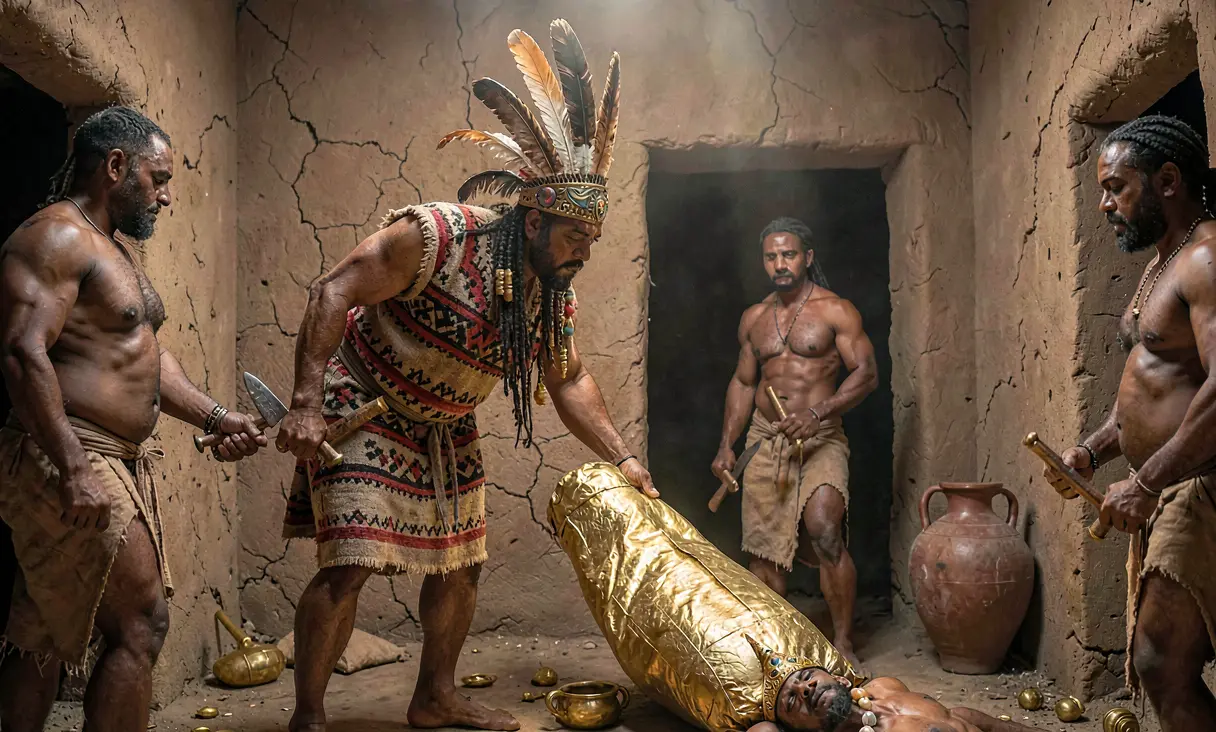 ReligionBurial of the Royal Tombs at Sipán (Later Phase)c. 300 CE · Sipán, PeruElite Moche burials continue with elaborate rituals involving human sacrifice and gold offerings.
 ExplorationPolynesian Expansion into the Society Islandsc. 300 BCE · Society Islands, French PolynesiaPolynesian voyagers colonize the Society Islands, establishing a central hub for further eastward expansion.
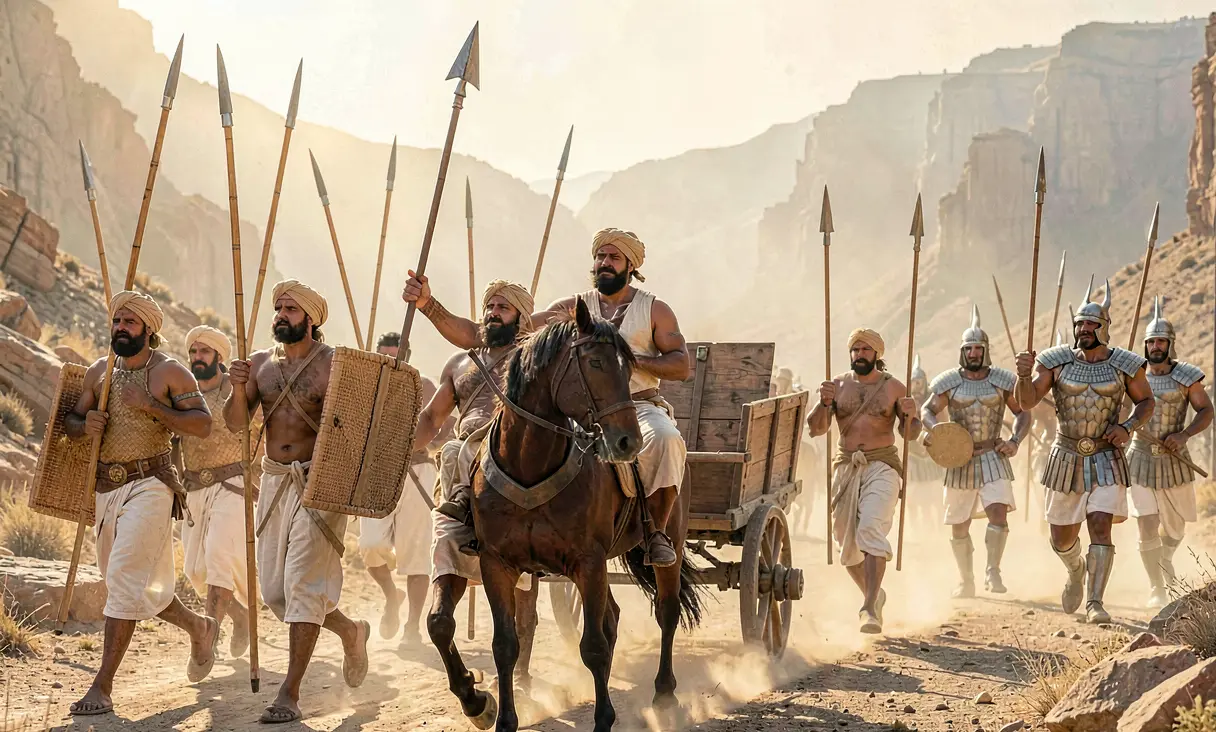 WarMauryan Conquest of Gandharac. 305 BCE · Peshawar Valley, Gandhara, PakistanChandragupta Maurya defeats Seleucus Nicator, securing the vital Gandhara region and expanding the Mauryan Empire westward to the Hindu Kush.
Discussion
Loading…