
Shaka Zulu Unifies the Zulu Kingdom
Shaka Zulu's radical military reforms and ruthless unification of the Zulu clan around 1816 forged a formidable empire, triggering the continent-altering Mfecane displacement while establishing a cent
Context of the Southern African Highlands
In the early 19th century, the region known today as KwaZulu-Natal was a patchwork of small, autonomous Nguni chiefdoms, including the Mthethwa, Ndwandwe, and the relatively minor Zulu clan. These groups were bound by complex kinship ties and engaged in sporadic cattle raiding, yet they lacked centralized political authority or unified military structures. The socio-political landscape was volatile; competition for grazing land and water sources intensified due to population growth and climatic shifts, creating a powder keg of inter-tribal tension. It was within this fragmented environment that the Zulu chiefdom, led by Chief Senzangakhona, remained a minor player until his death in 1816 set the stage for a radical transformation.
The Rise of Shaka kaSenzangakona
Shaka, born around 1787 to Senzangakhona and Nandi of the Langeni people, spent his youth in exile at the court of the Mthethwa chief Dingiswayo. There, he absorbed innovative military concepts and rose through the ranks as a formidable warrior. Upon his father's death in c. 1816, Shaka returned to seize control of the Zulu clan, initially ruling alongside his half-brother Sigujana before consolidating absolute power. Unlike previous chiefs who relied on consensus or loose alliances, Shaka imposed a rigid autocracy, viewing the state as an extension of his own will. He systematically dismantled rival clans within the Zulu sphere, absorbing their populations into a single, militarized entity under the banner of the Zulu nation.
Military Revolution and Tactical Innovation
Shaka's most enduring contribution was his complete overhaul of Nguni warfare. He discarded the traditional long throwing spear (assegai) in favor of a shorter, heavier stabbing spear known as the iklwa, named for the sound it made when withdrawn from a body. This weapon necessitated close-quarters combat, which Shaka enforced through the 'bull horn' formation: a central reserve force (the chest) engaged the enemy while two flanking wings (the horns) encircled and annihilated them. To execute this complex maneuver, he reorganized society into age-regiments (amabutho), stripping young men of their tribal affiliations and binding them to the king through shared barracks, rigorous training, and a ban on marriage until discharged by royal decree.
Expansion and the Mfecane
Between 1816 and 1825, Shaka launched relentless campaigns of conquest that reshaped the demographic map of southern Africa. His armies defeated powerful rivals such as the Ndwandwe under Zwide and the Mthethwa successor states, driving survivors northward and westward in a chain reaction of displacement known as the Mfecane (or Difaqane). This period of widespread chaos saw entire nations shattered, with refugees fleeing Shaka's expansion triggering conflicts from the Cape Colony to modern-day Zimbabwe. By 1825, Shaka commanded an empire stretching over 30,000 square miles, with a standing army estimated at 40,000 warriors, effectively creating the first centralized state in the region capable of resisting external pressures.
The End of an Era and Assassination
Despite his military genius, Shaka's rule was marked by increasing paranoia and brutality following the death of his mother Nandi in 1827. His grief manifested in draconian decrees forbidding agriculture, milk consumption, and childbirth for a year, leading to mass starvation and the execution of thousands deemed insufficiently mournful. This tyranny alienated his own generals and brothers, most notably Dingane and Mhlangana. In September 1828, while Shaka was away from the royal kraal at Dukuza, his half-brothers conspired with British trader Henry Francis Fynn to assassinate him, stabbing him repeatedly as he entered the cattle enclosure. His death marked the abrupt end of his reign and a shift in Zulu leadership toward Dingane.
Legacy and Historical Significance
Shaka's unification of the Zulu Kingdom created a political entity that would define southern African history for over a century. His military innovations influenced warfare across the continent, while his centralized state structure provided a foundation for the modern nation of South Africa. Although the Mfecane caused immense suffering and depopulation, it also facilitated the rise of other powerful states like the Sotho under Moshoeshoe and the Ndebele under Mzilikazi. Today, Shaka remains a polarizing yet iconic figure: a tyrant responsible for widespread bloodshed, but also a nation-builder whose strategic genius allowed the Zulu people to withstand European colonial encroachment for decades after his death.
Shaka's military innovations and state-building created a powerful indigenous African kingdom that reshaped the demographic and political landscape of southern Africa.
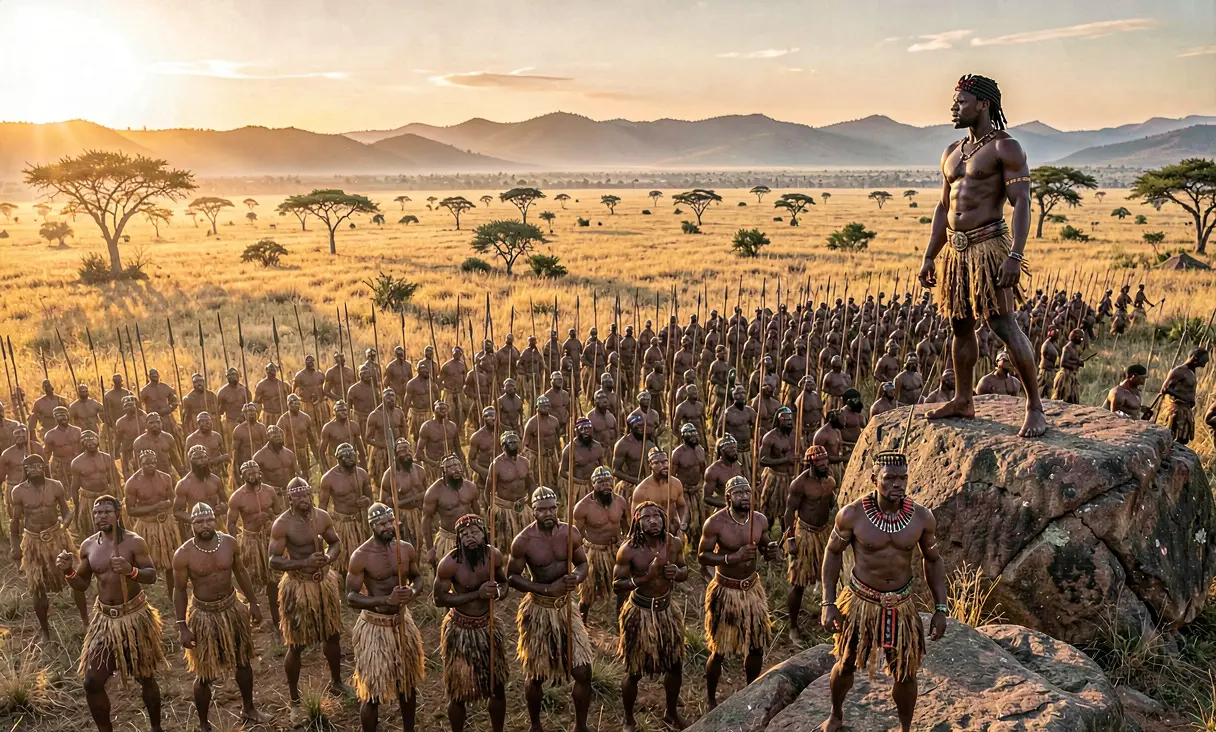

Where it happened
Natal, Southern Africa — see it on the interactive map →
Explore related history
 PoliticsSargon of Akkad Establishes the First Empirec. 2334 BCE · Akkad (Location uncertain, near Baghdad, Iraq)Sargon unifies Sumerian city-states to create the world's first multi-ethnic empire.
 PoliticsPromulgation of the Code of Ur-Nammuc. 2100 BCE · Ur, Southern Mesopotamia (Iraq)The earliest known surviving law code is established in the Sumerian city of Ur.
 PoliticsNelson Mandela Elected President of South AfricaApril 27, 1994 · Cape Town, South AfricaSouth Africa holds its first democratic election, ending the apartheid regime and establishing a multiracial government.
 PoliticsCongress of Tucumán Declares Argentine IndependenceJuly 9, 1816 · San Miguel de Tucumán, ArgentinaDelegates from the United Provinces of the Río de la Plata formally declare independence from Spain.
 PoliticsUva-Wellassa Rebellion Against British RuleMarch 1817 · Kandy, Sri LankaSinhalese chieftains lead a widespread uprising against British colonial expansion in the central highlands.
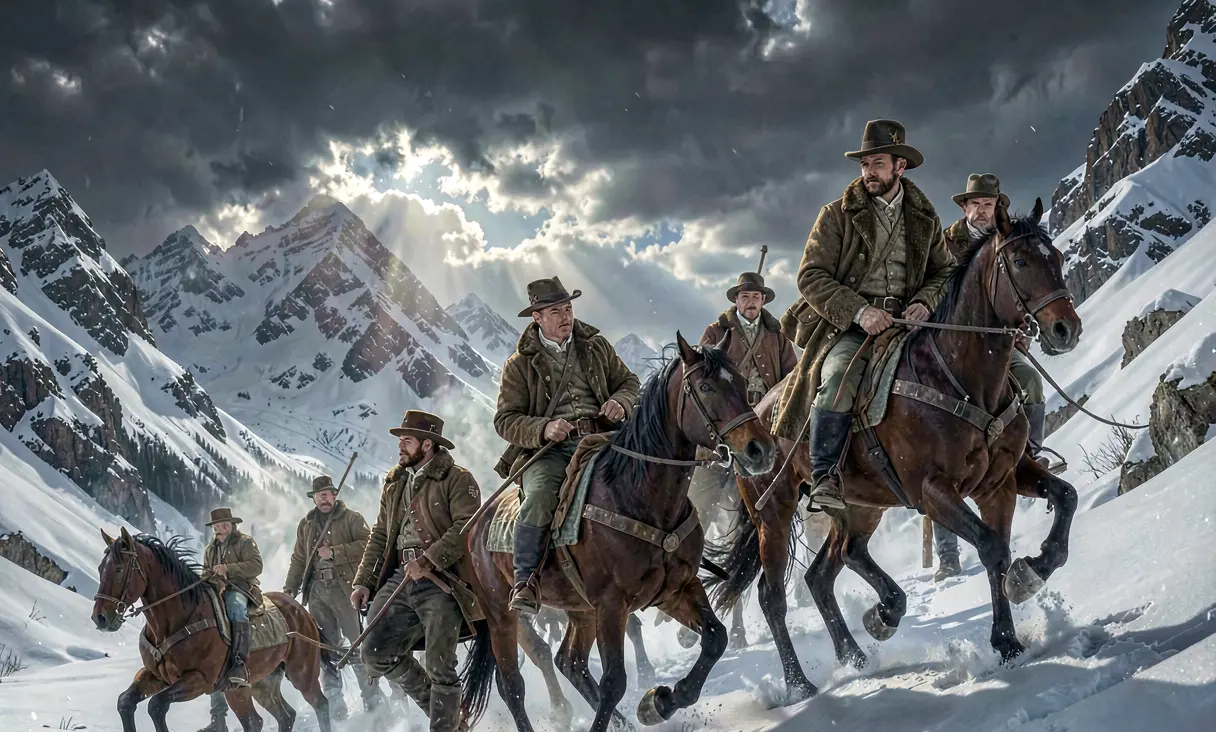 WarSimón Bolívar's Crossing of the AndesJune 1819 · Andes Mountains, Colombia/Venezuela BorderBolivar leads his army over the frozen Andes to launch a surprise attack on Spanish forces in New Granada.
Discussion
Loading…