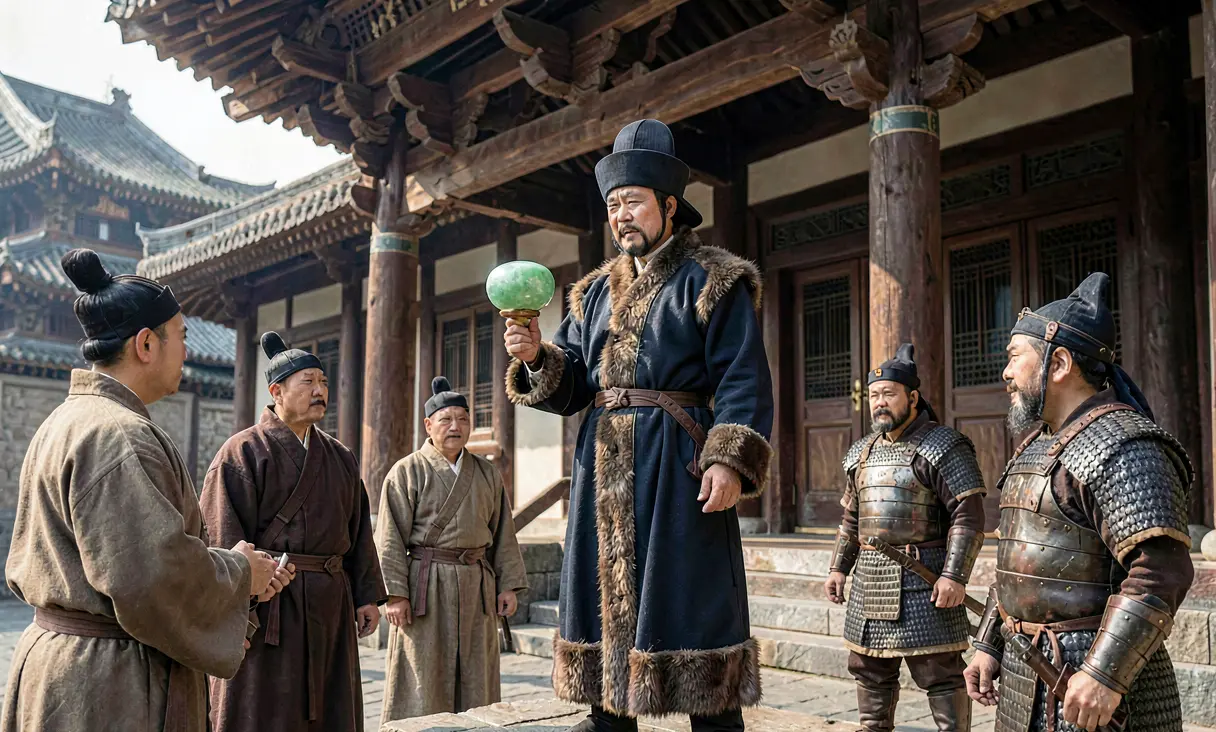
Kublai Khan Establishes Yuan Dynasty
In 1271, Kublai Khan founded the Yuan Dynasty in Dadu, becoming the first foreign ruler to unify all of China under a single banner while fusing Mongol military might with Chinese bureaucratic traditi
The Transition from Steppe to Sedentary Empire
By the mid-13th century, the Mongol conquests under Genghis Khan and his successors had shattered the political boundaries of Eurasia, yet the administration of the vast Chinese territories remained a precarious endeavor. Kublai Khan, grandson of Genghis and ruler of the Mongol Empire's eastern wing, recognized that traditional nomadic governance was insufficient to manage China's complex agrarian economy and sophisticated bureaucracy. Following his decisive victory over his brother Ariq Böke in the Toluid Civil War (1260–1264), Kublai shifted the empire's center of gravity from Karakorum to the Chinese heartland, seeking legitimacy not merely as a conqueror but as a sovereign emperor in the Confucian tradition.
The Proclamation of 1271
On November 19, 1271, Kublai Khan issued an imperial edict formally establishing the Yuan Dynasty. In a move of profound symbolic weight, he adopted the Chinese dynastic name 'Yuan' (meaning 'origin' or 'primordial'), derived from the I Ching's phrase 'Great beginning,' thereby signaling his intent to rule all under heaven rather than just as a foreign overlord. This declaration coincided with the completion of the new capital, Dadu (modern-day Beijing), which replaced the previous Jin dynasty stronghold of Zhongdu. By assuming the title of Emperor of China, Kublai effectively severed the administrative link to the western Mongol khanates, transforming the Mongol Empire into a distinct Chinese imperial entity while retaining its steppe roots.
Kublai Khan and the Synthesis of Cultures
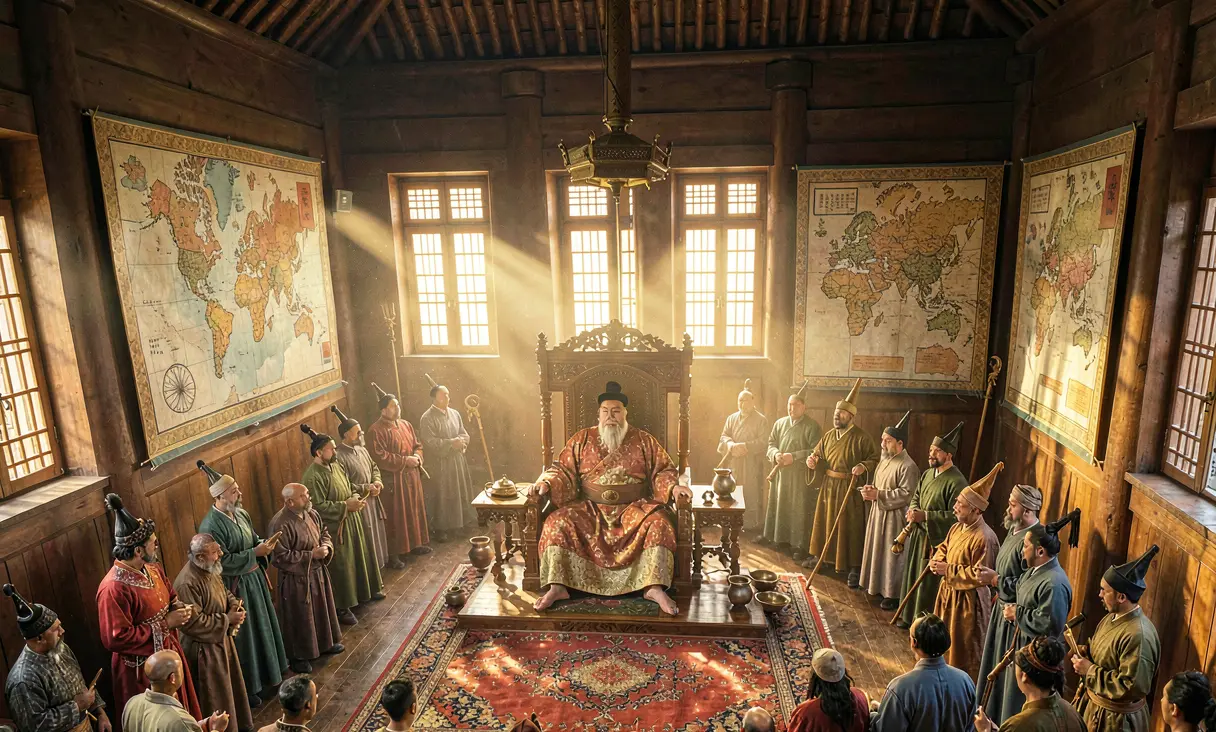
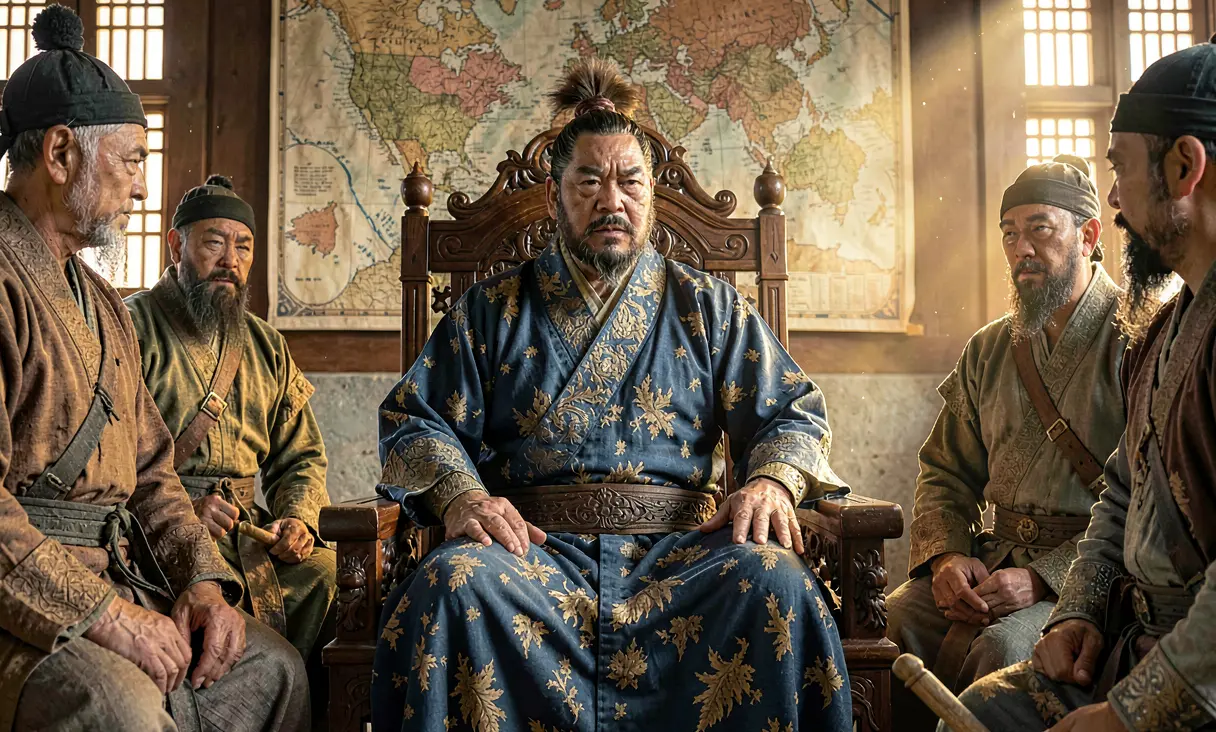
The central figure in this transformation was Kublai himself, a ruler who embodied a unique duality. He maintained the Mongol practice of the 'Yassa' (law code) and preserved the loyalty of his steppe warriors while simultaneously recruiting Han Chinese scholars like Liu Bingzhong to design a bureaucratic state modeled on Tang and Song precedents. This synthesis was not merely cosmetic; it involved the creation of a dual administrative system where Mongols held supreme military command, but Chinese officials managed civil affairs. Kublai's court became a cosmopolitan hub where Tibetan Buddhism flourished alongside Confucian rituals, and where Nestorian Christians, Muslims, and Daoists found patronage, reflecting his pragmatic approach to religious tolerance as a tool of statecraft.
Consolidation and the Fall of the Song
The establishment of the dynasty in 1271 did not immediately unify China; the Southern Song Dynasty still held sway over the south. The subsequent years were defined by a grueling military campaign to extinguish this last resistance, culminating in the Battle of Yamen in 1279, where the Song loyalists were annihilated and the young emperor Zhao Bing perished. This victory marked the first time in history that all of China was ruled by a non-Han ethnic group. The conquest required the integration of massive naval forces and the deployment of Persian engineers to construct trebuchets capable of breaching fortified cities, showcasing the Yuan's ability to mobilize resources from across their vast empire.
Social Stratification and Administrative Innovation
Despite its cosmopolitan veneer, the Yuan Dynasty institutionalized a rigid four-class hierarchy that privileged Mongols at the apex, followed by Semu (Central Asians and Westerners), Han Chinese (northerners), and Southerners (former Song subjects) at the bottom. This system ensured Mongol dominance in government and military roles, often excluding the Han elite from high office, which sowed seeds of resentment that would later fuel rebellion. Nevertheless, the administration achieved remarkable feats: it standardized paper currency across the realm, expanded the Grand Canal to link Dadu with the Yangtze delta, and revitalized the Silk Road, creating a 'Pax Mongolica' that facilitated unprecedented trade and communication between Europe and Asia.
Legacy of the First Foreign Dynasty
The Yuan Dynasty's legacy is one of paradoxical greatness; it was a regime that bridged continents yet fractured internally. It opened China to the world, as evidenced by the accounts of Marco Polo and the influx of Islamic astronomy and medicine, but its reliance on ethnic stratification prevented long-term stability. The dynasty lasted only 97 years before collapsing in 1368 due to peasant uprisings exacerbated by inflation and natural disasters. However, the Yuan permanently altered China's geopolitical map, establishing Beijing as the primary capital for subsequent dynasties and setting a precedent for multi-ethnic governance that would influence Chinese political thought for centuries.
It unified China under foreign rule for nearly a century, connecting East Asia to the wider Eurasian world.
Where it happened
Dadu (Beijing), China — see it on the interactive map →
Explore related history
 PoliticsRise of Srivijaya as Maritime Hegemon683 CE · Palembang, Sumatra (Modern Indonesia)Srivijaya emerges as the dominant maritime empire controlling the Strait of Malacca.
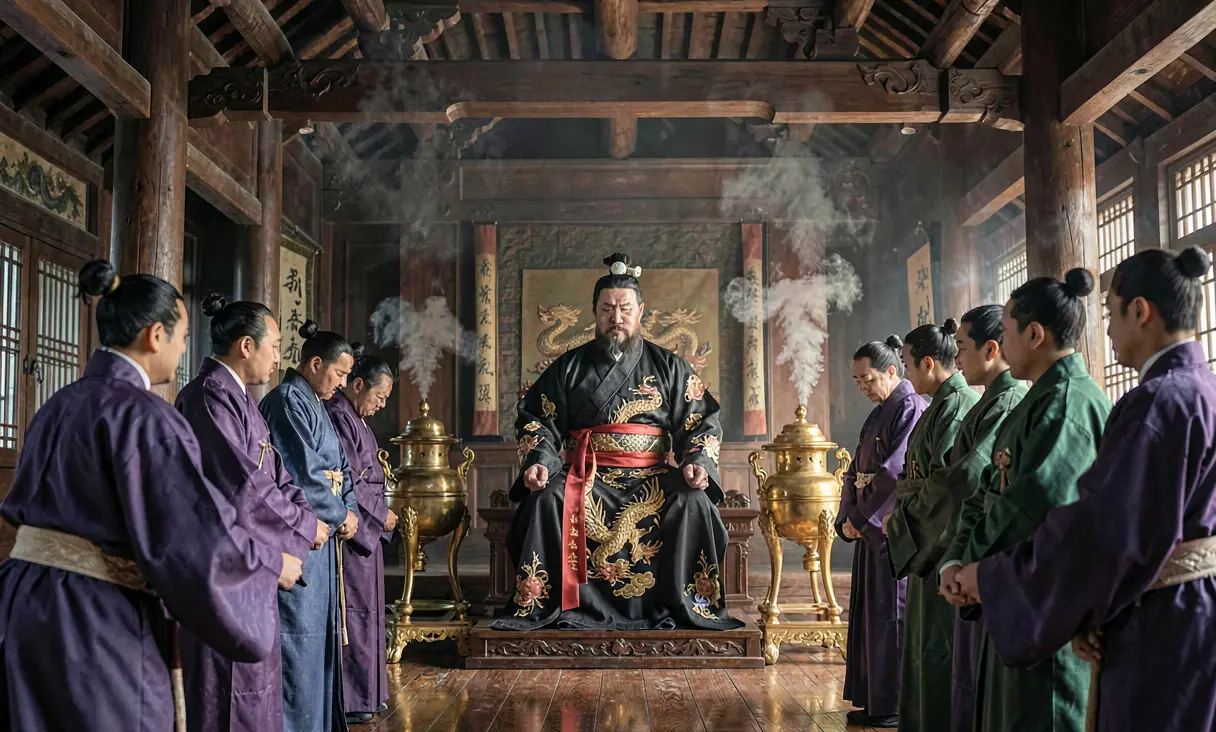 PoliticsEmperor Xuanzong Ascends the Tang Throne712 CE · Chang'an, ChinaEmperor Xuanzong begins his reign, ushering in the High Tang golden age.
 PoliticsFounding of Heian-kyo794 CE · Kyoto, JapanEmperor Kammu moves the capital to Heian-kyo, beginning the Heian period.
 ExplorationPolynesian Settlement of New Zealand (Aotearoa)c. 1280 CE · Canterbury, New Zealand (South Island)Polynesian navigators arrive in New Zealand, founding the Māori culture and adapting to a temperate environment.
 ExplorationPolynesian Voyaging to New Zealandc. 1280 CE · South Island, New ZealandPolynesian navigators arrive in Aotearoa using double-hulled canoes and celestial navigation.
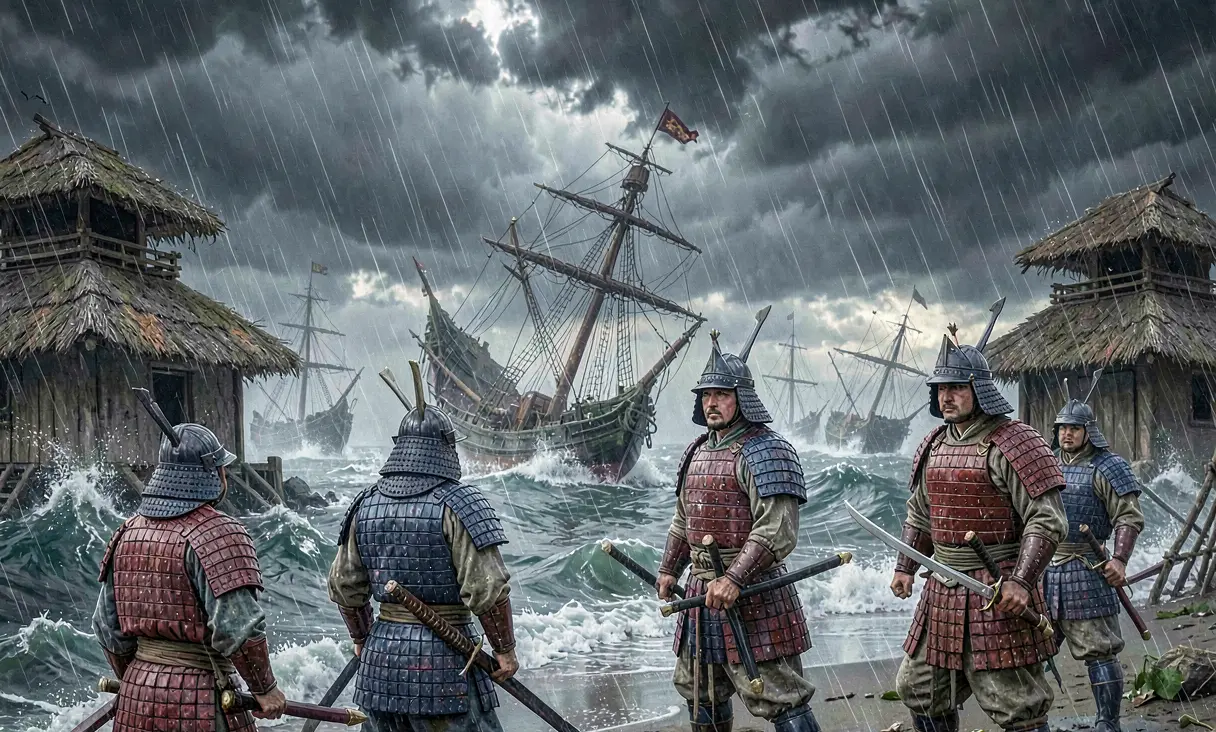 WarMongol Invasion of Japan (Kamikaze)1281 CE · Hakata Bay (Fukuoka), JapanA typhoon destroys the second Mongol invasion fleet.
Discussion
Loading…