Viking Settlement of Iceland
In 874 CE, Norse chieftains fleeing Norwegian tyranny founded Iceland's first permanent settlements, establishing the world's oldest parliament and launching the era of North Atlantic exploration.
The Flight from Tyranny
In the late ninth century, the political landscape of Scandinavia was undergoing a violent transformation. King Harald Fairhair (Harald Hårfagre) sought to unify the disparate petty kingdoms of Norway under a single crown, a campaign that necessitated the subjugation or exile of rival chieftains. For many powerful Norse nobles who valued their independence above all else, this consolidation represented an existential threat. Consequently, a significant wave of migration began, not merely as a search for new lands, but as a desperate flight from political tyranny and forced vassalage. These exiles, often accompanied by their families, slaves (thralls), and entire households, turned their gaze westward across the North Atlantic, seeking a sanctuary where they could govern themselves according to ancient customs.
The Discovery of the Land of Fire and Ice
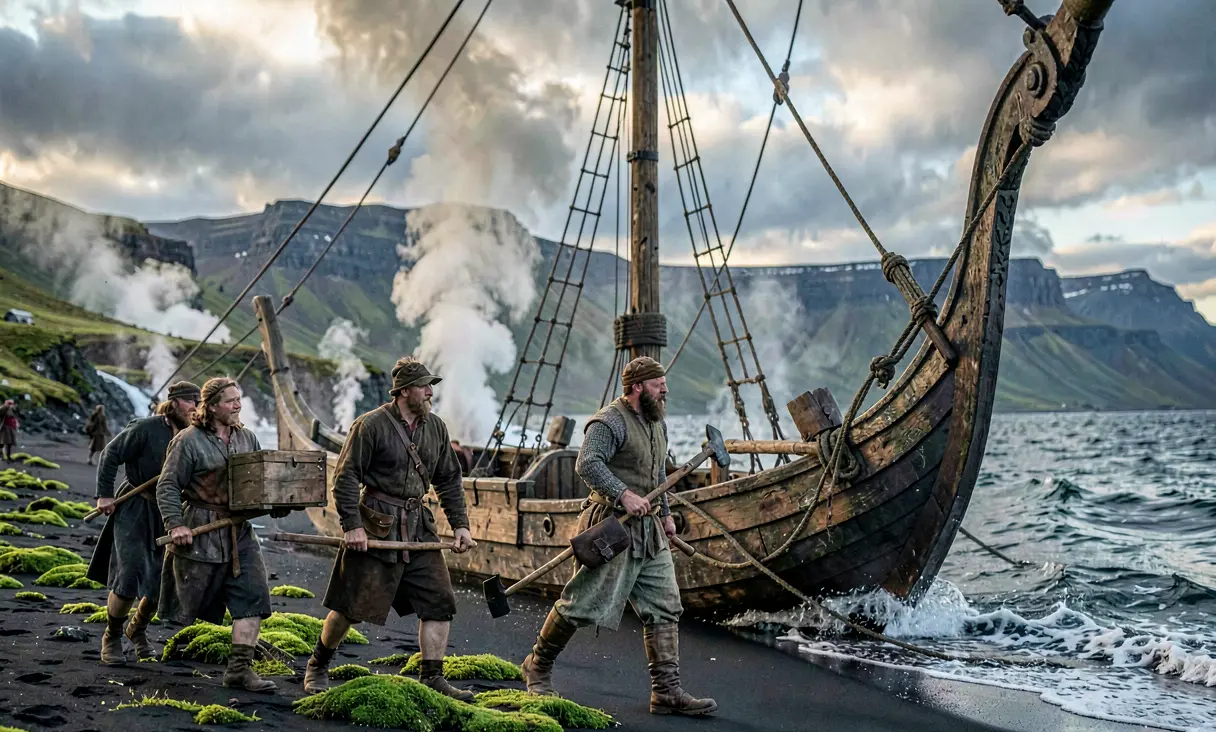
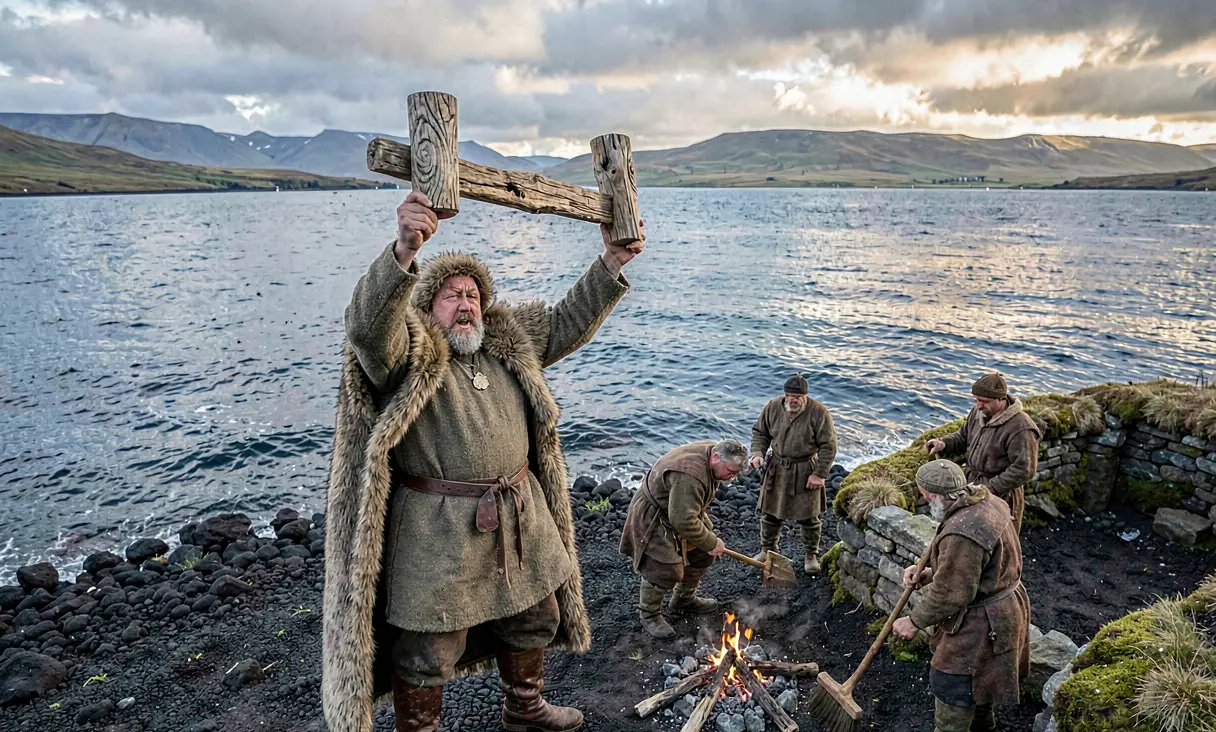
While Irish monks, known as Papar, had reportedly visited Iceland in the preceding century, it was the Norse who permanently settled the island. The traditional starting point for this colonization is fixed at 874 CE, when Ingólfur Arnarson, a chieftain from Norway, arrived on the shores of what would become Reykjavík. According to the Landnámabók (Book of Settlements), Ingólfur cast his high-seat pillars overboard upon arrival, vowing to settle wherever the gods guided them to land. These pillars washed ashore in a bay characterized by geothermal steam rising from the earth—a phenomenon that gave the settlement its name, Reykjavík, or 'Smoky Bay.' This event marked the beginning of a rapid and systematic colonization that would fill the island's habitable valleys within sixty years.
Ingólfur Arnarson and the Age of Settlement
Ingólfur Arnarson is remembered as the first permanent Norse settler, but he was merely the vanguard of a massive demographic shift. Between 874 CE and roughly 930 CE, thousands of settlers arrived from Norway, as well as from other Norse colonies in the British Isles, bringing with them Celtic wives and slaves captured during raids. Prominent figures such as Njáll Þorgeirsson, Eiríkr rauði (Erik the Red), and later Leifur Eiríksson emerged from this era of intense migration. The settlement was not a chaotic scramble but a structured division of land known as 'landnám,' where chieftains claimed vast estates based on their ability to defend them and establish productive farms. This period transformed Iceland from an uninhabited volcanic island into a thriving Norse society within two generations.
From Farmsteads to the Althing
The settlers quickly realized that the harsh, isolated nature of the island required a new form of social organization. Without a central king or external authority to enforce laws, the chieftains (goðar) established a unique political system centered on the individual farm and the local assembly. By 930 CE, this decentralized structure coalesced into the Althing, held annually at Þingvellir in a rift valley between tectonic plates. The Althing served as both a legislative body and a supreme court, where laws were recited from memory by a Lawspeaker (Lögsögumaður) for thirty years, and disputes were settled through arbitration rather than royal decree. This institution created a society that was effectively a republic of chieftains, devoid of a monarch yet bound by a common legal code.
Survival in the Sub-Arctic
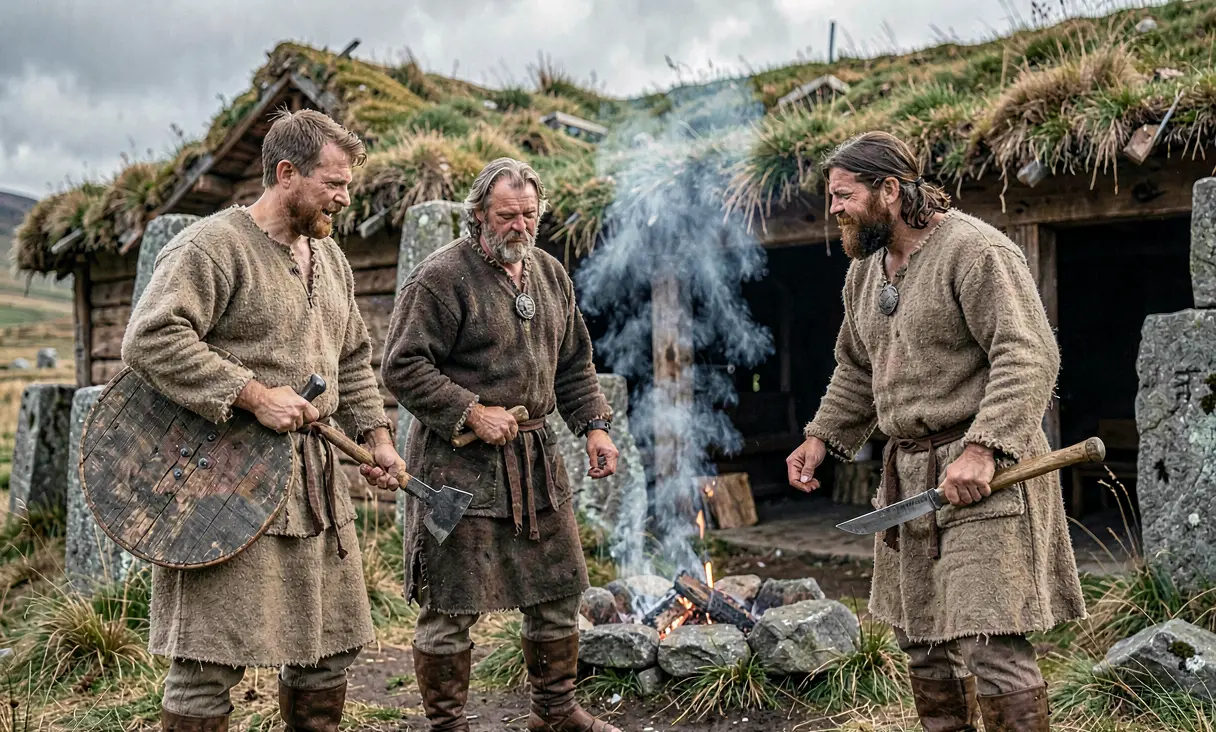
Life in Iceland presented formidable challenges, particularly regarding agriculture. The climate was significantly colder than in Norway, and the growing season was short. However, the settlers astutely utilized the island's unique geothermal resources to sustain their economy. They constructed turf houses with stone foundations that could be heated by hot springs, allowing them to survive brutal winters. In some areas, they even used geothermal heat to create greenhouses for growing vegetables and to dry fish, a crucial protein source. The economy remained primarily pastoral, relying on sheep, cattle, and horses, but the harsh environment limited arable farming, forcing a heavy reliance on fishing and the export of wool and dried cod.
The Gateway to the Atlantic
The settlement of Iceland served as a critical stepping stone for further Norse exploration into the North Atlantic. From this base, Erik the Red was exiled in 982 CE and subsequently discovered Greenland, establishing the Eastern and Western Settlements there. A generation later, his son, Leifur Eiríksson, sailed even further west, reaching the coast of North America (Vinland) around the year 1000 CE. Without the established supply lines and navigational knowledge gained from the Icelandic colonies, these trans-oceanic voyages would have been nearly impossible. Thus, Iceland became the launchpad for the first European contact with the Americas, centuries before Columbus.
A Legacy of Law and Literature
The cultural legacy of the Viking settlement is profound and enduring. The Icelandic Commonwealth lasted until 1262, when it voluntarily entered into a union with Norway due to internal strife and external pressure. However, the legal traditions established at the Althing influenced parliamentary systems globally; today, Iceland's parliament remains one of the oldest continuous democratic institutions in the world. Furthermore, the isolation of the island preserved the Old Norse language and oral traditions, which were later transcribed into the Icelandic Sagas during the 13th century. These literary masterpieces provide an unparalleled window into Viking Age society, law, and mythology, ensuring that the story of this remote settlement remains a cornerstone of Western historical consciousness.
It marked the northernmost extent of early medieval European expansion and created a distinct Norse-Icelandic culture.
Where it happened
Reykjavik, Iceland — see it on the interactive map →
Explore related history
 ExplorationKorean Tribute Trade with China918 CE · Sungnyemun Gate (Kaesong), KoreaGoryeo establishes formal tributary relations with the Song Dynasty.
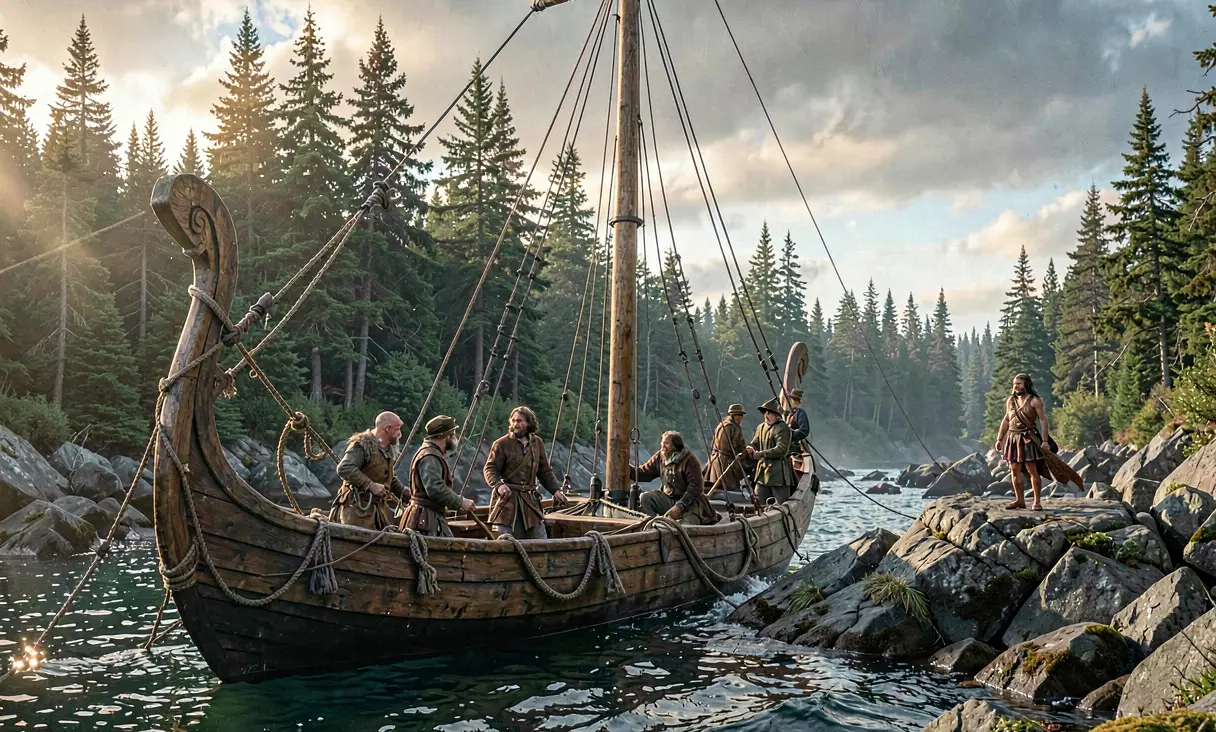 ExplorationLeif Erikson's Voyage to Vinlandc. 1000 CE · L'Anse aux Meadows, Newfoundland, CanadaLeif Erikson establishes a short-lived Norse settlement in North America, five centuries before Columbus.
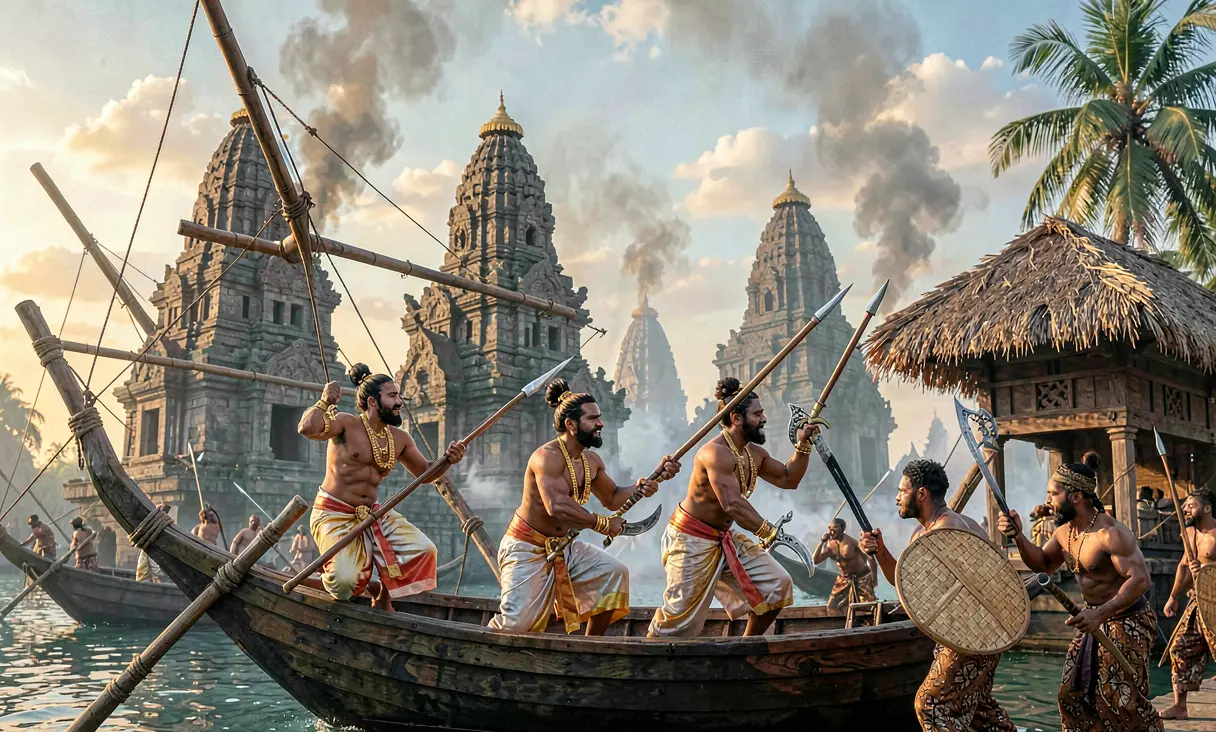 ExplorationChola Naval Expedition to Southeast Asia1025 CE · Java and Sumatra (Modern Indonesia)Chola fleet raids coastal cities across the archipelago.
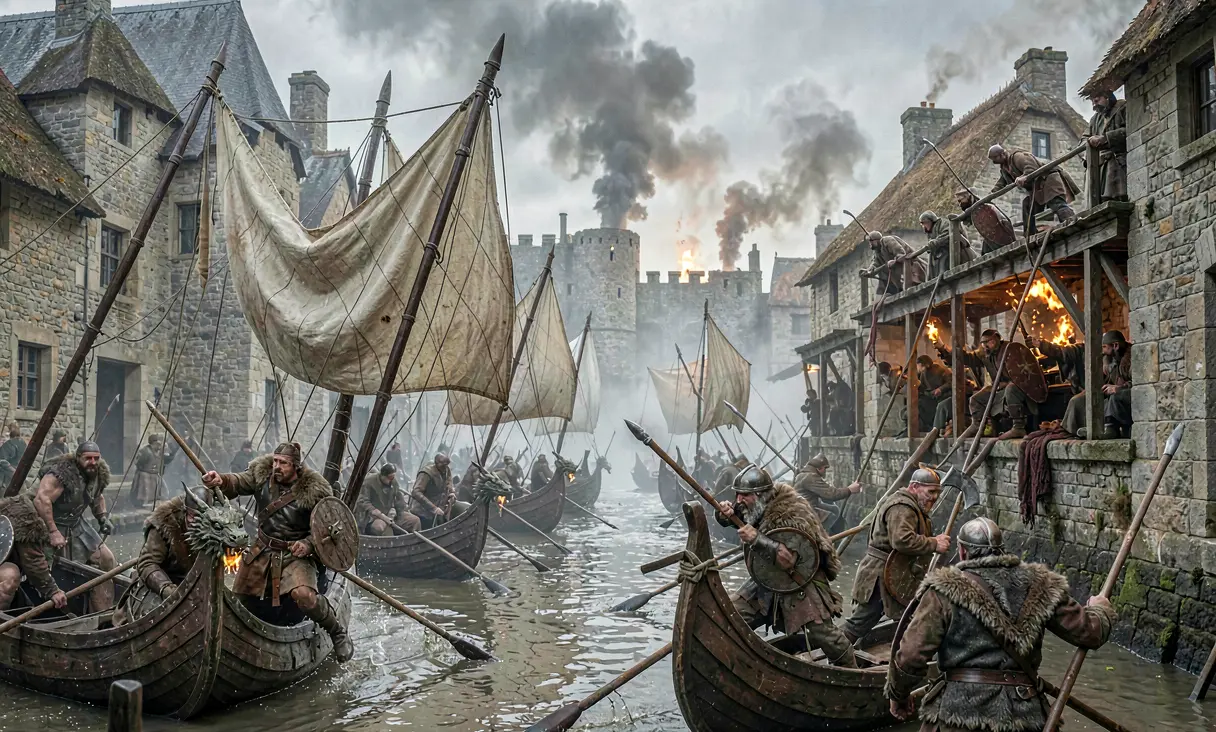 WarViking Siege of Paris885 CE · Paris, FranceViking raiders led by Sigfred besiege Paris for over a year, testing the defenses of West Francia.
 TechnologyDiscovery of Gunpowder by Tang Dynasty Alchemistsc. 850 CE · Chang'an, ChinaTang alchemists accidentally discover gunpowder while seeking an elixir of immortality.
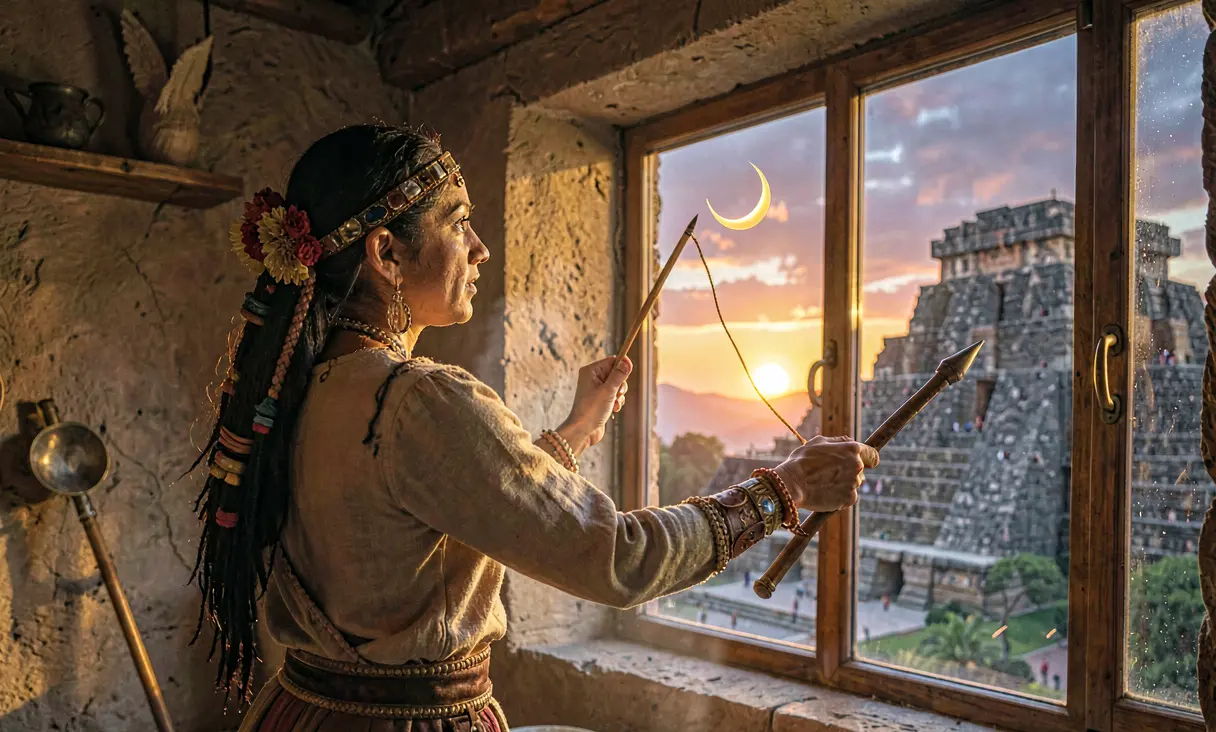 ScienceConstruction of El Caracol Observatory at Chichen Itzac. 850 CE · Chichen Itza, MexicoMaya astronomers build a circular observatory aligned with Venus cycles.
Discussion
Loading…