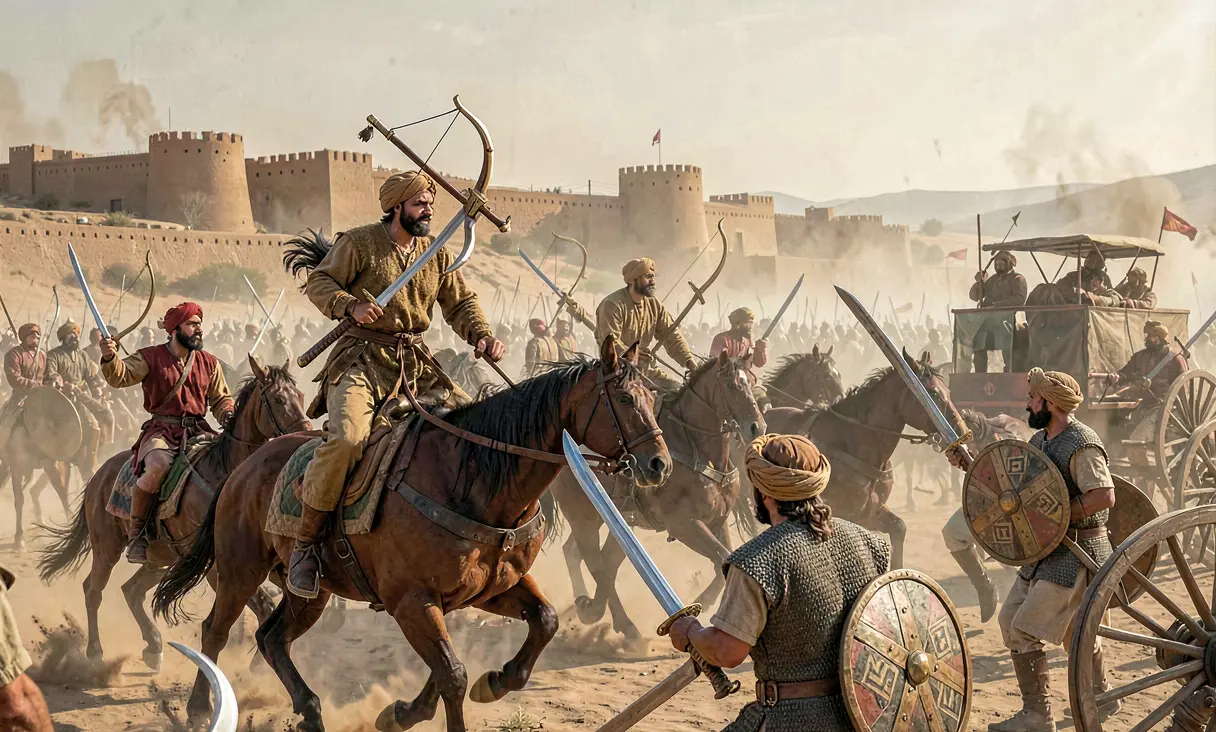
Ghurid Conquest of Delhi
Muhammad of Ghor's decisive victory over Prithviraj Chauhan at Tarain in 1192 shattered Hindu hegemony, paving the way for the Delhi Sultanate and centuries of Islamic rule in India.
The Shadow of Tarain
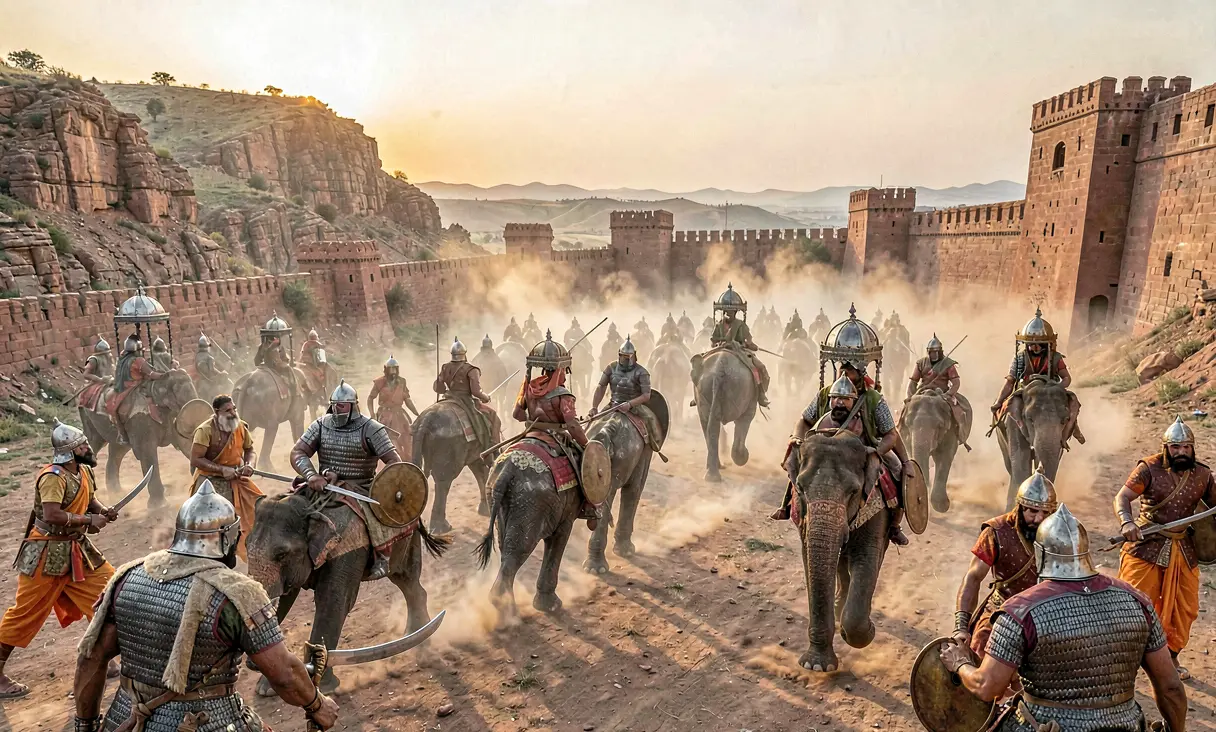
By the late 12th century, the political landscape of northern India was dominated by the Chahamana (Chauhan) dynasty, whose ruler, Prithviraj III, presided over a formidable realm centered in Ajmer and Delhi. To the northwest, the Ghurid Empire, under the ambitious Sultan Mu'izz ad-Din Muhammad bin Sam (Muhammad of Ghor), sought to expand beyond its mountainous Afghan heartland into the fertile plains of the Ganges. The stage was set for a collision that would redefine the subcontinent's destiny. In 1191 CE, the two powers met at the First Battle of Tarain, where Prithviraj's massive Rajput cavalry and war elephants decisively routed the Ghurid forces, forcing Muhammad of Ghor to retreat in humiliation.
Strategic Reassessment
Rather than accepting defeat as a final verdict, Muhammad of Ghor returned within a year with a reconfigured army and refined tactics. He recognized that the traditional Rajput reliance on frontal charges against heavy cavalry was vulnerable to hit-and-run maneuvers. Consequently, he assembled a force estimated at 120,000 horsemen, heavily emphasizing light cavalry archers capable of maintaining distance while raining arrows upon the enemy lines. This strategic pivot was not merely a military adjustment but a calculated effort to exploit the tactical rigidity of the Rajput armies, which prioritized honor and direct engagement over flexible maneuvering.
The Second Battle of Tarain
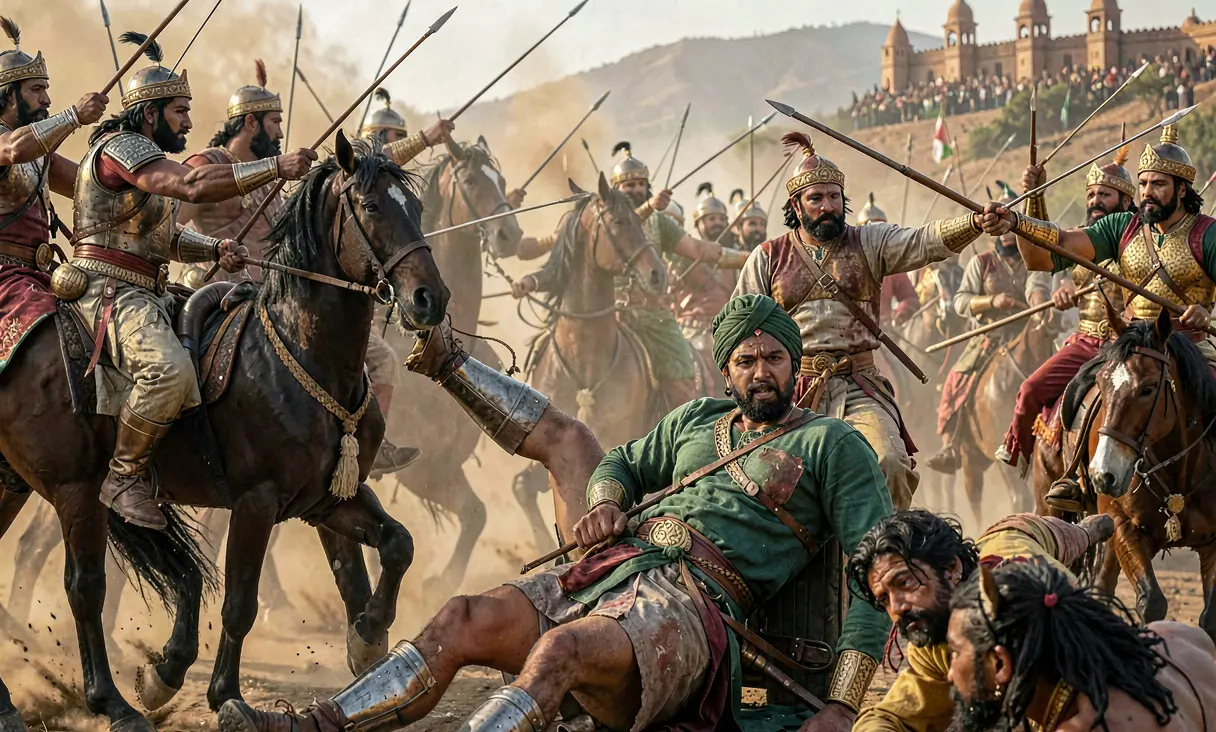
In early 1192 CE, the armies converged once again near Tarain (modern-day Taraori in Haryana). Muhammad of Ghor employed a feigned retreat, a classic steppe tactic designed to lure the Rajput forces out of their defensive formation. As Prithviraj's cavalry pursued the seemingly fleeing Ghurid archers, they broke ranks and became disorganized. The Ghurids then turned abruptly, surrounding the isolated Rajput units with superior mobility and relentless arrow fire. The battle lasted from dawn until dusk, resulting in a catastrophic defeat for the Chahamanas. Prithviraj Chauhan was captured while attempting to flee, and his army was effectively annihilated.
The Fall of Delhi
Following the crushing victory at Tarain, Muhammad of Ghor advanced rapidly toward the Gangetic heartland. The city of Delhi, then a significant but not yet imperial capital under the Tomara and Chahamana dynasties, fell with little resistance as its defenders were decimated or demoralized. Ajmer, Prithviraj's ancestral stronghold, was also secured shortly thereafter. The capture of these strategic hubs allowed the Ghurids to establish a foothold in northern India that had previously been inaccessible to foreign invaders. Unlike previous transient raids, this conquest aimed at permanent occupation and administrative integration.
The Fate of Prithviraj
Prithviraj Chauhan's fate remains a subject of historical debate and legend, though contemporary chronicles suggest he was taken prisoner to Ghazni. While later medieval literature romanticized his escape or heroic end, the prevailing historical consensus indicates that Muhammad of Ghor executed him, either shortly after capture or following a brief period of captivity. The removal of India's most powerful Hindu ruler in 1192 CE created a power vacuum that no other regional dynasty could immediately fill, leaving the path open for the systematic establishment of Muslim rule across the north.
Birth of the Delhi Sultanate
The conquest of 1192 marked the definitive end of independent Hindu hegemony in northern India for centuries. Muhammad of Ghor appointed his former slave and general, Qutb al-Din Aibak, as his viceroy in India, laying the administrative groundwork for what would become the Delhi Sultanate. This new political entity would dominate the subcontinent for over three centuries, introducing Persianate culture, Islamic jurisprudence, and a centralized bureaucratic state structure that fundamentally altered the region's religious demographics and social fabric.
Enduring Legacy
The Ghurid victory at Tarain is widely regarded as one of the most pivotal moments in Indian history. It initiated a period of sustained Islamic political dominance that shaped the architecture, language, and culture of the subcontinent, leading eventually to the Mughal Empire. The event demonstrated the effectiveness of mobile cavalry tactics against traditional heavy infantry and war elephants, influencing military doctrine across Asia for generations. The shift in power dynamics established Delhi as a global metropolis and a crossroads of civilizations, echoing through history until the advent of British colonial rule.
This battle initiated the era of Islamic sultanates in India, leading to the Delhi Sultanate and profound cultural transformations.
Where it happened
Delhi, India — see it on the interactive map →
Explore related history
 WarIslamic Conquest of the Sasanian Empire637 CE · Ctesiphon, Iraq (Persia)Arab Muslim forces defeat the Sasanian Empire at the Battle of al-Qadisiyyah, ending centuries of Persian rule.
 WarViking Siege of Paris885 CE · Paris, FranceViking raiders led by Sigfred besiege Paris for over a year, testing the defenses of West Francia.
 WarChola Conquest of Sri Lankac. 993 CE · Anuradhapura, Sri LankaRajaraja Chola launches a massive amphibious invasion of Sri Lanka, defeating the Sinhalese kingdom and annexing the island.
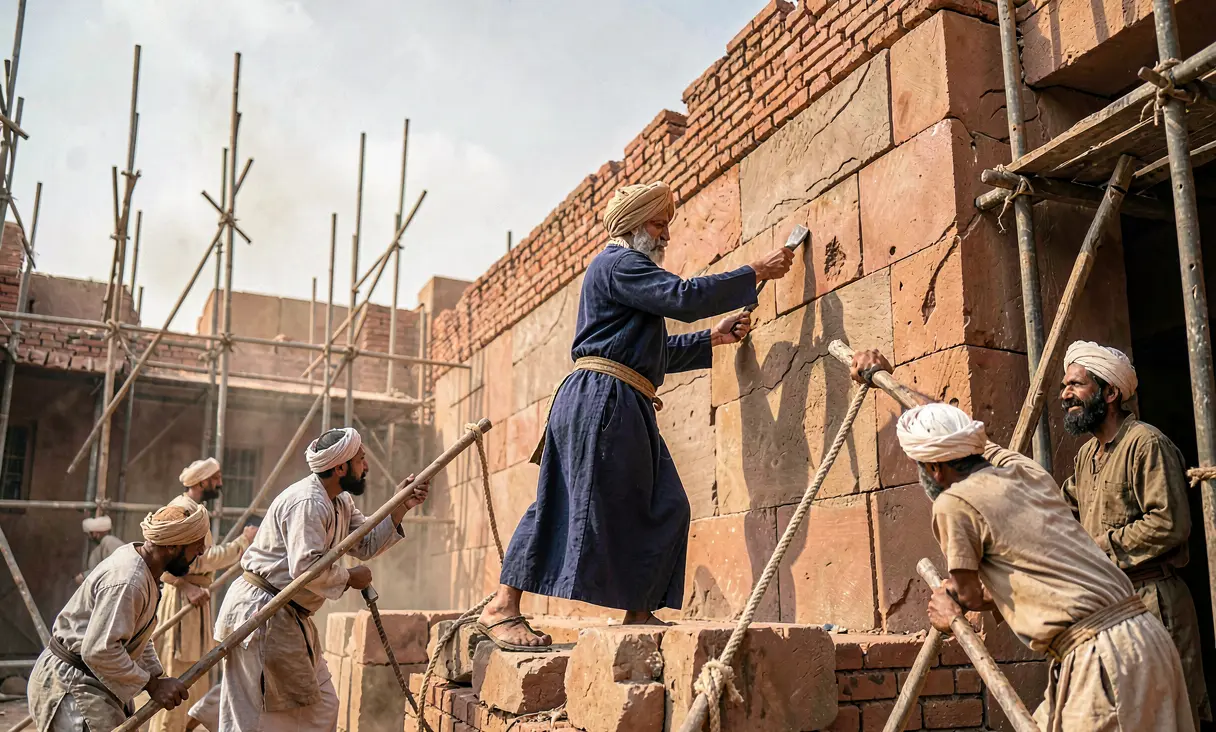 ArtConstruction of Qutub Minar Beginsc. 1199 CE · Delhi, IndiaQutb-ud-din Aibak begins construction of the Qutub Minar, a victory tower symbolizing the establishment of the Delhi Sultanate.
 CivilizationRise of Swahili City-States on the East African Coastc. 1200 CE · Kilwa Kisiwani, TanzaniaSwahili city-states flourish as cosmopolitan hubs of Indian Ocean trade, blending African and Islamic cultures.
 TechnologyStandardization of the Quipu System in the Andesc. 1200 CE · Cusco Region, PeruInca and pre-Inca cultures refine the quipu for complex numerical and narrative data storage.
Discussion
Loading…