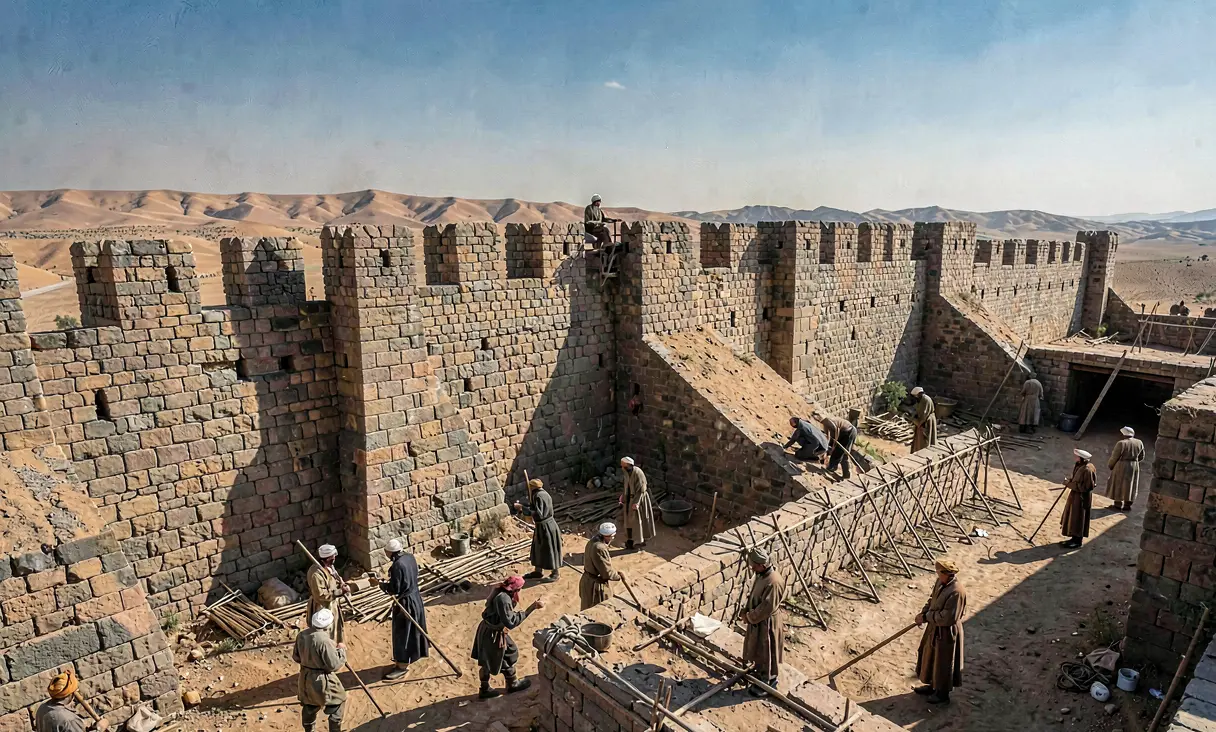
Ghiyas-ud-din Tughlaq Founding of Tughlaqabad
Ghiyas-ud-din Tughlaq founded the fortress city of Tughlaqabad in 1320 CE to create an impregnable capital against Mongol threats, establishing a distinct military architectural style that defined the
The Collapse of the Khalji and the Rise of a New Order
By the early fourteenth century, the Delhi Sultanate was reeling from internal decay and external threats. The last ruler of the Khalji dynasty, Khusrau Khan, had seized power through regicide in 1320, plunging the realm into chaos and inviting rebellion across the subcontinent. In this vacuum of authority, Ghazi Malik, a seasoned military commander and governor of Dipalpur, emerged as the stabilizing force. Having successfully repelled Mongol incursions on the northwestern frontier, he possessed both the military acumen and the political capital necessary to restore order. His victory over Khusrau Khan at the Battle of Kaghan in September 1320 marked a definitive end to the Khalji era and the dawn of the Tughlaq dynasty.
The Architectural Manifesto: Founding Tughlaqabad
Upon ascending the throne as Ghiyas-ud-din Tughlaq, the new Sultan immediately sought to physically manifest his regime's strength and permanence. In 1320 CE, he commissioned the construction of a massive fortress city on the banks of the Yamuna River, approximately seven kilometers southeast of the existing Siri Fort. This project was not merely an administrative relocation but a strategic imperative designed to counter the persistent threat of Mongol raids from Central Asia and to suppress internal dissent. The site was chosen for its defensible terrain, utilizing natural elevations to create an impregnable stronghold that would serve as the new capital of the Delhi Sultanate.
Engineering a Fortress: The Tughlaq Style
Tughlaqabad stands as the quintessential example of early Tughlaq architecture, characterized by its austere grandeur and military pragmatism. The citadel was enclosed by massive walls stretching over 10 kilometers in circumference, punctuated by 52 bastions that provided overlapping fields of fire for defenders. Distinct from the ornate styles of preceding dynasties, the fortification employed a distinctive 'batter' or sloping wall design, where the masonry tapered inward as it rose. This engineering innovation not only increased structural stability against siege engines and earthquakes but also deflected projectiles more effectively than vertical walls. The use of local grey quartzite and massive rubble core construction gave the city a somber, imposing appearance that reflected the Sultan's authoritarian rule.
The Strategic Imperative
The decision to shift the capital was driven by urgent geopolitical realities. The Mongol Ilkhanate and Chagatai Khanate had launched devastating invasions into northern India throughout the late thirteenth century, exposing the vulnerability of previous capitals located in more exposed positions. Ghiyas-ud-din Tughlaq recognized that a centralized, heavily fortified capital was essential to coordinate rapid military responses against these nomadic hordes. Furthermore, the new location allowed for better control over the surrounding agricultural hinterlands and trade routes, consolidating the Sultan's economic base while isolating potential rebel factions in older urban centers like Delhi and Siri.
A Short-Lived Capital
Despite its formidable construction, Tughlaqabad served as the imperial capital for a remarkably brief period. Ghiyas-ud-din Tughlaq ruled from the fortress for only six years before his mysterious death in 1325, an event widely attributed to a structural collapse or assassination orchestrated by his son and successor, Muhammad bin Tughlaq. Upon ascending the throne, Muhammad bin Tughlaq found the city's water supply insufficient and its location inconvenient for governing the expanding empire. Consequently, he abandoned Tughlaqabad in 1327 to establish a new capital at Daulatabad in the Deccan, leaving the massive fortress largely deserted within a decade of its completion.
Legacy of Stone and Strategy
Although Tughlaqabad was abandoned as a residence, its architectural legacy endured as a defining model for subsequent Indian fortifications. The 'batter' technique became a hallmark of Indo-Islamic military architecture, influencing the design of forts across the subcontinent for centuries. Today, the ruins stand as a testament to the ambition and volatility of the Tughlaq dynasty. The city remains a stark reminder of the constant tension between the need for defensive security and the logistical challenges of maintaining a vast empire. Its massive walls, now encroached upon by modern Delhi's expansion, continue to evoke the martial spirit of a ruler who sought to secure his legacy through stone and steel.
The founding of Tughlaqabad symbolized the transition to a more militarized and fortified state structure in the Delhi Sultanate.
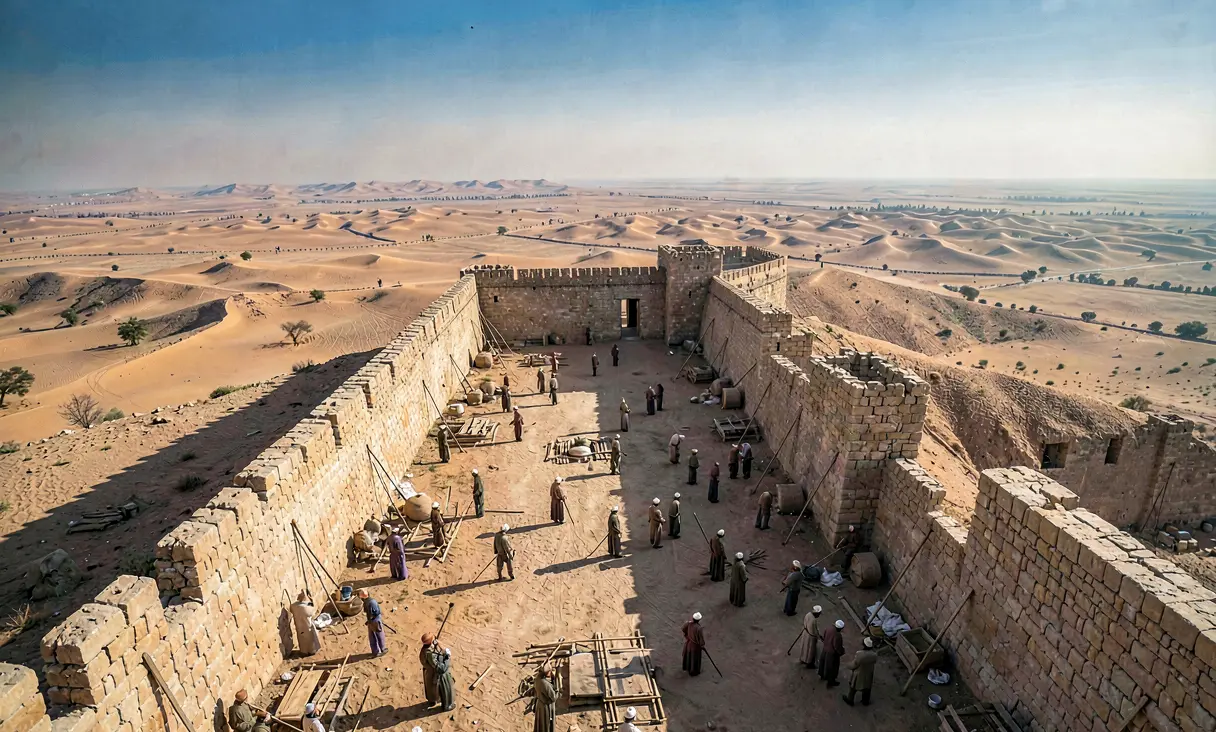
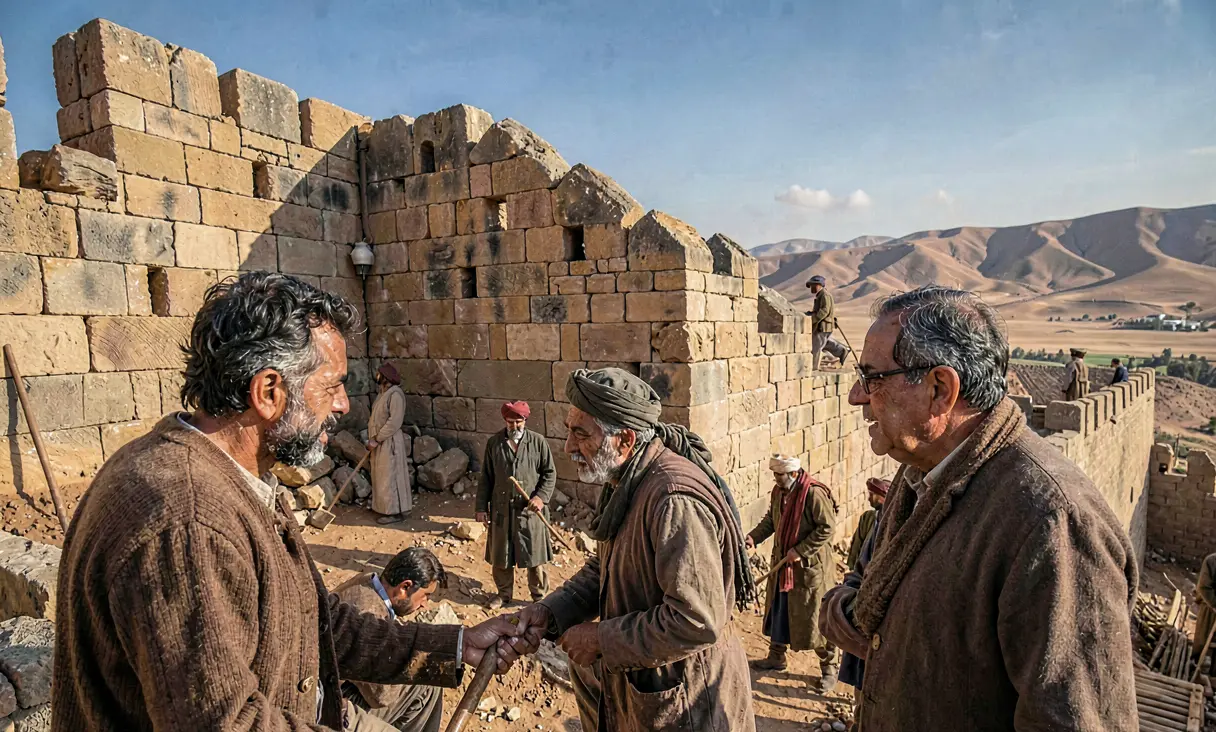
Where it happened
Delhi, India — see it on the interactive map →
Explore related history
 PoliticsRise of Srivijaya as Maritime Hegemon683 CE · Palembang, Sumatra (Modern Indonesia)Srivijaya emerges as the dominant maritime empire controlling the Strait of Malacca.
 PoliticsEmperor Xuanzong Ascends the Tang Throne712 CE · Chang'an, ChinaEmperor Xuanzong begins his reign, ushering in the High Tang golden age.
 PoliticsFounding of Heian-kyo794 CE · Kyoto, JapanEmperor Kammu moves the capital to Heian-kyo, beginning the Heian period.
 CivilizationMansa Musa Pilgrimage to Mecca1324 CE · Timbuktu, MaliMali Empire ruler travels with immense wealth, destabilizing economies along his route to Mecca.
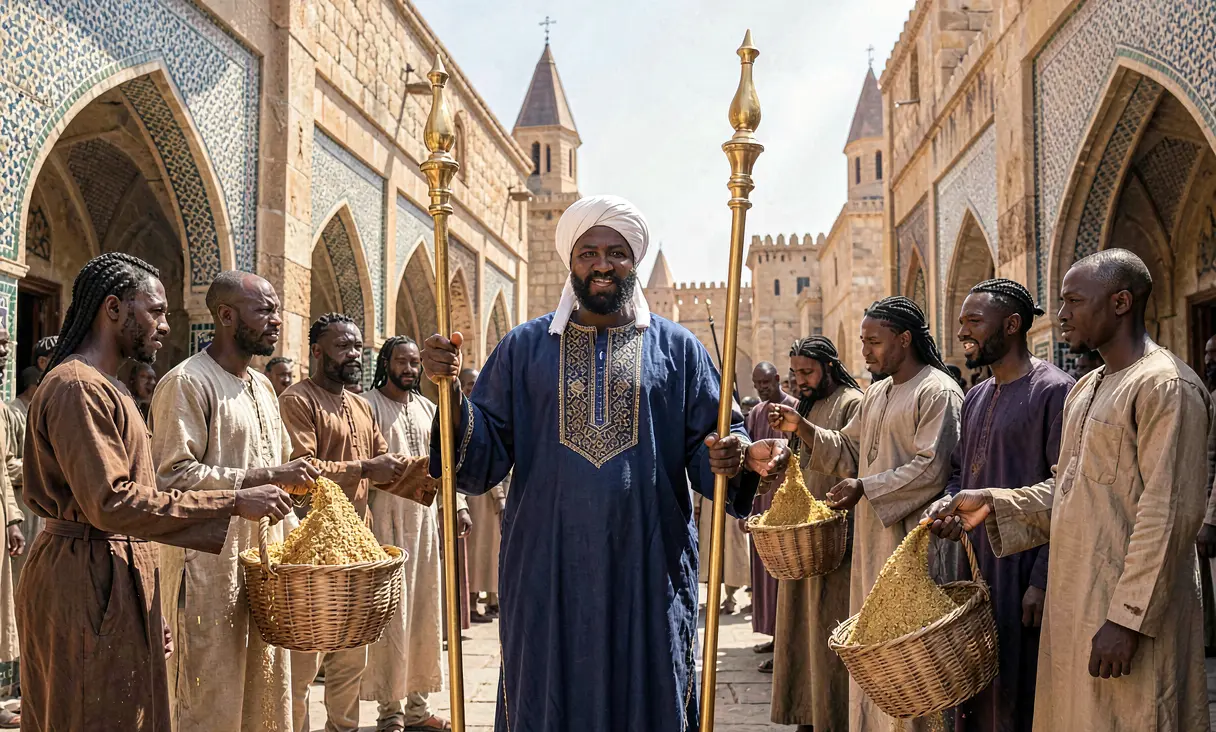 tradeMansa Musa's Pilgrimage and Gold Economy1324 CE · Cairo, Egypt (en route)Mansa Musa's pilgrimage disrupts gold markets in Cairo with massive displays of wealth.
 CivilizationFounding of Tenochtitlan1325 CE · Mexico City, MexicoAztecs build a magnificent island city on Lake Texcoco that becomes the largest in the Americas.
Discussion
Loading…