Peace of Westphalia
The Peace of Westphalia ended Europe's Thirty Years' War by establishing state sovereignty, creating the modern international system of independent nation-states and ending religious wars as drivers o
The Shadow of a Continent in Flames
By the mid-17th century, Central Europe lay in ruins after three decades of relentless conflict known as the Thirty Years' War. What began in 1618 as a religious revolt by Bohemian Protestants against Habsburg authority rapidly metastasized into a pan-European struggle for hegemony involving Spain, France, Sweden, and the Dutch Republic. The war was characterized not merely by battlefield maneuvers but by systematic plunder, famine, and disease that decimated populations; in some regions of the Holy Roman Empire, up to 50% of the populace perished. Simultaneously, the Eighty Years' War between Spain and the Dutch Republic dragged on, draining resources from both sides. The sheer scale of destruction created an unprecedented imperative for a comprehensive diplomatic solution that could address both religious schisms and geopolitical ambitions.
The Dual Negotiations at Münster and Osnabrück
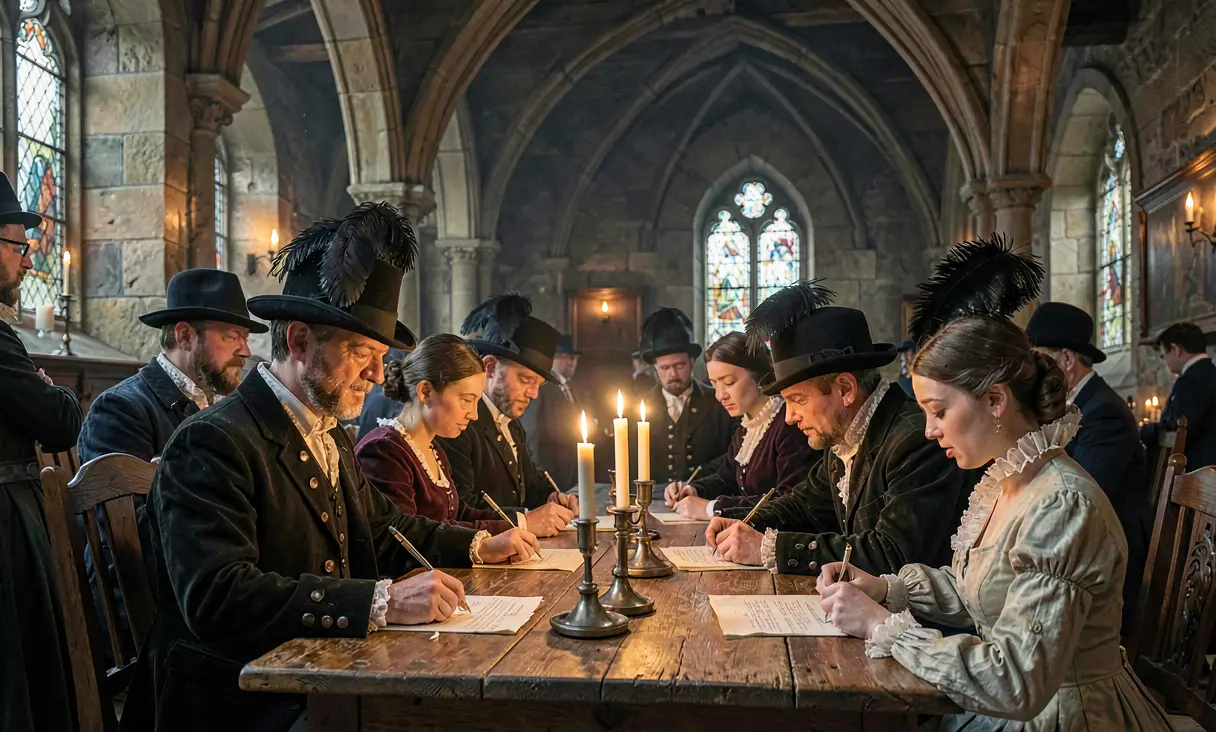
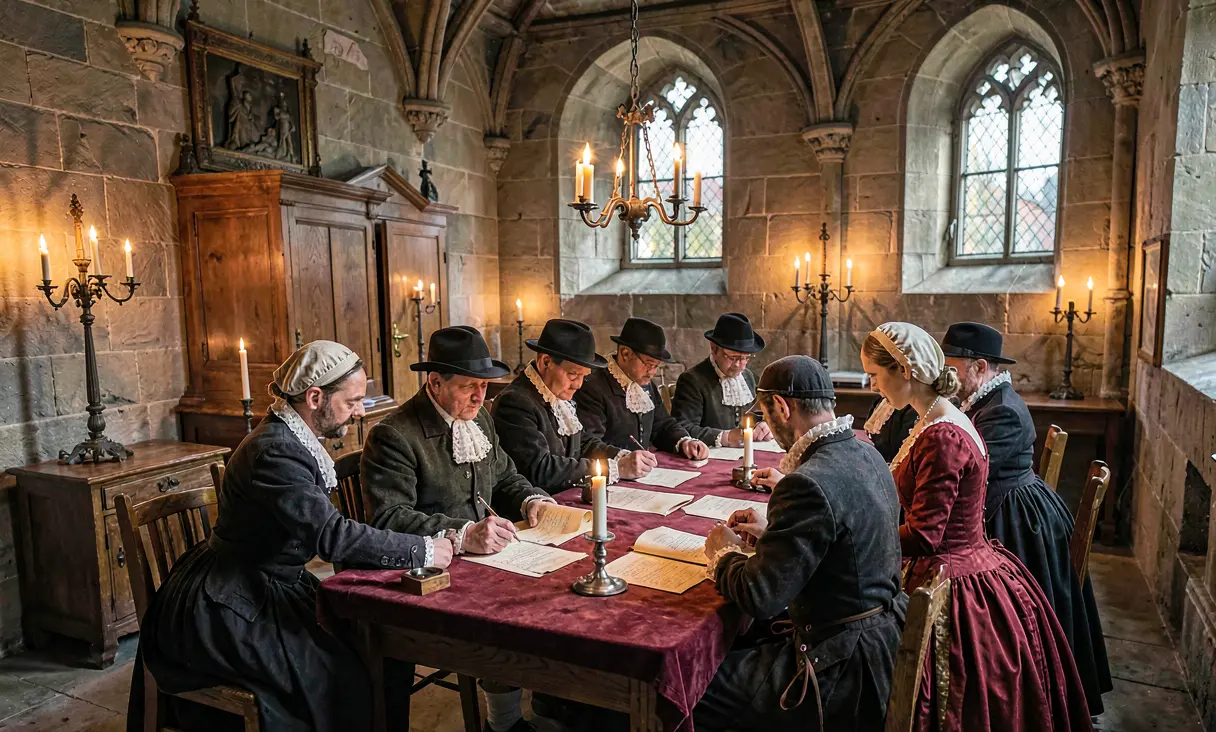
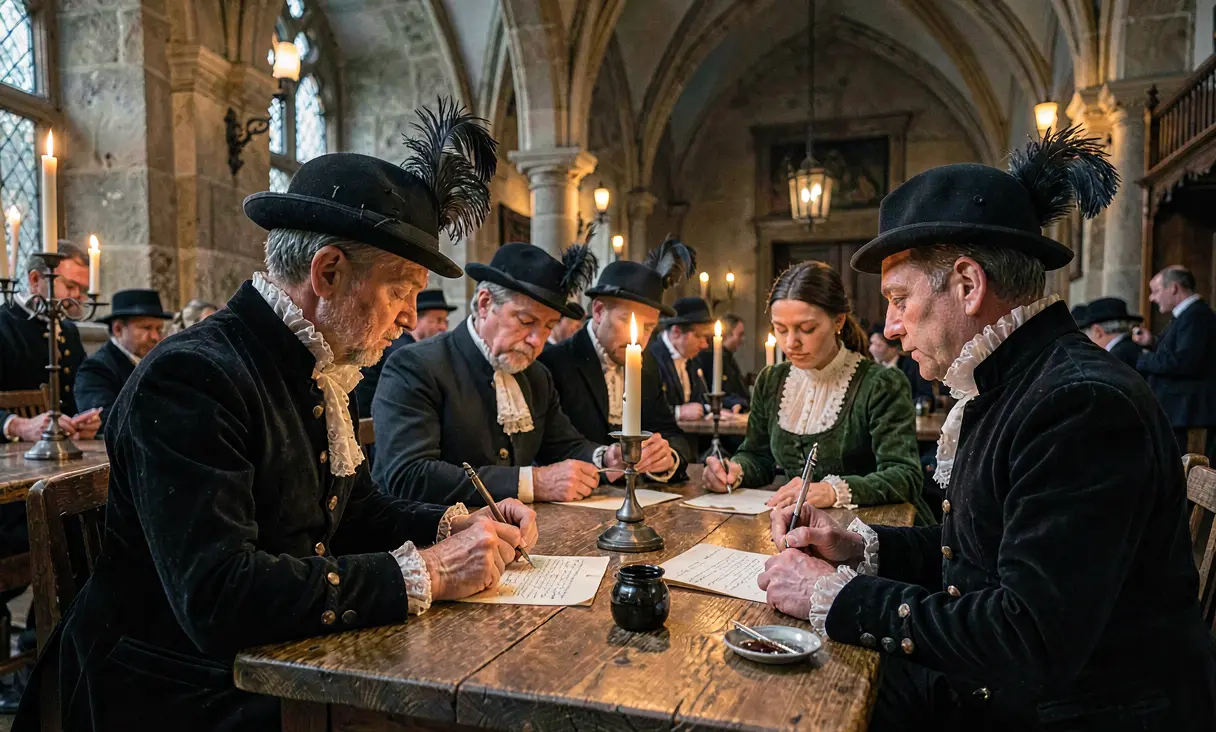
Unlike previous peace conferences held in a single location, the Peace of Westphalia was conducted through two parallel congresses running from 1645 to 1648. The Imperial Diet representatives, including Emperor Ferdinand III and his Catholic allies, met with French and Swedish delegates primarily in Münster, while negotiations concerning the Holy Roman Empire's internal structure and the Protestant cause took place in Osnabrück. This bifurcated approach allowed for complex, multi-layered diplomacy where the Thirty Years' War was settled alongside the Eighty Years' War. The proceedings were marked by grueling deliberations involving hundreds of diplomats, theologians, and legal scholars who had to reconcile centuries-old feudal rights with emerging concepts of national sovereignty.
Architects of a New Order
The negotiations were driven by a constellation of powerful figures whose rivalries shaped the outcome. Cardinal Mazarin, acting for France under Louis XIV, sought to dismantle Habsburg power and secure French borders, while Queen Christina of Sweden pushed for territorial gains in Northern Germany to ensure Baltic dominance. On the Imperial side, Emperor Ferdinand III was forced to accept significant concessions to end the war that threatened his dynasty's survival. Crucially, the Dutch Republic and Switzerland were formally recognized as independent sovereign states, separating them from the Holy Roman Empire. The presence of representatives from over a hundred distinct political entities within the Empire itself underscored the shift from a unified Christendom to a fragmented system of competing states.
The Treaties of Münster and Osnabrück
On October 24, 1648, the final agreements were signed: the Treaty of Münster between France and the Holy Roman Empire, and the Treaty of Osnabrück between Sweden and the Empire. These documents collectively ended the Thirty Years' War, while a separate treaty signed in Münster on the same day concluded the Eighty Years' War by recognizing Dutch independence from Spain. The treaties confirmed the Peace of Augsburg's principle of 'cuius regio, eius religio' (whose realm, his religion) but expanded it to include Calvinism alongside Lutheranism and Catholicism. Furthermore, they granted the Imperial Estates the right to form alliances with foreign powers, provided such alliances were not directed against the Emperor or the Empire, effectively neutering central imperial authority.
The Birth of State Sovereignty
The most profound legacy of Westphalia was the codification of state sovereignty. The treaties established that each state possessed exclusive jurisdiction over its own territory and population, immune to external interference in domestic affairs, particularly regarding religious practice. This marked a decisive break from the medieval ideal of a universal Christendom under the spiritual authority of the Pope or the temporal authority of the Holy Roman Emperor. Instead, Europe was reimagined as a system of legally equal, independent nation-states interacting through diplomacy and balance-of-power politics rather than dynastic or religious unity.
A Lasting Geopolitical Transformation
The immediate aftermath saw the Holy Roman Empire transformed into a loose confederation of nearly 300 semi-autonomous states, weakening it as a central power for two centuries. France emerged as the dominant continental power, having secured territory along the Rhine and the Pyrenees, while Sweden became a major Baltic power with significant German possessions. The Peace of Westphalia did not end all conflict in Europe, but it established a new diplomatic framework that prioritized territorial integrity and non-intervention. This 'Westphalian System' became the bedrock of international law and relations for centuries, influencing everything from the Congress of Vienna to the formation of the United Nations.
The Enduring Legacy
Historians often regard the Peace of Westphalia as the genesis of the modern international order. By prioritizing the concept of the sovereign state over religious or imperial unity, it created a stable, albeit competitive, framework for European diplomacy that prevented total hegemony by any single power for centuries. While the specific borders and alliances have shifted dramatically since 1648, the core principle that states are the primary actors in global politics remains the defining characteristic of international relations today. The event stands as a watershed moment where the chaos of religious warfare gave way to a structured system of secular statecraft.
It established the concept of national sovereignty and laid the foundation for the modern system of international relations.
Where it happened
Münster and Osnabrück, Germany — see it on the interactive map →
Explore related history
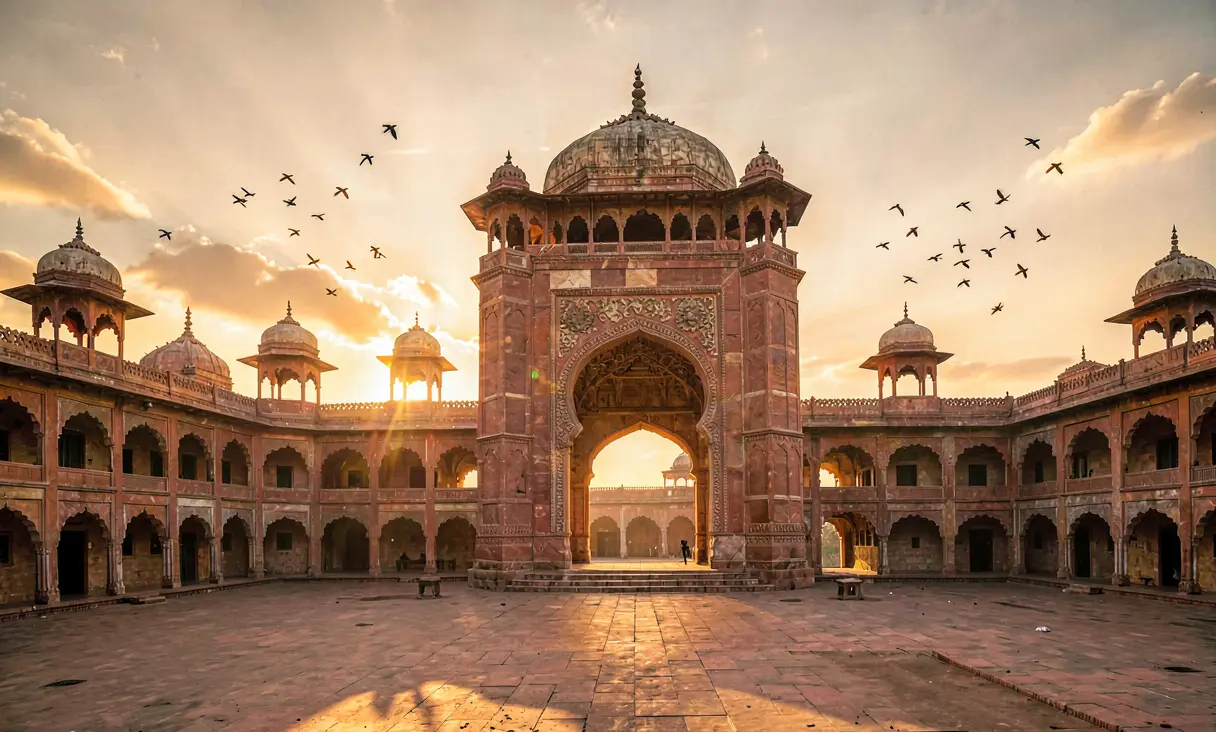 PoliticsFounding of Fatehpur Sikric. 1571 CE · Fatehpur Sikri, Uttar Pradesh, IndiaAkbar establishes Fatehpur Sikri as the new capital of the Mughal Empire to honor his spiritual guide and centralize administration.
 PoliticsShivaji Maharaj Coronation and Maratha Empirec. 1674 CE · Raigad Fort (modern Maharashtra/India)Chhatrapati Shivaji is crowned as the sovereign ruler of the Marathas, establishing an independent Hindu kingdom against Mughal dominance.
 PoliticsThe Glorious RevolutionNovember 5, 1688 · London, EnglandParliament invites William of Orange to depose James II, establishing constitutional monarchy.
 ArtConstruction of the Taj Mahal Beginsc. 1632 CE · Agra, Uttar Pradesh, IndiaShah Jahan commissions the Taj Mahal in memory of his wife Mumtaz Mahal, initiating one of history's greatest architectural projects.
 DisasterGreat Fire of LondonSeptember 2, 1666 · London, EnglandCatastrophic fire destroys medieval London, leading to major urban reconstruction.
 ReligionBirth of Bulleh Shahc. 1680 CE · Uch (modern Pakistan)The birth of Bulleh Shah, a pivotal Sufi poet who challenged religious orthodoxy and promoted universal love.
Discussion
Loading…