Timur's Sack of Delhi
Timur's 1398 sack of Delhi annihilated the Tughlaq dynasty, depopulated the capital, and created a power vacuum that eventually enabled the rise of the Mughal Empire.
The Fractured Tughlaq Realm
By the late 14th century, the Delhi Sultanate, once a formidable power under the Tughlaq dynasty, had succumbed to internal decay and administrative fragmentation. The reigning sultan, Nasir-ud-din Mahmud Shah, was a figurehead with little actual control over the fractious nobility or the vast territories of northern India. Simultaneously, in Central Asia, Amir Timur (Tamerlane) had consolidated his empire through ruthless campaigns, seeking to restore the glory of Genghis Khan's legacy. While Timur claimed no intention of permanent conquest in India, his ambition for plunder and the religious imperative of a jihad against what he perceived as heretical rule provided the pretext for invasion. Crossing the Indus River in September 1398, Timur's forces encountered little resistance initially, as local governors either fled or submitted without a fight, leaving the path to Delhi dangerously open.
The Clash at the Yamuna
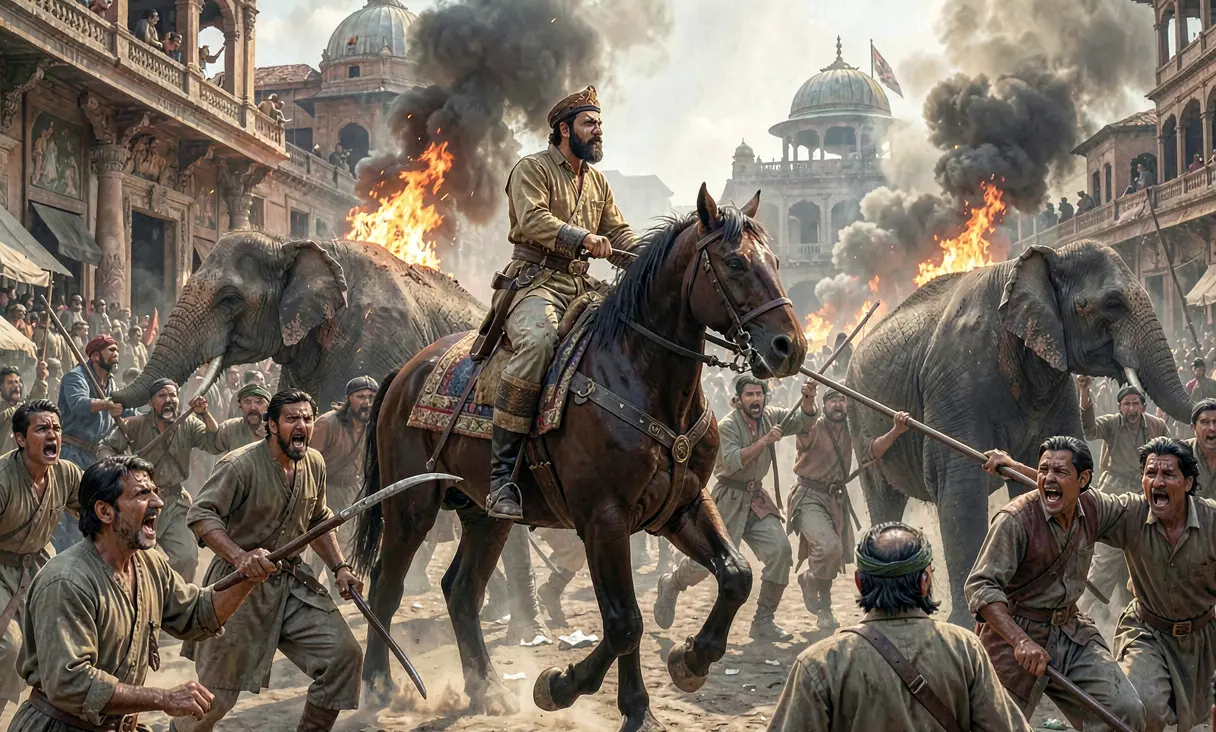
On December 17, 1398, the armies met on the plains east of Delhi. The Tughlaq forces, commanded by Malik Sarang and supported by a contingent of war elephants, vastly outnumbered Timur's disciplined cavalry. However, Timur had anticipated the psychological impact of the Indian elephants. He ordered his archers to target the animals' trunks with flaming arrows and utilized catapults to hurl burning projectiles into their ranks. Panic ensued among the beasts; turning on their own handlers and the infantry lines, they created chaos within the Sultanate's formation. Seizing this moment of disarray, Timur's light cavalry executed a classic flanking maneuver, decimating the confused Tughlaq army. The battle was short but decisive, resulting in the complete rout of the Delhi forces and the flight of Sultan Mahmud to Gujarat.
The Massacre and the Sack
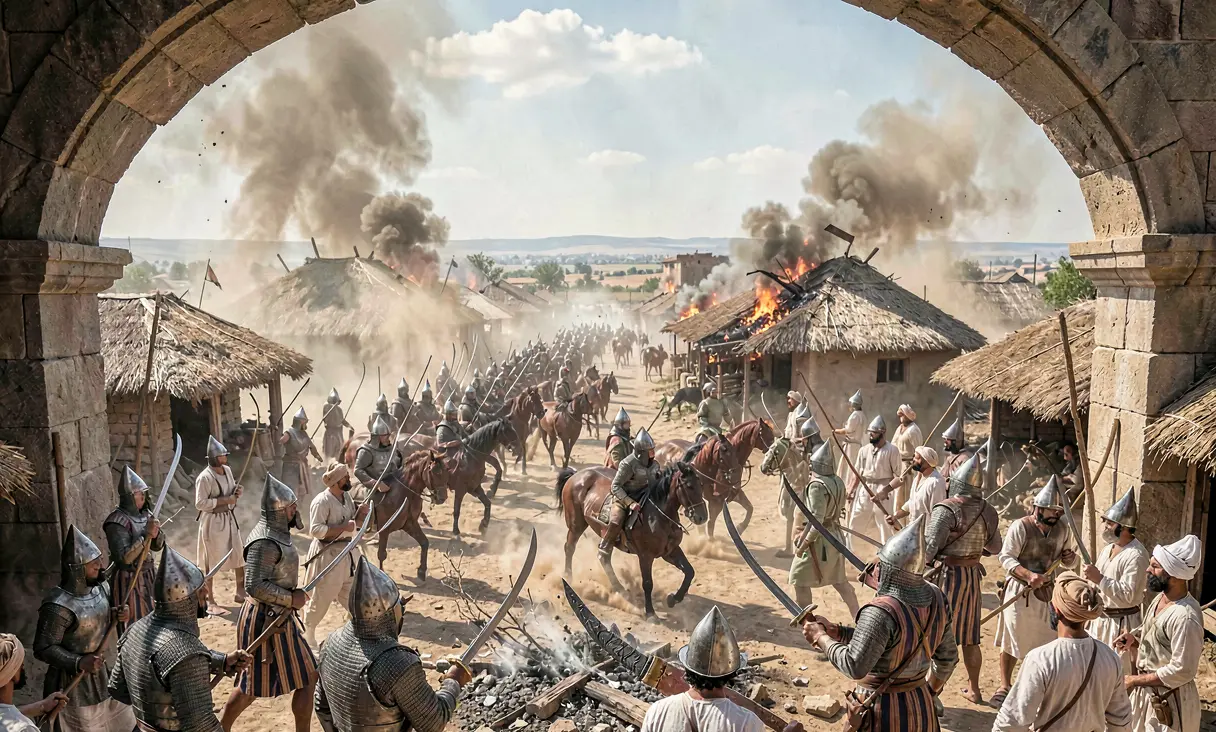
Following the victory, Timur faced a logistical dilemma: over 100,000 prisoners had been taken during the preceding weeks of campaigning. Fearing an uprising within his camp or that the prisoners might aid the retreating Sultanate forces, Timur issued a grim decree on December 18 to execute them all. The slaughter was indiscriminate and brutal, with thousands slain in a single day, their heads reportedly piled into towers—a macabre testament to Timur's terror tactics. Upon entering Delhi three days later, the city fell under a systematic looting that lasted for fifteen days. Timur's soldiers ransacked every quarter, seizing gold, silver, jewels, and artisans. The great mosques were stripped of their treasures, and the population was subjected to widespread violence, reducing the once-magnificent capital to a smoldering ruin.
Timur's Departure and the Power Vacuum
Despite the devastation, Timur had no intention of annexing Delhi or administering its complex governance. His primary objective was wealth extraction and the demonstration of power. In early 1399, he loaded his elephants with the spoils of war, including thousands of skilled artisans, architects, and scholars destined for Samarkand to embellish his own capital. As Timur's army marched back toward Central Asia, leaving behind a shattered city, the Tughlaq dynasty was left in ruins. The central authority evaporated, allowing regional governors and local chieftains to declare independence. The Sultanate fractured into competing petty states, marking the effective end of the first great era of Delhi's imperial power.
Long-Term Consequences for India
The sack of 1398 fundamentally altered the geopolitical landscape of the Indian subcontinent. The economic and demographic collapse was severe; contemporary chroniclers like Ibn Battuta (who had visited earlier) and later historians noted that Delhi remained a ghost town for years, its population decimated by massacre and famine. Politically, the vacuum paved the way for the rise of the Sayyid dynasty, a weak successor regime that struggled to hold the fragmented territories. More profoundly, the weakening of northern India's defenses created a strategic opening that would eventually be exploited by Timur's own descendant, Zahir-ud-din Muhammad Babur. The instability sown in 1398 directly facilitated the Mughal conquest of India less than a century later.
Legacy of Destruction
Timur's invasion remains one of the most catastrophic events in medieval Indian history, symbolizing the fragility of centralized power against nomadic military genius. While Timur did not establish a dynasty in India, his campaign demonstrated that the subcontinent was vulnerable to external incursions from the northwest. The event is remembered not for territorial expansion but for its sheer brutality and the transfer of immense cultural capital to Central Asia. The architectural legacy of this period includes the introduction of new Persianate styles brought back by the captured artisans, which would later influence Mughal architecture. However, the immediate memory of 1398 was one of trauma, leaving a scar on the collective consciousness of Delhi that persisted through centuries of subsequent invasions.
Timur's sack of Delhi effectively ended the Tughlaq dynasty and plunged North India into a period of fragmentation and chaos.
Where it happened
Delhi, India — see it on the interactive map →
Explore related history
 WarIslamic Conquest of the Sasanian Empire637 CE · Ctesiphon, Iraq (Persia)Arab Muslim forces defeat the Sasanian Empire at the Battle of al-Qadisiyyah, ending centuries of Persian rule.
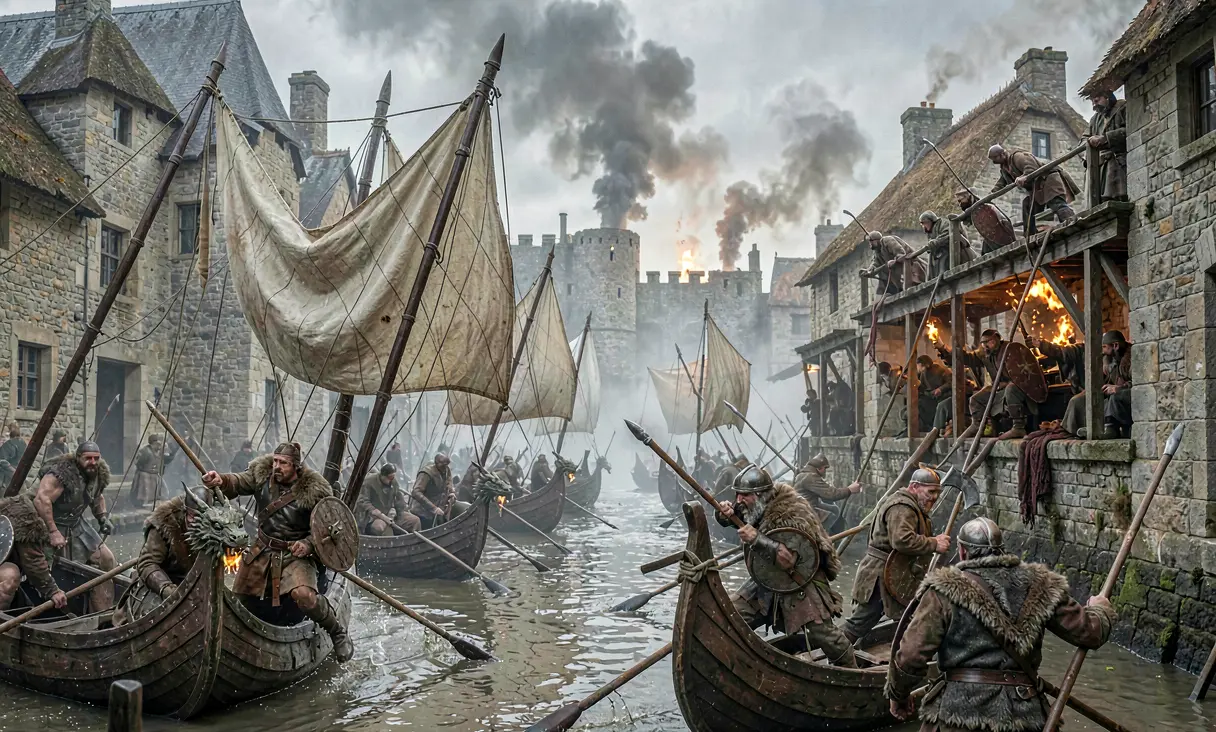 WarViking Siege of Paris885 CE · Paris, FranceViking raiders led by Sigfred besiege Paris for over a year, testing the defenses of West Francia.
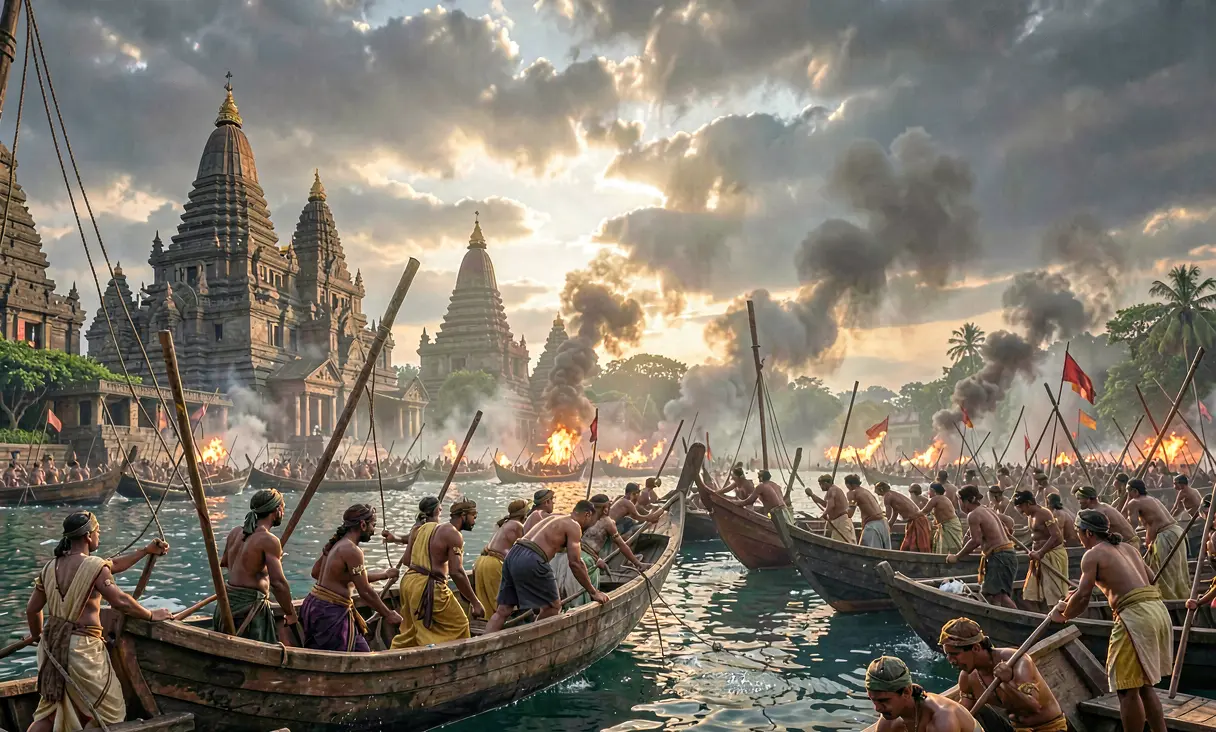 WarChola Conquest of Sri Lankac. 993 CE · Anuradhapura, Sri LankaRajaraja Chola launches a massive amphibious invasion of Sri Lanka, defeating the Sinhalese kingdom and annexing the island.
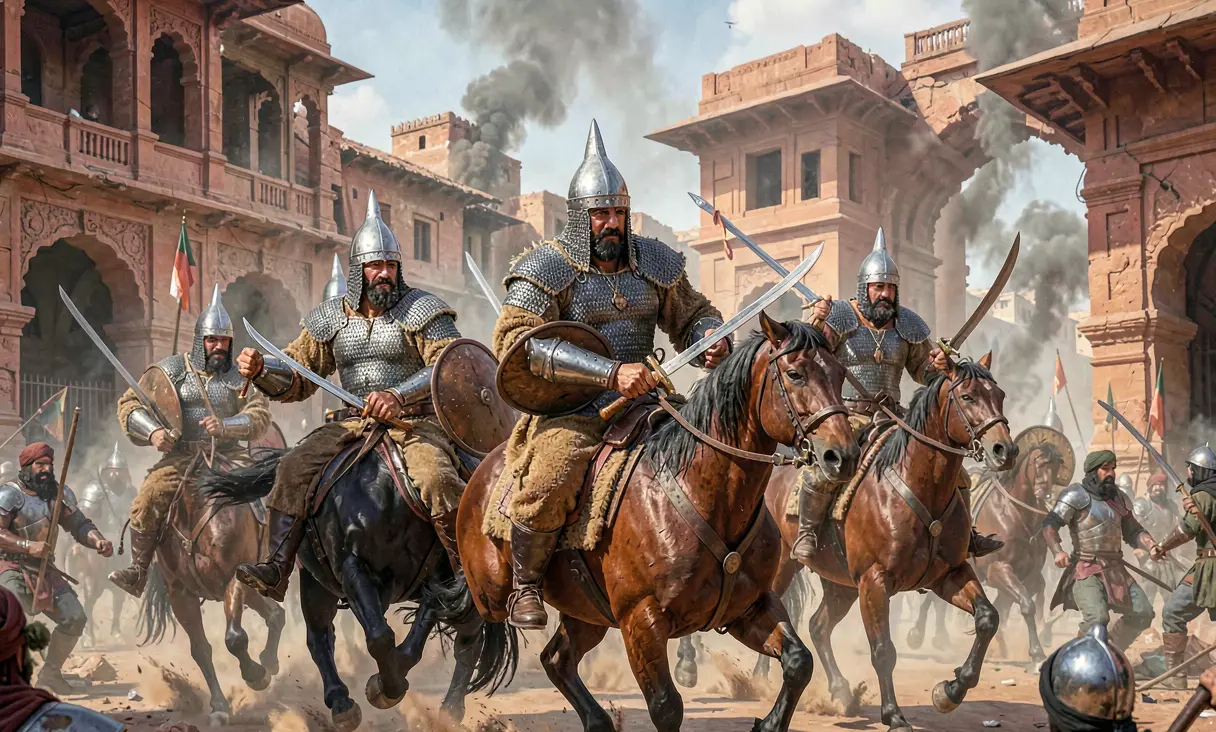 WarRise of Timur (Tamerlane) and Conquest of Delhi1398 CE · Delhi, IndiaTimur invades the Delhi Sultanate, sacking the city and temporarily ending Mamluk rule in Northern India.
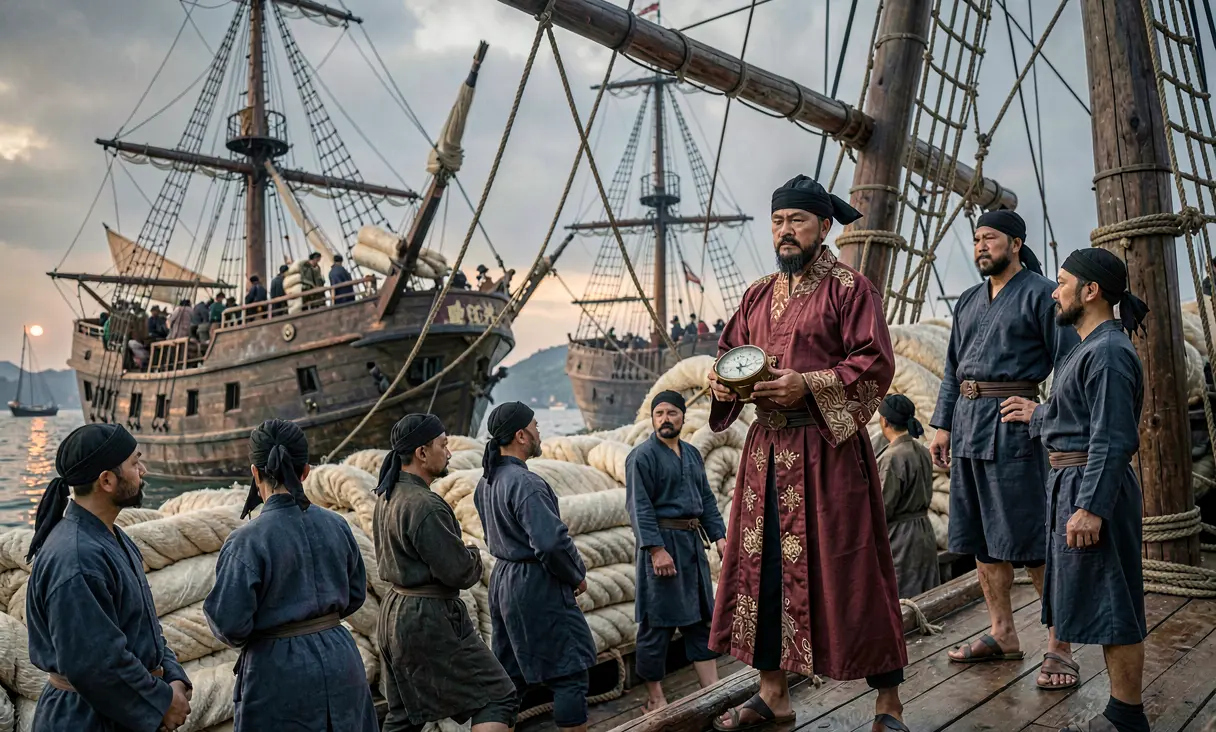 ExplorationZheng He's First Voyage BeginsJuly 11, 1405 CE · Nanjing, ChinaChinese admiral leads massive fleet to Southeast Asia and Africa projecting Ming power.
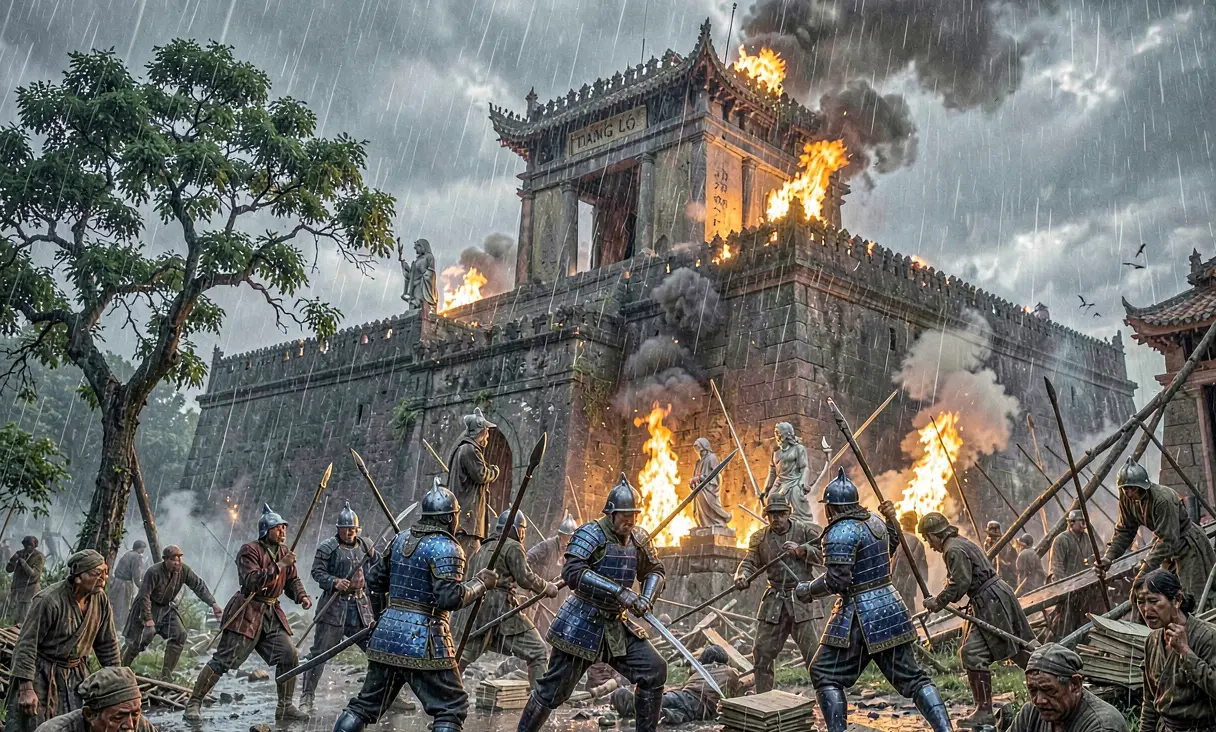 WarMing Conquest of Dai Viet (Fourth Era)1407 CE · Hanoi (Thang Long), VietnamMing forces capture the Ho Dynasty and annex Vietnam.
Discussion
Loading…