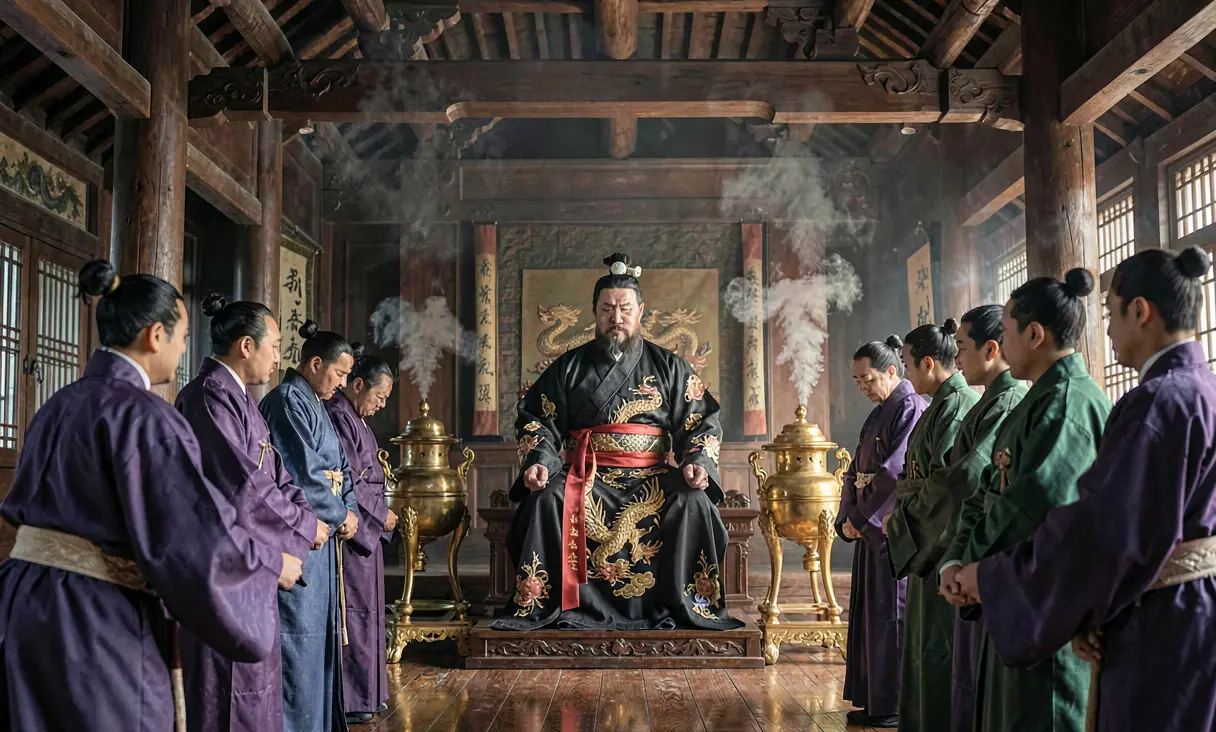
Emperor Xuanzong Ascends the Tang Throne
Emperor Xuanzong's 712 ascension launched the Tang Dynasty's golden age of cultural brilliance before his later mismanagement triggered a rebellion that permanently altered Chinese history.
A Dynasty in Flux
By the early 8th century, the Tang Dynasty stood at a precarious juncture. The reign of Empress Wu Zetian had ended just two decades prior, leaving behind a court fractured by factionalism and regicide. Her successors, including Emperor Zhongzong and the short-lived Emperor Ruizong, struggled to maintain control against powerful consort families and ambitious generals. In 710, Li Longji, the third son of Ruizong, had already demonstrated his political acumen by leading a coup that deposed Empress Wei, restoring his father to the throne. However, the court remained unstable; Empress Dowager Wei's faction was purged, but power struggles between the emperor and his son intensified as Li Longji proved more capable than his aging father.
The Abdication of 712
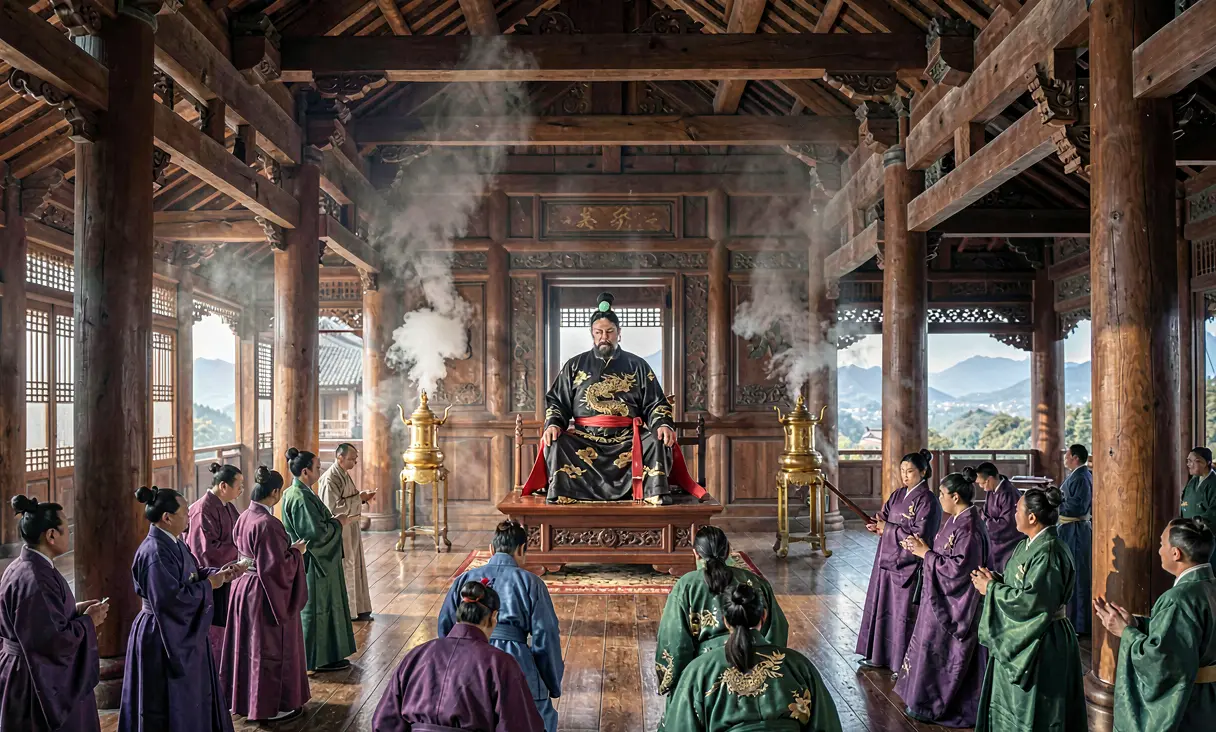
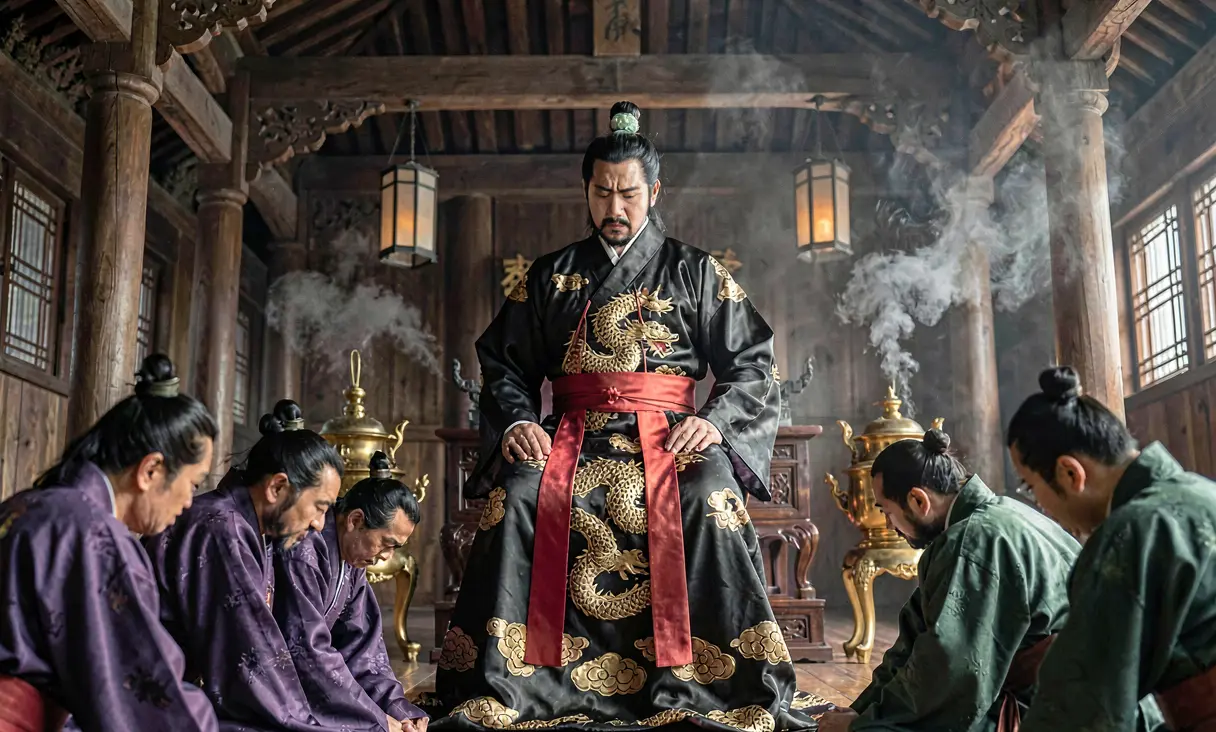
In the summer of 712 CE, a celestial anomaly—a comet appearing in the sky for several weeks—was interpreted by court astrologers as an omen demanding a change in rulership. Seizing this moment, Li Longji pressured his father, Emperor Ruizong, to abdicate. On September 8, 712, Ruizong formally yielded the throne to Li Longji, who ascended as Emperor Xuanzong (posthumously known as Minghuang). Unlike previous successions marked by bloodshed or coercion from external factions, this transition was orchestrated within the imperial family itself, though it effectively stripped Ruizong of real power while retaining the title of Taishang Huang (Retired Emperor) for a time. The coronation took place in the majestic Daming Palace in Chang'an, marking the beginning of what would become known as the Kaiyuan Era.
Architects of Stability
Emperor Xuanzong's early reign was defined by his selection of exceptionally competent ministers who reversed decades of administrative decay. He appointed Yao Chong, a seasoned statesman known for his pragmatism, as chancellor in 713. Yao immediately implemented sweeping reforms: he curbed the power of Buddhist monasteries that had accumulated excessive land and tax exemptions, reorganized the military to address border threats from the Turks and Tibetans, and streamlined the civil service examination system. Following Yao's departure, Song Jing succeeded him, bringing a different but equally vital focus on moral integrity and legal consistency. Together, these ministers established a meritocratic bureaucracy that prioritized efficiency over nepotism, laying the financial and military groundwork for the dynasty's golden age.
The Kaiyuan Zenith
The period from 713 to 741, known as the Kaiyuan Era, witnessed an unprecedented flourishing of culture, economy, and cosmopolitanism. Under Xuanzong's patronage, Chang'an became the largest city in the world, a vibrant hub where merchants, monks, and diplomats from Persia, India, Korea, and Japan mingled freely. The arts reached new heights; poets like Li Bai and Du Fu composed verses that would define Chinese literature for millennia, while painters such as Wu Daozi revolutionized religious and landscape art. Economically, the state enjoyed record agricultural yields and a stable currency, fueled by efficient tax collection and infrastructure projects along the Grand Canal. This era represented the apex of Tang power, projecting an image of imperial benevolence that attracted tribute from distant lands.
The Seeds of Decay
Despite his early brilliance, Xuanzong's later reign sowed the seeds of the dynasty's eventual collapse. As he grew older, the emperor withdrew from active governance, increasingly relying on eunuchs and favorites to manage state affairs. The appointment of Li Linfu as chancellor in 734 marked a turning point; Li was a capable administrator but ruthlessly suppressed political rivals and marginalized the military governors (jiedushi) who had been strengthened to defend the borders. His successor, the concubine Yang Guifei's cousin Yang Guozhong, further exacerbated tensions through corruption and incompetence. Crucially, Xuanzong placed excessive trust in An Lushan, a Sogdian-Turkic general of mixed heritage, granting him command over three massive frontier armies, a decision that would soon ignite the catastrophic An Lushan Rebellion.
Legacy and Historical Weight
The ascension of Emperor Xuanzong in 712 CE stands as one of the most pivotal moments in Chinese history, bookending an era that defined East Asian civilization for centuries. The Kaiyuan-Tianbao period set the standard for imperial governance, artistic achievement, and cultural exchange, influencing neighboring states like Japan and Korea in profound ways. However, the dramatic fall from grace during the An Lushan Rebellion (755–763) serves as a timeless cautionary tale about the fragility of power when leadership becomes complacent. While the Tang Dynasty survived the rebellion, it never fully regained its former glory, making Xuanzong's reign the definitive high-water mark and subsequent turning point in the trajectory of medieval China.
His reign represents the cultural and economic peak of pre-modern Chinese civilization before the An Lushan Rebellion.
Where it happened
Chang'an, China — see it on the interactive map →
Explore related history
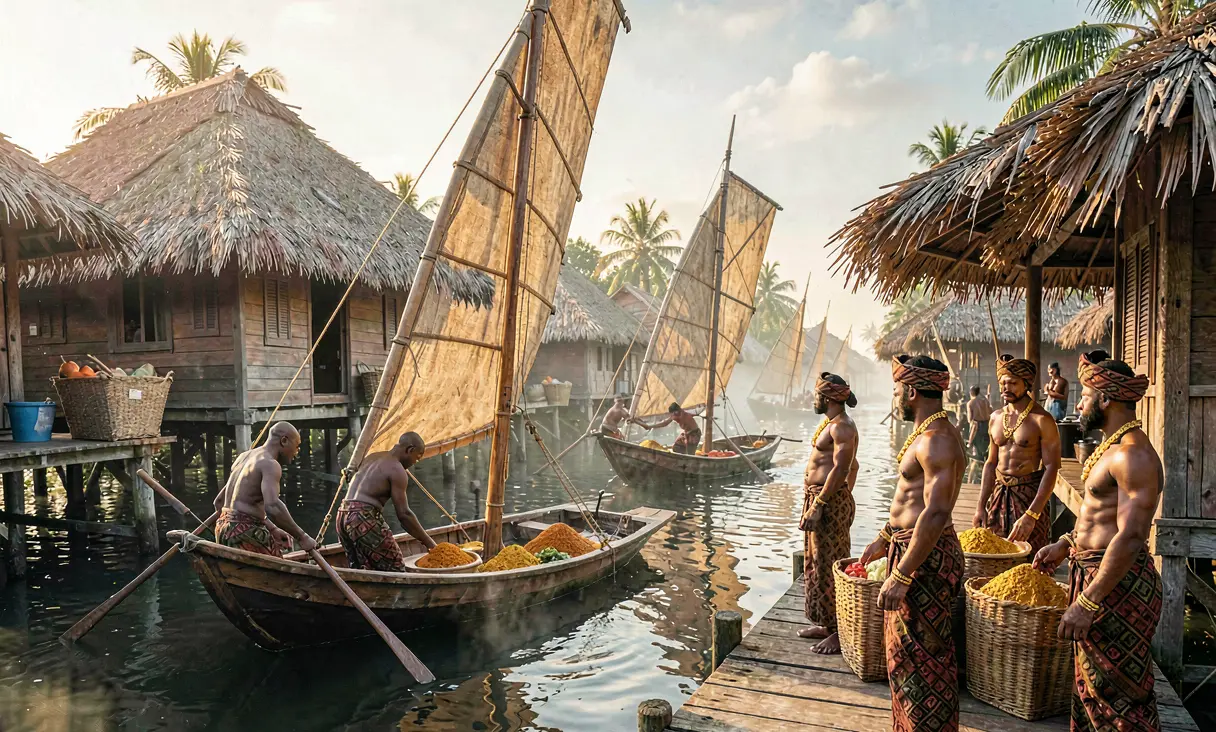 PoliticsRise of Srivijaya as Maritime Hegemon683 CE · Palembang, Sumatra (Modern Indonesia)Srivijaya emerges as the dominant maritime empire controlling the Strait of Malacca.
 PoliticsFounding of Heian-kyo794 CE · Kyoto, JapanEmperor Kammu moves the capital to Heian-kyo, beginning the Heian period.
 PoliticsJayavarman II Declares Khmer Independence802 CE · Phnom Kulen, CambodiaJayavarman II proclaims himself a universal monarch, founding the Khmer Empire.
 ArtTang Dynasty Golden Age of Poetry and Culturec. 713 CE · Chang'an, ChinaThe Tang Dynasty reaches its cultural zenith in Chang'an, producing legendary poets like Li Bai and Du Fu.
 TechnologyInvention of Greek Fire by Kallinikosc. 673 CE · Constantinople, TurkeyByzantine engineers develop a liquid incendiary weapon that burns on water.
 ReligionStandardization of the Quranic Textc. 650 CE · Medina (and Damascus), Arabia/SyriaCaliph Uthman commissions the definitive written codex of the Quran.
Discussion
Loading…