Burial of the Sutton Hoo Ship
The c. 625 CE Sutton Hoo ship burial reveals the sophistication of King Rædwald's East Anglian court through unparalleled goldwork and Byzantine trade goods, shattering myths of a culturally barren Da
Context of the Early Anglo-Saxon Kingdoms
In the early seventh century, the British Isles were a patchwork of competing Germanic kingdoms emerging from the collapse of Roman authority. The kingdom of East Anglia, situated in what is now Suffolk, had risen to prominence under the Wuffing dynasty, a lineage that claimed descent from the god Woden. By c. 625 CE, this region was not merely a remote outpost but a nexus of international trade and political maneuvering. The elite class navigated a complex cultural landscape, blending traditional pagan warrior values with the encroaching influence of Christianity, which had been reintroduced to England by missionaries from Rome and Ireland. It was within this volatile yet vibrant milieu that the concept of kingship was being redefined through displays of immense wealth and artistic sophistication.
The Discovery of Mound 1
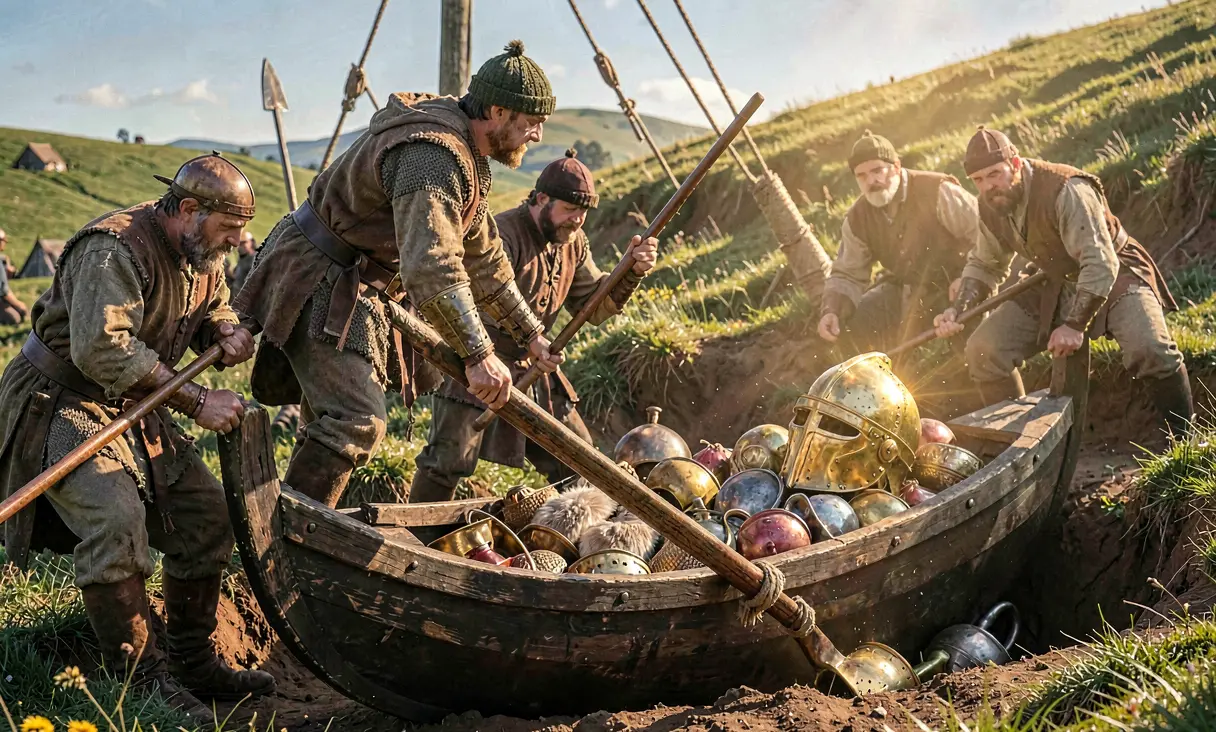
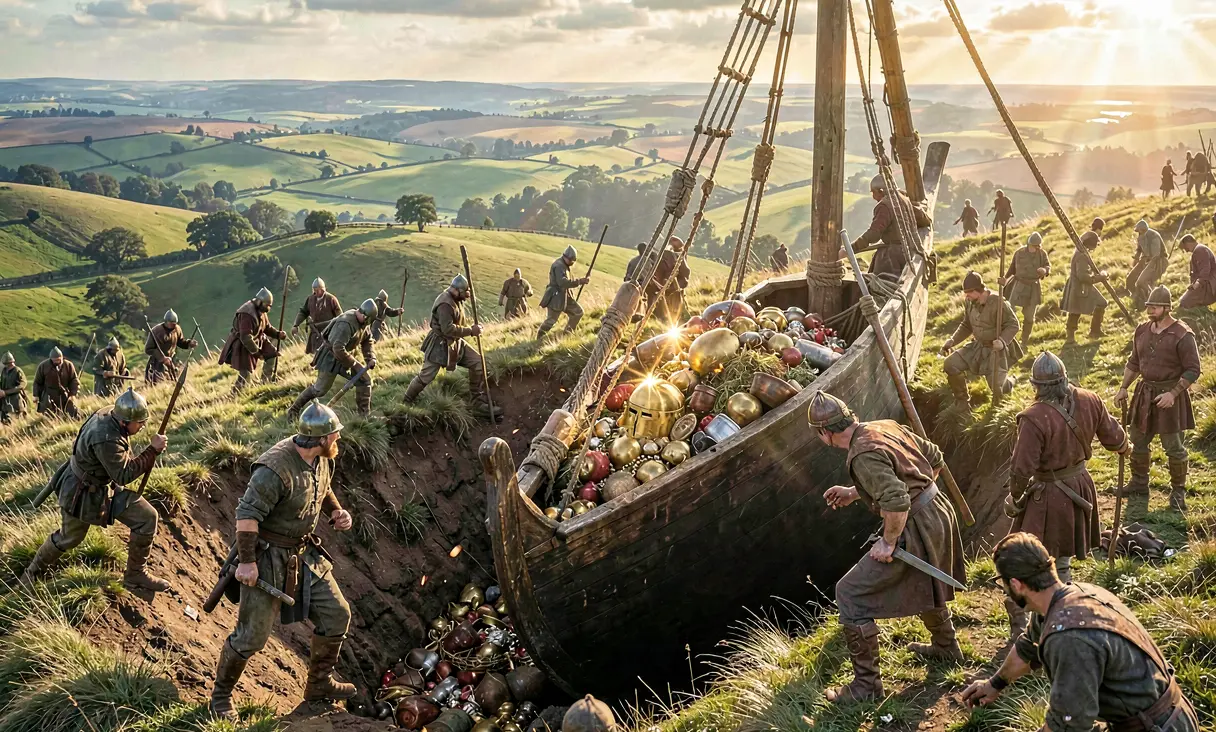
Centuries later, in 1939, archaeologists led by Basil Brown uncovered a structure that would revolutionize the understanding of the Dark Ages. Beneath the largest of the burial mounds at Sutton Hoo lay the impression of a massive ship, approximately 27 meters (89 feet) in length, constructed from oak planks riveted together with iron nails. Although the wood had long since decayed due to the acidic soil, the rust stains left behind by the metal fastenings preserved the vessel's exact dimensions and construction technique. The ship had been dragged overland to this specific site on a ridge overlooking the River Deben, then lowered into a trench and covered with earth to create a monumental tomb. This was not a simple grave but a ceremonial vessel intended to transport the deceased into the afterlife.
The Identity of the Interred Ruler
While no human skeleton survived the acidic conditions, the sheer scale and opulence of the contents point unequivocally to the burial of a supreme ruler. Historical records identify King Rædwald of East Anglia (died c. 624/625) as the most probable occupant. Bede, the Venerable historian, described Rædwald as the fourth king to hold the title of Bretwalda, or overlord of southern Britain. The grave goods reflect a man who straddled two worlds: the gold and garnet cloisonné work speaks to Germanic heroic tradition, while the presence of silver bowls from Byzantium and liturgical objects suggests familiarity with Christian rites. Rædwald's unique position as a king who maintained a pagan temple alongside a Christian altar is mirrored in this burial, which serves as a physical manifestation of his dual religious allegiance.
The Artistry of the Grave Goods
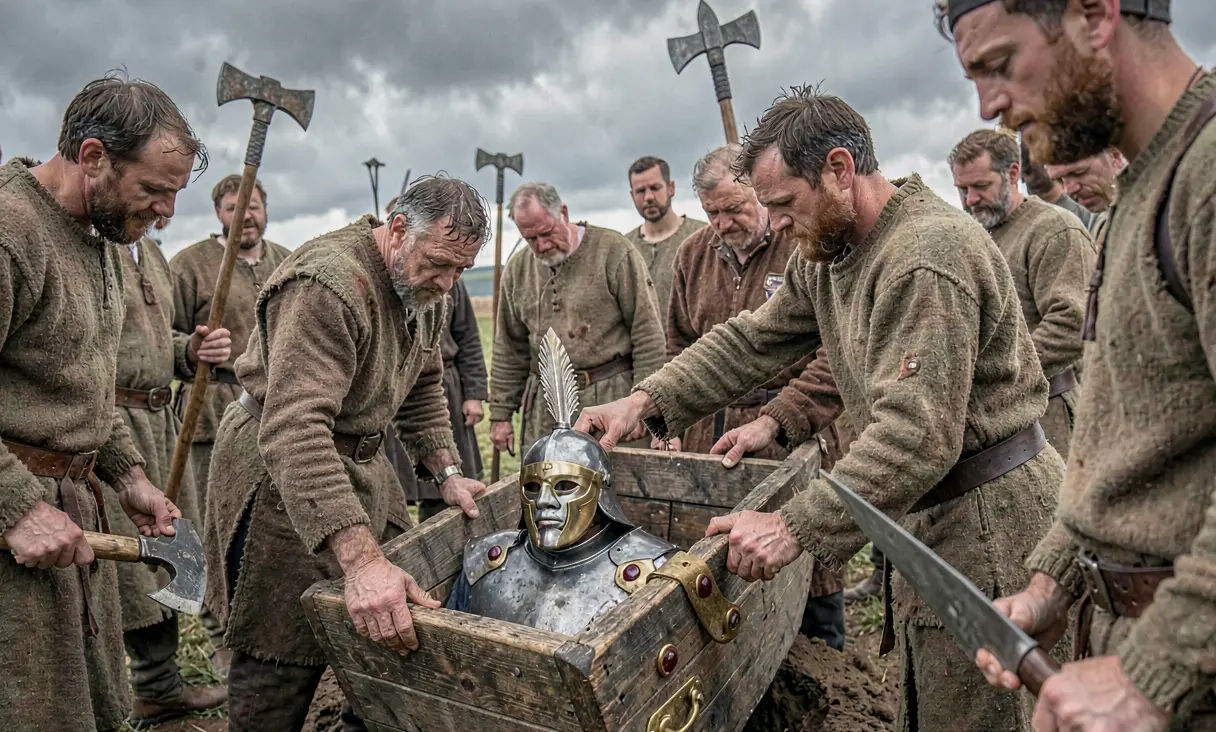
The artifacts recovered from Mound 1 represent the pinnacle of early medieval craftsmanship. Central to the collection is the iconic iron helmet, reconstructed from over 500 fragments, featuring a face mask, cheek guards, and a crest adorned with intricate animal interlace patterns that evoke both protection and divine power. The burial also yielded a purse lid encrusted with gold foil and garnets depicting a warrior fighting two wolves, a motif deeply rooted in Germanic mythology. Other treasures included a set of silver spoons inscribed with the names Saul and Paul, likely a baptismal gift, and six silver bowls stamped with Byzantine emperors from the reign of Anastasius I to Justin II. These objects were not merely decorative; they were symbols of status, authority, and connection to distant imperial powers.
The Ritual of Entombment
The burial itself was a complex ritual event involving the interment of the ship and its contents. The vessel was filled with a staggering array of goods: weapons such as spears, shields, and a sword in a gold-hilted scabbard; dining sets for feasting in the afterlife; and musical instruments like lyres. The arrangement suggests a deliberate staging of power, where the king sits at the head of his ship, surrounded by the tools of war, governance, and diplomacy. The presence of animal sacrifices, including horses and dogs, further underscores the pagan elements of the ceremony. Once filled, the ship was covered with a massive mound of earth, creating a permanent monument that dominated the landscape for over a millennium, serving as a silent testament to the might of the Wuffing dynasty.
Legacy and Historical Significance
The excavation of Sutton Hoo fundamentally altered the historical narrative of early medieval Europe. Prior to 1939, the period was often dismissed as a 'Dark Age' devoid of culture or sophistication. The discovery proved that Anglo-Saxon society possessed advanced metallurgical skills, extensive trade networks reaching the Mediterranean and Scandinavia, and a rich artistic tradition capable of rivaling contemporary continental courts. It provided the first tangible evidence of the literary world described in epics like Beowulf, bridging the gap between oral tradition and material reality. Today, the artifacts housed at the British Museum stand as global icons of early medieval art, reminding us that the roots of English identity are deeply intertwined with a cosmopolitan, wealthy, and artistically vibrant past.
The Sutton Hoo find revolutionized understanding of Dark Age England as a period of sophisticated artistry and international connection.
Where it happened
Suffolk, England — see it on the interactive map →
Explore related history
 ArtCreation of Maya Polished Obsidian Mirrorsc. 600 CE · Guatemala (Maya Lowlands)Artisans craft polished obsidian mirrors for divination and ritual use.
 ArtTang Dynasty Golden Age of Poetry and Culturec. 713 CE · Chang'an, ChinaThe Tang Dynasty reaches its cultural zenith in Chang'an, producing legendary poets like Li Bai and Du Fu.
 ArtMacedonian Renaissance in Byzantiumc. 920 CE · Constantinople, TurkeyThe Byzantine Empire experiences a cultural revival with renewed interest in classical learning and artistic production.
 ReligionHijra of Prophet MuhammadSeptember 24, 622 CE · Medina, Saudi ArabiaMuhammad migrates to Medina establishing the first Muslim community and calendar.
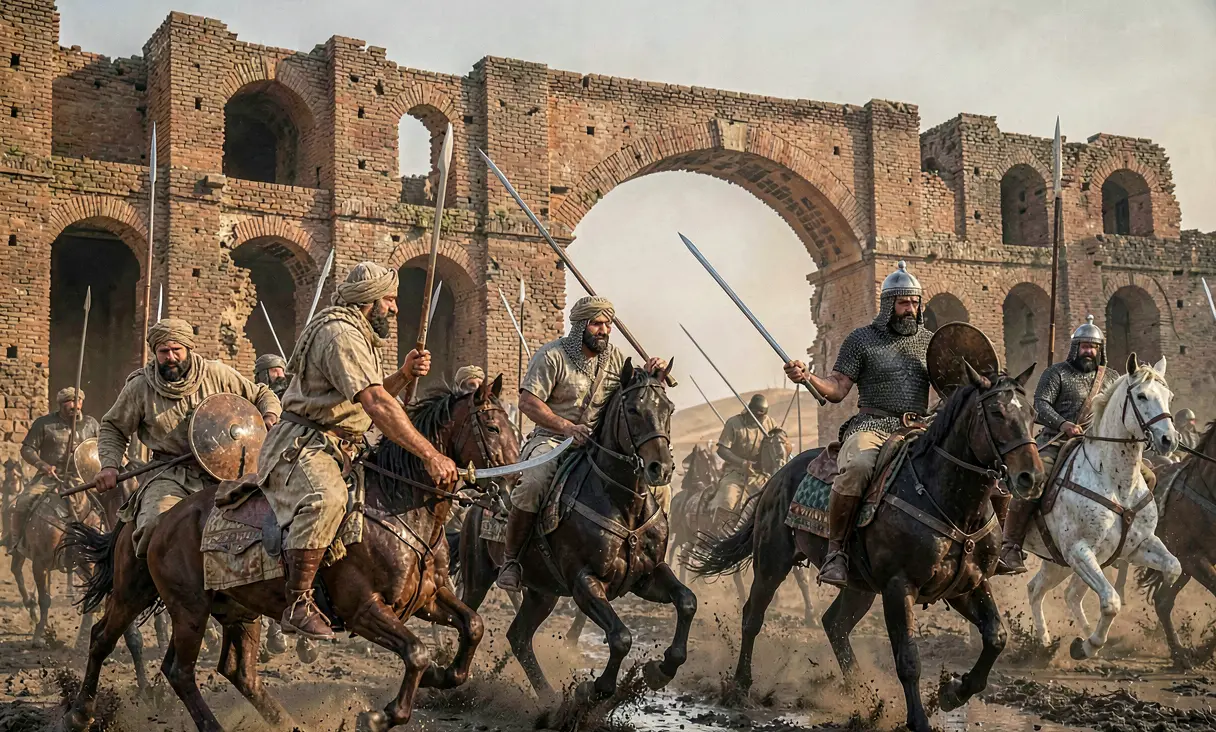 WarIslamic Conquest of the Sasanian Empire637 CE · Ctesiphon, Iraq (Persia)Arab Muslim forces defeat the Sasanian Empire at the Battle of al-Qadisiyyah, ending centuries of Persian rule.
 ReligionStandardization of the Quranic Textc. 650 CE · Medina (and Damascus), Arabia/SyriaCaliph Uthman commissions the definitive written codex of the Quran.
Discussion
Loading…