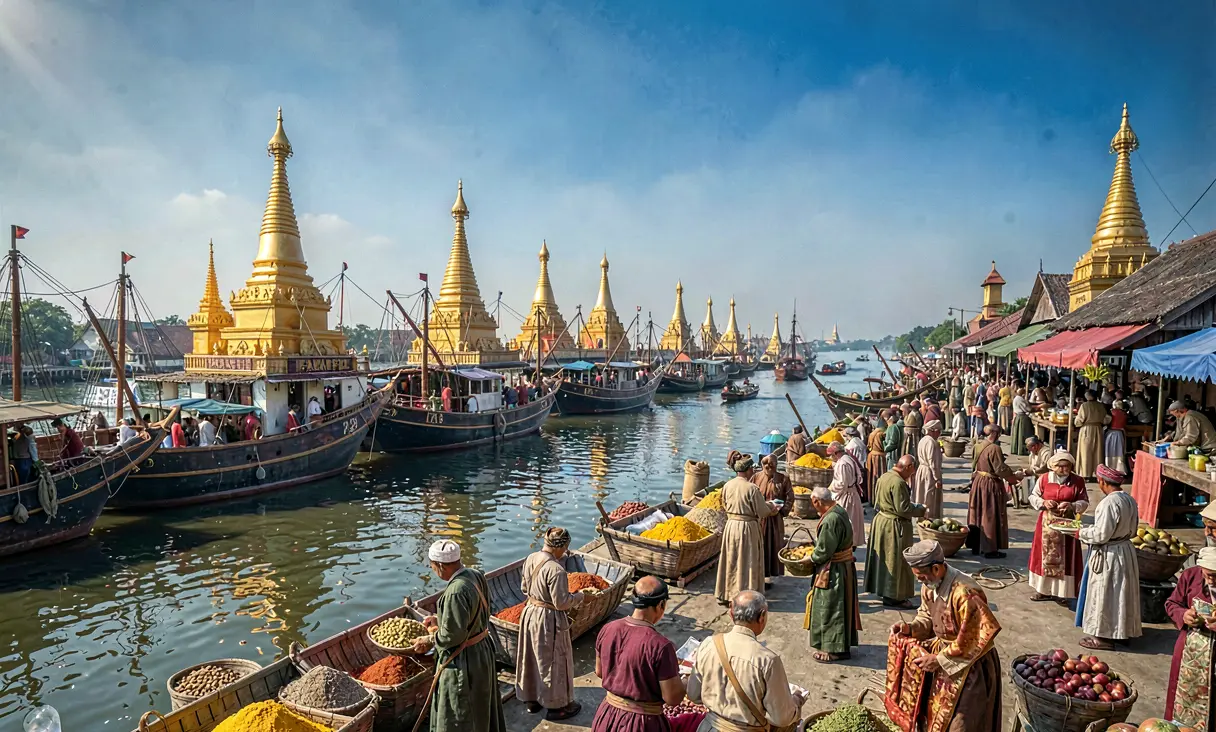
Srivijaya at its Zenith
Around 1000 CE, Srivijaya dominated the Strait of Malacca as a wealthy Buddhist hub and maritime superpower before its decline following Chola invasions.
The Rise of the Thalassocracy
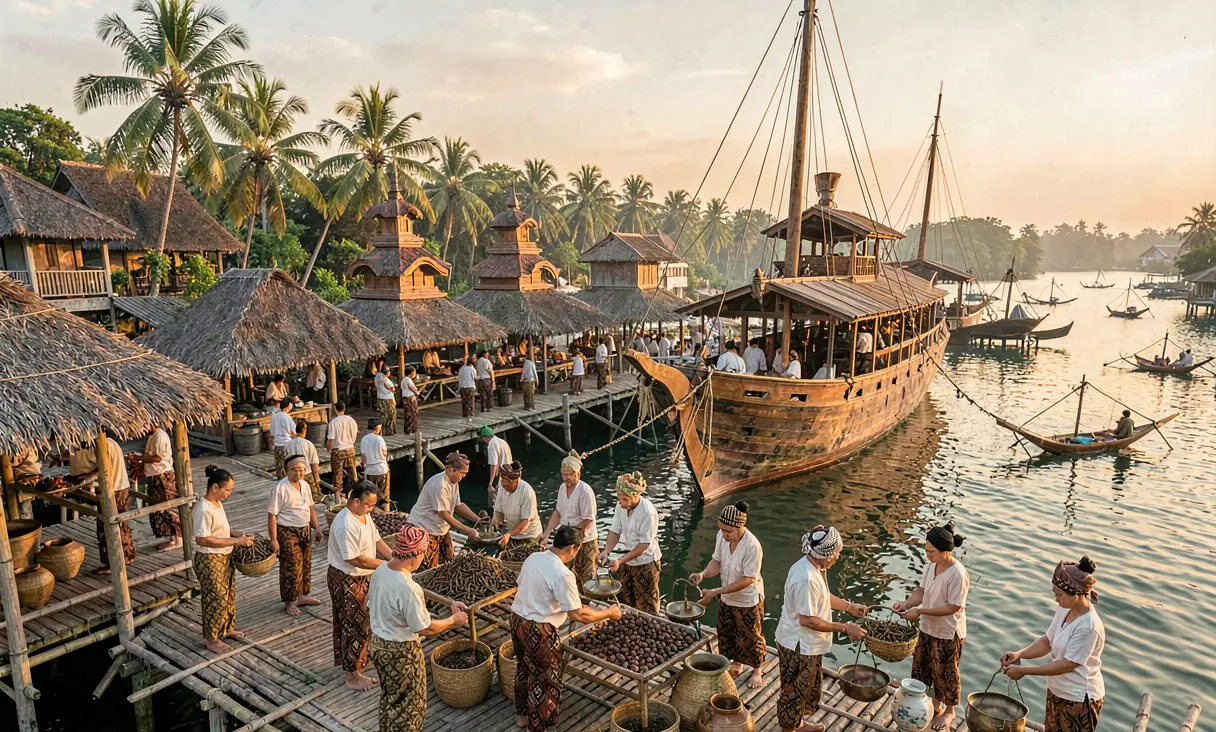
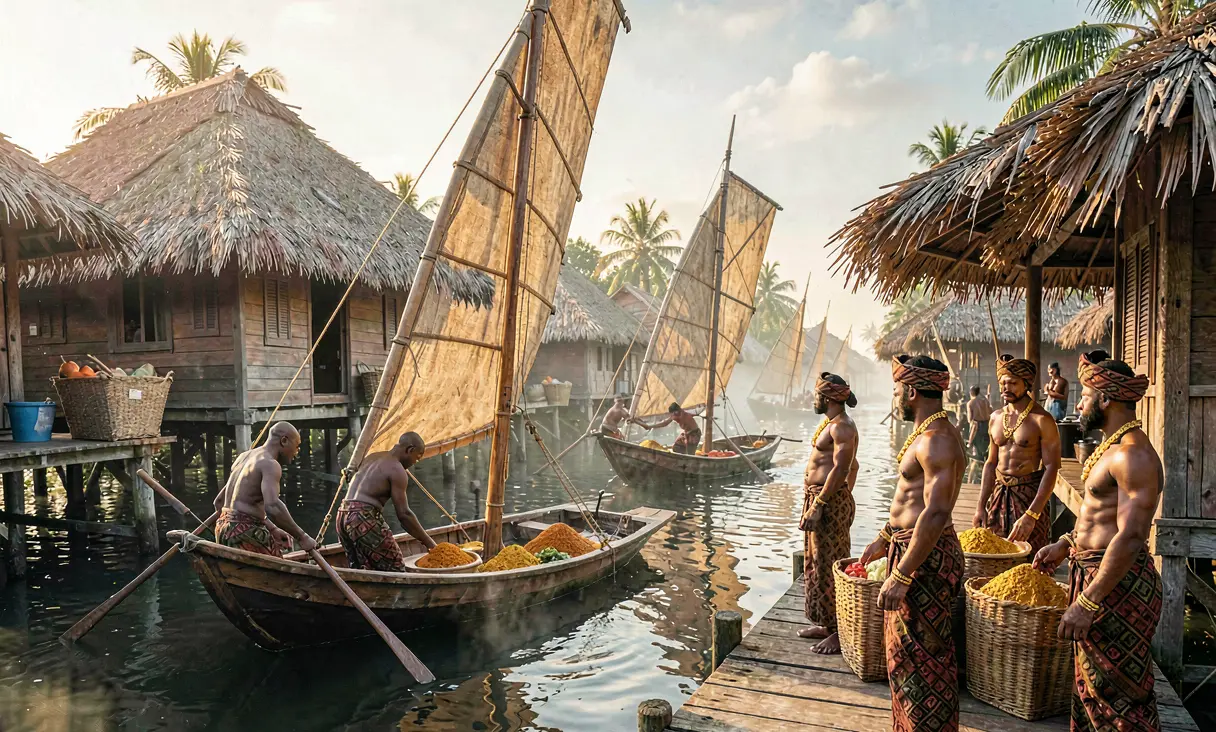
By the turn of the first millennium CE, the maritime empire of Srivijaya had transcended its origins as a local polity in southern Sumatra to become the undisputed hegemon of Southeast Asia. Centered in Palembang, the kingdom's power was not derived from vast territorial conquests on land, but from its absolute mastery of the Strait of Malacca and the Sunda Strait. These narrow waterways served as the critical choke points connecting the Indian Ocean trade routes with the South China Sea, funneling a constant stream of Chinese silk, Indian spices, and Middle Eastern glassware through Srivijayan waters. The Sailendra dynasty, having consolidated power in the late 8th century, perfected a system of naval coercion that allowed them to levy tolls on virtually every vessel passing through their domain, transforming the kingdom into an economic powerhouse without the need for a massive standing army.
The Zenith of Power and Wealth
Around 1000 CE, under the reign of rulers such as Sri Cudamaniwarmadewa (often identified with the king mentioned in the Leiden inscription), Srivijaya reached its apogee. The wealth accumulated from maritime tariffs was staggering, funding a sophisticated bureaucracy and an elite navy capable of projecting power across the archipelago. This era saw the construction of magnificent Buddhist monasteries and stupas in Palembang, turning the capital into a glittering hub of religious architecture that rivaled contemporary centers in India. The kingdom's influence extended from the Malay Peninsula down to Java and parts of Borneo, creating a 'Mandala' of loose political allegiance where local chieftains acknowledged Srivijayan suzerainty in exchange for protection and access to the lucrative trade network.
A Global Crossroads of Faith
Beyond its military and economic dominance, 10th and early 11th-century Srivijaya emerged as the premier center for Mahayana Buddhist scholarship in the world. The kingdom's strategic location made it a natural stopping point for monks traveling between India and China. Most notably, the Chinese pilgrim Yijing (I-tsing) resided in Palembang from 671 to 695 CE, documenting the city as a place where hundreds of scholars studied Sanskrit grammar and Buddhist philosophy. By 1000 CE, this tradition had deepened; Srivijaya hosted renowned Indian masters who traveled there to teach, effectively making it a bridge between Indian intellectual traditions and East Asian religious development. The royal court actively patronized these exchanges, commissioning translations of sutras and sending envoys to India to acquire sacred relics.
Diplomacy with the Song Dynasty
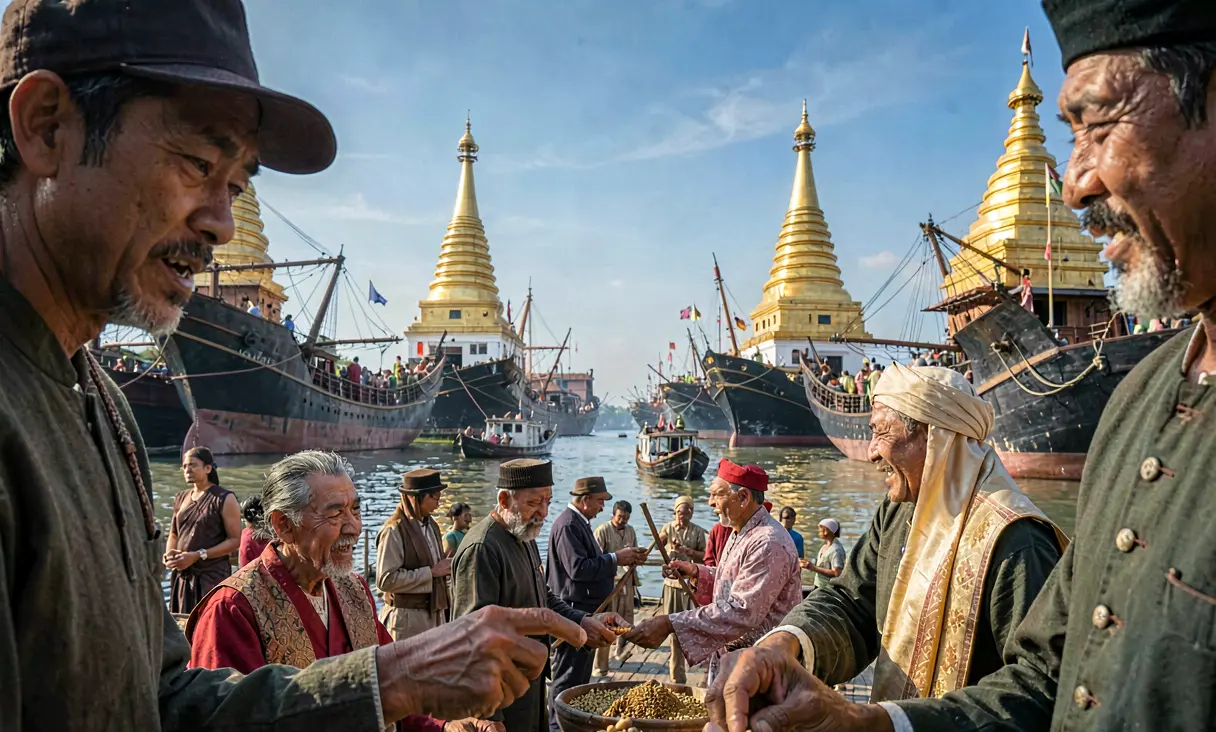
The zenith of Srivijaya was marked by intense diplomatic engagement with the rising Song dynasty in China. Records from the Song court detail frequent missions sent by Srivijayan kings, often bearing exotic gifts such as ivory, rhinoceros horn, and tortoise shells to secure favorable trade terms and imperial recognition. In 988 CE, a mission led by a high-ranking official arrived at the Song capital of Kaifeng, followed by another in 1003 CE which resulted in the Emperor bestowing the title 'King of Srivijaya' upon the local ruler. This diplomatic dance was crucial; it legitimized Srivijaya's monopoly on trade in the eyes of its most important customer while ensuring that Chinese merchants continued to favor Palembang over rival ports, reinforcing the kingdom's status as the indispensable middleman of Asian commerce.
The Seeds of Decline
Despite this golden age, the very structure of Srivijaya's power contained the seeds of its eventual decline. The empire relied heavily on a fragile balance of coercion and patronage; as trade routes shifted or rival ports like Chola India began to challenge their dominance, the system became vulnerable. In 1025 CE, just decades after this zenith, the Chola Emperor Rajendra I launched a devastating naval raid against Srivijaya, sacking Palembang and capturing its king. This attack exposed the limits of Srivijayan naval power when faced with a determined external adversary and shattered the illusion of invincibility that had protected their strait monopoly for centuries.
Legacy of the Maritime Empire
The legacy of Srivijaya at its zenith endures as a foundational chapter in Southeast Asian history, defining the region's trajectory toward maritime integration. It established the precedent that political power in the archipelago could be derived from controlling sea lanes rather than agricultural hinterlands, a model that would influence subsequent states like Majapahit and Malacca. Furthermore, its role as a cultural crucible ensured the widespread adoption of Mahayana Buddhism across the region before the later arrival of Islam. The wealth and cosmopolitanism of 1000 CE Palembang remain a testament to a time when Southeast Asia was not merely a periphery of global trade, but its vibrant, central engine.
It represents the height of maritime trade dominance in the Indian Ocean world.
Where it happened
Palembang, Sumatra (Modern Indonesia) — see it on the interactive map →
Explore related history
 PoliticsRise of Srivijaya as Maritime Hegemon683 CE · Palembang, Sumatra (Modern Indonesia)Srivijaya emerges as the dominant maritime empire controlling the Strait of Malacca.
 PoliticsEmperor Xuanzong Ascends the Tang Throne712 CE · Chang'an, ChinaEmperor Xuanzong begins his reign, ushering in the High Tang golden age.
 PoliticsFounding of Heian-kyo794 CE · Kyoto, JapanEmperor Kammu moves the capital to Heian-kyo, beginning the Heian period.
 ExplorationLeif Erikson's Voyage to Vinlandc. 1000 CE · L'Anse aux Meadows, Newfoundland, CanadaLeif Erikson establishes a short-lived Norse settlement in North America, five centuries before Columbus.
 TechnologyUse of Astrolabes for Celestial Navigation by Arab Sailorsc. 1000 CE · Jeddah, Saudi ArabiaArab navigators utilize refined astrolabes to cross the Indian Ocean.
 WarChola Conquest of Sri Lankac. 993 CE · Anuradhapura, Sri LankaRajaraja Chola launches a massive amphibious invasion of Sri Lanka, defeating the Sinhalese kingdom and annexing the island.
Discussion
Loading…