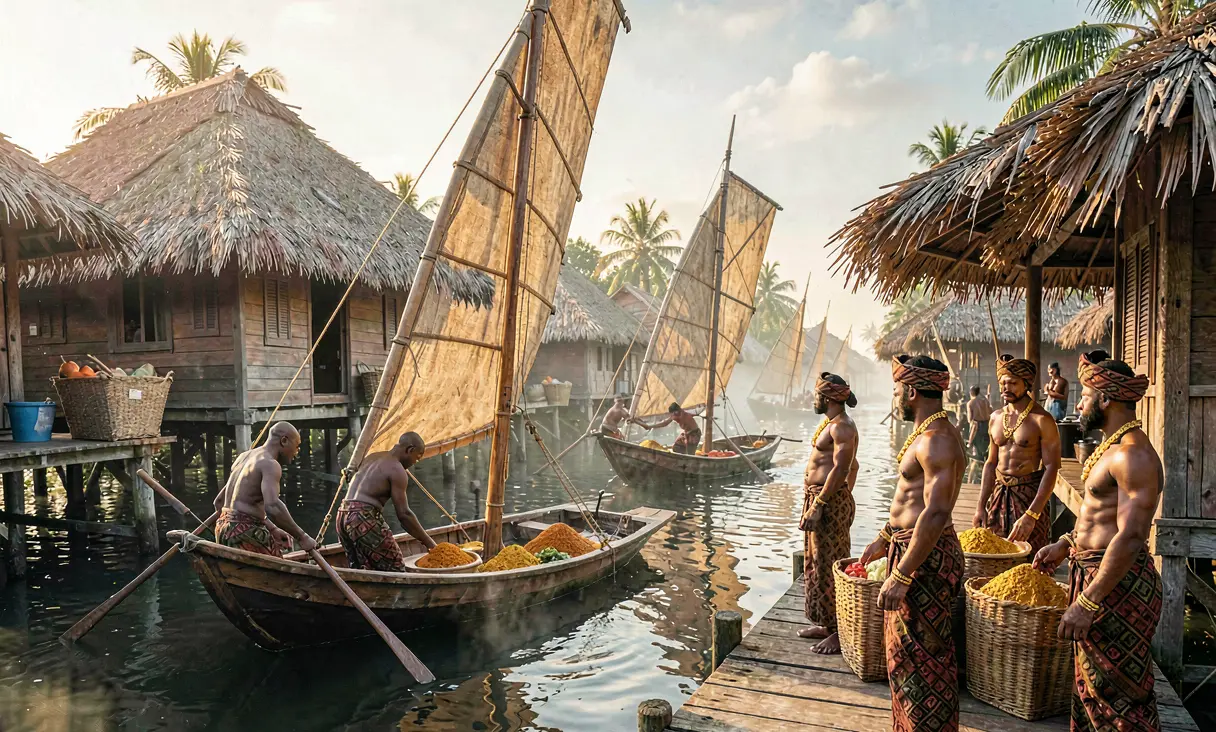
Rise of Srivijaya as Maritime Hegemon
In 683 CE, Dapunta Hyang Sri Jayanasa launched a decisive naval campaign from Palembang to forge Srivijaya, establishing a six-century maritime empire that controlled global trade and became a premier
Strategic Genesis of the Thalassocracy
In the late seventh century, the geopolitical landscape of Southeast Asia was undergoing a profound transformation driven by the escalating demand for maritime trade between the Tang Dynasty in China and the Gupta and later Pala dynasties in India. The Strait of Malacca and the Sunda Strait emerged as the critical choke points connecting these two economic giants, necessitating a powerful local authority to ensure safe passage and regulate commerce. By 683 CE, the polity centered in Palembang on the island of Sumatra had evolved from a collection of competing riverine settlements into a cohesive thalassocracy known as Srivijaya. This rise was not merely a regional shift but a restructuring of global trade networks, establishing a maritime hegemon that would dominate the archipelago for six centuries.
The Kedukan Bukit Inscription and Military Consolidation
The definitive moment of Srivijaya's consolidation is recorded in the Kedukan Bukit inscription, discovered near Palembang and dated to Saka 605 (683 CE). This Sanskrit text, written in Pallava script, commemorates a *siddhayatra* or successful military expedition led by Dapunta Hyang Sri Jayanasa. The inscription details how the ruler, accompanied by 20,000 soldiers and a vast entourage of 131 foot soldiers and 812 horsemen, traveled by boat to secure the allegiance of surrounding territories. This display of naval power was instrumental in subduing rival polities and establishing Palembang as the undisputed capital. The expedition marked the transition from a loose confederation to a centralized state capable of projecting force across the archipelago, securing the vital waterways against piracy and competing kingdoms.
Dapunta Hyang Sri Jayanasa: Architect of Empire
Dapunta Hyang Sri Jayanasa stands as the foundational figure of Srivijayan imperial power. Unlike later rulers who were often depicted primarily as religious patrons, Jayanasa is remembered first and foremost as a conqueror and state-builder. His title, 'Dapunta Hyang,' suggests a synthesis of political and spiritual authority, positioning him as both a warrior-king and a divine intermediary. Through his leadership, he unified the disparate Malay-speaking communities along the Musi River basin and extended his influence over the strategic straits. His ability to mobilize such a significant naval force in 683 CE demonstrates an advanced administrative capacity and resource management that was unparalleled in the region at the time.
Control of the Spice Route and Economic Hegemony
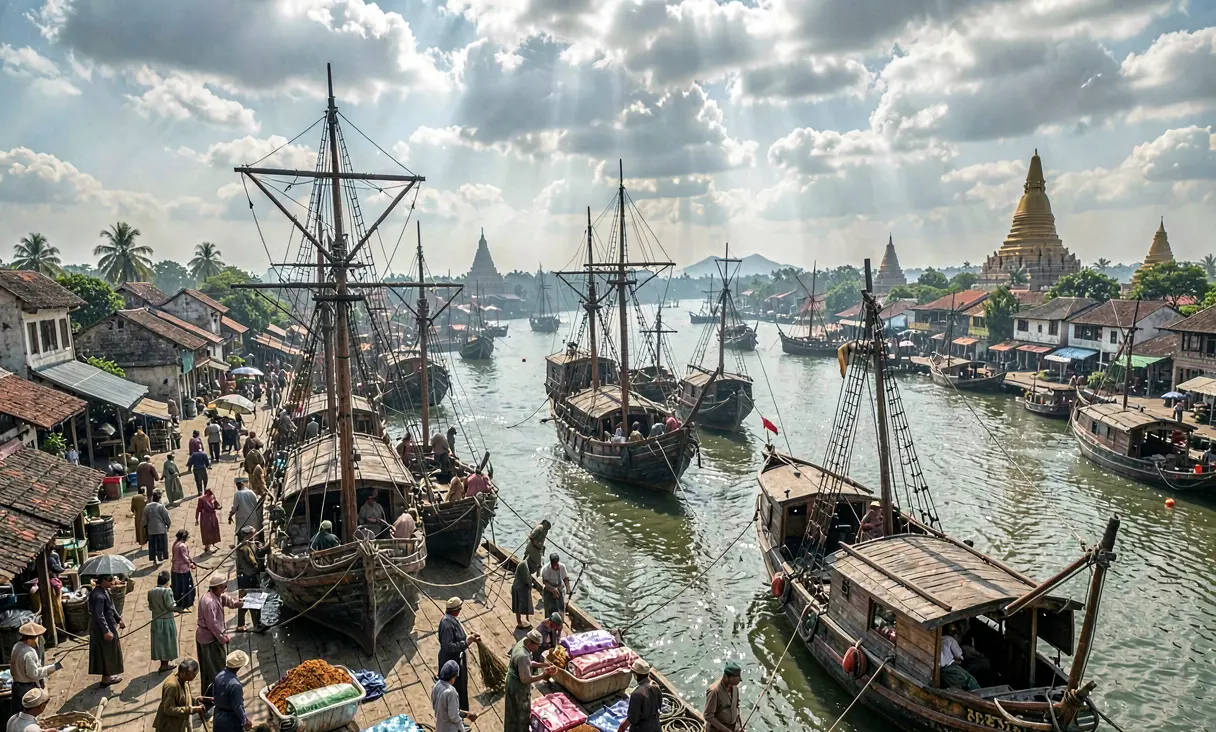
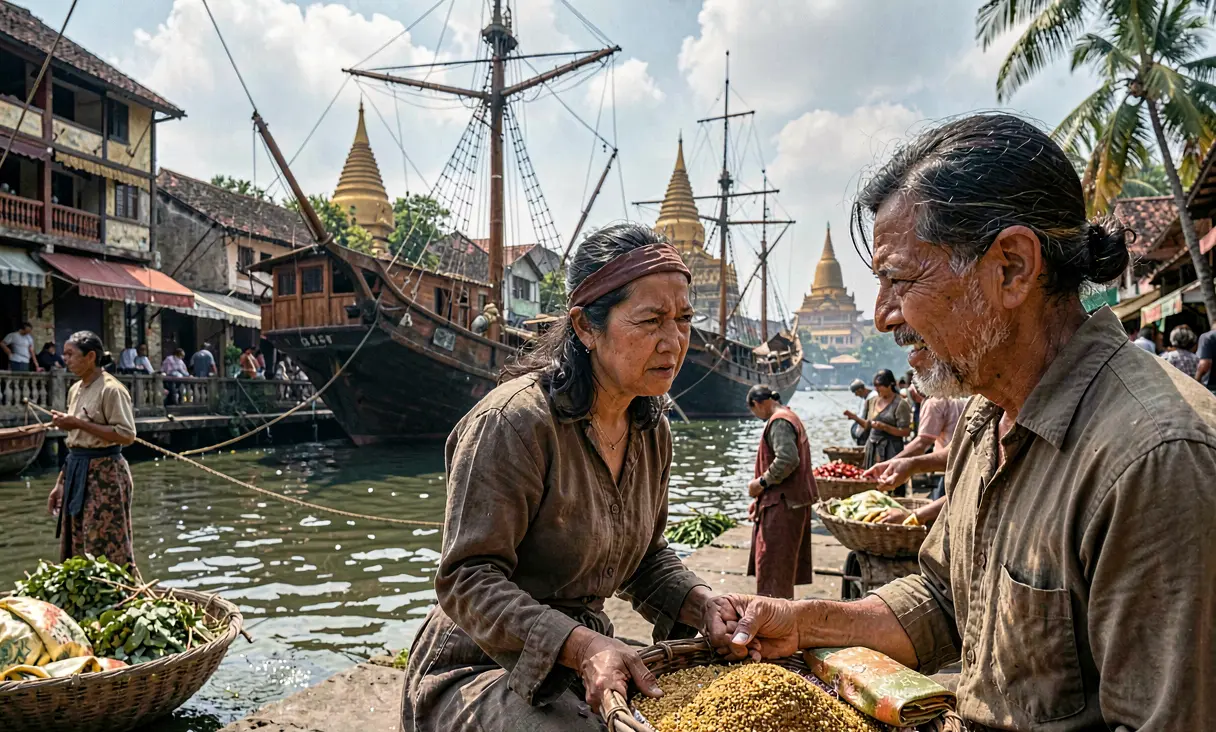
The primary engine of Srivijaya's power was its monopoly over the flow of goods between East and West. By controlling the Strait of Malacca, the kingdom could levy taxes on passing vessels, effectively turning trade into a state revenue source. The port of Palembang became a bustling entrepôt where spices from the Moluccas, resins from Borneo, gold from Sumatra's interior, and Chinese silk and ceramics were exchanged. This economic dominance allowed Srivijaya to accumulate immense wealth, which was subsequently reinvested into maintaining a formidable navy and constructing grand religious monuments. The kingdom did not merely facilitate trade; it dictated the terms of commerce in the Indian Ocean basin for centuries.
The Golden Age of Buddhist Scholarship
Beyond its military and economic might, Srivijaya distinguished itself as a premier center of Mahayana Buddhist learning. The kingdom's rulers were devout patrons who constructed massive *stupas* and monasteries, attracting scholars from across Asia. Most notably, the Chinese pilgrim I-Tsing (Yijing) arrived in Palembang around 671 CE, staying for six months to study Sanskrit grammar before proceeding to India. Upon his return in 685 CE, he spent another decade there, noting that over a thousand monks resided in the capital, studying at the feet of masters like Sakyakirti. This intellectual flourishing transformed Srivijaya into a cultural bridge, transmitting Buddhist philosophy and Sanskrit literature throughout Southeast Asia.
Legacy and Enduring Significance
The rise of Srivijaya in 683 CE set the template for future maritime empires in Southeast Asia, demonstrating how control of sea lanes could generate wealth and cultural influence superior to territorial conquest. Its legacy is visible in the widespread adoption of Sanskrit-based scripts, the enduring presence of Mahayana Buddhism in the region, and the architectural styles that influenced later kingdoms like Majapahit. Although the empire eventually declined due to Chola invasions and shifting trade patterns in the 13th century, its role as the first great Malay empire cemented Sumatra's place at the heart of global history. The events of 683 CE were the catalyst that turned a regional power into a world-defining maritime hegemon.
It established Southeast Asia as a crucial node in global trade networks for centuries.
Where it happened
Palembang, Sumatra (Modern Indonesia) — see it on the interactive map →
Explore related history
 PoliticsEmperor Xuanzong Ascends the Tang Throne712 CE · Chang'an, ChinaEmperor Xuanzong begins his reign, ushering in the High Tang golden age.
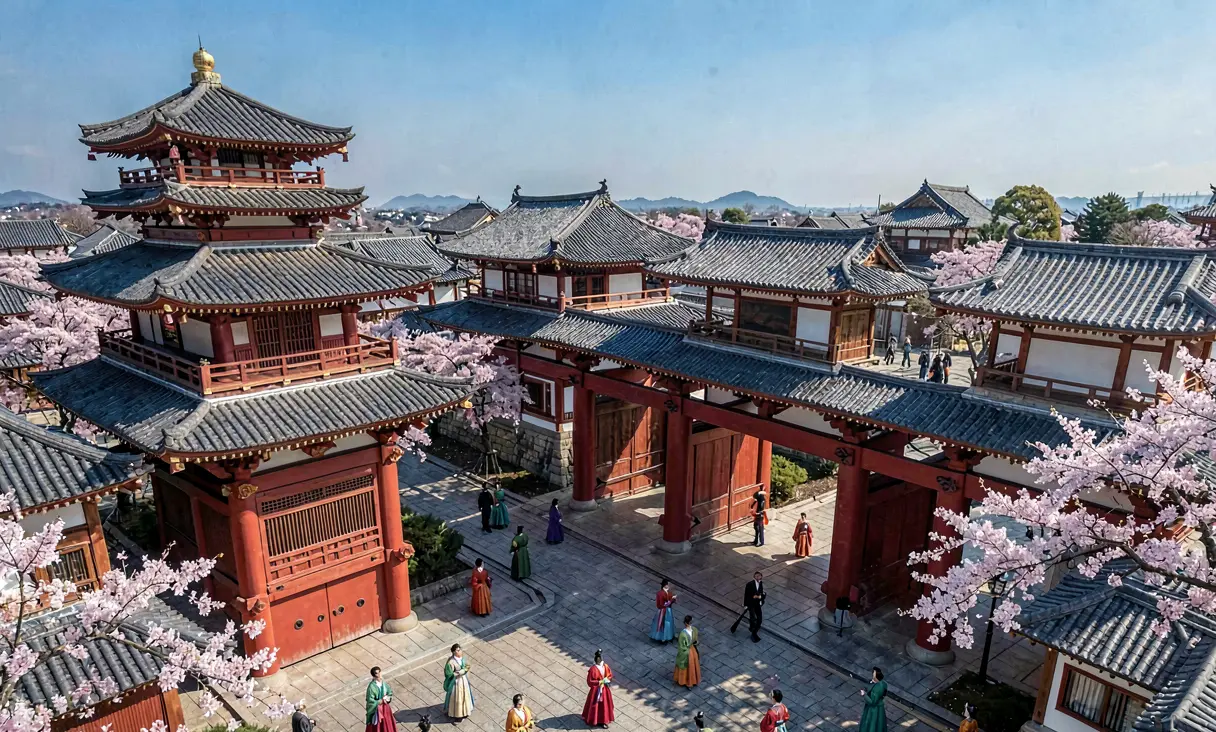 PoliticsFounding of Heian-kyo794 CE · Kyoto, JapanEmperor Kammu moves the capital to Heian-kyo, beginning the Heian period.
 PoliticsJayavarman II Declares Khmer Independence802 CE · Phnom Kulen, CambodiaJayavarman II proclaims himself a universal monarch, founding the Khmer Empire.
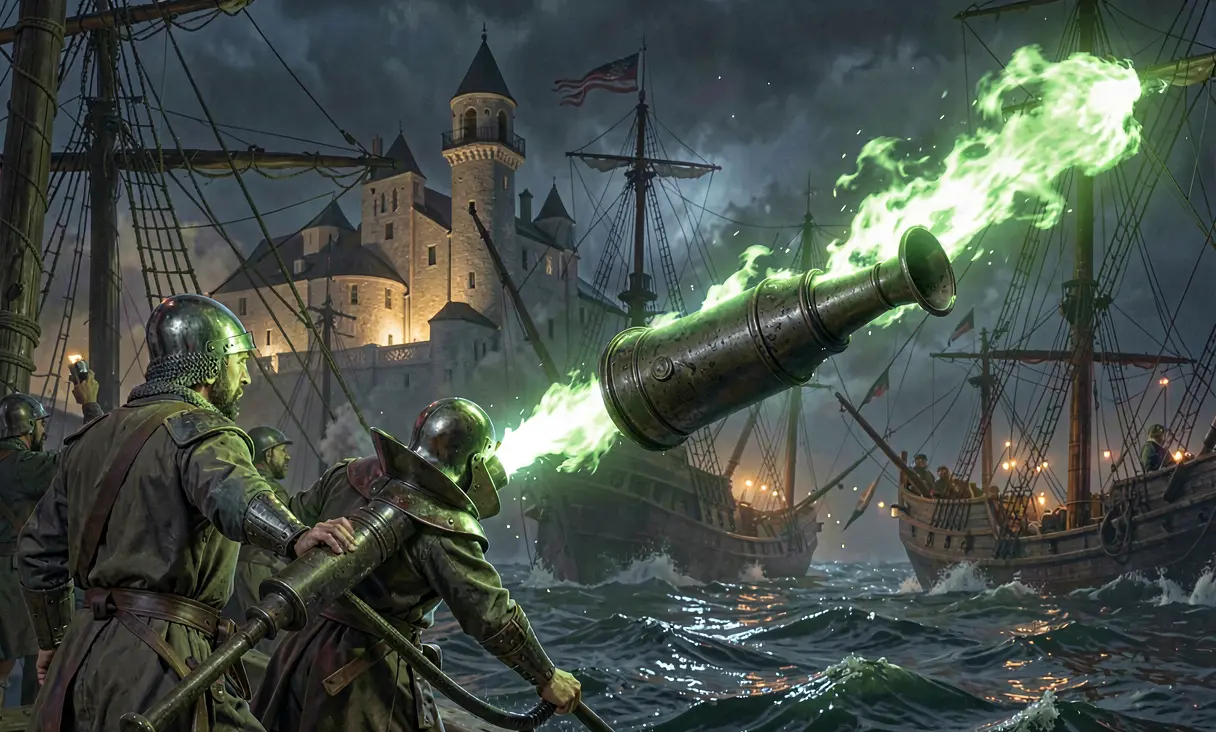 TechnologyInvention of Greek Fire by Kallinikosc. 673 CE · Constantinople, TurkeyByzantine engineers develop a liquid incendiary weapon that burns on water.
 ArtTang Dynasty Golden Age of Poetry and Culturec. 713 CE · Chang'an, ChinaThe Tang Dynasty reaches its cultural zenith in Chang'an, producing legendary poets like Li Bai and Du Fu.
 ReligionStandardization of the Quranic Textc. 650 CE · Medina (and Damascus), Arabia/SyriaCaliph Uthman commissions the definitive written codex of the Quran.
Discussion
Loading…