Sankore Madrasah Becomes a Center of Learning in Timbuktu
By 1450 CE, Sankore Madrasah transformed Timbuktu into a global hub of science and law, housing hundreds of thousands of manuscripts and fostering a decentralized scholarly network that rivaled contem
The Intellectual Crucible of the Sahel
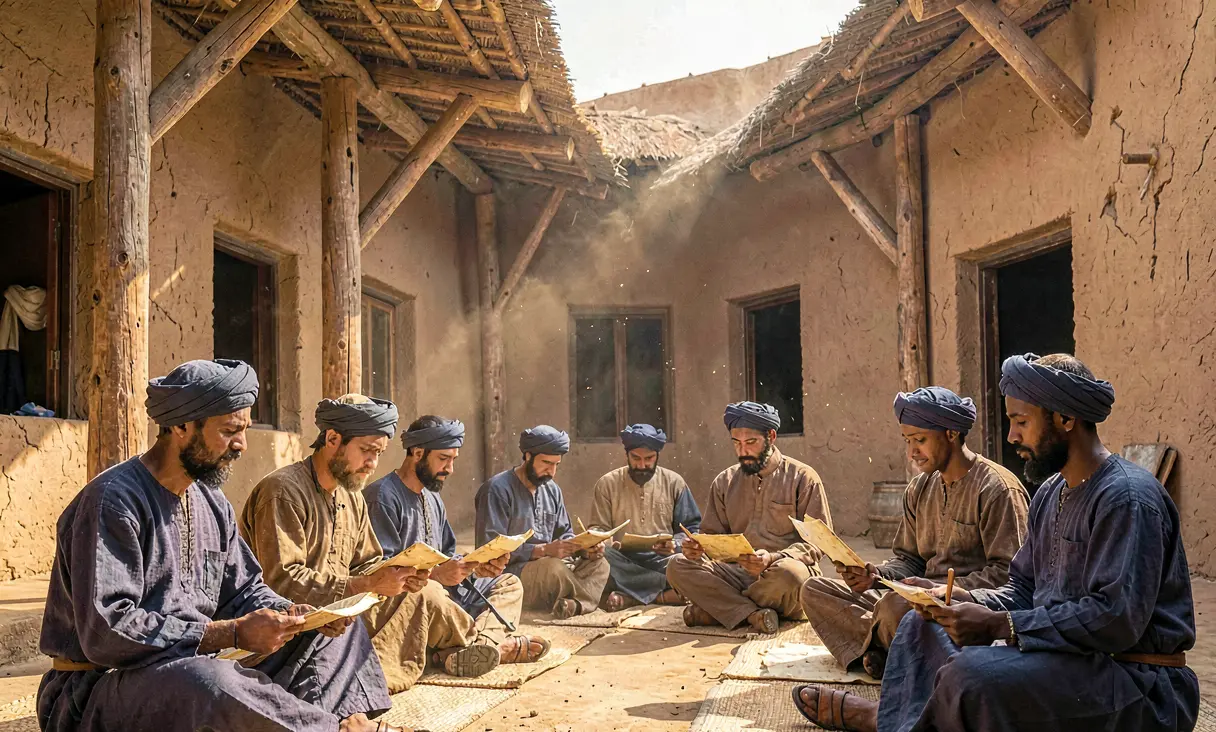
By the mid-15th century, Timbuktu had transcended its origins as a seasonal Tuareg encampment to become the preeminent intellectual capital of Sub-Saharan Africa. Situated at the strategic nexus where the Niger River bends toward the Sahara, the city served as a vital terminus for trans-Saharan trade routes connecting North African merchants with the gold fields of the south. While the Mali Empire had laid the foundational infrastructure and patronized early scholars, it was under the rising influence of the Songhai dynasty that Sankore Madrasah truly flourished. Unlike the rigid, lecture-hall based universities emerging in medieval Europe or the Islamic world's established centers like Al-Azhar, Sankore operated as a decentralized network of independent scholars teaching in courtyard settings, fostering an environment where inquiry was driven by personal mastery rather than institutional dogma.
The Evolution into a Global Academy
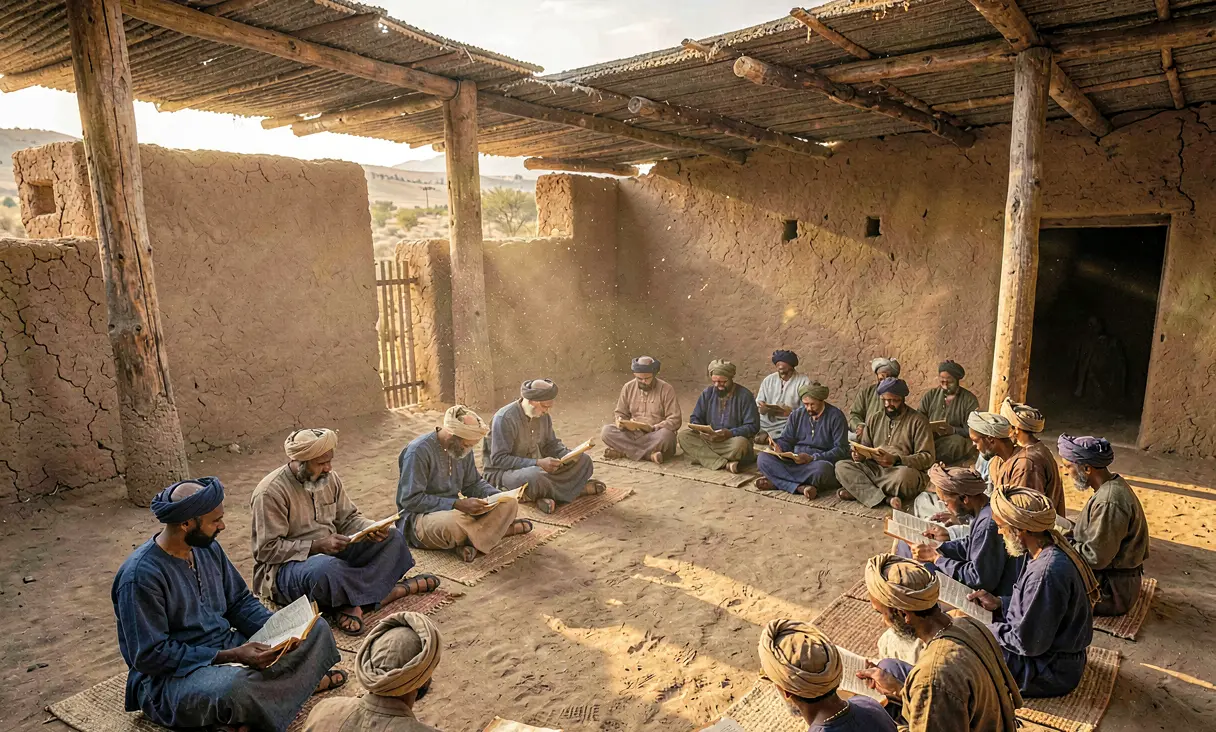
Around 1450 CE, Sankore had already matured from a mosque-attached school into a university of global renown. The institution did not possess a single central administration or a fixed curriculum; instead, it functioned through the authority of individual 'ustads' (masters) who attracted students based on their specific expertise in fields ranging from Islamic jurisprudence (fiqh) and theology to astronomy, medicine, and mathematics. These masters taught small groups of disciples in the open courtyards surrounding the Sankore Mosque, creating an intimate yet rigorous academic atmosphere. The city's reputation drew scholars not only from West Africa but also from Cairo, Fez, Mecca, and Cordoba, turning Timbuktu into a cosmopolitan hub where Arabic was the lingua franca of science and philosophy.
Patronage and the Rise of Scholarly Elites
The golden age of Sankore was fueled by the immense wealth generated from the gold-salt trade, which local rulers and merchant families reinvested directly into intellectual pursuits. Prominent figures such as the scholar Ahmad Baba al-Timbukti would later emerge from this lineage, but the foundations were laid in the preceding century by wealthy patrons who commissioned vast libraries and endowed scholarships for students. The city's elite viewed the accumulation of knowledge as a form of spiritual capital equal to material wealth. This unique socio-economic structure allowed scholars to live in relative comfort, free from the need to labor for subsistence, thereby dedicating their lives entirely to the copying, debating, and expanding of human knowledge.
The Manuscript Culture and Scientific Achievement
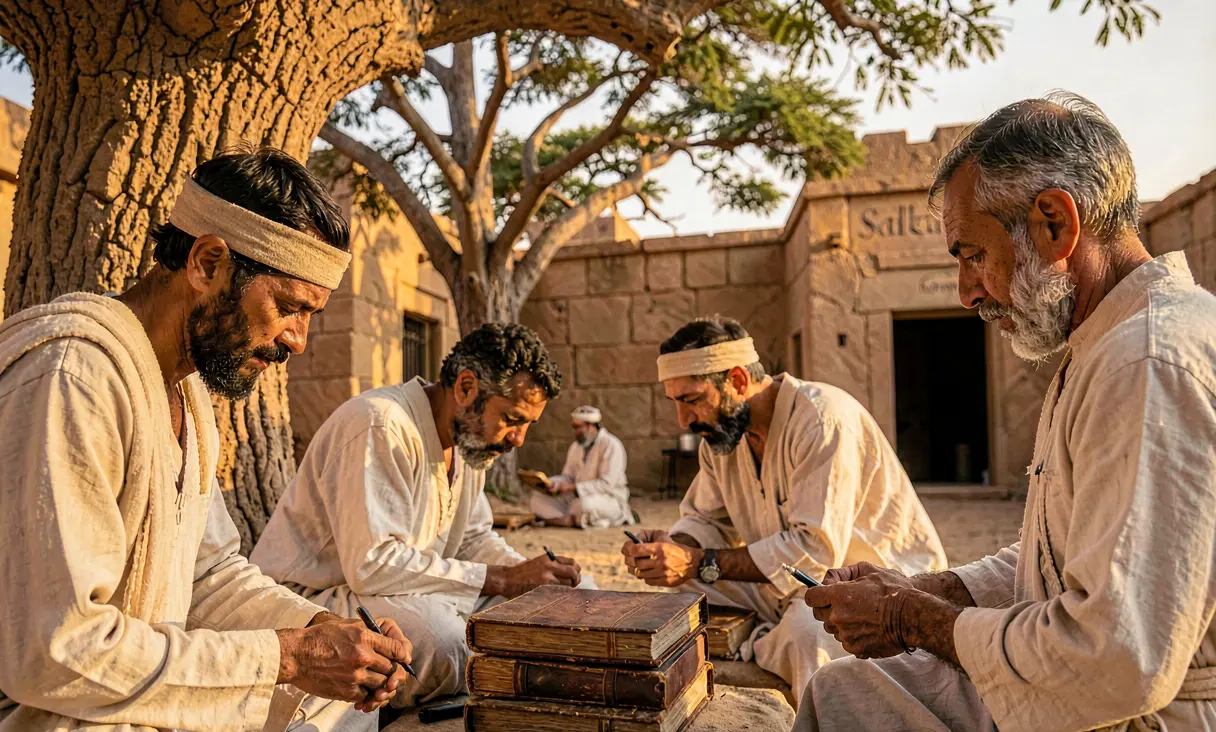
At its zenith, Sankore was supported by a massive manuscript culture that rivaled the great libraries of contemporary Europe. While exact numbers are difficult to verify due to the passage of time and subsequent conflicts, estimates suggest that private and public collections in Timbuktu housed hundreds of thousands of manuscripts. These texts were not merely religious treatises; they included sophisticated astronomical charts used for navigation across the Sahara, detailed legal codes governing trade and civil disputes, medical manuals describing local herbal remedies alongside Galenic medicine, and mathematical works advancing algebraic concepts. The preservation of this knowledge was meticulous, with scribes employing high-quality paper imported from Egypt and North Africa, ensuring that complex scientific data survived centuries of oral tradition.
A Decentralized Model of Higher Education
The pedagogical structure of Sankore Madrasah around 1450 CE represented a distinct alternative to the centralized university models developing elsewhere. Students were not enrolled in degree programs but rather attached themselves to specific masters, studying until they received an 'ijazah' (license) certifying their competence in a particular subject. This flexibility allowed for rapid adaptation to new intellectual currents and encouraged specialization. A student might study astronomy with one master in the morning and jurisprudence with another in the afternoon, creating polymaths well-versed in multiple disciplines. The courtyard setting facilitated open debate and the cross-pollination of ideas, making Sankore a dynamic engine of innovation rather than a static repository of ancient texts.
Legacy and the Enduring Shadow of Timbuktu
The intellectual prominence established by 1450 CE cemented Timbuktu's status as a symbol of African achievement, challenging later colonial narratives that depicted the continent as devoid of complex civilization. Although the city faced invasions from the Moroccan Saadi dynasty in 1591 and suffered subsequent declines, the scholarly tradition persisted for centuries. The manuscripts produced during this era remain today as irrefutable evidence of a sophisticated scientific and literary culture in pre-colonial West Africa. In the modern era, efforts to preserve these texts have highlighted their continued relevance, proving that Sankore was not merely a historical curiosity but a pivotal node in the global exchange of knowledge that shaped the intellectual history of humanity.
Established West Africa as a global center of Islamic learning and scientific inquiry during the medieval period.
Where it happened
Timbuktu, Mali — see it on the interactive map →
Explore related history
 ScienceDomestication of the Turkey in Mesoamericac. 1000 BCE · Central MexicoAncient Mesoamericans successfully domesticate the wild turkey for meat and ritual feathers.
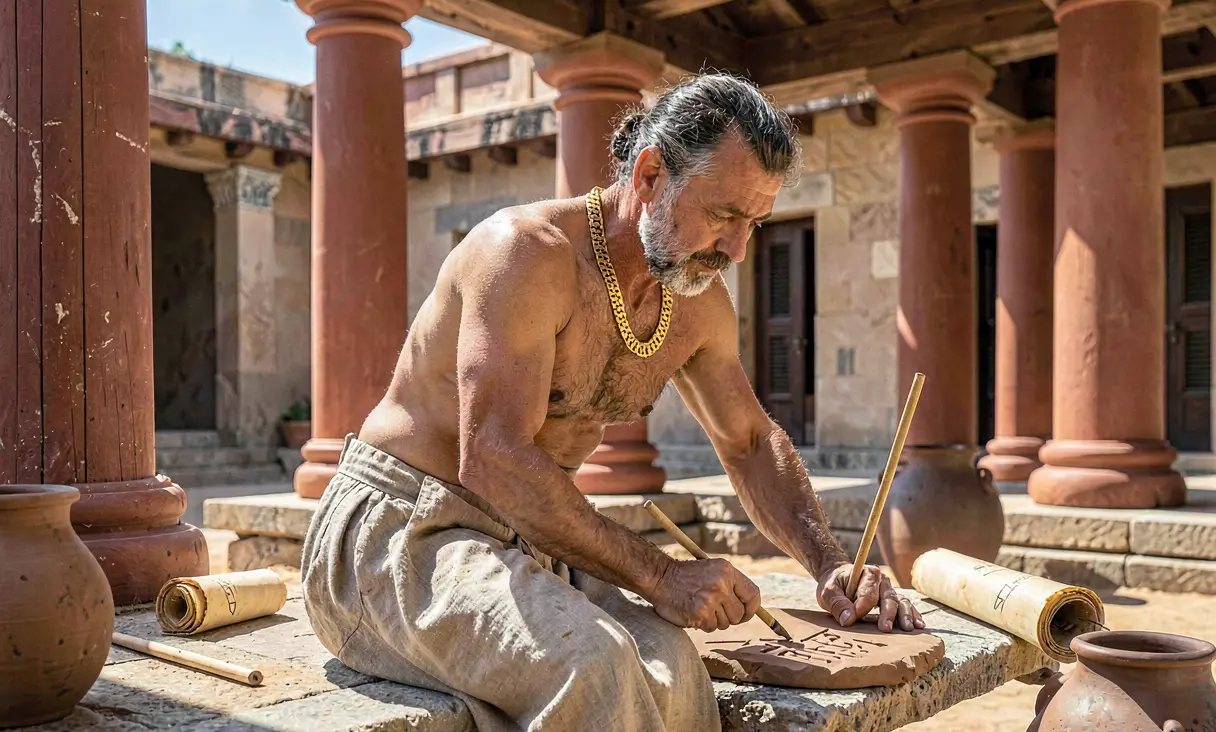 ScienceDevelopment of Linear A Script by Minoansc. 1800 BCE · Knossos, Crete (Greece)The Minoans develop Linear A, a still undeciphered writing system for administration.
 ScienceSurvival of the Madrid Codex Amidst Destructionc. 1450 CE · Maya Region (Yucatán), MexicoThe Madrid Codex is created just before the Spanish destruction of Maya books.
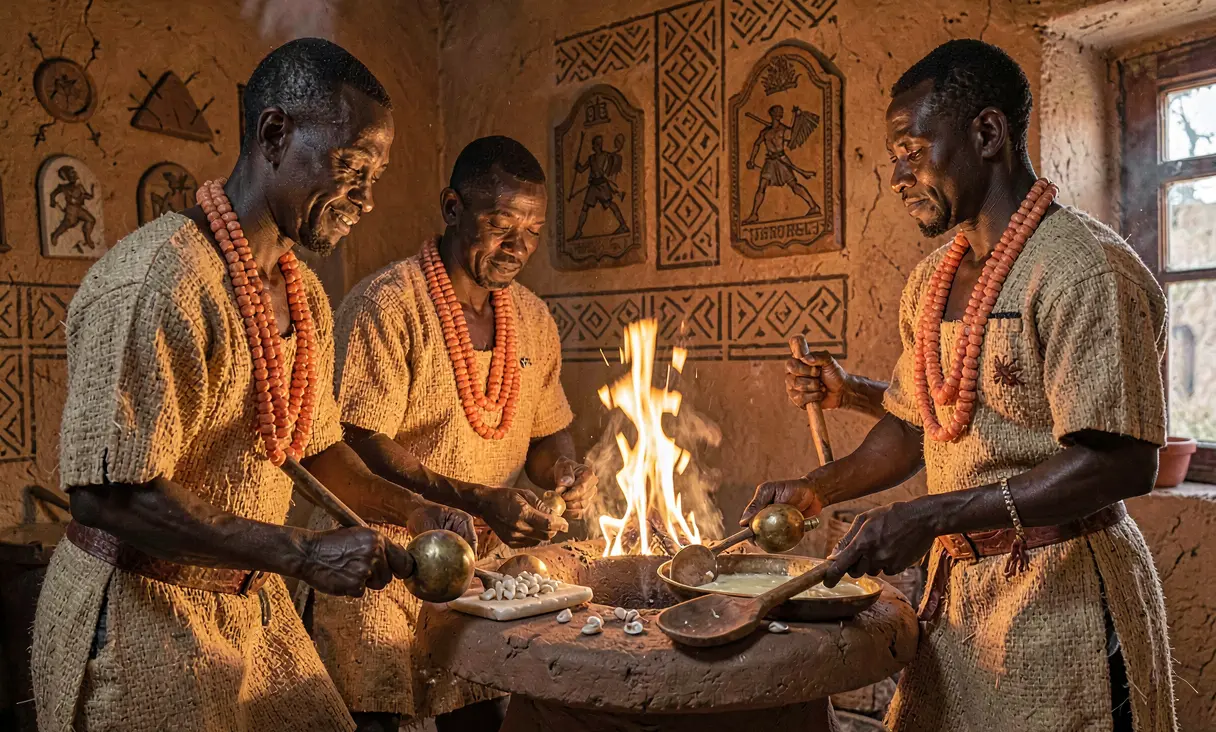 ArtCreation of the Benin Bronzes under Oba Ewuarec. 1450 CE · Benin City, NigeriaOba Ewuare commissions the famous bronze and ivory plaques documenting court life and military victories.
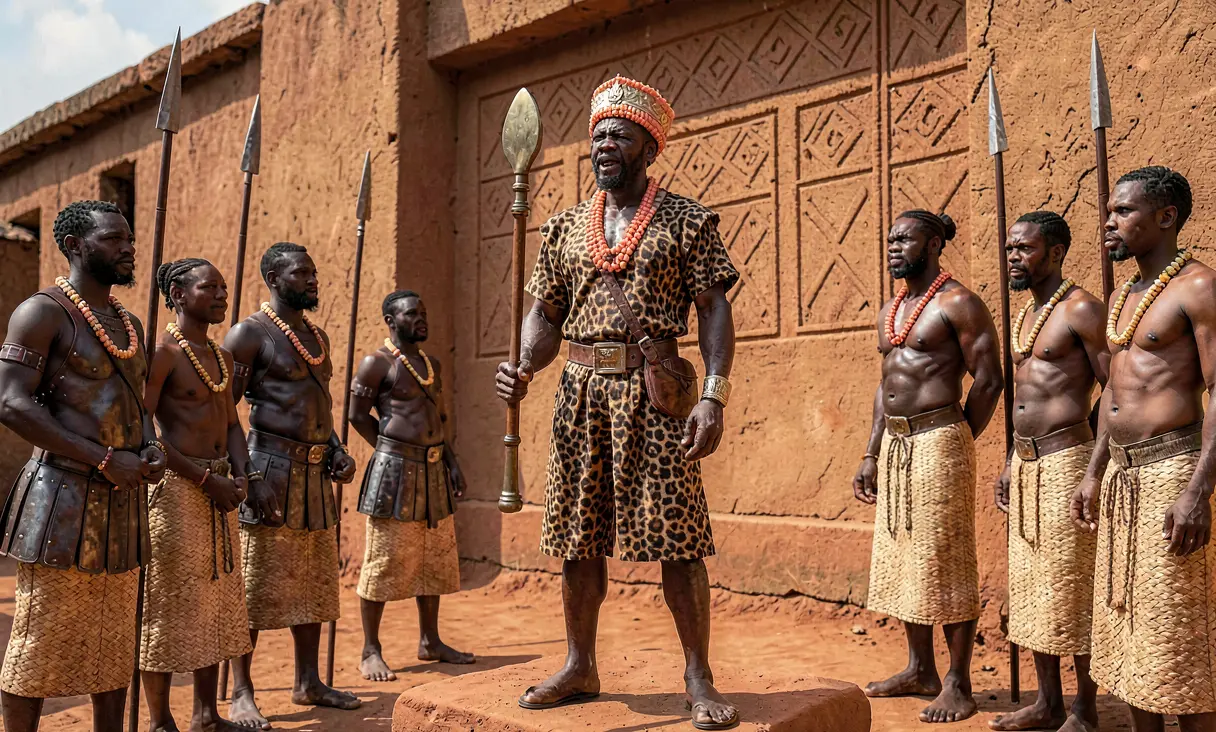 PoliticsOba Ewuare Centralizes the Kingdom of Beninc. 1450 CE · Benin City, NigeriaOba Ewuare reorganizes the kingdom into a centralized state with a professional army and bureaucracy.
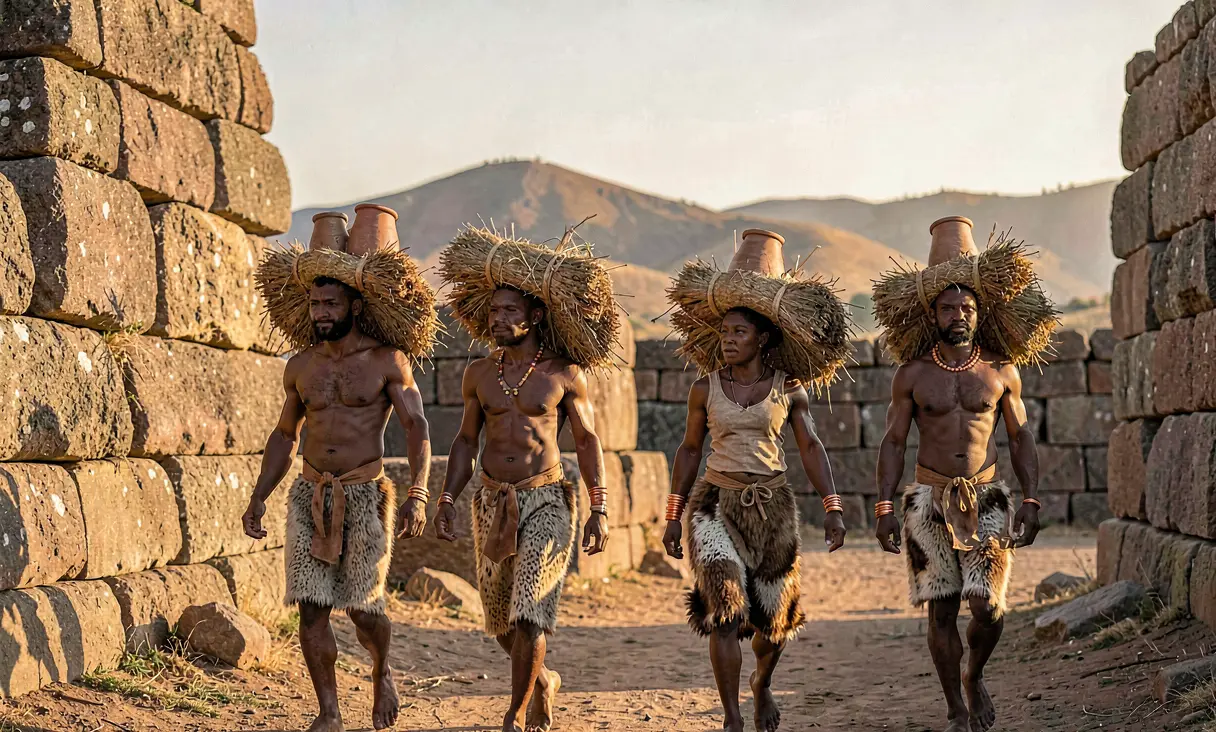 DisasterAbandonment of Great Zimbabwec. 1450 CE · Great Zimbabwe, ZimbabweEnvironmental degradation and shifting trade routes lead to the gradual abandonment of Great Zimbabwe.
Discussion
Loading…