Founding of Sikhism by Guru Nanak
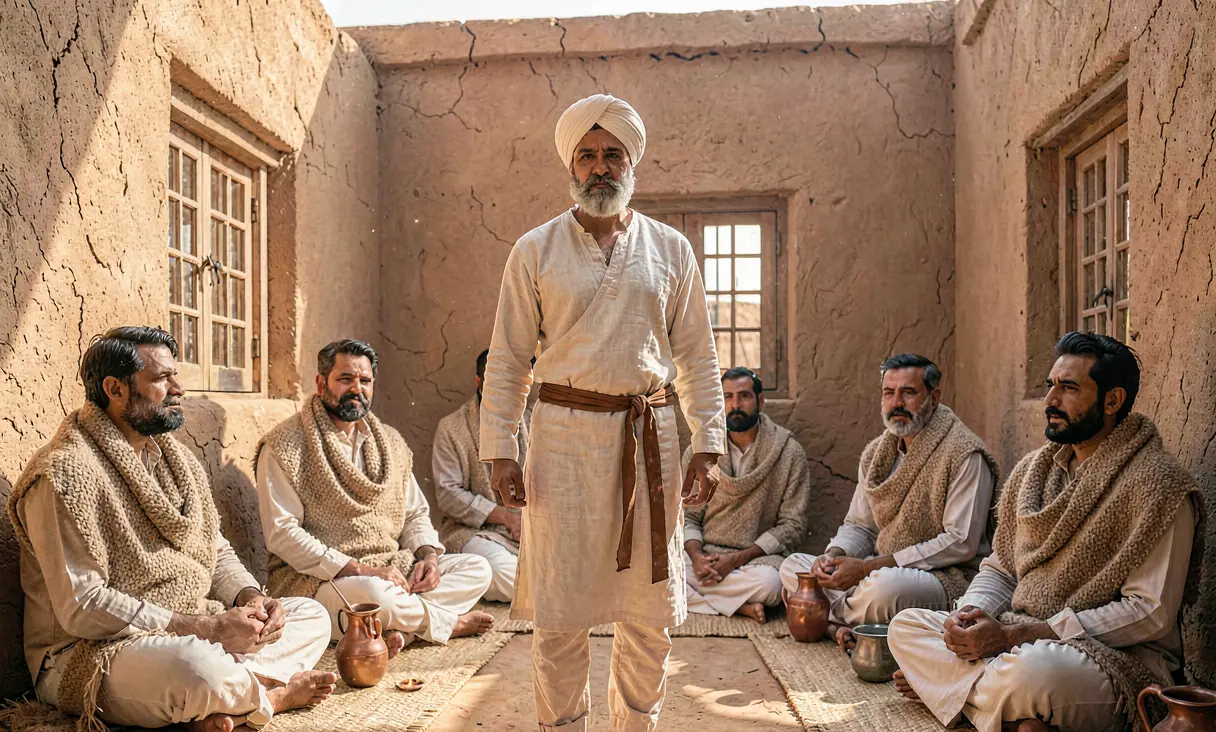
Guru Nanak's 1499 mystical awakening in Punjab dismantled caste barriers and sectarian divisions, founding Sikhism as a universal monotheistic faith centered on equality, honest labor, and selfless se
Context of the Punjab and the Spiritual Landscape
In the late 15th century, the Punjab region was a volatile mosaic of political fragmentation and deep religious stratification. The Delhi Sultanate, ruled by the Lodi dynasty, exerted nominal control while local Rajput chieftains maintained autonomy. Socially, society was rigidly divided by the caste system, which dictated one's profession, social interaction, and spiritual worth. Simultaneously, a syncretic Sufi tradition flourished alongside Bhakti movements within Hinduism, both of which emphasized personal devotion over ritualistic orthodoxy. Into this complex milieu was born Guru Nanak Dev Ji in 1469 at Talwandi (now Nankana Sahib), Pakistan, to parents Mehta Kalu and Mata Tripta. Though raised in a Hindu Khatri family, the atmosphere of the time was ripe for a spiritual revolution that would challenge entrenched hierarchies and offer a unified path to the Divine.
The Mystical Awakening at Kali Bein
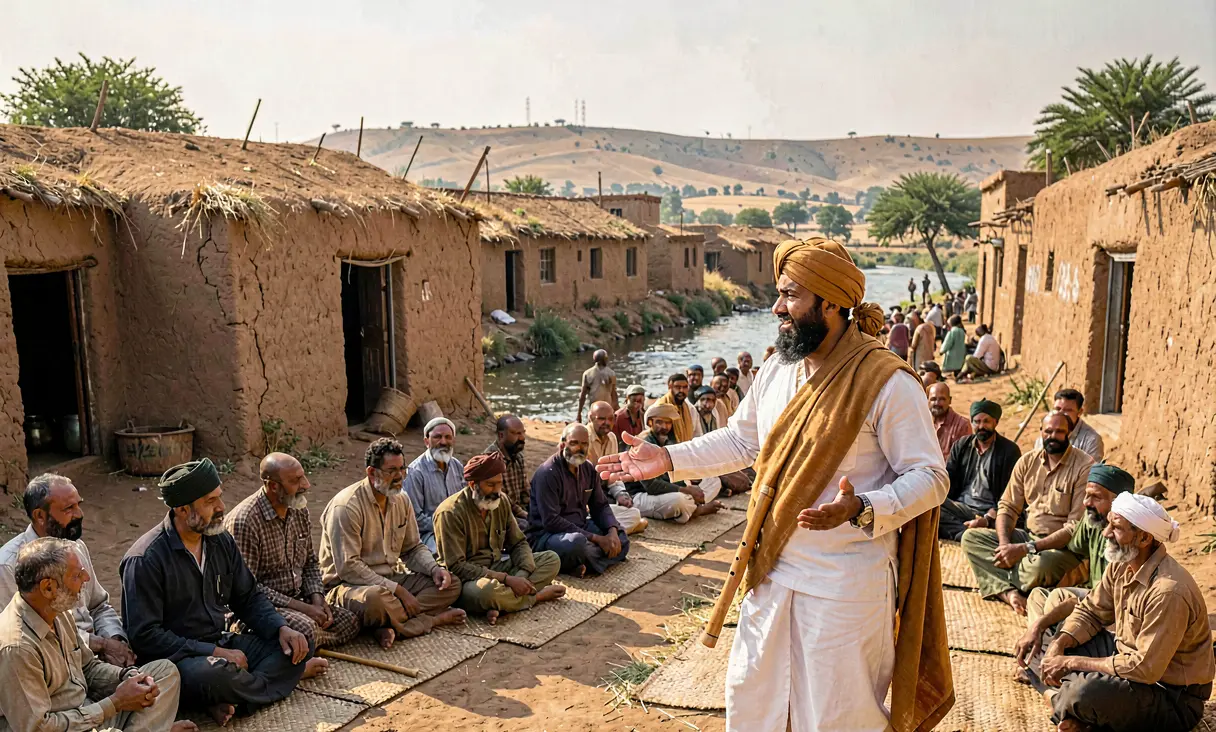
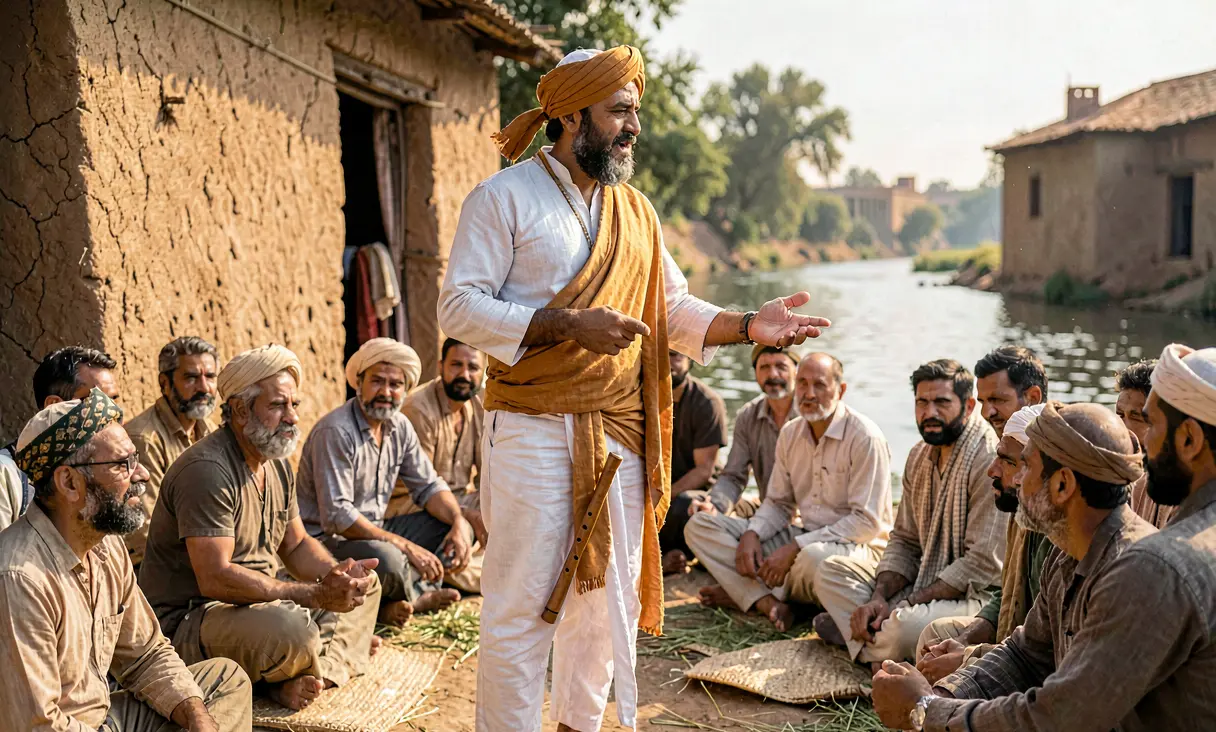
The pivotal moment marking the founding of Sikhism occurred around 1499 CE. Nanak, then serving as a treasurer for the local Muslim governor Daulat Khan Lodi in Sultanpur Lodhi, disappeared during his morning ablutions in the Kali Bein rivulet. He was missing for three days, leading to widespread rumors of his death or abduction. When he reappeared on the third day, he had undergone a profound mystical experience, later described by scholars as a direct communion with the Formless One (Ik Onkar). Upon returning, Nanak uttered the words that would become the foundational creed of Sikhism: 'There is no Hindu, there is no Muslim.' This declaration signaled a radical departure from the religious binaries of the era, asserting that spiritual truth transcended sectarian labels and that all human beings were equal before God.
The First Missionary Journey and Core Teachings
Following his enlightenment, Nanak embarked on extensive travels known as Udasis, covering thousands of miles across the Indian subcontinent, Persia, and Arabia. He was rarely alone; he was often accompanied by Bhai Mardana, a Muslim musician who played the rabab to accompany Nanak's hymns (Shabads). His teachings were radical in their simplicity and inclusivity: he rejected idol worship, caste discrimination, and the efficacy of ritualistic pilgrimages or fasting. Instead, he emphasized 'Naam Japna' (remembrance of God), 'Kirat Karni' (honest labor), and 'Vand Chakna' (sharing with others). He established the institution of the Langar, a community kitchen where people of all castes, creeds, and genders sat together on the floor to eat, physically dismantling social barriers through the act of communal dining.
Establishment of Kartarpur and Institutional Foundations
In 1521, Guru Nanak settled in Kartarpur (now in Pakistan's Punjab province), where he established the first Sikh community. This settlement became the prototype for future Sikh gurdwaras and social structures. Here, he formalized the practice of congregational worship and the daily recitation of his compositions, which were later compiled into the Guru Granth Sahib. He appointed Bhai Lehna, a devoted follower from a different caste, as his successor, renaming him Guru Angad Dev Ji. This act was revolutionary; it broke the tradition of hereditary succession based on bloodline or caste, instead establishing a meritocratic lineage of spiritual leadership based on devotion and character. This ensured that the movement would survive beyond Nanak's physical presence.
Legacy and Global Expansion
Guru Nanak passed away in 1539, but his legacy catalyzed the rapid growth of Sikhism into a distinct, major world religion. Over the next two centuries, nine successive Gurus expanded upon his foundations, developing a martial tradition to defend religious freedom and social justice against Mughal persecution. Today, with over 25 million adherents worldwide, Sikhism stands as the fifth-largest religion globally. Its core tenets of equality, service (Seva), and social justice continue to influence global humanitarian efforts through institutions like the Khalsa Aid. The Gurdwara Darbar Sahib in Nankana Sahib remains a primary pilgrimage site, symbolizing the birthplace of a faith that fundamentally reshaped the spiritual geography of South Asia and continues to offer a universal message of human unity.
It established a unique monotheistic tradition promoting social equality in South Asia.
Where it happened
Nankana Sahib, Pakistan — see it on the interactive map →
Explore related history
 ReligionHijra of Prophet MuhammadSeptember 24, 622 CE · Medina, Saudi ArabiaMuhammad migrates to Medina establishing the first Muslim community and calendar.
 ReligionStandardization of the Quranic Textc. 650 CE · Medina (and Damascus), Arabia/SyriaCaliph Uthman commissions the definitive written codex of the Quran.
 ReligionEnd of Byzantine Iconoclasm843 CE · Constantinople, TurkeyEmpress Theodora restores the veneration of icons in the Byzantine Empire, ending a century-long theological conflict.
 ExplorationVasco da Gama Reaches India via Sea RouteMay 20, 1498 · Kozhikode (Calicut), IndiaPortuguese explorer Vasco da Gama arrives in India, bypassing Ottoman land routes.
 ExplorationColumbus Reaches the AmericasOctober 12, 1492 CE · San Salvador, BahamasEuropean explorer lands in Caribbean initiating permanent contact between Old and New Worlds.
 ReligionKingdom of Kongo Adopts Catholicism1491 CE · Mbanza Kongo, AngolaKing Nzinga a Nkuwu converts to Catholicism and takes the name João I, integrating Christianity into Kongo society.
Discussion
Loading…