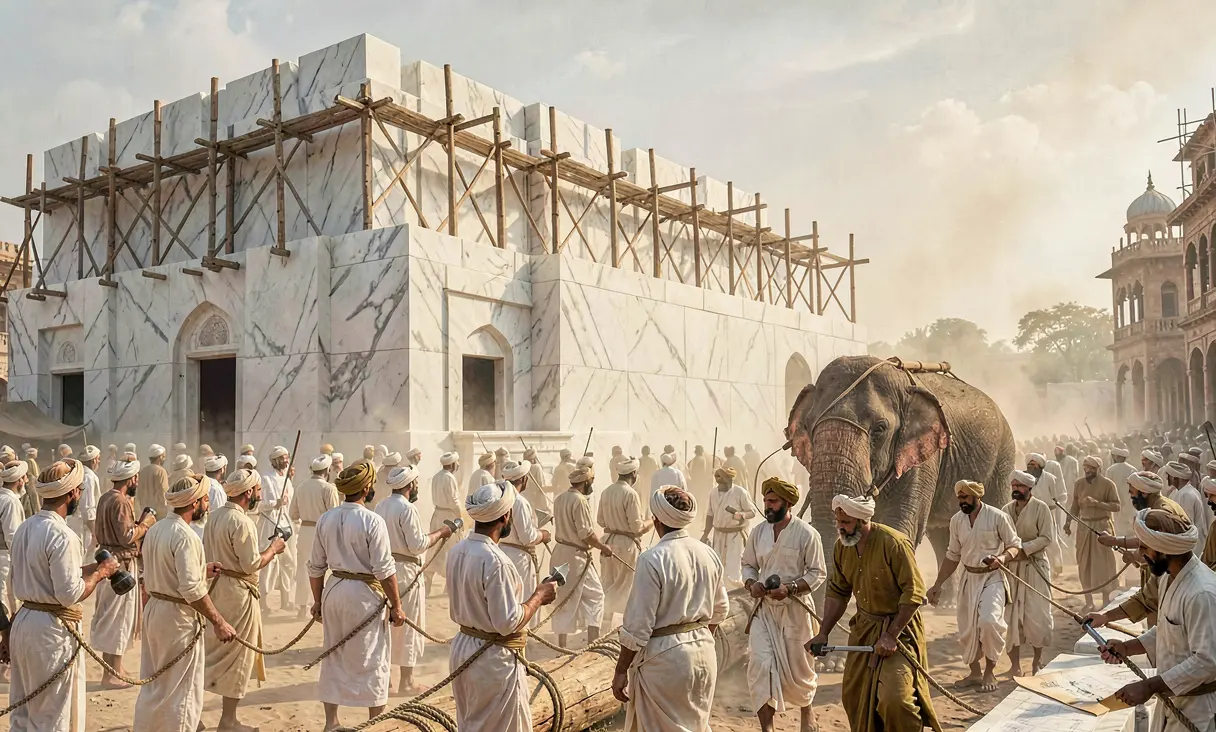
Construction of the Taj Mahal Begins
In 1632, Shah Jahan launched the monumental construction of the Taj Mahal to honor his late wife Mumtaz Mahal, creating an architectural masterpiece that synthesized Persian and Indian traditions.
The Grief of an Emperor
In June 1631, the Mughal Empire suffered a profound personal and political blow with the death of Mumtaz Mahal, the beloved chief consort of Emperor Shah Jahan. She succumbed to complications during childbirth in Burhanpur while accompanying her husband on a military campaign in the Deccan Plateau. Her passing plunged the imperial court into deep mourning; contemporary chronicles describe the emperor as inconsolable, his beard turning white overnight and his spirit seemingly extinguished. In an unprecedented display of devotion, Shah Jahan commissioned a mausoleum that would surpass all previous Mughal tombs in scale and splendor, intending to create a monument where earthly beauty mirrored divine perfection.
The Royal Decree and Site Selection
By early 1632, the decision was finalized: the tomb would rise on the southern banks of the Yamuna River in Agra, directly opposite the emperor's own red sandstone fort. This location was chosen not only for its scenic grandeur but to fulfill a cosmological vision where the river represented the earthly realm and the mausoleum the celestial paradise. The site had previously housed a smaller structure owned by Raja Jai Singh I of Amber, which Shah Jahan acquired in exchange for a palace within the Agra Fort. The imperial architects immediately began leveling the ground, constructing massive wooden foundations to support the immense weight of the marble structure on the riverbank soil.
Architects and Artisanal Mobilization
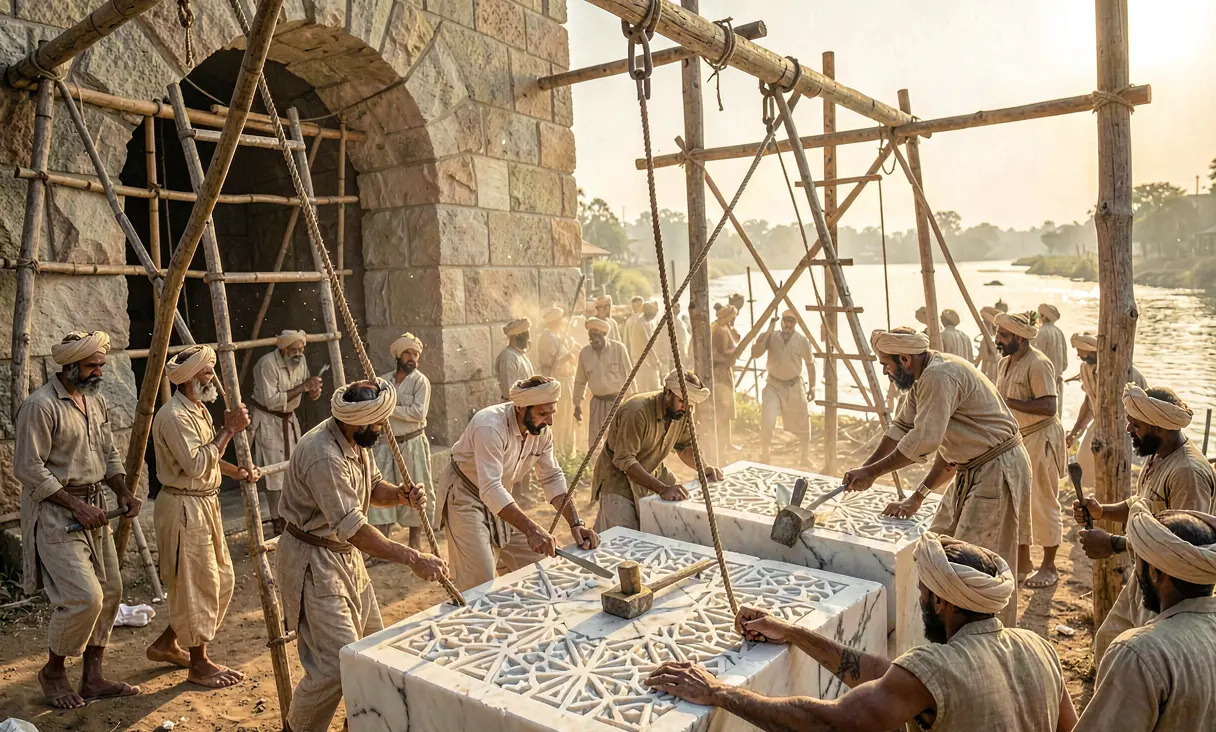
The project was a logistical marvel that mobilized an estimated 20,000 artisans, laborers, painters, calligraphers, stonecutters, and masons from across the Mughal Empire and beyond. Ustad Ahmad Lahori is widely credited as the chief architect, though the design likely emerged from a collaborative council of masters including Ismail Afandi of the Ottoman Empire for the dome and Qazim Khan from Lahore for casting the solid gold finial. The workforce was organized into specialized guilds; master calligraphers like Amanat Khan were tasked with inscribing Quranic verses onto the facade, while craftsmen from Persia and Central Asia perfected the technique of pietra dura, inlaying semi-precious stones like lapis lazuli, jade, and carnelian into white Makrana marble.
Engineering the Impossible
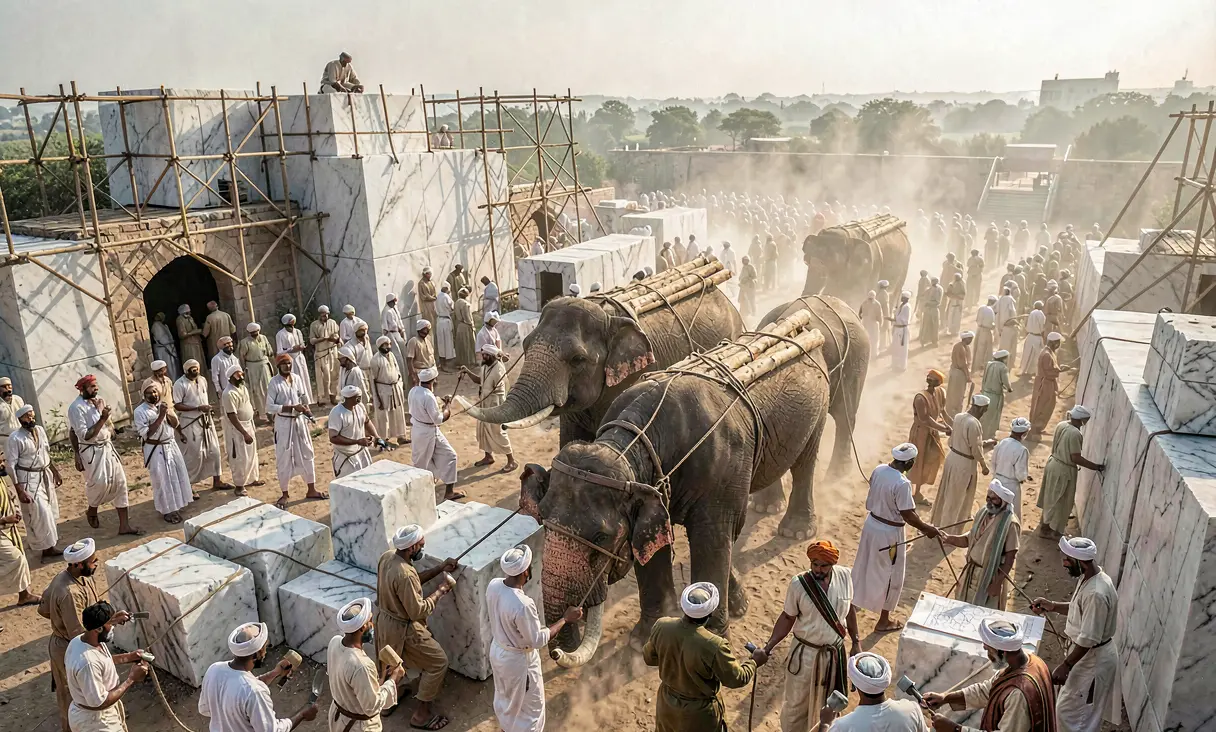
Construction commenced with the excavation of a vast well and the driving of thousands of wooden piles to reinforce the foundation against the shifting river soil. The main mausoleum, completed in 1643, was built upon a raised square platform featuring four minarets at each corner. These minarets were deliberately designed with a slight outward lean; this ingenious engineering precaution ensured that in the event of an earthquake, they would fall away from the central tomb rather than crushing it. The sheer volume of materials required was staggering: white marble was transported 200 miles from quarries in Makrana, Rajasthan, via a fleet of over 1,000 elephants and ox-carts, while red sandstone came from nearby Fatehpur Sikri.
Completion and Imperial Legacy
While the main mausoleum was finished in 1643, the entire complex—including the mosque, guest house, gateway, and the Charbagh garden—was not fully completed until approximately 1653. The total cost is estimated to have been around 32 million rupees at the time, a sum that strained the imperial treasury but cemented Shah Jahan's reputation as a patron of unparalleled grandeur. Tragically, the emperor was deposed by his son Aurangzeb in 1658 and imprisoned in the Agra Fort, where he spent his final years gazing out a window at the tomb he built for his wife, now housing her remains alongside his own.
A Synthesis of Civilizations
The Taj Mahal stands as the zenith of Mughal architecture, representing a perfect synthesis of Persian, Islamic, and Indian design traditions. Its symmetrical layout reflects the Islamic concept of paradise, while the use of chhatris (domed kiosks) and lotus motifs draws deeply from Hindu architectural vocabulary. The building's pristine white marble changes color with the shifting light of the day—pinkish in the morning, milky white at noon, and golden under the moonlight—creating a dynamic visual experience that transcends static stone. It remains the definitive symbol of Mughal power and romantic devotion, influencing architecture globally for centuries.
Enduring Global Significance
Today, the Taj Mahal is recognized as a UNESCO World Heritage Site and one of the New Seven Wonders of the World. It attracts millions of visitors annually, serving as a testament to the artistic capabilities of the 17th century and the enduring human capacity for grief and expression. The monument's preservation continues to face challenges from environmental pollution and structural stress, yet it remains an immutable icon of India's cultural heritage. Its construction marks a pivotal moment in art history where engineering precision met spiritual aspiration, creating a legacy that outlasts empires.
The Taj Mahal is recognized as one of the Seven Wonders of the World and represents the zenith of Mughal artistic achievement.
Where it happened
Agra, Uttar Pradesh, India — see it on the interactive map →
Explore related history
 ArtPainting of the Mona Lisac. 1503 CE · Florence, ItalyLeonardo da Vinci creates the most famous portrait using sfumato technique.
 ArtCompletion of Sistine Chapel CeilingOctober 31, 1512 CE · Vatican City, ItalyMichelangelo finishes frescoes depicting Genesis scenes transforming Renaissance art.
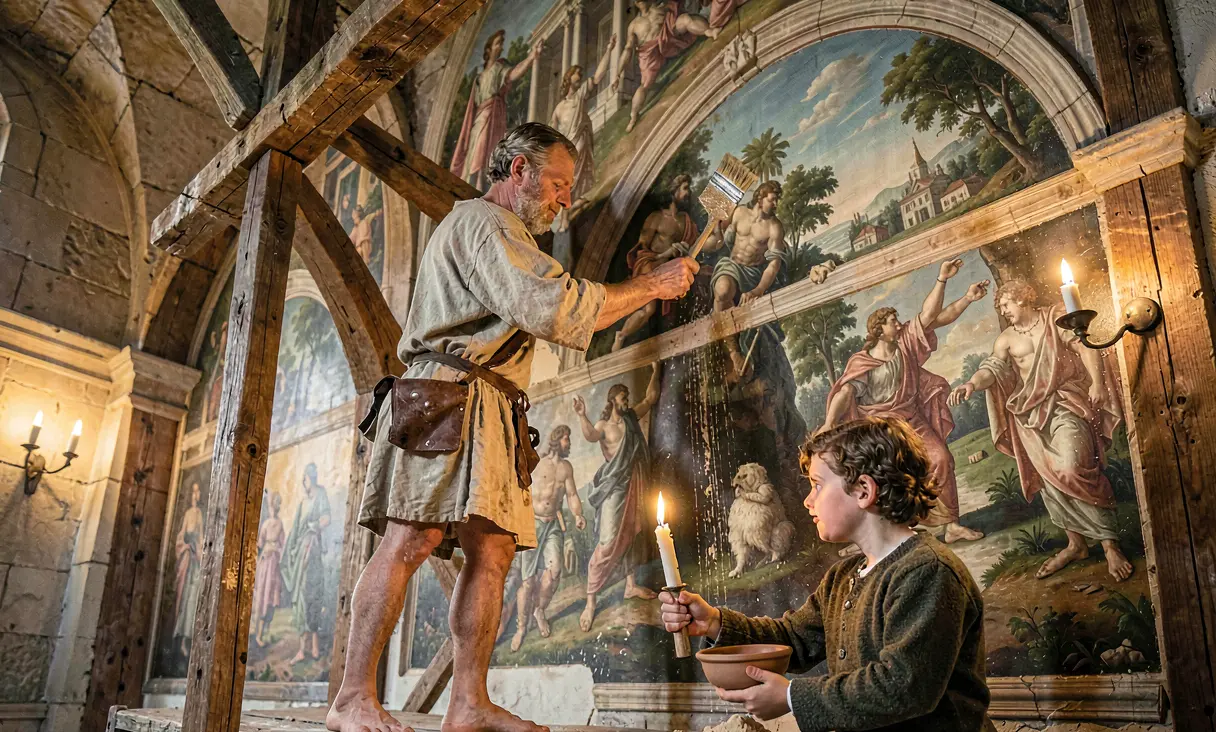 ArtMichelangelo Completes the Sistine Chapel CeilingOctober 31, 1512 · Vatican City, RomeMichelangelo finishes the monumental fresco cycle depicting Genesis.
 PoliticsPeace of WestphaliaOctober 24, 1648 · Münster and Osnabrück, GermanyTreaties end the Thirty Years' War, establishing state sovereignty.
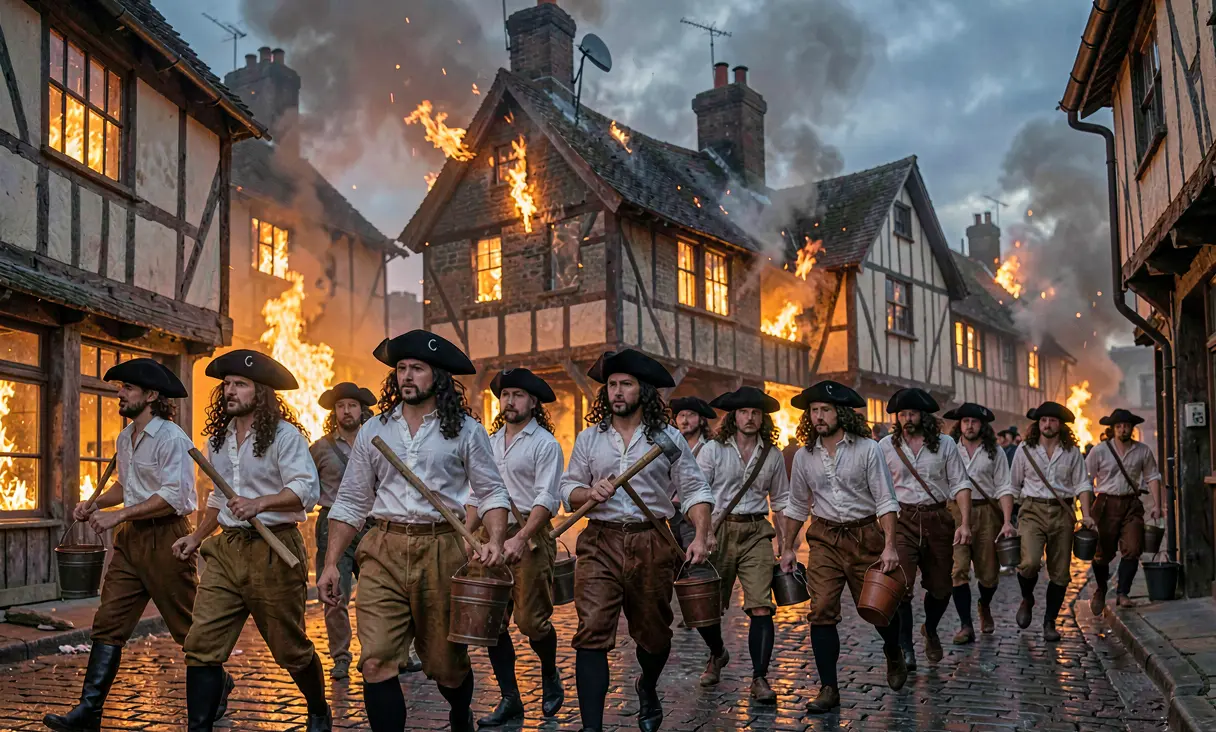 DisasterGreat Fire of LondonSeptember 2, 1666 · London, EnglandCatastrophic fire destroys medieval London, leading to major urban reconstruction.
 PoliticsShivaji Maharaj Coronation and Maratha Empirec. 1674 CE · Raigad Fort (modern Maharashtra/India)Chhatrapati Shivaji is crowned as the sovereign ruler of the Marathas, establishing an independent Hindu kingdom against Mughal dominance.
Discussion
Loading…