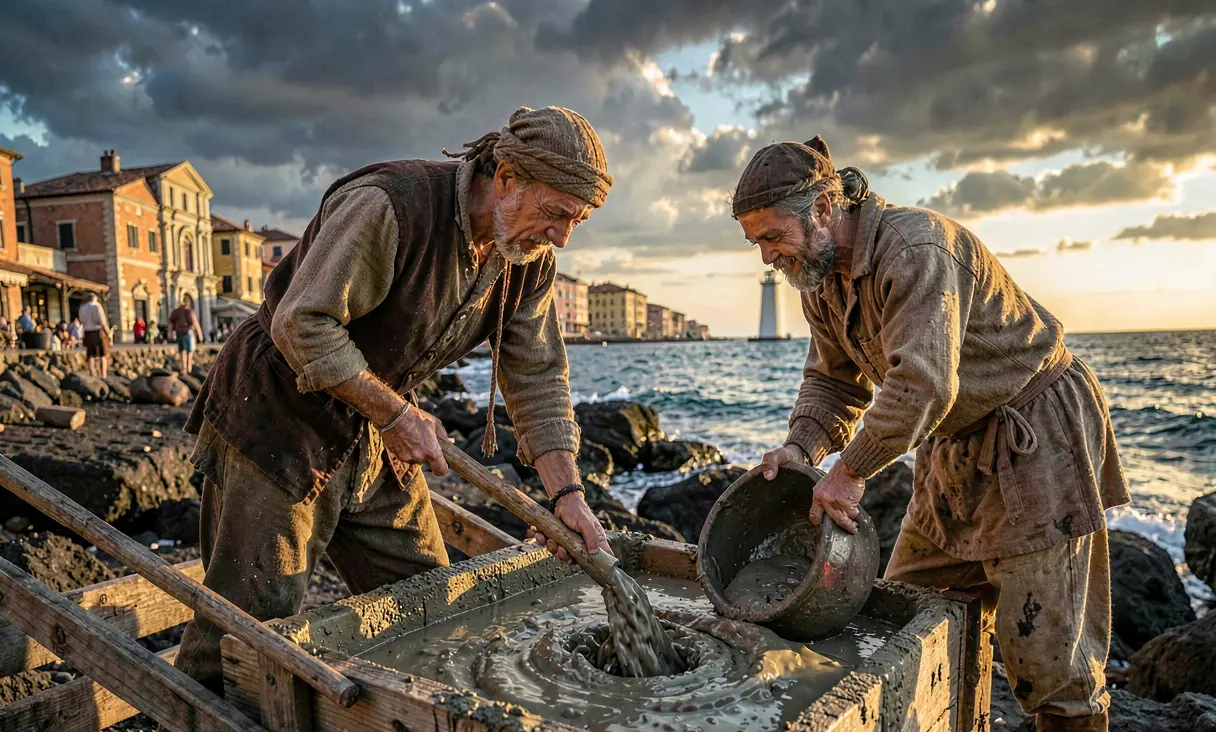
Innovation of Roman Hydraulic Concrete (Opus Caementicium)
The invention of hydraulic concrete around 250 BCE allowed Romans to build underwater harbors and massive domes, creating infrastructure that has survived for two millennia.
The Pre-Roman Landscape of Construction
Prior to the mid-3rd century BCE, Mediterranean construction relied heavily on ashlar masonry and wooden formwork for arches and vaults. While the Etruscans had mastered the true arch, their methods were labor-intensive and limited by the availability of cut stone and the structural integrity of timber supports. In the wake of the First Punic War (264–241 BCE), Rome faced an urgent need to expand its naval capabilities rapidly. The Republic required extensive harbors, breakwaters, and fortifications that could withstand the corrosive Mediterranean sea and the constant battering of waves—structures that traditional lime mortars, which required air to cure and dissolved in water, simply could not support.
The Discovery of Pozzolana
Around 250 BCE, Roman engineers identified a transformative material in the volcanic regions surrounding the Bay of Naples, specifically near the town of Puteoli (modern-day Pozzuoli). This fine, reddish-brown volcanic ash, known as *pulvis puteolanus* or pozzolana, possessed unique chemical properties when mixed with slaked lime and aggregate. Unlike standard mortars that hardened only through carbonation in the presence of air, this mixture underwent a hydraulic reaction. The silica and alumina within the ash reacted with calcium hydroxide to form calcium silicate hydrates (C-S-H) and aluminates, creating a crystalline lattice structure that not only set rapidly but actually gained strength when submerged.
The Birth of Opus Caementicium
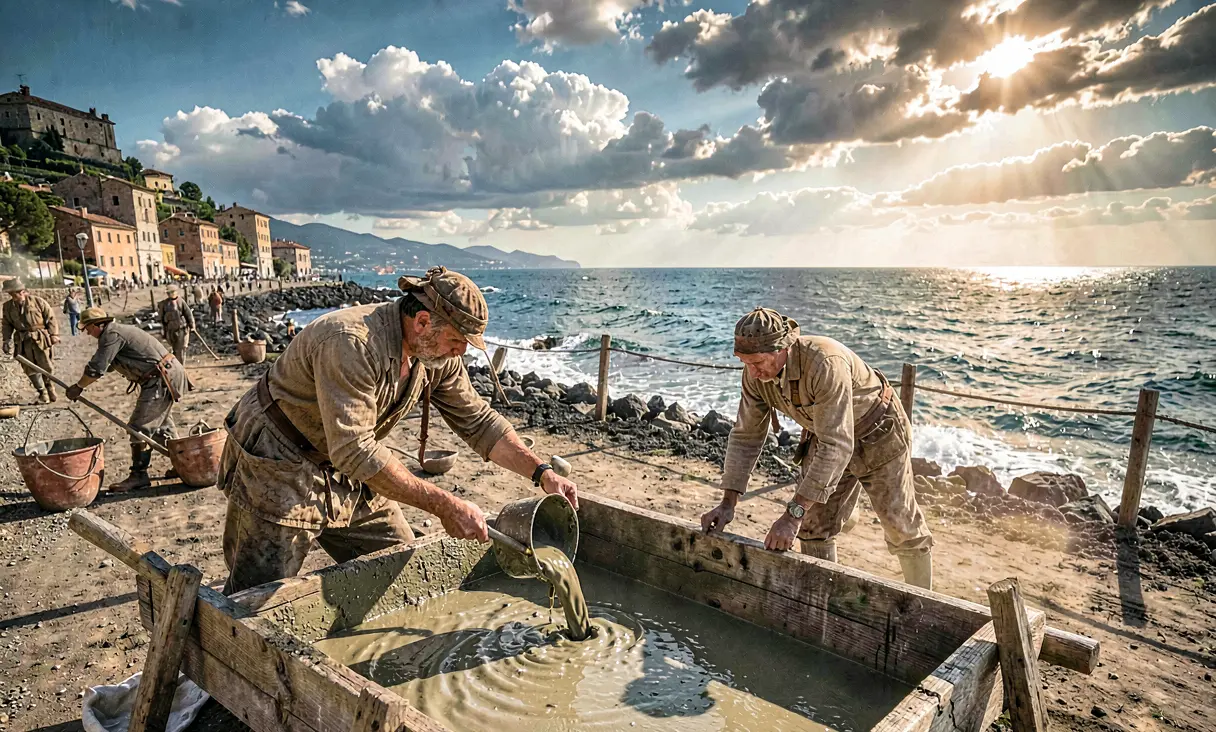
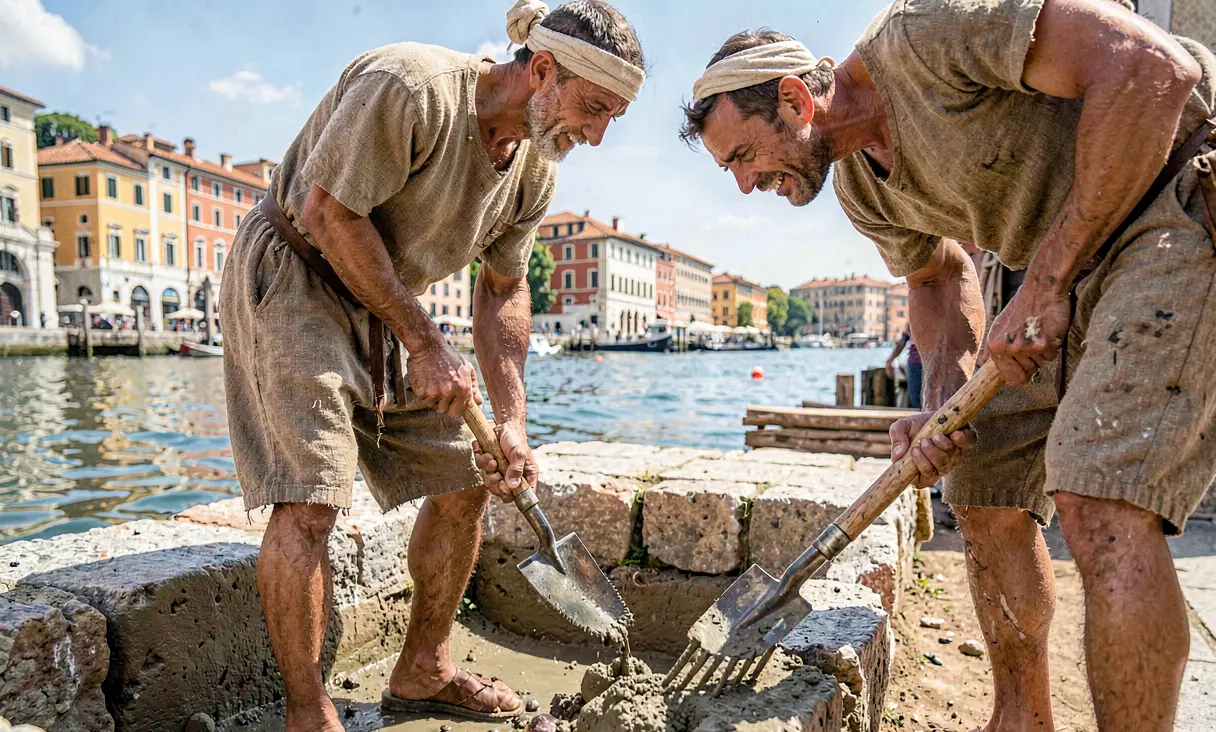
This chemical breakthrough gave rise to *opus caementicium*, the Roman equivalent of modern concrete. The material was a composite of lime, pozzolana, and various aggregates ranging from crushed brick to large stones (*caementa*). This mixture could be poured into wooden formwork or, crucially, dumped directly into water where it would set without washing away. The innovation allowed for the construction of massive harbors like those at Caesarea Maritima (later built by Herod using Roman techniques) and Portus Julius near Cumae. For the first time in history, architects were freed from the constraints of stone availability and wooden scaffolding, enabling the creation of vast, curved vaults and domes that defied previous architectural logic.
Engineering the Unseen: Underwater Foundations
The application of hydraulic concrete revolutionized civil engineering by allowing for the construction of deep-water foundations. Roman engineers developed a method where large caissons or cofferdams were not strictly necessary; instead, they could pour the mixture directly into the sea, where it would harden around submerged stones. This technique was instrumental in building the breakwaters at Cosa and the harbor at Ostia. The resulting structures possessed a self-healing capability; over centuries, seawater percolating through microscopic cracks reacted with unhydrated lime and volcanic ash to form new crystals, sealing fissures and often making the structure stronger over time rather than weaker.
Architectural Liberation and the Pantheon
While initially utilized for military and maritime infrastructure, *opus caementicium* soon transformed monumental architecture. The material's plasticity allowed for the construction of complex geometries that would have been impossible with cut stone. This culminated in the 2nd century CE with the construction of the Pantheon under Emperor Hadrian. Its massive unreinforced concrete dome, spanning 43.3 meters (142 feet), remains the largest of its kind in the world. The Roman mastery of aggregate grading—using lighter pumice at the top and heavier basalt at the base—demonstrated a sophisticated understanding of material science that reduced structural load while maintaining integrity.
Legacy and Modern Re-evaluation
The fall of the Western Roman Empire led to a significant loss of this specific knowledge, as the precise ratios of lime to pozzolana were forgotten during the Middle Ages. For over a millennium, European construction reverted to less durable mortars. It was not until the 18th century that John Smeaton rediscovered the principles of hydraulic cement, and modern concrete (invented in the 19th century) largely replaced Roman techniques with Portland cement, which lacks the long-term durability of its ancient counterpart. Recent geological studies have confirmed that Roman seawater concrete develops a rare mineral called tobermorite, granting it a lifespan measured in millennia rather than decades.
The Enduring Impact on Western Civilization
The innovation of *opus caementicium* fundamentally altered the trajectory of human settlement and urban planning. It enabled the dense urbanization of Rome, the extensive aqueduct networks that supplied water to millions, and the massive public baths and amphitheaters that defined Roman social life. By decoupling construction from the limitations of stone cutting and timber formwork, this technology facilitated an infrastructure boom that supported the Pax Romana for centuries. The durability of these structures stands as a testament to Roman engineering prowess, continuing to influence modern material science as researchers strive to replicate the self-healing properties of ancient concrete to combat climate change and extend the lifespan of contemporary infrastructure.
Roman concrete enabled the construction of enduring maritime and monumental architecture that reshaped the ancient world's urban landscape.
Where it happened
Rome, Italy — see it on the interactive map →
Explore related history
 TechnologyGrand Canal of China Connects North and South610 CE · Luoyang to Hangzhou, ChinaEmperor Yang completes the massive waterway linking the Yellow and Yangtze rivers for transport and grain.
 TechnologyMeroitic Iron Smelting Industry Flourishesc. 500 BCE · Meroe, SudanMeroe develops a massive iron smelting industry using abundant fuel and advanced furnace technology.
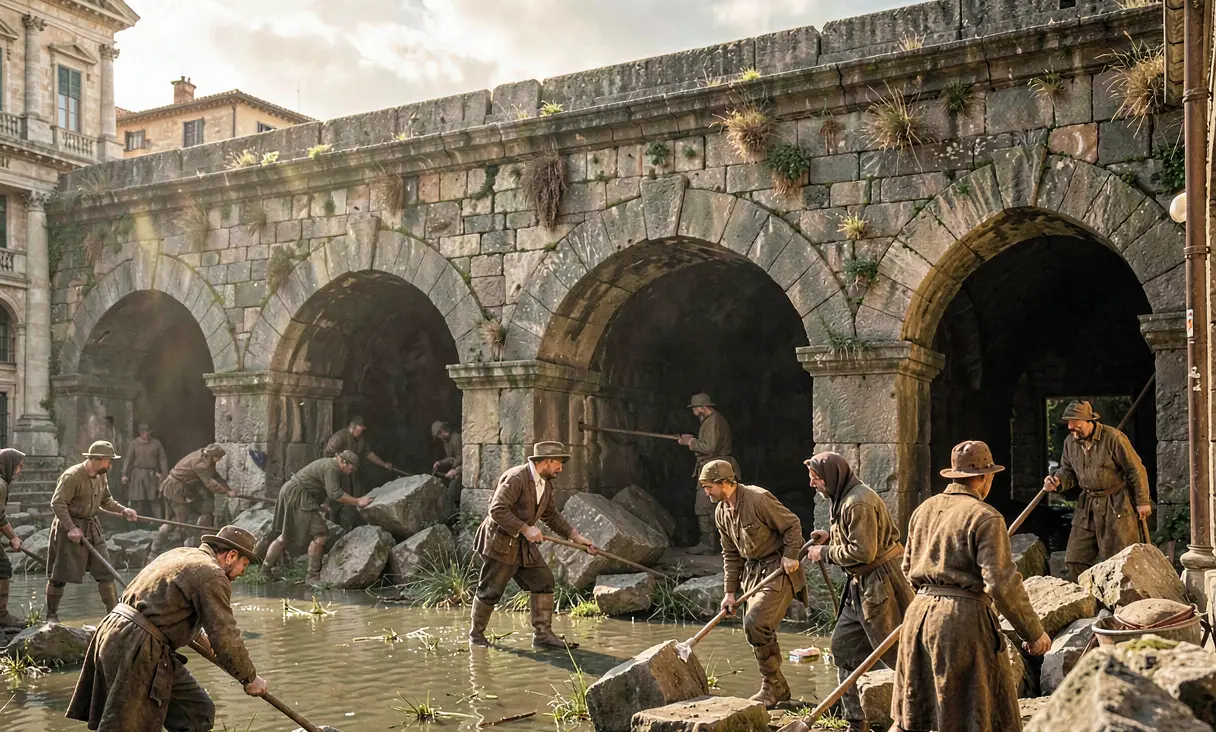 TechnologyConstruction of the Great Cloaca Maxima in Romec. 500 BCE · Rome, ItalyEarly Romans build the massive Cloaca Maxima sewer system to drain marshes and manage waste.
 ScienceArchimedes Formulates the Law of the Leverc. 250 BCE · Syracuse, SicilyArchimedes mathematically defines the principle of the lever and buoyancy, founding classical mechanics.
 ReligionAshoka Propagates Dharma via Rock Edictsc. 250 BCE · Sarnath, IndiaEmperor Ashoka spreads Buddhist ethics and non-violence across the Mauryan Empire through inscribed stone pillars.
 PoliticsBurial of the Lord of Sipánc. 250 BCE · Huaca Rajada, Lambayeque, PeruThe Moche ruler is buried with immense wealth and sacrificial victims.
Discussion
Loading…