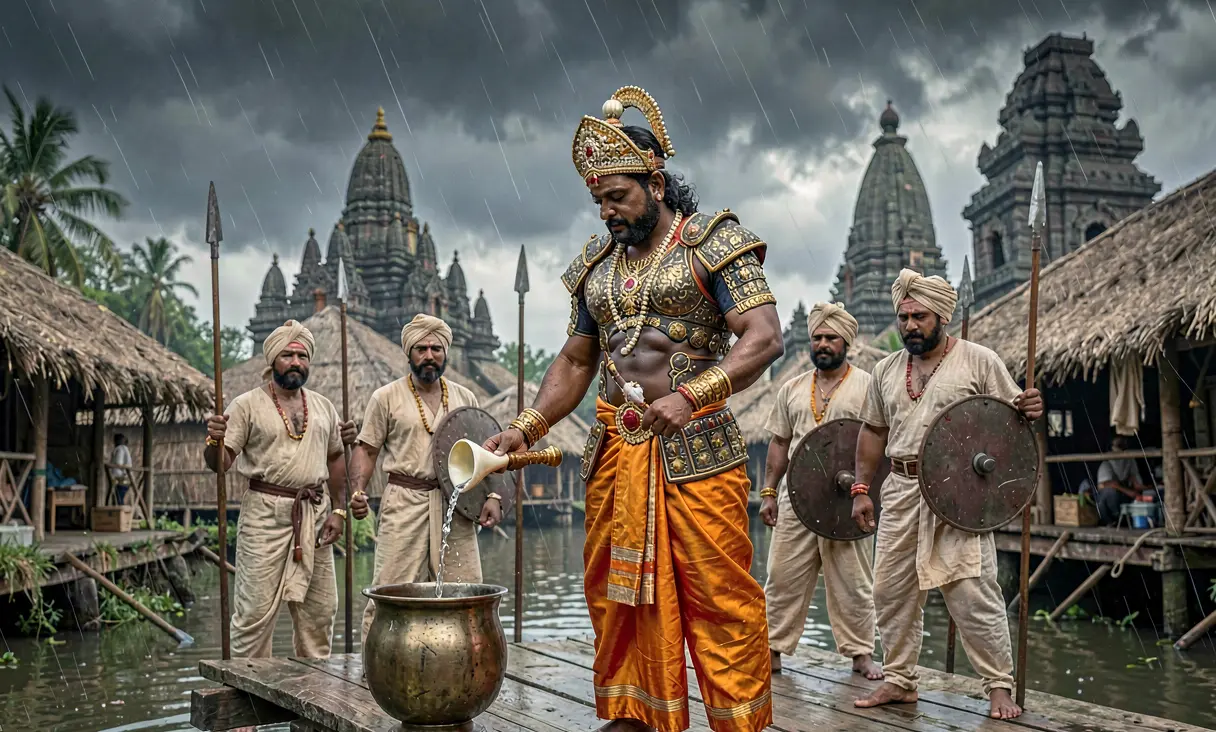
Rajendra Chola I's Ganges Expedition
Rajendra Chola I's unprecedented 1025 CE march to the Ganges defeated the Pala dynasty, symbolically unifying India under southern rule through a ritualistic return of holy river water and the foundin
Context of Imperial Ambition
By the early 11th century, the Chola dynasty had already established itself as the preeminent maritime and land power in southern India under Rajaraja I. His son, Rajendra Chola I, ascended the throne around 1014 CE inheriting a vast empire but sought to transcend regional dominance by projecting power into the Gangetic plains. While earlier South Indian kings had occasionally raided the north, none had attempted a sustained military occupation or symbolic conquest of the Ganges basin. The political landscape of northern India was fragmented among various dynasties, with the Pala Empire controlling Bengal and Bihar under the rule of Mahipala I. Rajendra's ambition was not merely territorial acquisition but the assertion of Chola suzerainty over all of India, a concept encapsulated in the title 'Gangaikonda' (Conqueror of the Ganges).
The March to the North
Around 1025 CE, Rajendra Chola I launched one of the most audacious military campaigns in Indian history. He marched his army northward from the Kaveri delta, traversing thousands of kilometers through hostile and unfamiliar terrain. The expedition required immense logistical planning, involving the movement of infantry, cavalry, war elephants, and supply trains across diverse ecosystems ranging from the Deccan plateau to the alluvial plains of Bengal. Inscriptions describe the army as a 'river of steel' that swept through the kingdoms of the Vengi region, crossing the Godavari and Krishna rivers before entering the heartland of the Pala Empire. The sheer distance covered—estimated at over 2,000 kilometers round trip—demonstrated an unprecedented level of strategic mobility for the era.
Confrontation with Mahipala I
The primary objective of the northern campaign was to defeat Mahipala I, the powerful ruler of the Pala dynasty who controlled Bengal and Bihar. Historical records, particularly the Thanjavur inscriptions, detail a series of fierce engagements where Rajendra's forces dismantled the Pala defenses. Although specific battle dates remain debated by historians, the consensus is that the Chola army decisively defeated Mahipala I, forcing him to retreat or submit to Chola overlordship. The campaign extended beyond Bengal into parts of Bihar and possibly Odisha, subjugating local chieftains who had previously paid tribute to the Palas. This victory was unique in South Indian history as it represented a successful deep-penetration raid that reached the sacred banks of the Ganges River.
The Ritual of Holy Water
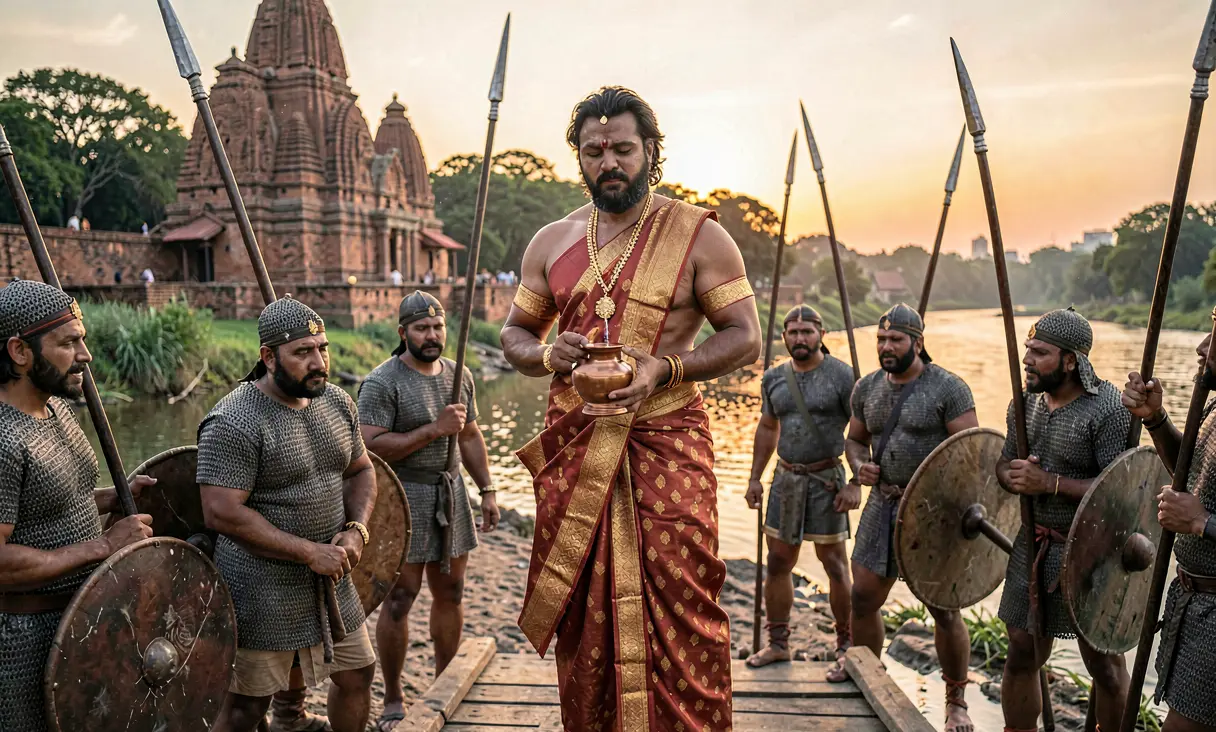
Upon reaching the confluence of the Ganges and other holy rivers, Rajendra Chola I performed a grand ritual to symbolize his conquest. He collected water from the Ganges in golden vessels and transported it back to the south, an act that held profound religious and political significance. This 'Gangapoorna' ceremony was intended to purify the conquered lands and legitimize Rajendra's rule as a universal monarch (Chakravartin). The return of the holy water signified that the spiritual center of India had been brought under Chola protection, effectively unifying the sacred geography of the subcontinent under a single southern dynasty. This act transformed a military victory into a divine mandate, reinforcing the Chola claim to imperial supremacy.
Founding of Gangaikonda Cholapuram
To immortalize this historic achievement, Rajendra Chola I abandoned his father's capital at Thanjavur and established a new imperial city named Gangaikonda Cholapuram (The City of the Chola who Conquered the Ganges) around 1025-1035 CE. The city was meticulously planned with wide streets, palaces, and administrative centers designed to reflect the grandeur of his northern victory. Its centerpiece was the Brihadisvara Temple dedicated to Shiva, a massive structure that rivaled its predecessor in Thanjavur but featured unique architectural innovations, including a towering vimana and intricate sculptures depicting the king's military exploits. The construction of this city served as a permanent monument to the expedition, embedding the memory of the Ganges campaign into the very stone of the Chola empire.
Legacy and Historical Significance
The Ganges Expedition remains a defining moment in Indian military history, showcasing the logistical prowess and strategic vision of the Chola dynasty. While Rajendra did not establish permanent administrative control over northern India, his campaign shattered the myth of invincibility surrounding northern powers and demonstrated that southern armies could project power deep into the subcontinent's interior. The expedition facilitated a cultural exchange between North and South India, evident in the spread of Chola art styles to Bengal and the adoption of northern motifs in southern temple architecture. Ultimately, the campaign cemented Rajendra Chola I's status as one of history's greatest warrior-kings and marked the zenith of Chola imperial power before its gradual decline in the following centuries.
This expedition proved that a South Indian power could project military force across the entire subcontinent, redefining the geopolitical map of medieval India.

Where it happened
Bengal to Ganges Delta, India — see it on the interactive map →
Explore related history
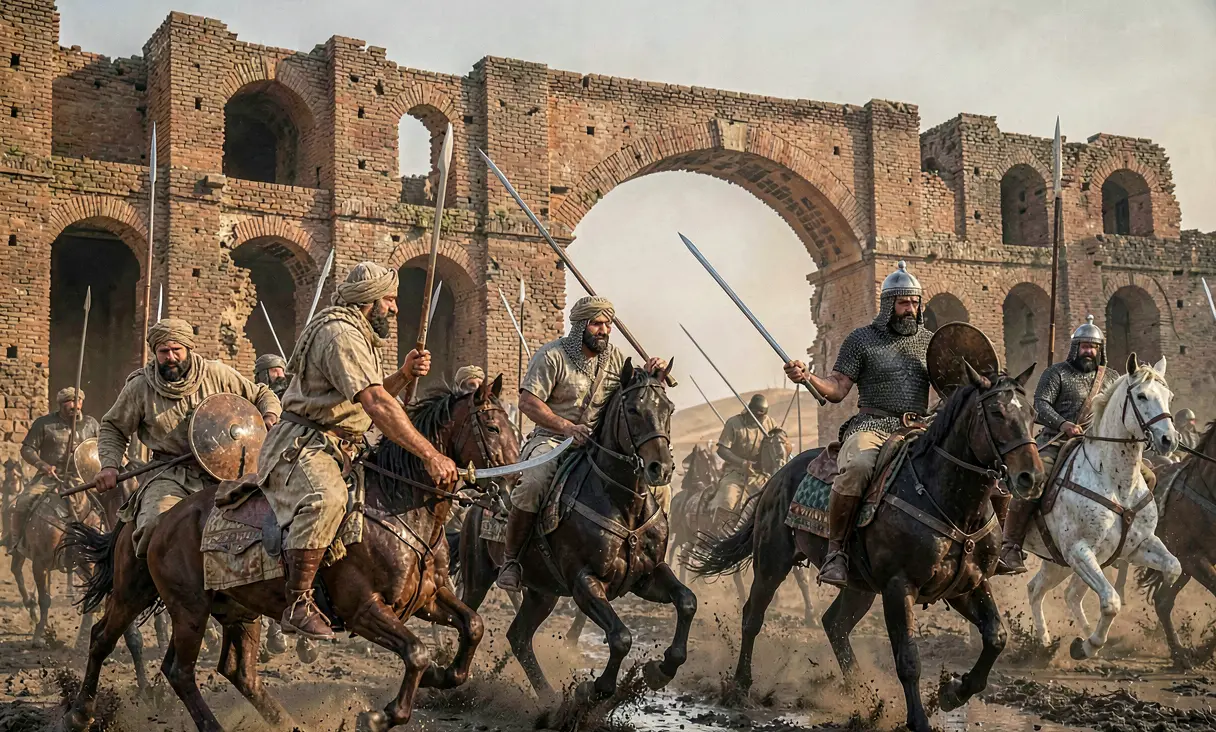 WarIslamic Conquest of the Sasanian Empire637 CE · Ctesiphon, Iraq (Persia)Arab Muslim forces defeat the Sasanian Empire at the Battle of al-Qadisiyyah, ending centuries of Persian rule.
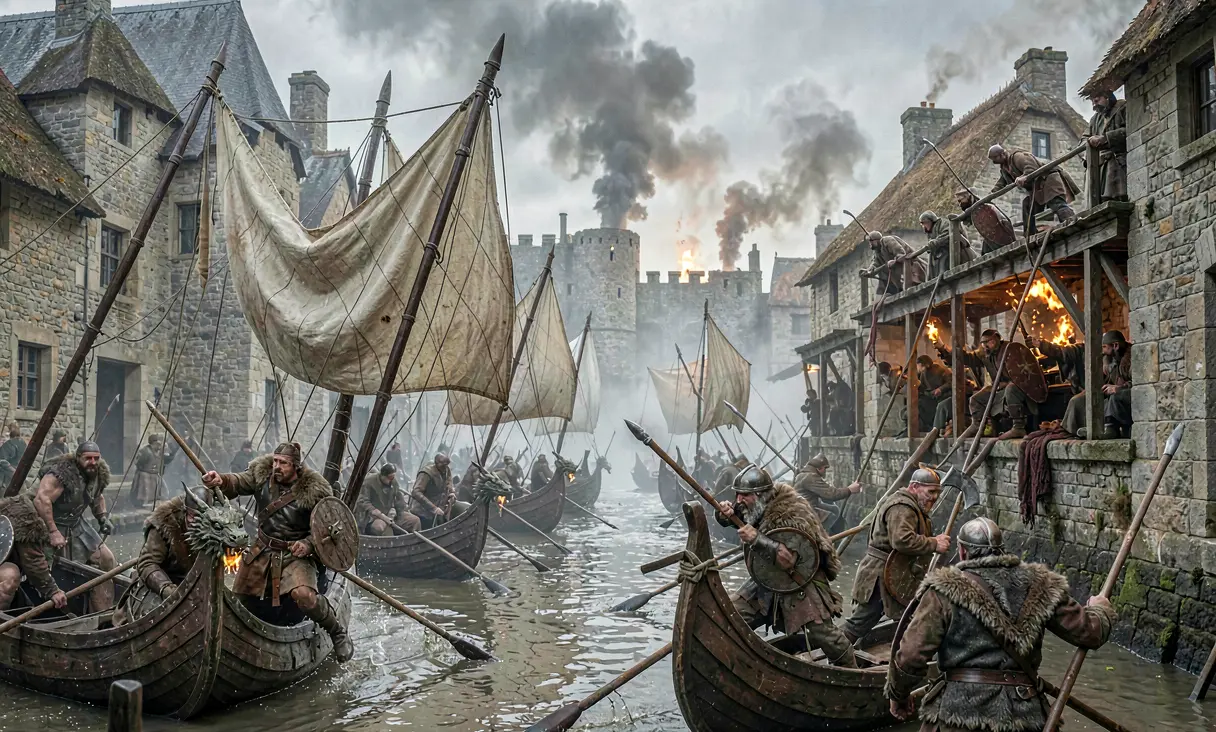 WarViking Siege of Paris885 CE · Paris, FranceViking raiders led by Sigfred besiege Paris for over a year, testing the defenses of West Francia.
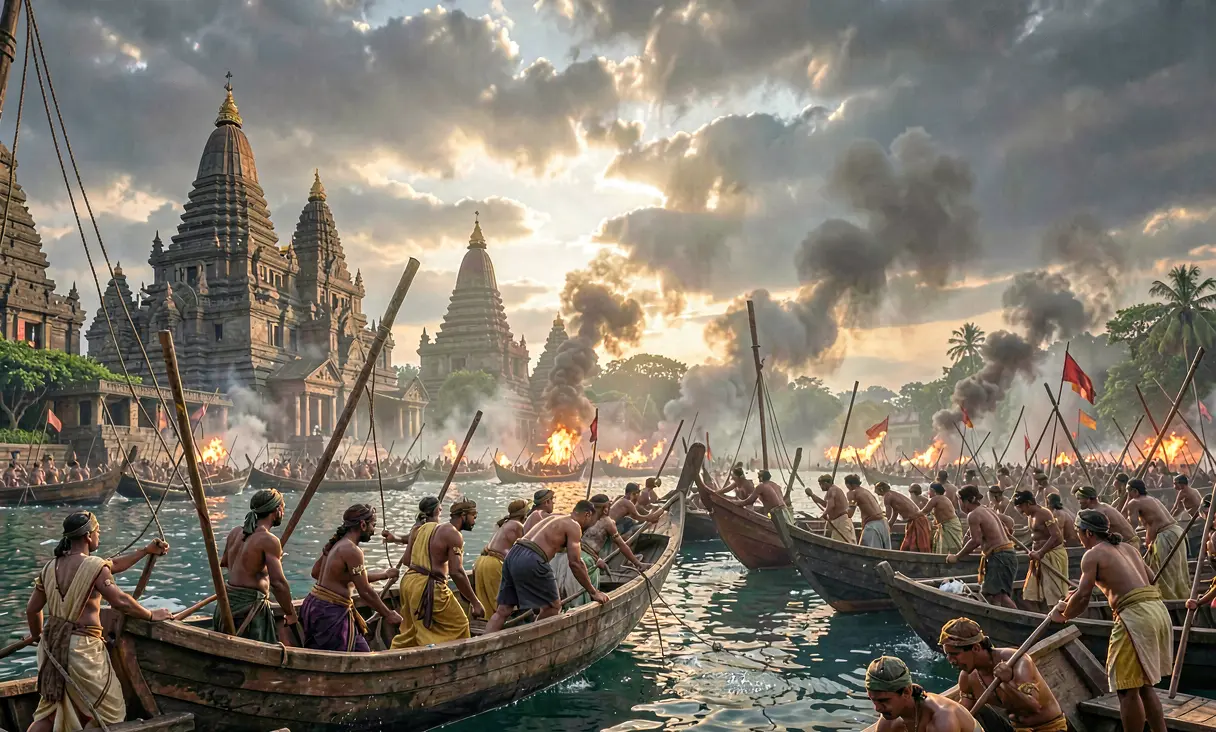 WarChola Conquest of Sri Lankac. 993 CE · Anuradhapura, Sri LankaRajaraja Chola launches a massive amphibious invasion of Sri Lanka, defeating the Sinhalese kingdom and annexing the island.
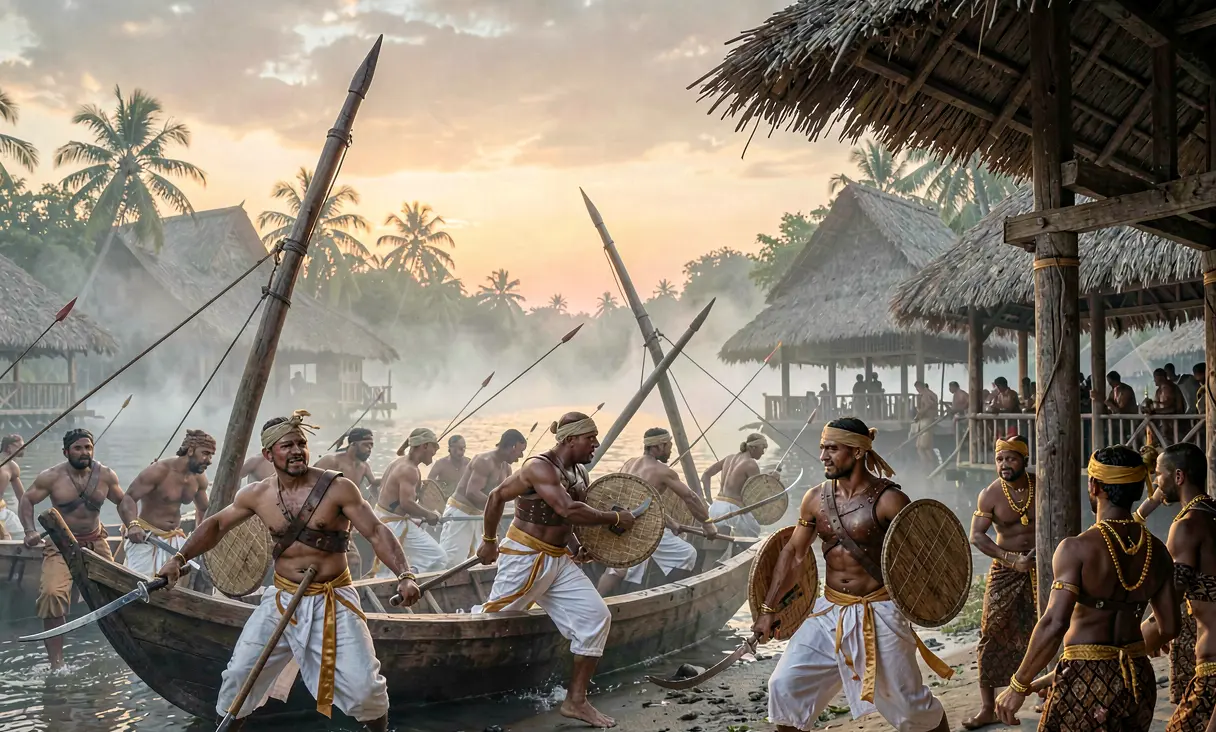 WarChola Invasion of Srivijayac. 1025 CE · Palembang, Sumatra, IndonesiaRajendra Chola I launches a naval raid on the Srivijaya Empire, disrupting its control over the Strait of Malacca and securing trade routes.
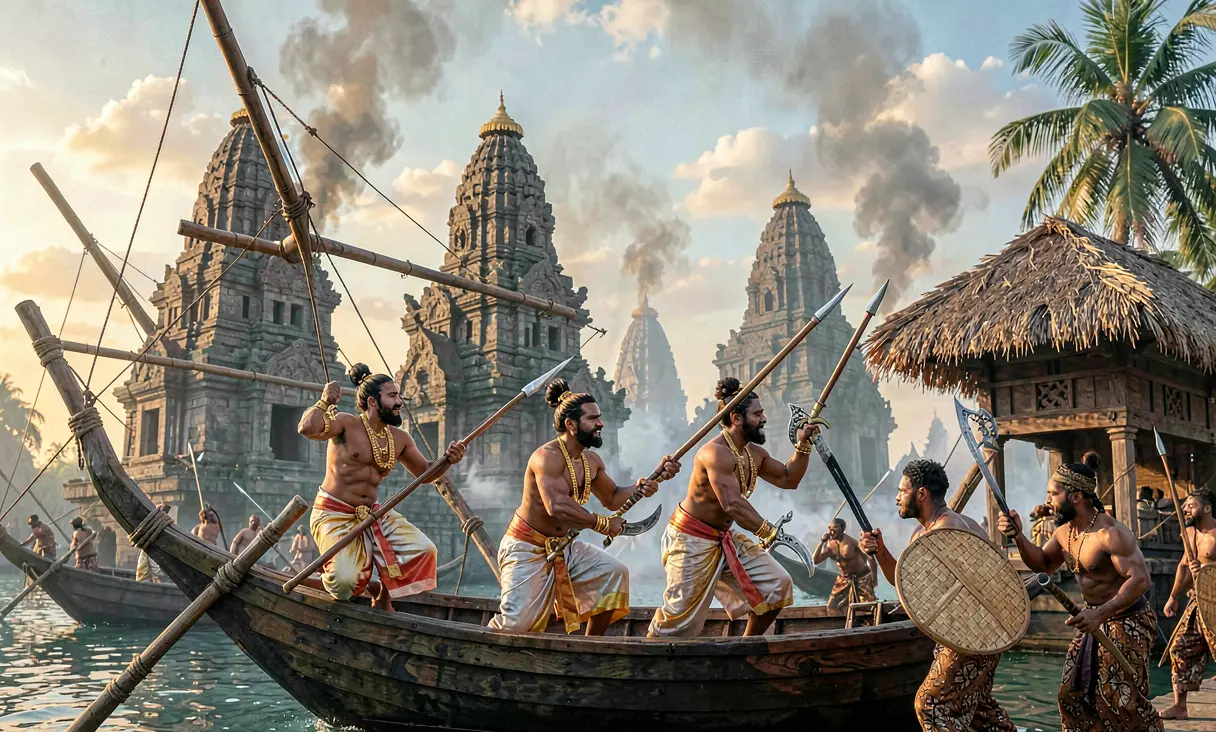 ExplorationChola Naval Expedition to Southeast Asia1025 CE · Java and Sumatra (Modern Indonesia)Chola fleet raids coastal cities across the archipelago.
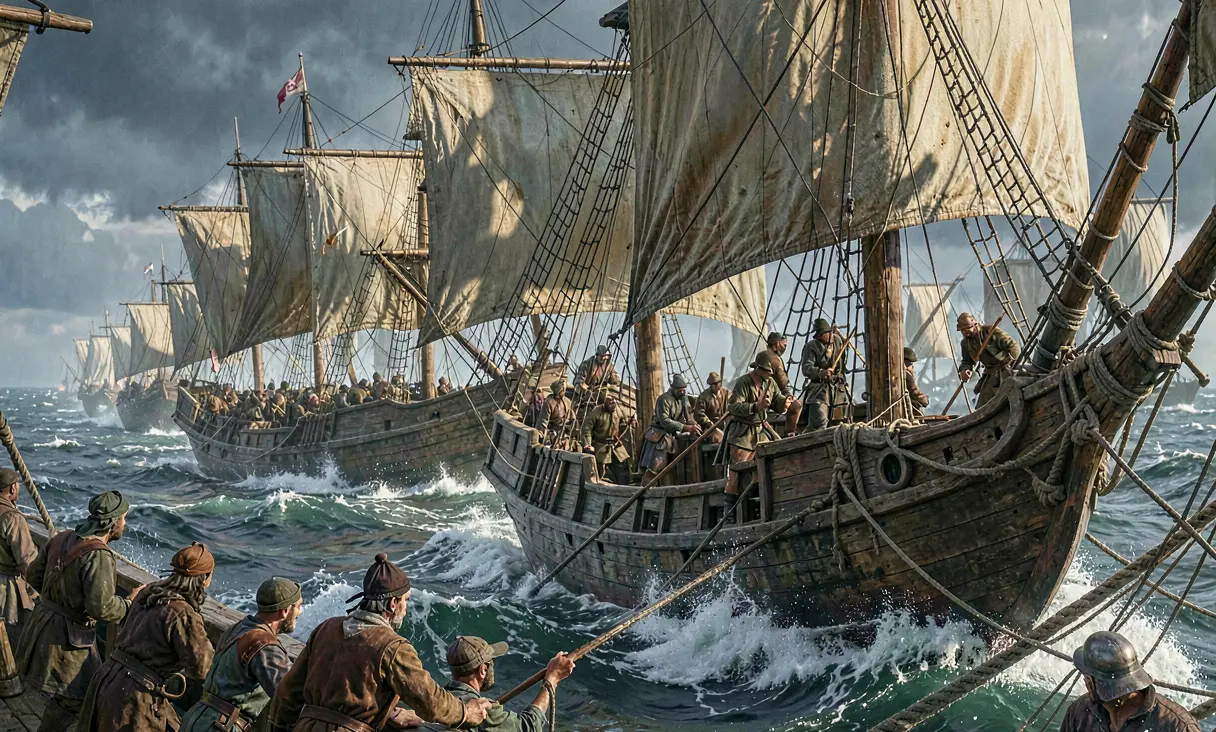 WarRajendra Chola I's Expedition to Southeast Asiac. 1025 CE · Kedah (modern Malaysia)Chola Emperor Rajendra I launches a massive naval raid on Srivijaya, projecting Indian power across the Bay of Bengal.
Discussion
Loading…