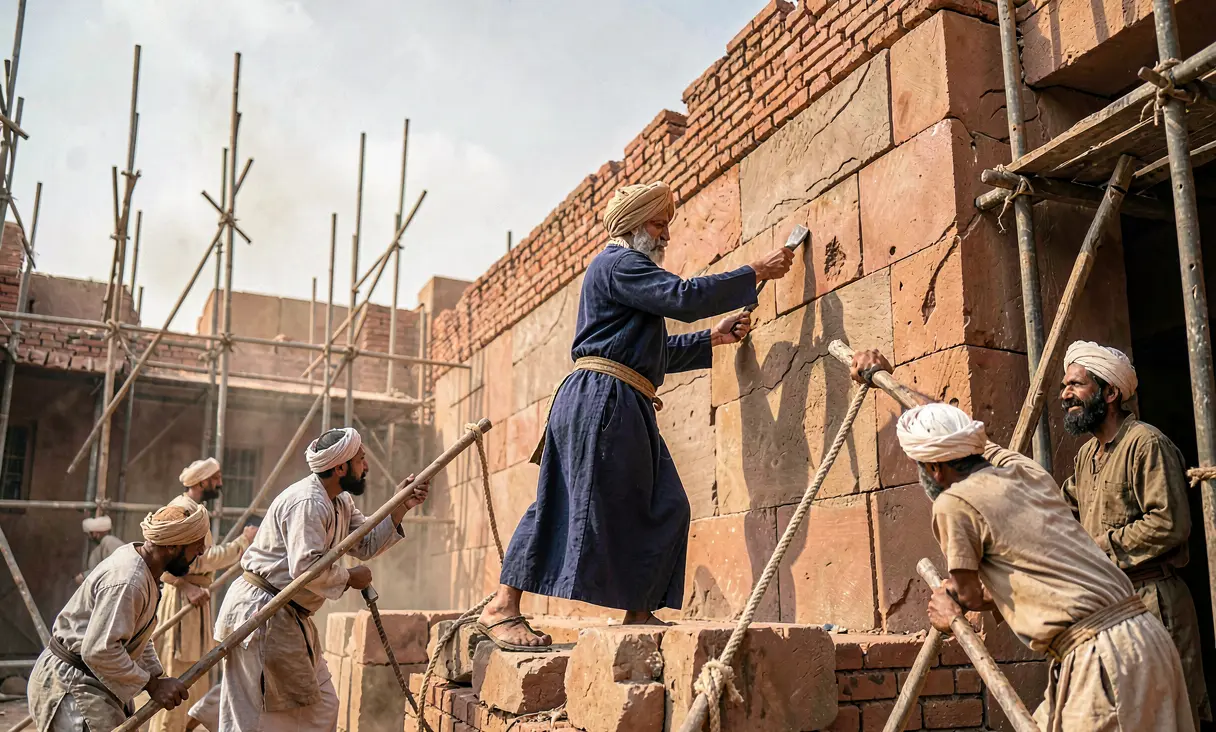
Construction of Qutub Minar Begins
Begun c. 1199 CE by Qutb-ud-din Aibak, the Qutub Minar stands as the earliest masterpiece of Indo-Islamic architecture, symbolizing the establishment of Muslim rule in Delhi.
The Dawn of Sultanate Power
In the wake of the decisive Ghurid victories at Tarain in 1192 CE, the political landscape of northern India underwent a seismic shift. The defeat of Prithviraj Chauhan marked the effective end of major Hindu resistance in the region and paved the way for the establishment of the Delhi Sultanate. Qutb-ud-din Aibak, a former slave who rose to become the most trusted general of Muhammad Ghori, assumed de facto control over the newly conquered territories. While Muhammad Ghori ruled from Ghazni, it was Aibak who laid the administrative and military foundations for Muslim rule in Delhi, transforming a military conquest into a lasting political entity.
A Monument to Victory
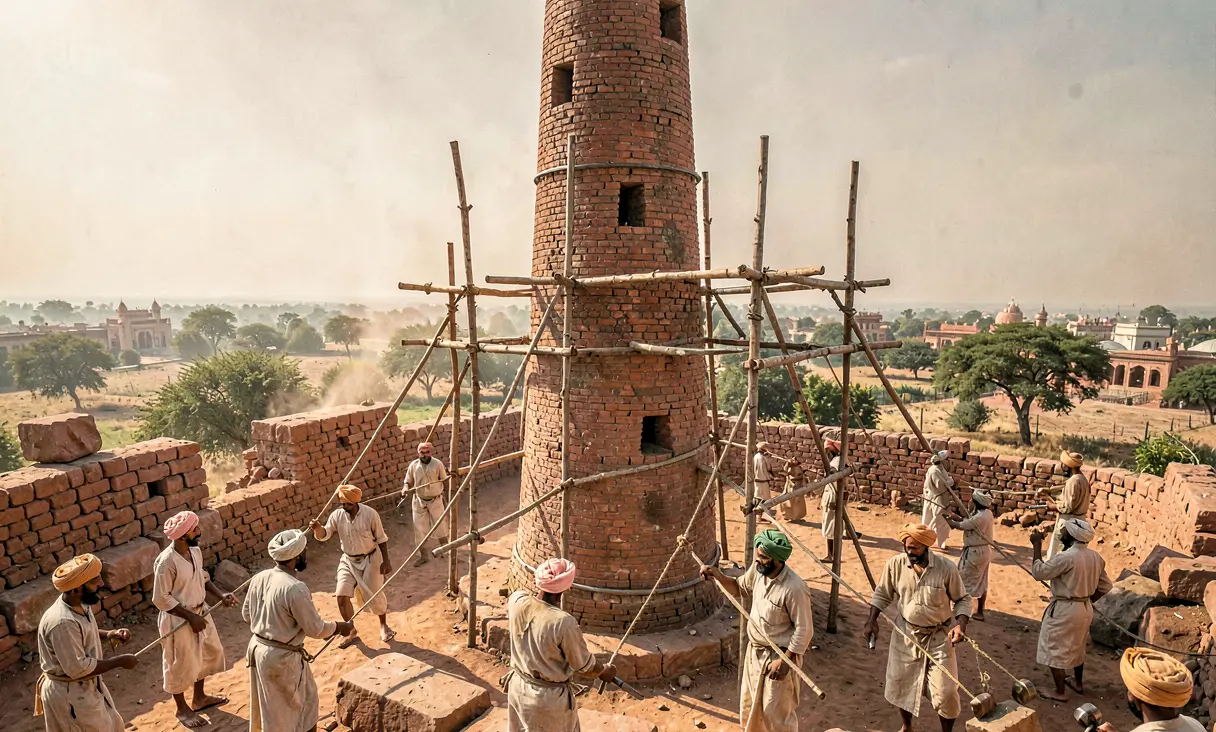
Around 1199 CE, Qutb-ud-din Aibak initiated the construction of the Qutub Minar, a project intended not merely as an architectural feat but as a potent symbol of Islamic triumph over the indigenous powers. The tower was designed to serve as a minaret for the adjacent Quwwat-ul-Islam Mosque, India's first congregational mosque built by Muslim rulers in Delhi. Unlike previous structures that were often repurposed from existing temples, this project represented a deliberate fusion of new religious imperatives with local building traditions. Aibak envisioned a structure that would dominate the skyline of Lalkot (Red Fort), asserting the permanence and grandeur of the new regime.
The Architectural Synthesis
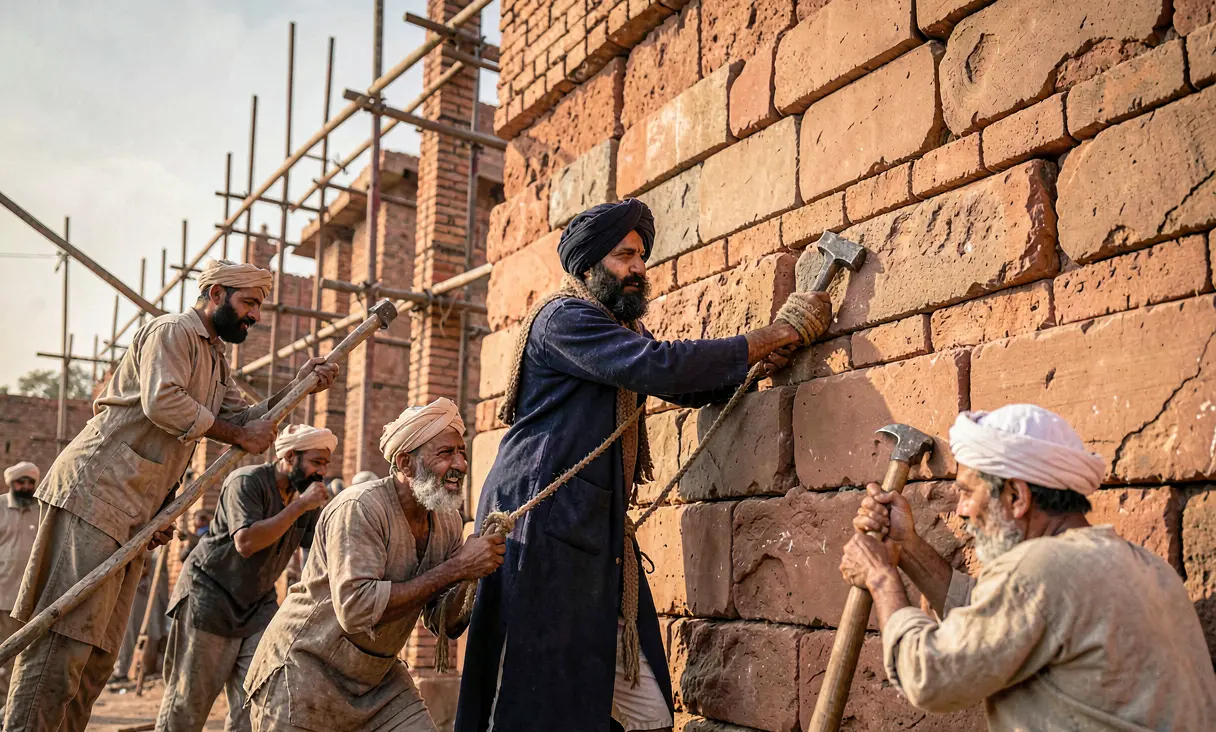
The construction of the Qutub Minar stands as the earliest surviving exemplar of Indo-Islamic architecture, a style born from the necessity of employing Indian artisans to execute Islamic designs. The tower rises over 72 meters (approximately 238 feet) in five distinct storeys, each separated by projecting balconies supported by intricate stone brackets. The lower three storeys are constructed primarily of red sandstone, while the upper two incorporate marble and sandstone, reflecting a sophisticated understanding of materials and structural integrity. The facade is adorned with fluted columns and deep, arched niches, decorated with calligraphic inscriptions from the Quran and geometric patterns that contrast sharply with the floral motifs typical of earlier Hindu temple architecture.
The Unfinished Vision
Although Qutb-ud-din Aibak laid the foundation and completed the first storey, his reign was cut short by his death in 1210 CE following a polo accident. The project was subsequently taken up by his successor, Iltutmish, who added three more storeys to the tower around 1220 CE. It was not until the reign of Firoz Shah Tughlaq in the 14th century that the final storey and the restoration work were completed, following damage from lightning strikes. This multi-generational effort underscores the Minar's status as a dynastic project, where each Sultan sought to leave their mark on this enduring symbol of sovereignty.
Legacy of Stone and Faith
The Qutub Minar has survived for over eight centuries, witnessing the rise and fall of five distinct dynasties within the Delhi Sultanate, as well as the subsequent Mughal Empire. It set a definitive precedent for future minarets and towers across the Indian subcontinent, influencing structures such as the Adhai Din Ka Jhonpra in Ajmer and various Mughal-era monuments. The tower's unique blend of Persian aesthetics with Indian craftsmanship created a visual language that defined the architectural identity of medieval India. Today, it remains the tallest brick minaret in the world, a UNESCO World Heritage Site, and an enduring testament to the complex cultural synthesis that characterized the early Sultanate period.
The Qutub Minar remains the tallest brick minaret in the world and is a potent symbol of the Delhi Sultanate's rise to power.
Where it happened
Delhi, India — see it on the interactive map →
Explore related history
 ArtCreation of Maya Polished Obsidian Mirrorsc. 600 CE · Guatemala (Maya Lowlands)Artisans craft polished obsidian mirrors for divination and ritual use.
 ArtBurial of the Sutton Hoo Shipc. 625 CE · Suffolk, EnglandAn Anglo-Saxon king is buried with a magnificent helmet and gold artifacts.
 ArtTang Dynasty Golden Age of Poetry and Culturec. 713 CE · Chang'an, ChinaThe Tang Dynasty reaches its cultural zenith in Chang'an, producing legendary poets like Li Bai and Du Fu.
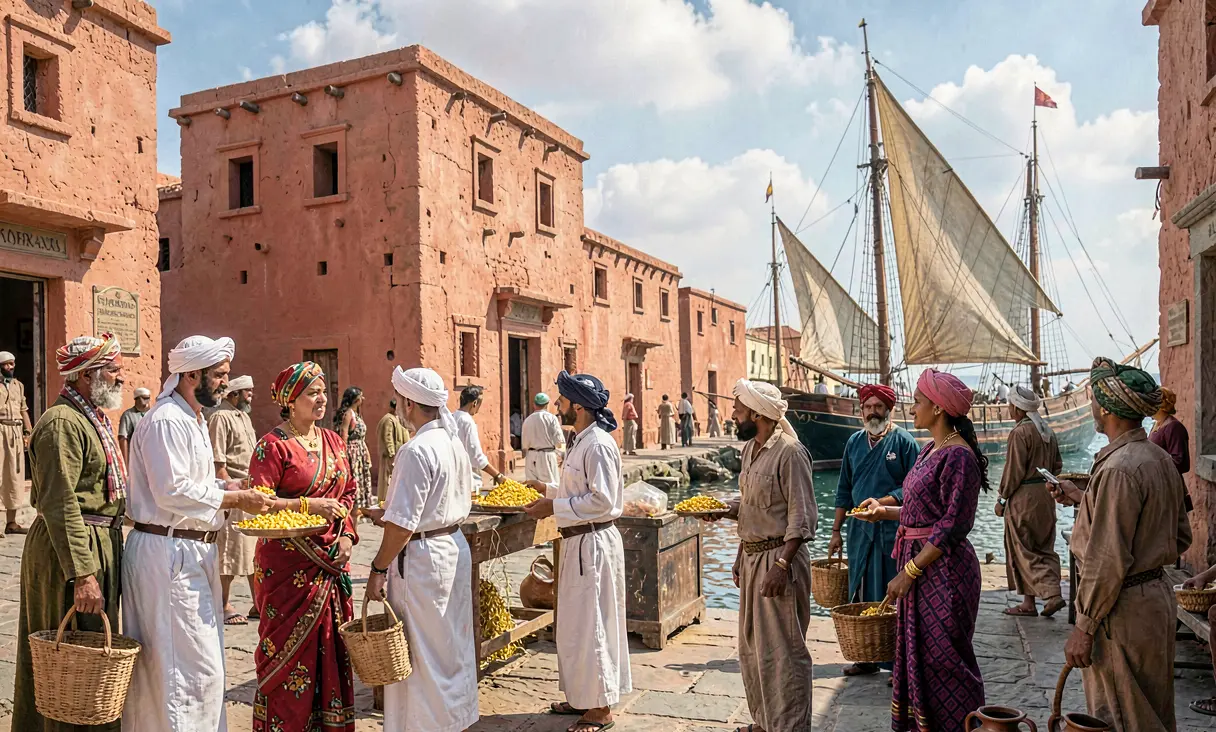 CivilizationRise of Swahili City-States on the East African Coastc. 1200 CE · Kilwa Kisiwani, TanzaniaSwahili city-states flourish as cosmopolitan hubs of Indian Ocean trade, blending African and Islamic cultures.
 TechnologyStandardization of the Quipu System in the Andesc. 1200 CE · Cusco Region, PeruInca and pre-Inca cultures refine the quipu for complex numerical and narrative data storage.
 ScienceMaya Astronomical Tables in the Dresden Codexc. 1200 CE · Yucatán Peninsula, MexicoMaya astronomers record precise calculations for Venus cycles and eclipses.
Discussion
Loading…