
Qin Shi Huang Unifies China
In 221 BCE, King Zheng of Qin conquered rival states to declare himself the First Emperor, establishing China's first centralized empire and creating a political blueprint that endured for two millenn
The Warring States Prelude
By the late 3rd century BCE, China was fractured into seven dominant states locked in a brutal cycle of warfare known as the Warring States period. For centuries, the Zhou Dynasty's nominal authority had eroded, leaving a power vacuum filled by regional kings who prioritized military expansion over feudal loyalty. Among these powers, the state of Qin, situated in the fertile Wei River Valley of modern-day Shaanxi, emerged as the most formidable. Under the guidance of Legalist reformers like Shang Yang, Qin transformed into a hyper-efficient war machine, implementing meritocratic promotions and strict agricultural-military codes that outpaced its rivals.
The Rise of King Zheng
Born in 259 BCE, Ying Zheng ascended the throne of Qin at the age of thirteen. His early reign was dominated by powerful regents and internal conspiracies, but upon assuming full control around 238 BCE, he unleashed a decade-long campaign of total conquest. Unlike previous rulers who sought hegemony or tributary status, Zheng pursued absolute unification. He systematically dismantled the other six states—Han, Zhao, Wei, Chu, Yan, and Qi—through a combination of diplomatic subversion, espionage, and overwhelming military force. The final blow fell in 221 BCE with the conquest of Qi, leaving no rival state standing.
The Proclamation of the First Emperor
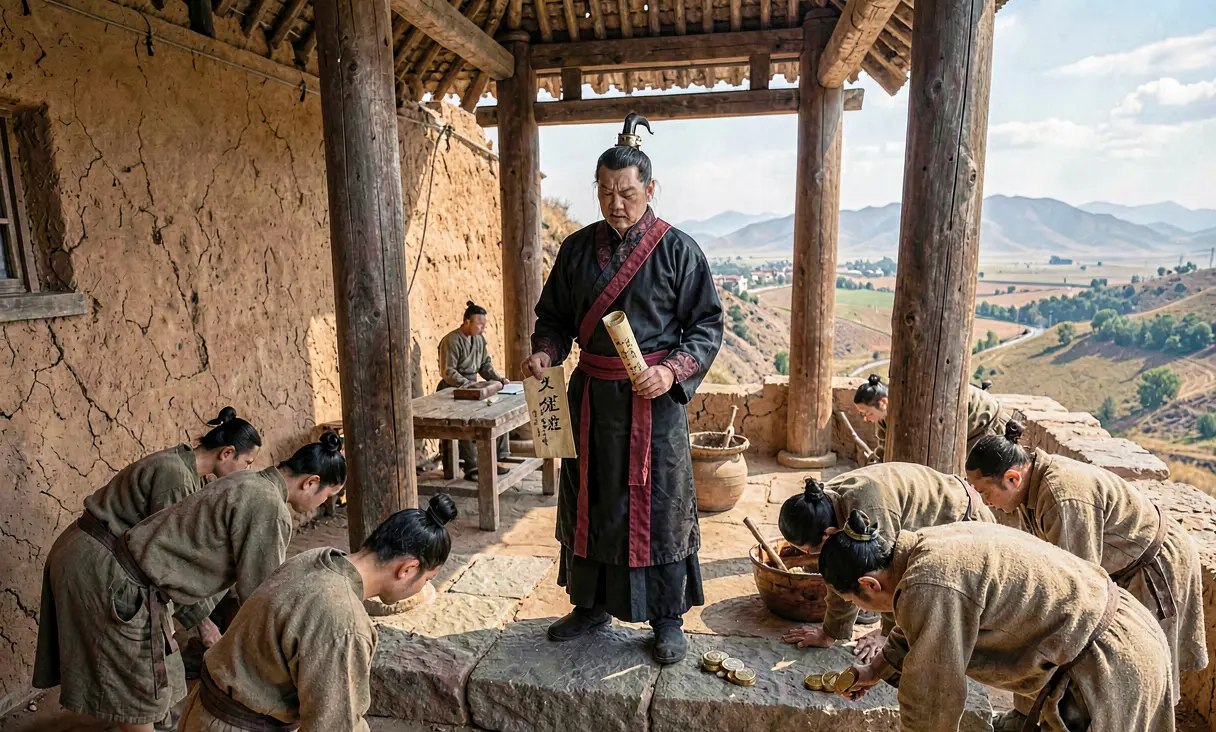
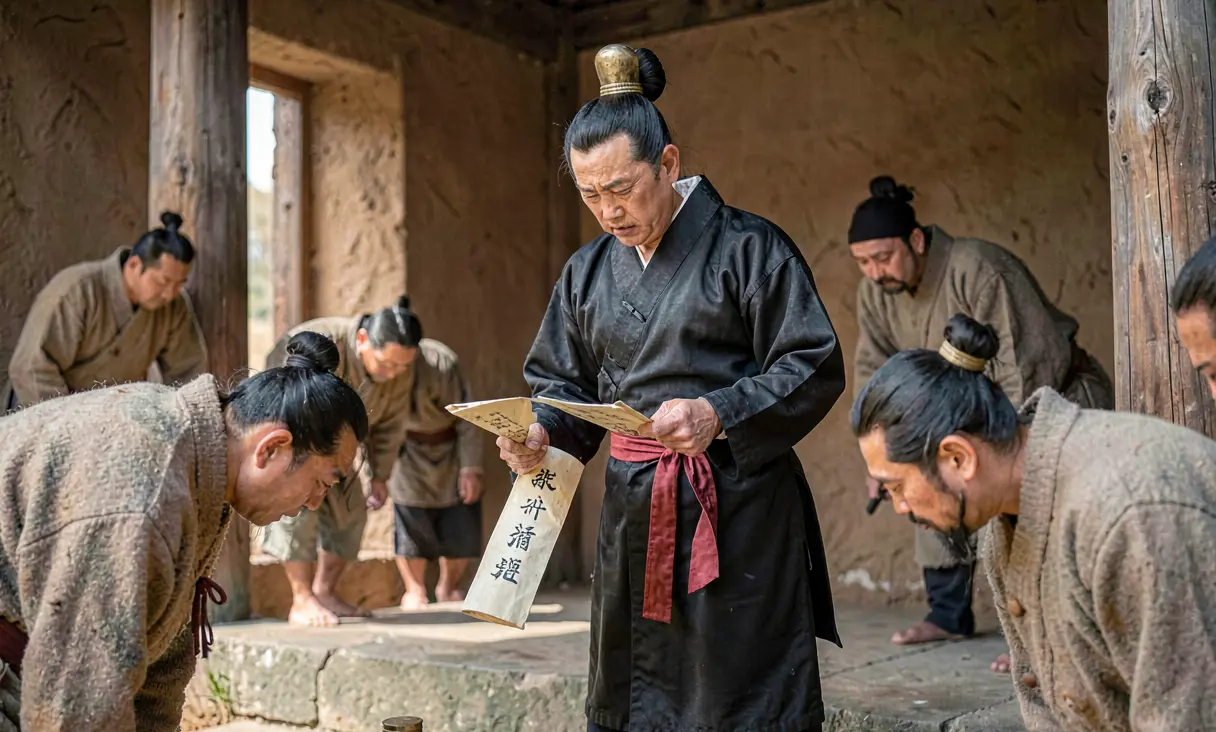
In the autumn of 221 BCE, having secured the entirety of the Central Plains, King Zheng declared that his achievements surpassed those of the legendary Three Sovereigns and Five Emperors. Rejecting the title 'King' (Wang), he adopted the new, unprecedented designation of 'Huangdi,' or Emperor, styling himself Qin Shi Huang, the First August Emperor. He established his capital at Xianyang, transforming it into a sprawling administrative hub. This act was not merely symbolic; it signaled the end of the feudal era where power was shared among aristocratic families and the birth of a centralized imperial system where all authority flowed from the throne.
Centralization and Standardization
Qin Shi Huang, advised by his chancellor Li Si, immediately dismantled the old feudal structure. The empire was divided into thirty-six commanderies (later expanded), governed by appointed officials who could be rotated or recalled, effectively ending hereditary local rule. To bind this vast territory together, the Emperor enforced radical standardization: a single written script based on the Qin seal script replaced diverse regional dialects; weights and measures were unified to facilitate trade; and axle widths for carts were standardized to ensure uniformity across the imperial road network. These reforms created a cohesive economic and cultural identity that transcended local loyalties.
Harsh Legalism and Defense
The new regime was underpinned by strict Legalist philosophy, which posited that human nature was inherently selfish and required harsh laws and collective punishment to maintain order. Dissent was crushed; the burning of books and burying of scholars in 213 BCE were extreme measures intended to erase historical narratives that contradicted the official state ideology. Simultaneously, the Emperor turned his attention to external threats, ordering the connection and reinforcement of existing defensive walls along the northern frontier against the Xiongnu nomads. This massive engineering project, stretching over thousands of miles, laid the physical foundation for what would become the Great Wall.
Legacy and Historical Significance
Although the Qin Dynasty collapsed in 206 BCE, merely fifteen years after its founder's death, its political architecture proved indestructible. The Han Dynasty that followed retained the centralized bureaucratic model, the standardized script, and the concept of a unified empire, ensuring that 'China' remained a singular political entity for two millennia. Every subsequent dynasty viewed Qin Shi Huang as the archetype of imperial power, even while condemning his tyranny. His unification defined the geographical and cultural boundaries of China, creating a template of governance that prioritized unity over fragmentation, a legacy that continues to shape East Asian history.
This event created the concept of a unified China that persists as a geopolitical entity to this day.
Where it happened
Xianyang, Shaanxi, China — see it on the interactive map →
Explore related history
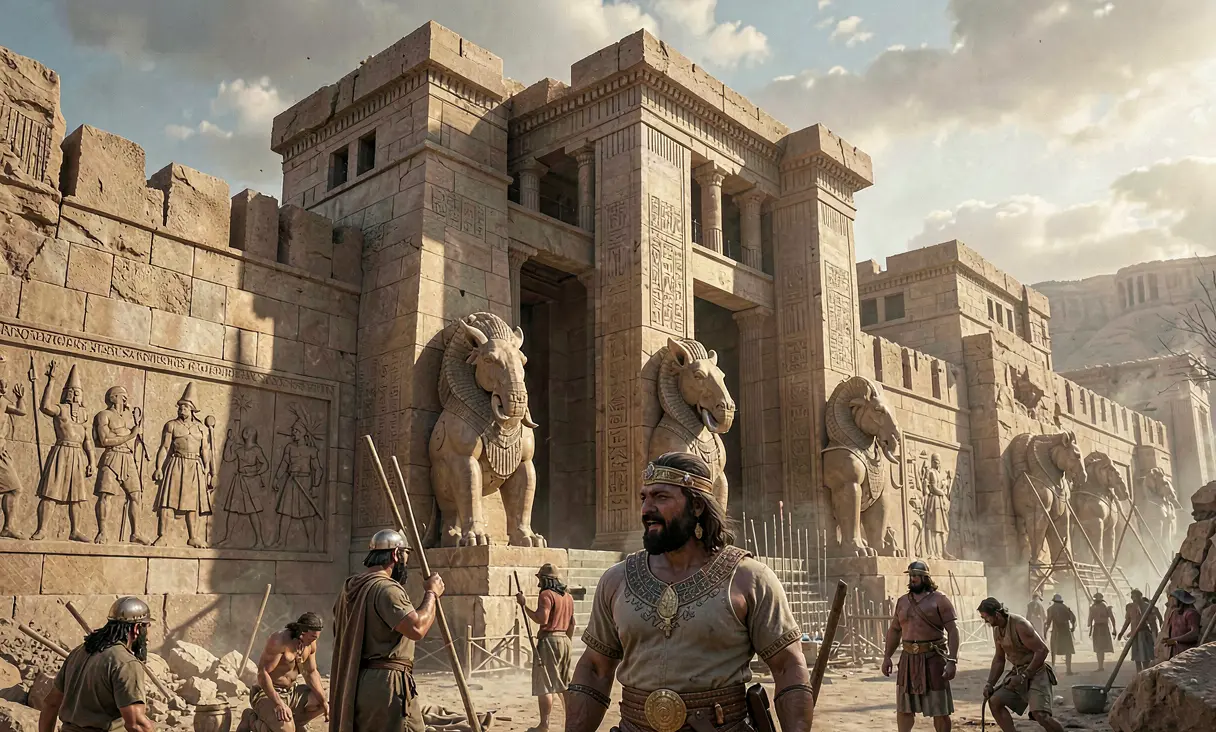 PoliticsFounding of Dur-Sharrukin by Sargon IIc. 717 BCE · Khorsabad (Dur-Sharrukin), IraqSargon II builds a new capital city to project Assyrian power and administrative control.
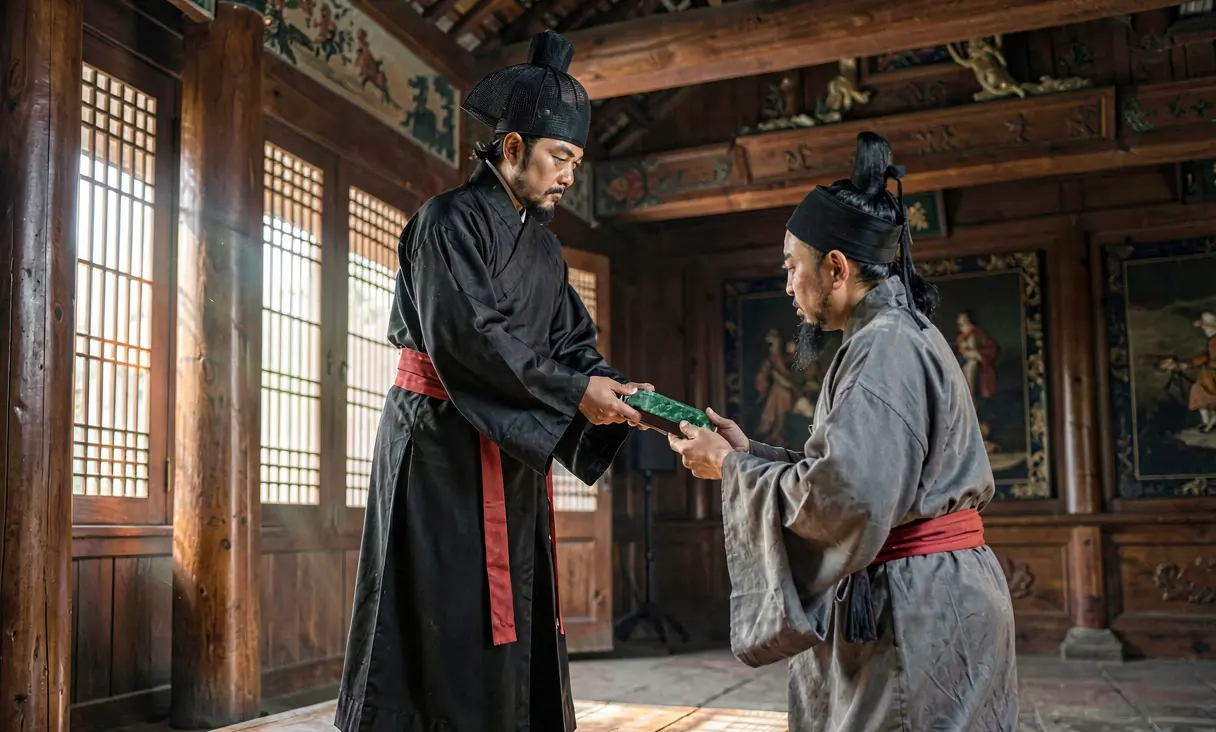 PoliticsReign of Emperor Taizong and the Zhenguan Era626 CE · Chang'an, ChinaLi Shimin ascends the throne after the Xuanwu Gate Incident, ushering in a golden age of governance.
 PoliticsRise of the Sixteen Mahajanapadasc. 600 BCE · Gangetic Plain (modern Uttar Pradesh/India)Sixteen great kingdoms and republics emerge across the Gangetic plain, marking the transition from tribal chiefdoms to state-level societies.
 PoliticsFall of Han Dynasty and Three Kingdoms Period Begins220 CE · Chang'an, ChinaEmperor Xian abdicates, ending the Han Dynasty and fragmenting China into three rival kingdoms.
 WarHannibal Barca Crosses the Alps into Italyc. 218 BCE · Alps (Col de Montgenèvre), France/Italy BorderHannibal leads his Carthaginian army and war elephants over the Alps to surprise Rome.
 PoliticsRise of the Satavahana Empirec. 230 BCE · Deccan Plateau (modern Maharashtra/India)The Satavahana Dynasty emerges in the Deccan, becoming a major power that controlled trade routes between northern and southern India.
Discussion
Loading…