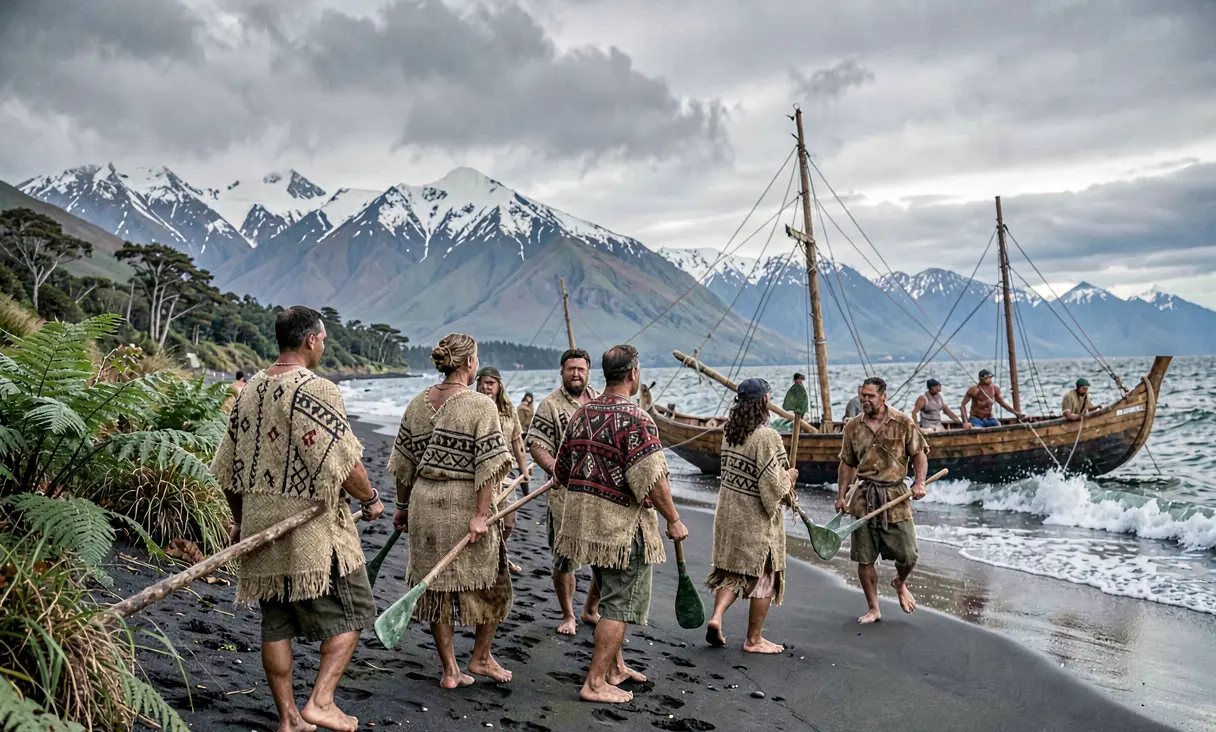
Polynesian Settlement of New Zealand (Aotearoa)
In c. 1280 CE, Polynesian voyagers completed humanity's global expansion by settling New Zealand using advanced star navigation, fundamentally altering the island's ecosystem and culture forever.
The Final Frontier of Human Expansion
By the late 13th century, the Polynesian expansion across the Pacific Ocean had reached its geographical limit. Aotearoa (New Zealand), located nearly 2,000 kilometers southeast of the nearest settled islands in the Cook Islands and Society Islands, remained uninhabited by humans. The settlement of this massive archipelago marked the completion of the greatest maritime migration in human history, a feat that required navigating open ocean swells using only celestial cues, wind patterns, and bird migrations over distances previously unattempted by any other culture.
Navigational Mastery and the Great Waka
The arrival was not accidental but the result of sophisticated voyaging technology and deep empirical knowledge. Settlers arrived in large, double-hulled voyaging canoes known as waka hourua, capable of carrying dozens of people, animals, and vital crops across thousands of kilometers of open ocean. Unlike European explorers who relied on compasses or coastal hopping, these navigators utilized a complex system of star paths, reading the swells to detect landmasses beyond the horizon, and observing the behavior of seabirds like the white tern (tara) which indicated proximity to islands. The journey likely originated from East Polynesia, specifically the region around Rarotonga or the Marquesas, undertaken during a period of favorable climatic conditions.
The Arrival in Aotearoa: c. 1280 CE
Radiocarbon dating and genetic analysis now converge on a settlement window between 1250 and 1300 CE, with 1280 CE serving as the most probable date for the initial colonization of the South Island's Canterbury region. Archaeological evidence from sites such as Wairau Bar suggests that early settlers established temporary camps to exploit abundant resources before spreading further. The first landfall likely occurred in the north or east of the North Island, but rapid expansion saw groups reaching the fertile plains of Canterbury within a generation. These pioneers encountered a landscape dominated by giant flightless birds, including the moa, and vast forests that had never known human disturbance.
Cultural Adaptation and the Rise of Māori
Upon arrival, the settlers faced an environment radically different from their tropical homeland. The introduction of the kūmara (sweet potato) required significant agricultural innovation to survive New Zealand's cooler climate; they developed specialized storage pits (rua) and utilized microclimates in the north to cultivate this staple crop. Simultaneously, they adapted their hunting strategies to exploit the massive moa populations, which provided meat, bone, and feathers. Over centuries of isolation from other Polynesian groups, these settlers evolved into a distinct culture known as Māori, developing unique art forms such as intricate wood carving (whakairo) and facial tattooing (tā moko), while their language diverged significantly from its East Polynesian roots.
Ecological Transformation and Rapid Change
The human impact on the New Zealand ecosystem was immediate and profound. Within a few centuries of settlement, the moa population was driven to extinction due to intensive hunting and habitat modification by fire. This rapid deforestation altered the landscape from dense rainforests to open scrublands in many regions. The arrival also introduced the Polynesian rat (kiore), which decimated native bird populations and plant seeds. These ecological shifts demonstrate the speed with which human settlement can alter an isolated island ecosystem, a phenomenon observed nowhere else on Earth with such dramatic and rapid consequences for megafauna.
Legacy of the Last Great Migration
The settlement of New Zealand stands as the final chapter in the peopling of the globe. It demonstrated that human ingenuity could conquer vast oceanic barriers without metal tools, written maps, or mechanical aids. The resulting Māori society, with its complex social structures (iwi and hapū) and rich oral traditions, preserved a direct link to the ancestral Polynesian world while forging a unique identity in the southernmost reaches of the Pacific. This event reshaped the demographic map of the Earth, leaving an enduring legacy evident today in the language, culture, and genetic heritage of over 700,000 Māori people.
It marked the final chapter in the great Polynesian expansion across the Pacific Ocean.
Where it happened
Canterbury, New Zealand (South Island) — see it on the interactive map →
Explore related history
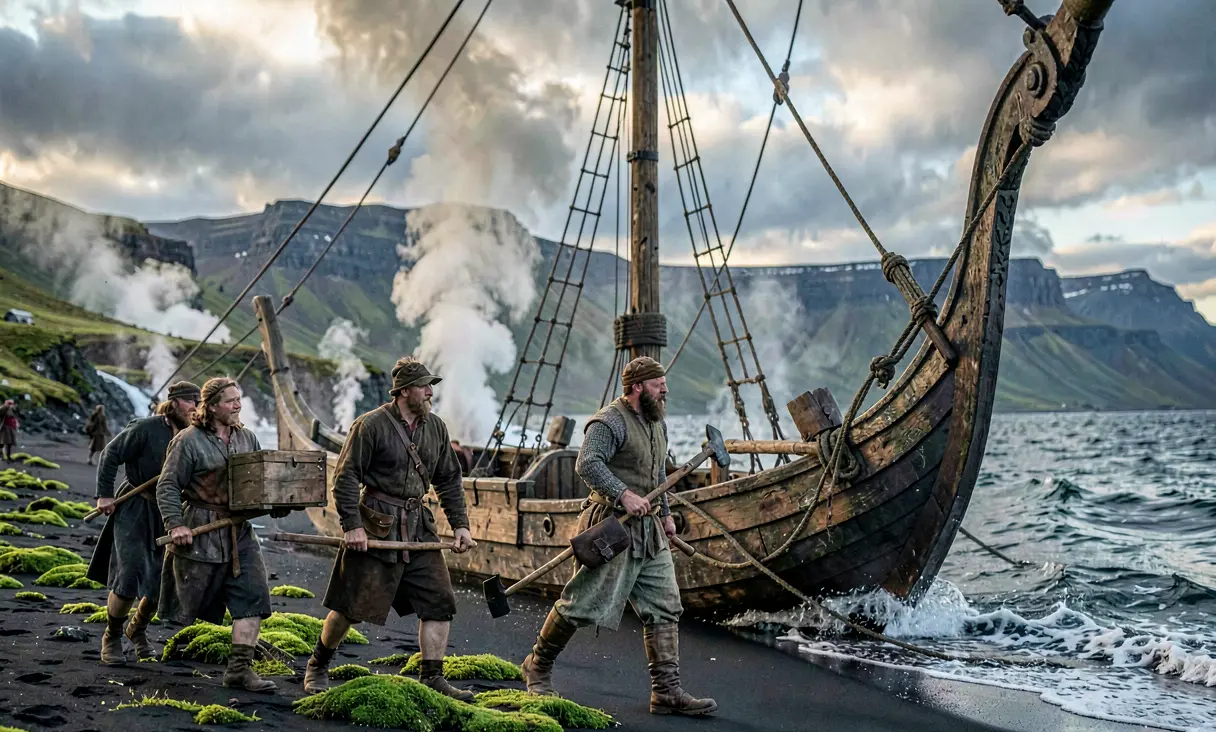 ExplorationViking Settlement of Iceland874 CE · Reykjavik, IcelandNorse explorers led by Ingólfr Arnarson settle Iceland, establishing the first permanent European community in the North Atlantic.
 ExplorationKorean Tribute Trade with China918 CE · Sungnyemun Gate (Kaesong), KoreaGoryeo establishes formal tributary relations with the Song Dynasty.
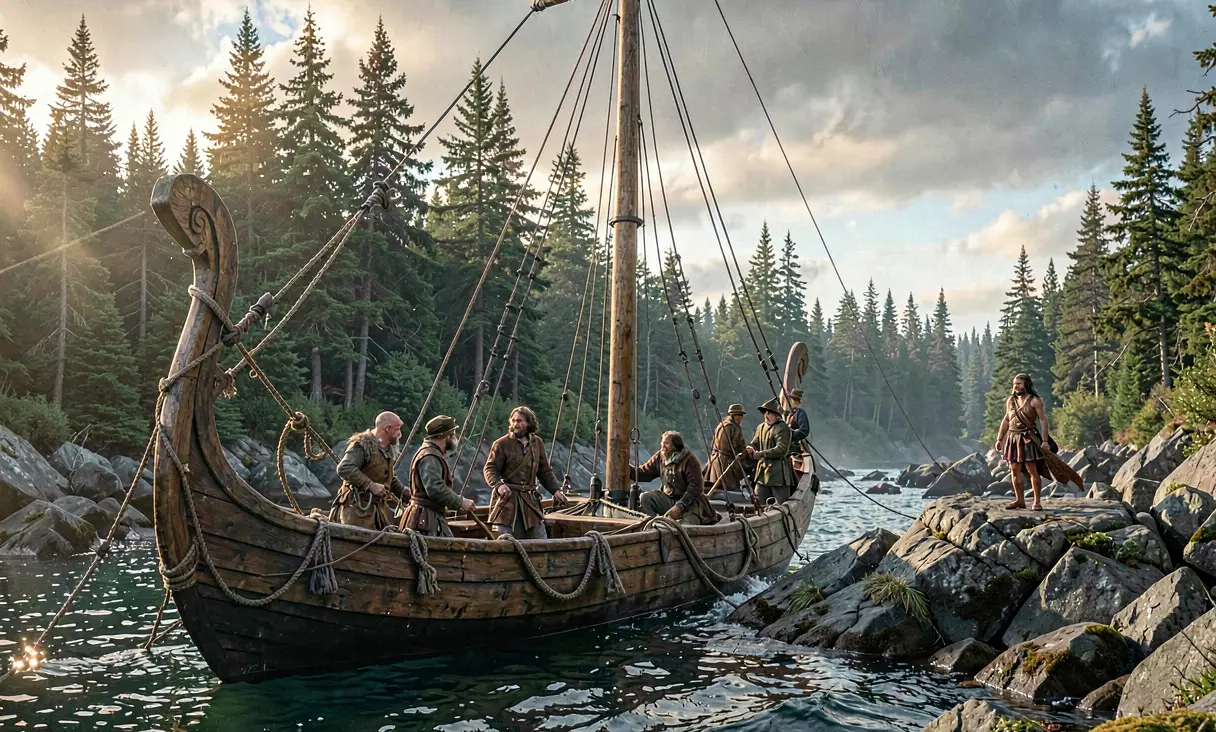 ExplorationLeif Erikson's Voyage to Vinlandc. 1000 CE · L'Anse aux Meadows, Newfoundland, CanadaLeif Erikson establishes a short-lived Norse settlement in North America, five centuries before Columbus.
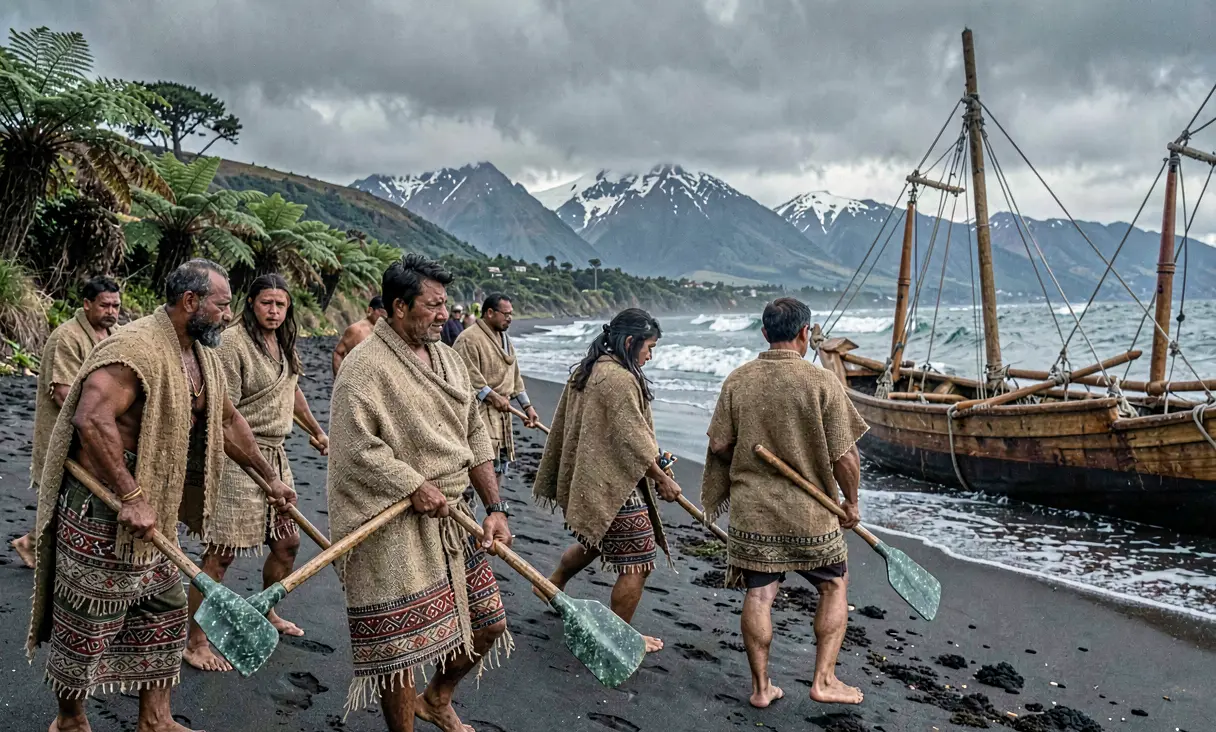
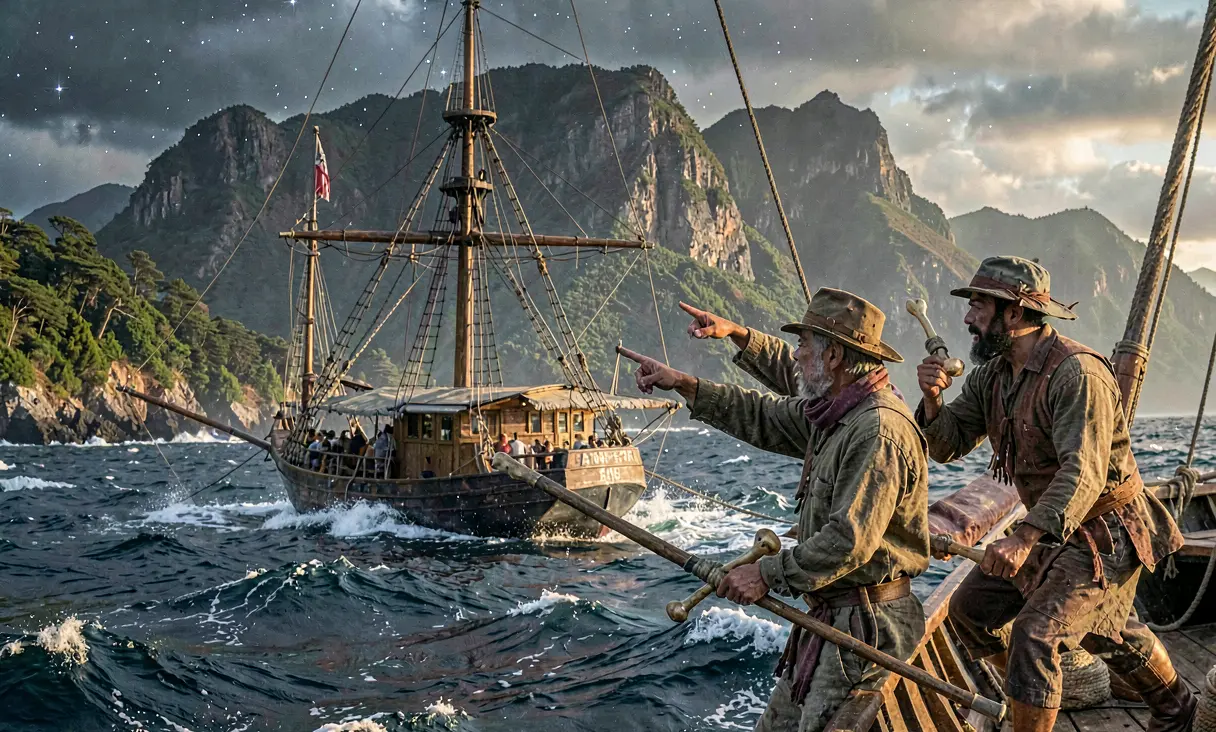 ExplorationPolynesian Voyaging to New Zealandc. 1280 CE · South Island, New ZealandPolynesian navigators arrive in Aotearoa using double-hulled canoes and celestial navigation.
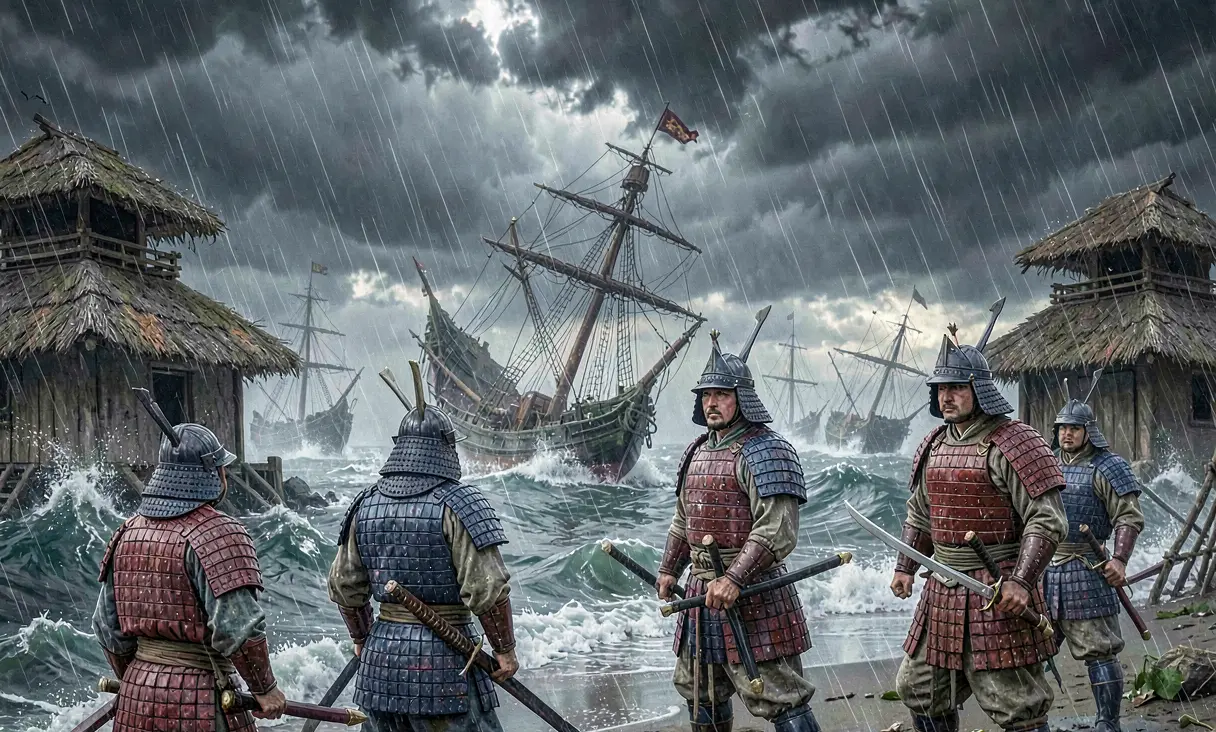 WarMongol Invasion of Japan (Kamikaze)1281 CE · Hakata Bay (Fukuoka), JapanA typhoon destroys the second Mongol invasion fleet.
 PoliticsKublai Khan Establishes Yuan Dynasty1271 CE · Dadu (Beijing), ChinaKublai Khan declares the Yuan Dynasty, unifying China under Mongol rule.
Discussion
Loading…