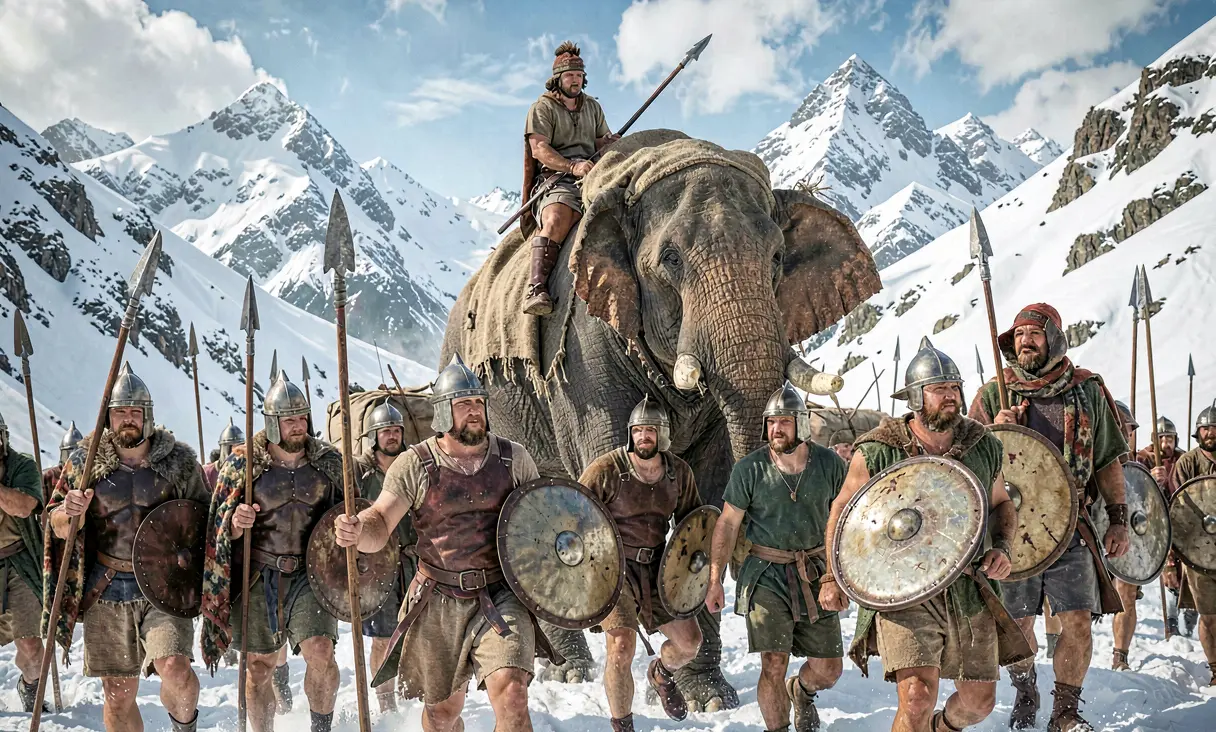
Hannibal Barca Crosses the Alps into Italy
In 218 BCE, Hannibal Barca defied geographical impossibility by leading his army and war elephants over the snow-bound Alps, achieving total strategic surprise against Rome and igniting a devastating
Strategic Imperative and the Second Punic War
By 218 BCE, the Mediterranean world stood on the precipice of a conflict that would redefine the balance of power. The Roman Republic, having recently secured victory in the First Punic War, sought to expand its hegemony over the Iberian Peninsula, threatening Carthaginian interests under the Barcid dynasty. Hannibal Barca, son of Hamilcar Barca and a man driven by an oath of eternal enmity toward Rome, recognized that a conventional naval invasion was impossible given Roman maritime supremacy. His strategic genius lay in identifying the only viable path to strike at the heart of Italy: a land route through hostile territory that the Romans deemed impassable for a large army.
The March from New Carthage to the Alps
Hannibal’s campaign began in spring 218 BCE at New Carthage (modern Cartagena, Spain). He departed with an estimated force of roughly 90,000 infantry and 12,000 cavalry, though attrition during the march through Iberia and southern Gaul reduced these numbers significantly before he reached the Alpine foothills. The general's objective was not merely to traverse the mountains but to do so while maintaining the cohesion of a multi-ethnic army comprising Numidian horsemen, Spanish veterans, and African mercenaries. Upon crossing the Rhône River, Hannibal faced resistance from local Gallic tribes, necessitating a series of rapid skirmishes that further whittled his ranks before he turned north toward the Alps.
The Descent: A Fifteen-Day Ordeal
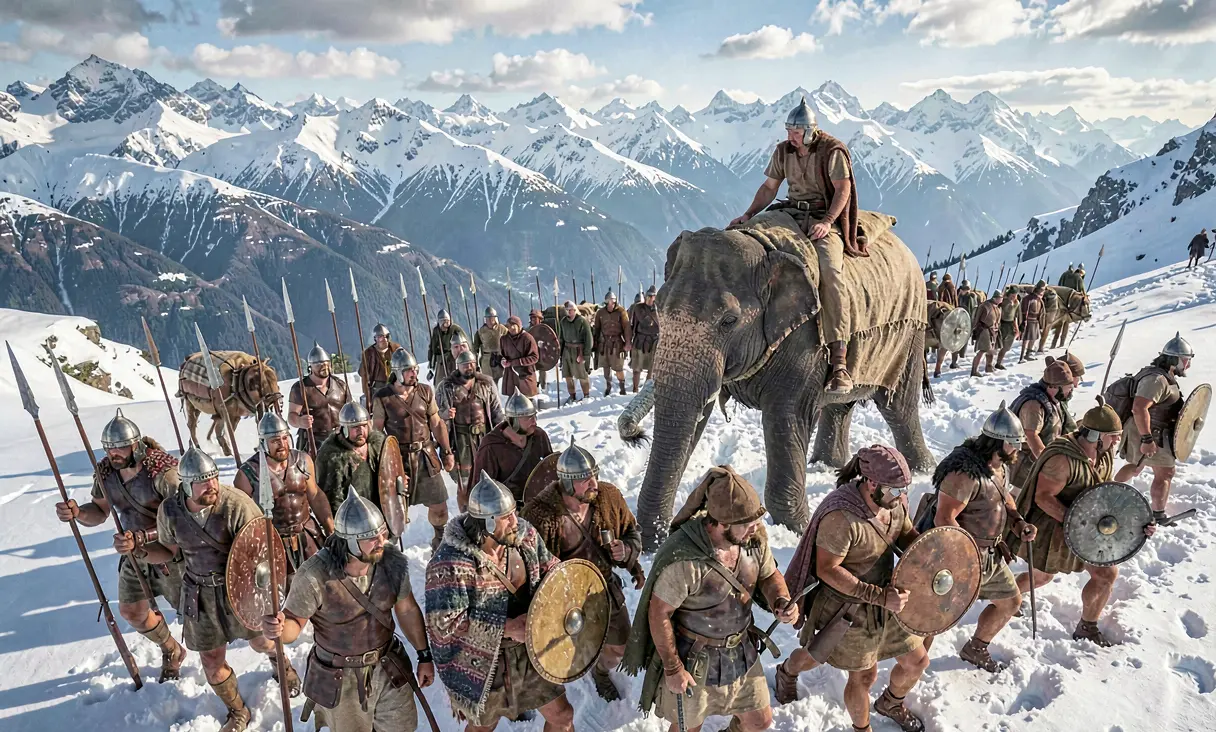
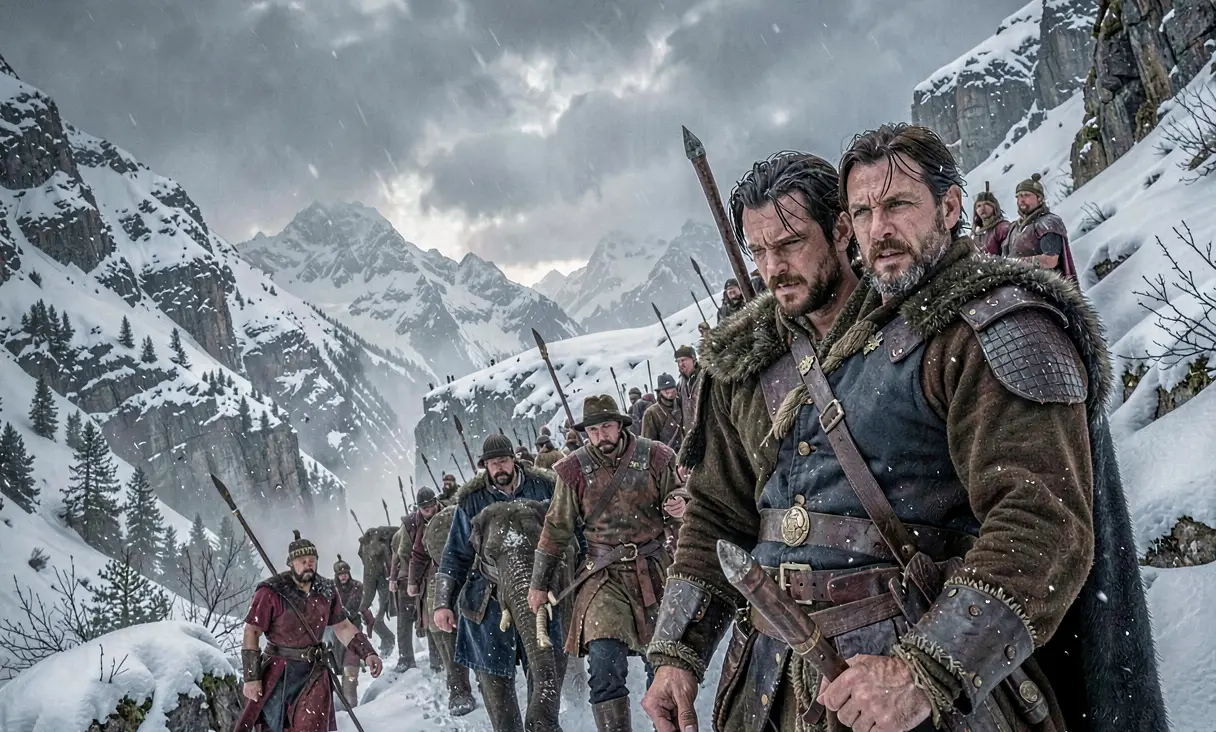
In late October 218 BCE, Hannibal initiated the ascent into the Alps, likely traversing the Col de Montgenèvre or a nearby pass in the Cottian Alps. The terrain was brutal; ancient sources like Polybius and Livy describe narrow paths clinging to precipices, snowdrifts that had not melted since the previous winter, and treacherous ice that caused men and beasts to slip into abysses. Compounding the physical hardship were constant ambushes by Alpine tribesmen who knew the terrain intimately. The army's morale wavered as supplies dwindled and the cold intensified. Most critically, Hannibal faced the logistical nightmare of moving 37 war elephants through snow and rock; many perished during the descent, though a core group survived to shock the Italian populace.
The Arrival in Cisalpine Gaul
After fifteen days of grueling struggle, Hannibal emerged from the mountains into the Po Valley, entering Italy with a force reduced to approximately 20,000 infantry and 6,000 cavalry. The loss of his elephants was significant, yet the psychological impact of their survival was profound; the sight of African beasts descending from the snow-capped peaks shattered Roman assumptions about the inviolability of their northern borders. Unlike previous invaders who had approached via the sea or the easy passes of the north, Hannibal appeared where no enemy army had ever been expected. He immediately secured alliances with local Gallic tribes in Cisalpine Gaul, replenishing his numbers and establishing a base of operations before marching south toward Rome.
Immediate Consequences: The Shock to Rome
The arrival of Hannibal in Italy sent a panic through the Roman Senate that had not been felt since the Gallic sack centuries prior. The Romans had prepared for a war on two fronts, expecting Carthage to attack from Spain or Africa via sea, but they were utterly unprepared for an invasion from the north. This strategic surprise allowed Hannibal to dictate the terms of engagement in his first major battles, such as the Battle of Trebia later that same year. The Roman consuls, Publius Cornelius Scipio and Tiberius Sempronius Longus, found their armies decimated or forced into retreat, marking the beginning of a decade-long war where Rome faced existential threat.
Legacy: The Apex of Military Audacity
Hannibal’s crossing of the Alps remains the quintessential example of operational surprise and logistical audacity in military history. It demonstrated that no geographical barrier was insurmountable to a determined commander with sufficient resolve. While Hannibal ultimately failed to destroy Rome, his ability to project power deep into enemy territory forced the Republic to adapt its military doctrines, eventually leading to the rise of Scipio Africanus and the total subjugation of Carthage. The event is immortalized in historical memory not just for the tactical brilliance involved, but for the sheer human endurance required to move an army through one of the world's most forbidding landscapes.
Hannibal's crossing demonstrated extraordinary strategic audacity and brought the war directly to the Italian peninsula.
Where it happened
Alps (Col de Montgenèvre), France/Italy Border — see it on the interactive map →
Explore related history
 WarAn Lushan Rebellion Begins755 CE · Chang'an, ChinaGeneral An Lushan revolts against Emperor Xuanzong, devastating the Tang Dynasty and population.
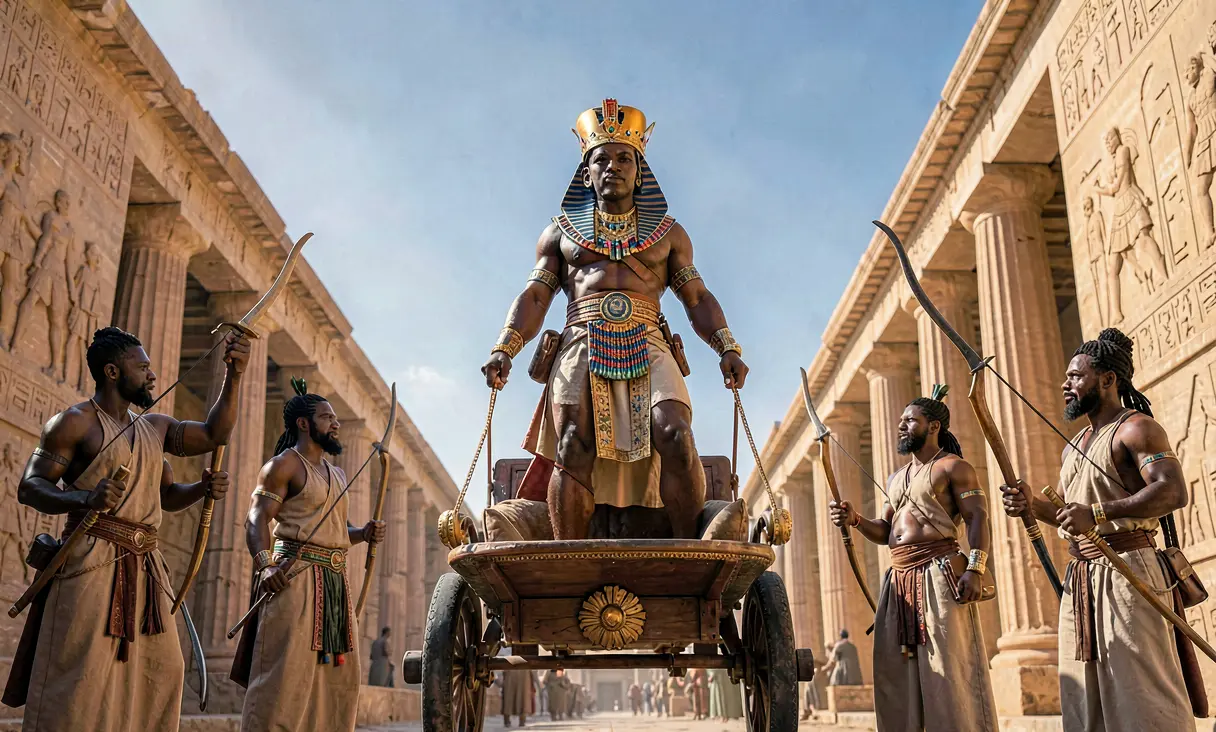 WarKushite Conquest of Egypt (25th Dynasty)c. 747 BCE · Thebes, EgyptKing Piye of Kush conquers Upper and Lower Egypt, establishing the first African-led dynasty in Egyptian history.
 WarKushite Conquest of Egypt Establishes 25th Dynastyc. 744 BCE · Napata, Nubia (Modern Sudan)King Piye of Kush conquers Upper Egypt, establishing the 25th Dynasty and restoring traditional Egyptian religious practices.
 PoliticsFall of Han Dynasty and Three Kingdoms Period Begins220 CE · Chang'an, ChinaEmperor Xian abdicates, ending the Han Dynasty and fragmenting China into three rival kingdoms.
 PoliticsQin Shi Huang Unifies China221 BCE · Xianyang, Shaanxi, ChinaQin Shi Huang conquers warring states to create the first unified Chinese empire, standardizing script and currency.
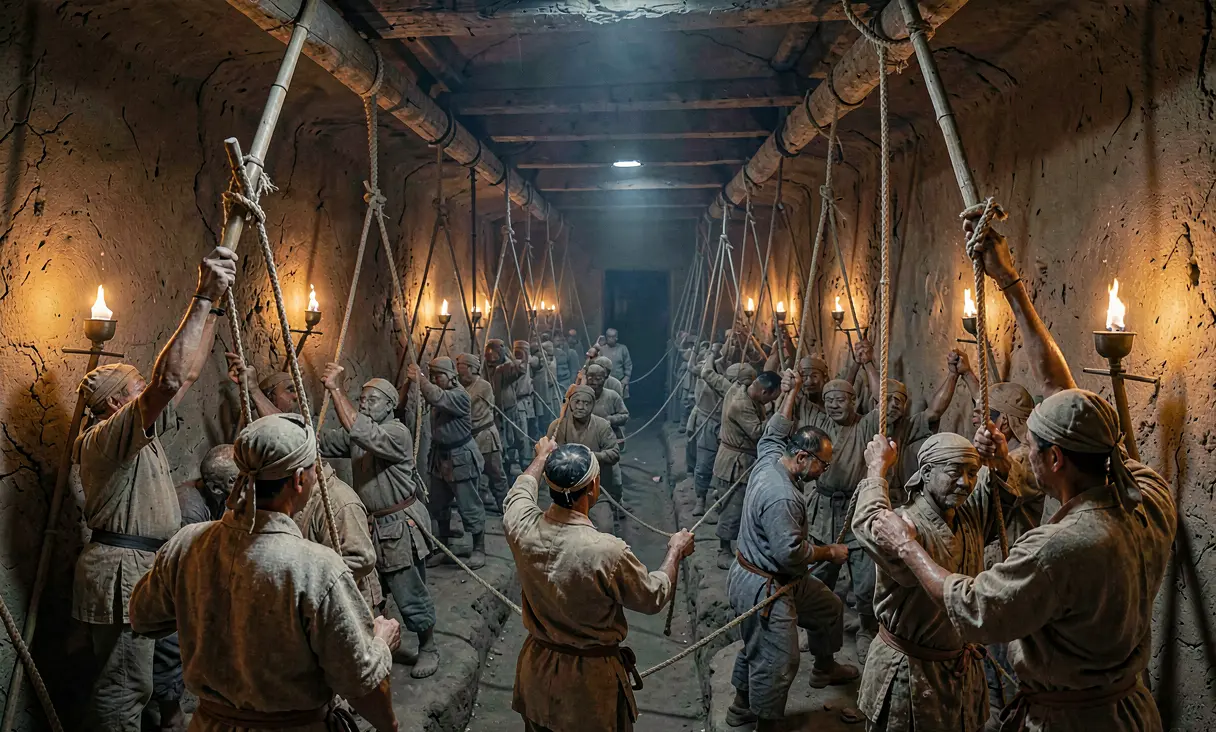 ArtBurial of Qin Shi Huang's Terracotta Armyc. 210 BCE · Xi'an, ChinaEmperor Qin Shi Huang is buried with a massive army of life-sized terracotta soldiers to guard him in the afterlife.
Discussion
Loading…