
Launch of La Solidaridad
La Solidaridad's 1889 launch in Barcelona united Filipino intellectuals to demand reform through the press, inadvertently sparking the nationalist consciousness that fueled the Philippine Revolution.
The Propaganda Movement's Strategic Pivot
By the late 1880s, the Philippines stood at a precarious juncture under Spanish colonial administration. Decades of friar dominance, economic stagnation, and the suppression of native clergy had fostered deep-seated resentment among the educated Ilustrado class. While earlier attempts at reform through local petitions had been met with indifference or repression from Madrid, a new strategy emerged: leveraging the press in the metropole itself. The Propaganda Movement, composed of exiled Filipino intellectuals residing in Europe, sought to bypass colonial censorship by publishing their grievances directly within Spain's capital and major cities. This shift marked a transition from isolated complaints to a coordinated, intellectual campaign aimed at awakening Spanish public opinion and forcing legislative reform.
The Debut of La Solidaridad
On February 15, 1889, the first issue of *La Solidaridad* hit the presses in Barcelona, Spain. Founded by the orator Graciano López Jaena, who also served as its inaugural editor, the bi-weekly newspaper was established at a cost of roughly 300 pesos per issue, funded largely by donations from Filipino expatriates and sympathetic Spanish liberals. The masthead bore the motto 'La Solidaridad es la fuerza' (Solidarity is strength), signaling the publication's core philosophy: that unity between Filipinos and liberal Spaniards was essential for progress. Unlike previous clandestine pamphlets, this was a legitimate periodical printed on high-quality paper, featuring articles, essays, and poems that articulated a clear vision of assimilation rather than immediate independence.
Architects of Reform: Jaena, Del Pilar, and Rizal
The intellectual engine behind *La Solidaridad* was a triumvirate of towering figures in Philippine history. Graciano López Jaena launched the paper with fiery rhetoric attacking the abuses of the Dominican and Franciscan friars. However, as the publication struggled financially and editorially, leadership passed to Marcelo H. del Pilar in late 1889. Del Pilar, a lawyer and master satirist, brought a more systematic approach, using his pen to dissect colonial law and advocate for secularization of parishes and Filipino representation in the Spanish Cortes. Although José Rizal never served as editor, he was the movement's most influential contributor; his novel *Noli Me Tangere* had already set the tone, and his essays in *La Solidaridad*, often written under pseudonyms like 'Dimasalang,' provided the moral and philosophical backbone of the reformist cause.
Demands for Secularization and Representation
The editorial content of *La Solidaridad* was precise in its demands, avoiding radical calls for separation from Spain. Instead, it championed the assimilation of the Philippines as a regular province of the Spanish nation. Key objectives included the secularization of parishes—removing them from the control of religious orders and placing them under native Filipino priests—and the granting of equal civil rights to Filipinos. The publication relentlessly argued for the right of the Philippines to send representatives to the Spanish Cortes (parliament) in Madrid, a privilege denied to the colony since 1837. It also called for freedom of speech, assembly, and the press, framing these not as special privileges but as fundamental rights owed to all Spanish subjects, regardless of race or geography.
Financial Struggles and Cessation
Despite its intellectual brilliance, *La Solidaridad* faced insurmountable logistical and financial hurdles. The cost of printing in Barcelona was high, and the flow of funds from Filipino communities in Europe and the Philippines was erratic. Internal friction also plagued the movement; disagreements between López Jaena and del Pilar over editorial direction and leadership led to a fractured front. By November 1895, after publishing only 143 issues over six years, the newspaper ceased publication due to bankruptcy. The Spanish government, initially tolerant of liberal discourse, eventually grew hostile as the tone shifted toward more critical analyses of colonial policy, effectively silencing the primary voice of the reform movement.
From Reform to Revolution
The failure of *La Solidaridad* to secure legislative reforms in Madrid had an unintended but profound consequence: it radicalized a generation of Filipinos. The realization that peaceful, legal means were insufficient to dismantle the friar-dominated colonial structure led many former supporters of the Propaganda Movement to embrace more militant action. While José Rizal remained committed to reform until his execution in 1896, others like Andrés Bonifacio founded the Katipunan, a secret society dedicated to armed revolution. The ideas cultivated in *La Solidaridad*—national identity, sovereignty, and human rights—became the ideological foundation for the Philippine Revolution of 1896, transforming a call for assimilation into a fight for independence.
Enduring Legacy of the Press
The legacy of *La Solidaridad* extends far beyond its short lifespan. It established the Filipino press as a potent tool for political mobilization and nation-building, setting a precedent for future journalistic endeavors in the archipelago. More importantly, it forged a cohesive national consciousness among a fragmented populace, articulating for the first time a unified 'Filipino' identity that transcended regional dialects and tribal affiliations. The newspaper remains a seminal document of Asian anti-colonial history, illustrating how intellectual resistance can precede and fuel physical revolution, ultimately reshaping the geopolitical landscape of Southeast Asia.
La Solidaridad was the intellectual catalyst for Philippine nationalism, bridging the gap between reformist desires and revolutionary action against Spain.


Where it happened
Barcelona, Spain (Philippine context) — see it on the interactive map →
Explore related history
 PoliticsSargon of Akkad Establishes the First Empirec. 2334 BCE · Akkad (Location uncertain, near Baghdad, Iraq)Sargon unifies Sumerian city-states to create the world's first multi-ethnic empire.
 PoliticsPromulgation of the Code of Ur-Nammuc. 2100 BCE · Ur, Southern Mesopotamia (Iraq)The earliest known surviving law code is established in the Sumerian city of Ur.
 PoliticsNelson Mandela Elected President of South AfricaApril 27, 1994 · Cape Town, South AfricaSouth Africa holds its first democratic election, ending the apartheid regime and establishing a multiracial government.
 WarStart of the Cuban War of IndependenceFebruary 24, 1895 · CubaJosé Martí and Máximo Gómez launch a coordinated uprising against Spanish colonial rule in Cuba.
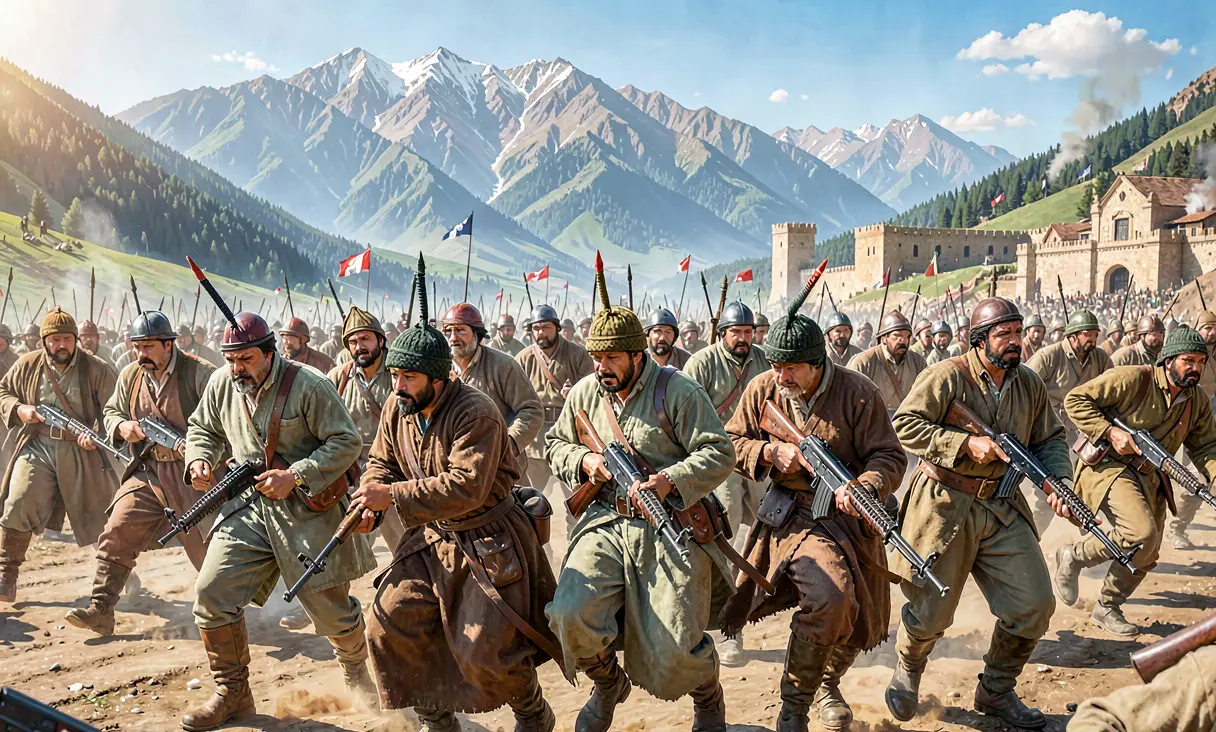 WarBattle of Adwa: Ethiopian Victory Over ItalyMarch 1, 1896 · Adwa, EthiopiaEmperor Menelik II decisively defeats Italian forces, securing Ethiopian sovereignty against colonial encroachment.
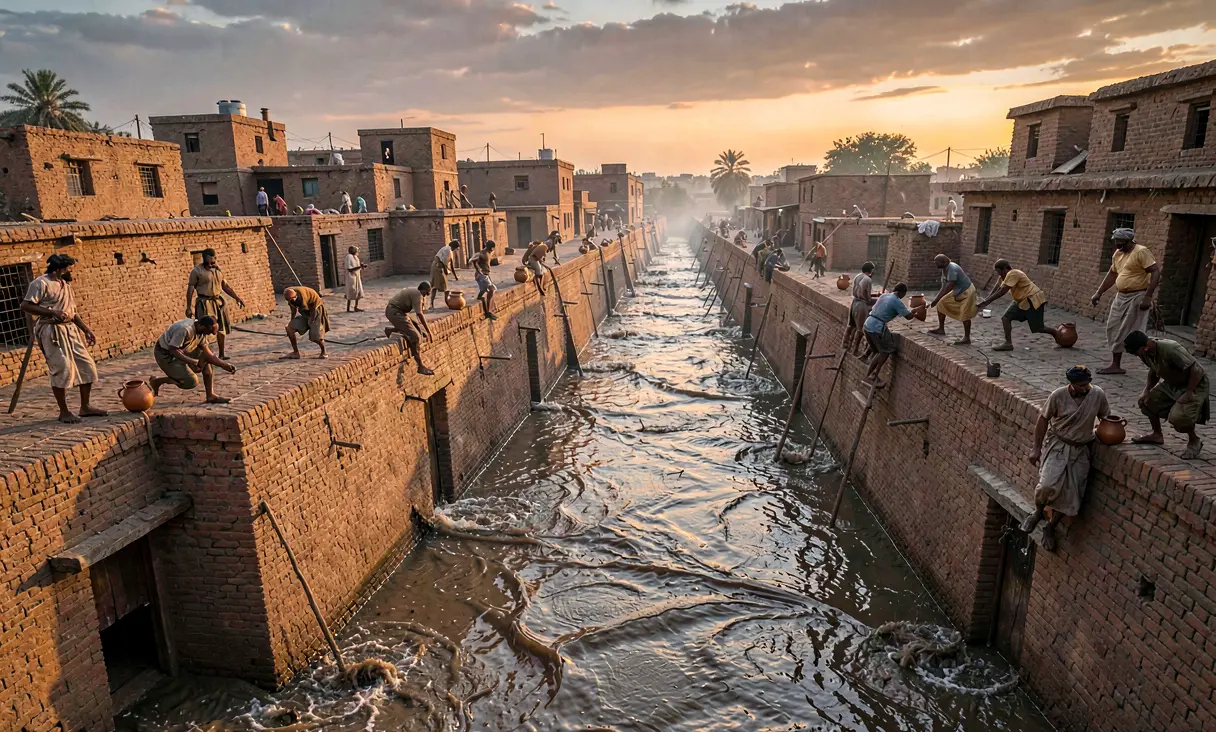 DisasterCatastrophic Flooding at Mohenjo-Daroc. 1900 BCE · Mohenjo-Daro, Sindh, PakistanDevastating floods from the Indus River repeatedly buried and destroyed layers of Mohenjo-Daro, signaling the decline of the urban phase.
Discussion
Loading…