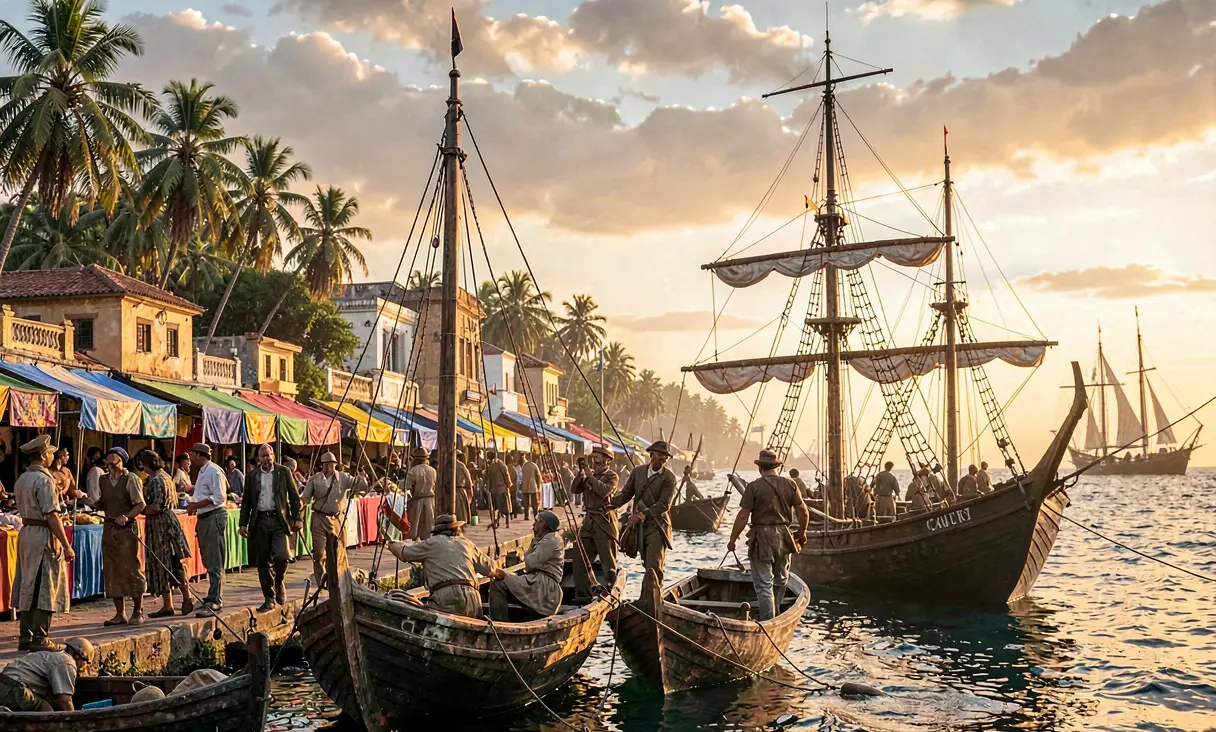
Vasco da Gama Reaches India via Sea Route
Vasco da Gama's 1498 arrival in Calicut shattered the overland spice monopoly, establishing the first direct sea link between Europe and Asia and launching the age of global maritime empire.
The Quest for a Maritime Passage
By the late 15th century, the European appetite for Asian spices—particularly black pepper, cinnamon, and cloves—was insatiable, yet access was choked by a labyrinthine overland network. The Silk Road and Indian Ocean trade routes were dominated by a coalition of Arab merchants, Venetian middlemen, and the expanding Ottoman Empire, who levied exorbitant tariffs that drove prices to astronomical levels in European markets. Portugal, a small kingdom on the Iberian Peninsula's western edge, had spent nearly eighty years pushing south along the African coast under the strategic vision of Prince Henry the Navigator, seeking to bypass these intermediaries. The breakthrough came with Bartolomeu Dias rounding the Cape of Good Hope in 1488, proving that the Atlantic and Indian Oceans were connected, but a direct route remained unproven until King Manuel I commissioned Vasco da Gama to lead an expedition of four ships into the unknown.
The Voyage Across the Southern Ocean
Departing Lisbon on July 8, 1497, with a fleet comprising the flagship São Gabriel, the São Rafael, a supply caravel, and a smaller vessel, da Gama faced a harrowing journey. Unlike Dias, who hugged the African coast, da Gama executed a daring 'volta do mar' maneuver, sailing far into the South Atlantic to harness favorable westerlies before curving eastward toward Africa's southern tip. This route added thousands of miles but saved months of time and avoided dangerous coastal currents. After rounding the Cape in November 1497, the fleet navigated up the eastern coast of Africa, enduring scurvy that claimed several crew members, until they reached Malindi (modern-day Kenya) in April 1498. There, da Gama secured a crucial alliance with the local ruler and hired an experienced Arab navigator, Ahmad ibn Majid, whose knowledge of the monsoon winds was indispensable for crossing the Indian Ocean.
Arrival at Calicut
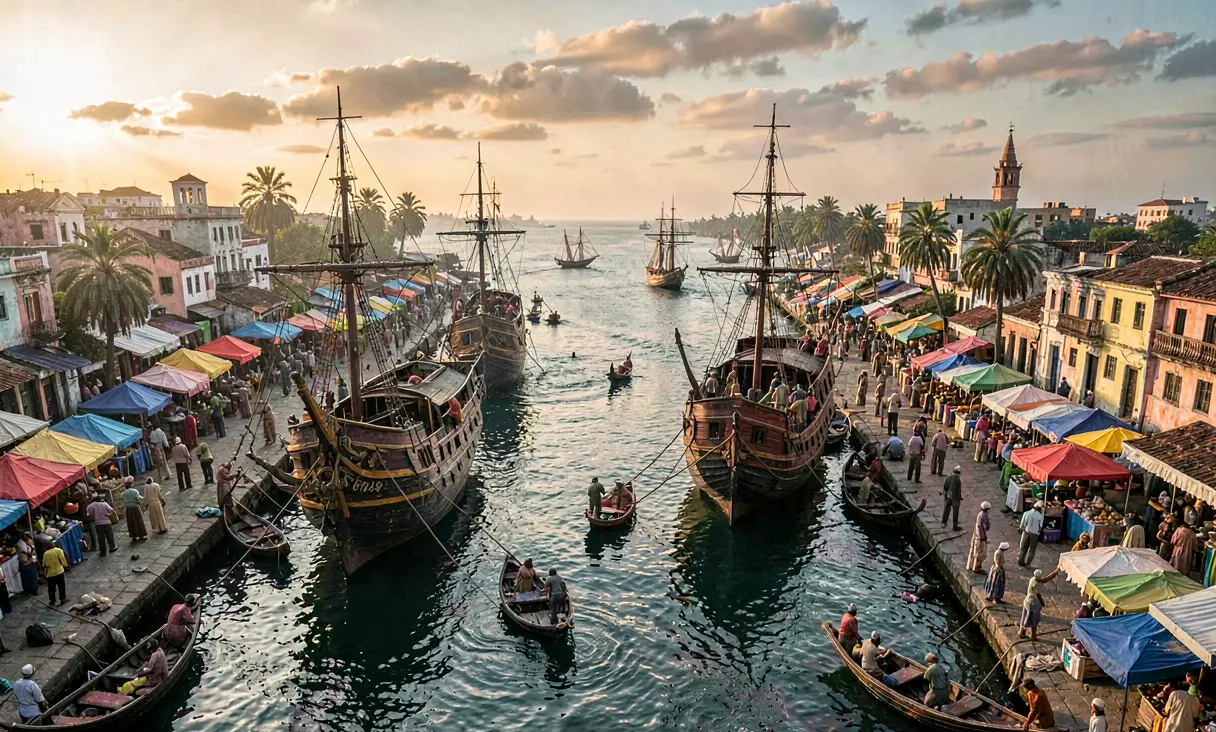
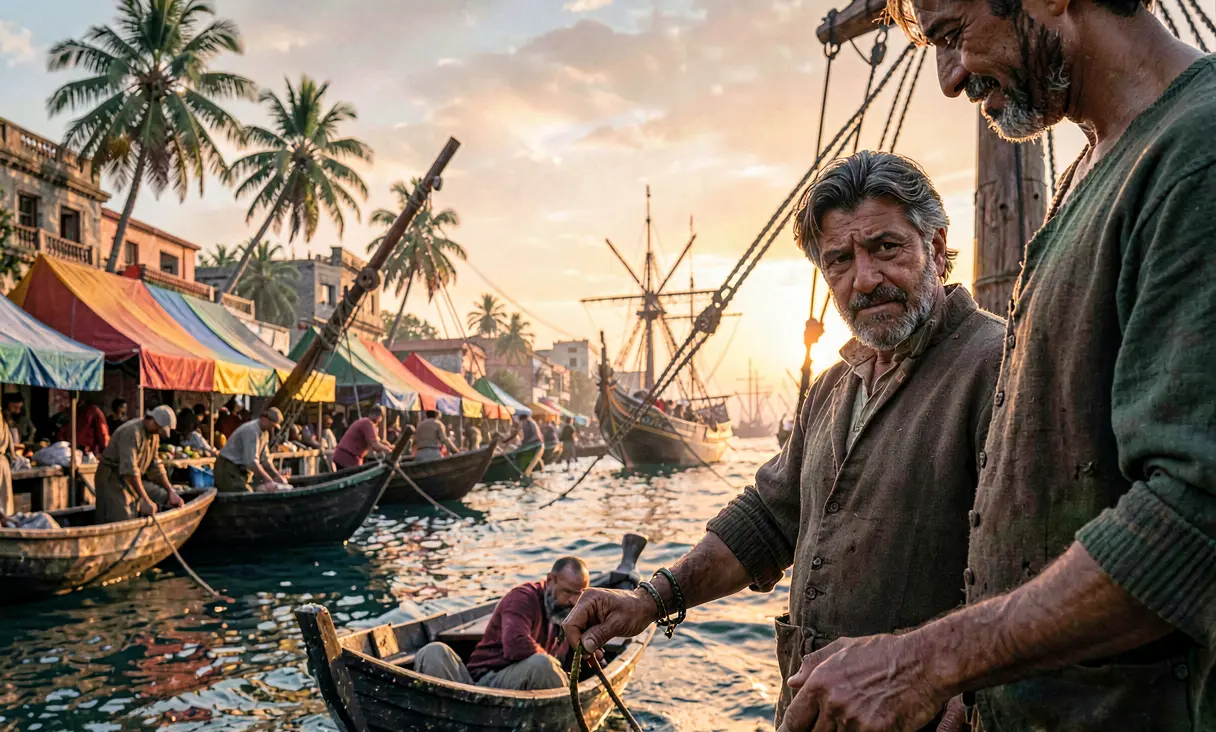
On May 20, 1498, after only twenty-three days at sea from Malindi, Vasco da Gama's fleet dropped anchor off the coast of Kozhikode (Calicut), a thriving port city ruled by the Zamorin. The arrival marked the first time a European expedition had successfully linked Europe and Asia entirely by sea, bypassing the land routes that had defined Eurasian commerce for millennia. However, the initial reception was fraught with cultural dissonance; da Gama, expecting to trade gold and silver, presented modest gifts of cloth, basins, and hats intended for local merchants rather than royalty. The Zamorin's court viewed these items as beneath the dignity of a sovereign envoy, leading to tense negotiations where the Portuguese struggled to articulate their intent beyond simple barter. Despite the friction, da Gama managed to load his ships with a cargo of cinnamon, ginger, and pepper before departing in August 1498.
The Shift in Global Power Dynamics
The immediate consequence of da Gama's return to Lisbon in July 1499 was the shattering of the Venetian-Ottoman monopoly on the spice trade. While the initial voyage yielded a modest profit relative to its human cost—only two ships and roughly half the crew survived—the strategic implication was staggering. Portugal now possessed a direct maritime artery to the source of Asia's most valuable commodities, allowing them to bypass the heavy taxes imposed by Middle Eastern and Italian intermediaries. This breakthrough catalyzed the rapid expansion of the Portuguese Estado da Índia, leading to the establishment of fortified trading posts from Mozambique to Malacca within two decades. It signaled the dawn of a new era where naval supremacy, rather than land-based territorial control, became the primary determinant of global economic power.
Legacy and Historical Significance
Vasco da Gama's 1498 voyage fundamentally reoriented the center of gravity in world history from the Mediterranean to the Atlantic. It initiated the first truly global trade network, connecting Europe, Africa, Asia, and eventually the Americas in a single economic system driven by maritime logistics. The event precipitated centuries of colonial competition among European powers, as Spain, the Netherlands, England, and France scrambled to replicate Portugal's success or challenge its dominance. While the human cost was immense, involving the subjugation of indigenous populations and the disruption of established Asian trade networks, the voyage remains a definitive pivot point that ushered in the modern era of globalization, marking the transition from regional empires to interconnected world systems.
This achievement shattered the monopoly of overland spice routes and initiated the era of European colonial dominance in Asia.
Where it happened
Kozhikode (Calicut), India — see it on the interactive map →
Explore related history
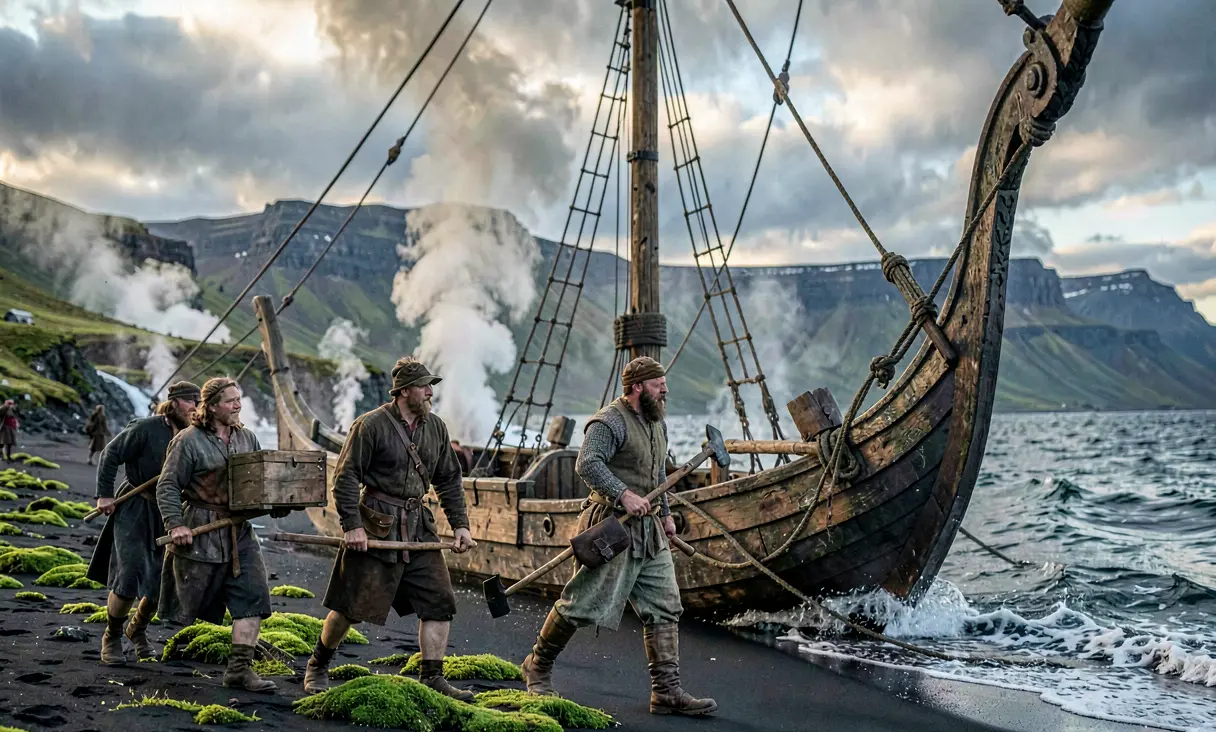 ExplorationViking Settlement of Iceland874 CE · Reykjavik, IcelandNorse explorers led by Ingólfr Arnarson settle Iceland, establishing the first permanent European community in the North Atlantic.
 ExplorationKorean Tribute Trade with China918 CE · Sungnyemun Gate (Kaesong), KoreaGoryeo establishes formal tributary relations with the Song Dynasty.
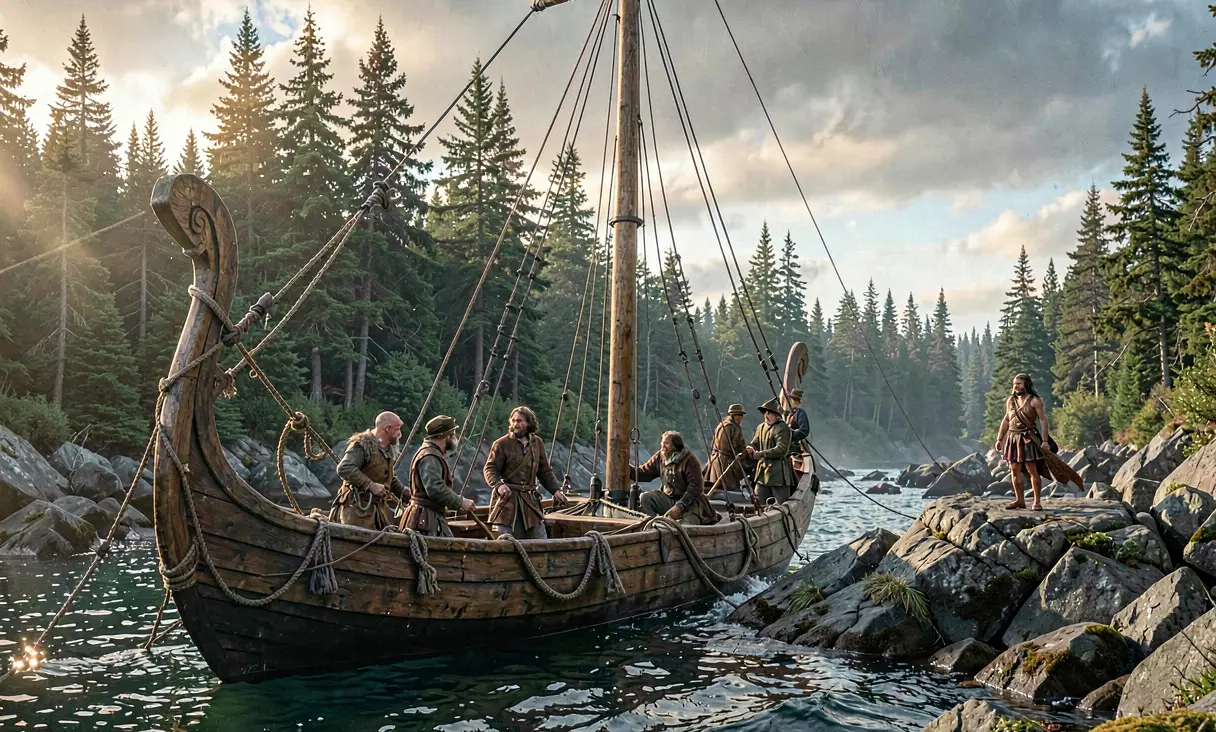 ExplorationLeif Erikson's Voyage to Vinlandc. 1000 CE · L'Anse aux Meadows, Newfoundland, CanadaLeif Erikson establishes a short-lived Norse settlement in North America, five centuries before Columbus.
 ReligionFounding of Sikhism by Guru Nanakc. 1499 CE · Nankana Sahib, PakistanGuru Nanak proclaims unity of God and equality of all humans in Punjab.
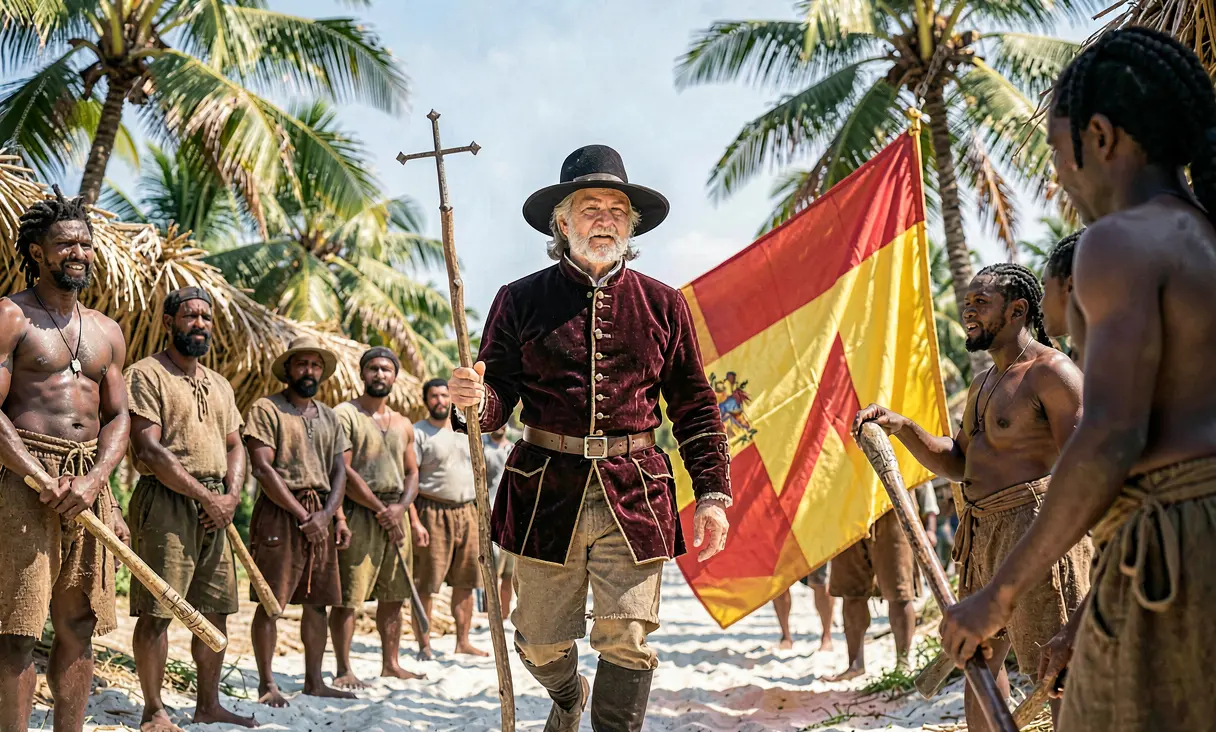 ExplorationColumbus Reaches the AmericasOctober 12, 1492 CE · San Salvador, BahamasEuropean explorer lands in Caribbean initiating permanent contact between Old and New Worlds.
 ReligionKingdom of Kongo Adopts Catholicism1491 CE · Mbanza Kongo, AngolaKing Nzinga a Nkuwu converts to Catholicism and takes the name João I, integrating Christianity into Kongo society.
Discussion
Loading…