Muhammad bin Tughlaq Moves Capital to Daulatabad
Muhammad bin Tughlaq's disastrous 1327 forced migration of Delhi's entire population to Daulatabad aimed at centralizing power but collapsed due to logistical failure, causing massive suffering and im
Strategic Ambitions and Political Context
By the early 14th century, the Delhi Sultanate under Muhammad bin Tughlaq had expanded its dominion significantly southward, incorporating vast territories of the Deccan plateau. The Sultan, a ruler renowned for his intellectual curiosity but often criticized for administrative overreach, perceived the traditional capital of Delhi as too distant from these newly acquired southern frontiers. Simultaneously, the northern borders faced persistent threats from Mongol invasions, necessitating a strategic pivot that could simultaneously secure the south and project power effectively across the subcontinent. Devagiri, renamed Daulatabad ('City of Fortune'), stood as an ideal geographical midpoint, offering natural fortifications and proximity to both the Bay of Bengal and the Arabian Sea.
The Decree of Relocation
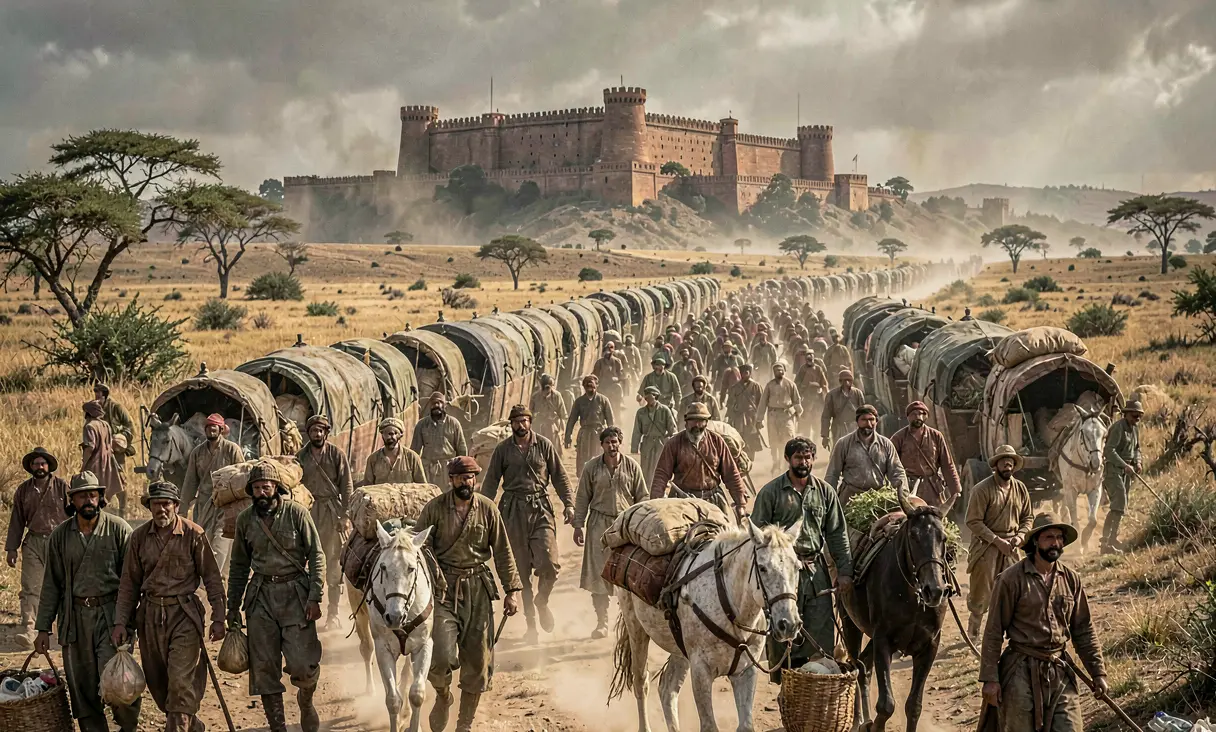
Around 1327 CE, Muhammad bin Tughlaq issued a sweeping and unprecedented edict ordering the complete migration of the Sultanate's capital from Delhi to Daulatabad. Unlike previous administrative shifts that involved only the royal court and military apparatus, this decree mandated the relocation of the entire population: nobles, scholars, Sufi saints, merchants, artisans, and common citizens. The Sultan envisioned a unified imperial center where governance could be centralized, reducing the friction between the northern heartland and southern provinces. This decision reflected his desire to create a cosmopolitan hub that would serve as the nexus of a vast, integrated empire, yet it ignored the logistical impossibility of moving hundreds of thousands of people across 800 miles of rugged terrain.
The Great Migration and Human Cost
The execution of this mandate transformed into a humanitarian catastrophe. The journey from Delhi to Daulatabad, covering nearly two months on foot under the scorching Indian sun, proved fatal for many. Historical chronicles, including those by contemporary observers like Ibn Battuta, describe scenes of immense suffering where families were separated, the elderly and infirm perished along the roadside, and looting became rampant among the displaced masses. The Sultan's administration attempted to enforce strict discipline, with severe punishments awaiting those who lagged behind or refused to comply. The sheer scale of the forced migration strained the empire's resources, as food supplies failed to keep pace with the moving population, leading to widespread starvation and disease.
Administrative Collapse and Rebellion
Upon arrival in Daulatabad, the new capital quickly became a symbol of administrative disarray rather than imperial grandeur. The sudden influx of Delhi's elite into a city not fully prepared to sustain such a massive population overwhelmed local infrastructure. Furthermore, the vacuum left in Delhi triggered immediate instability; the northern provinces, stripped of their governing class and military presence, fell prey to internal rebellions and external incursions. The Sultan found himself isolated in the Deccan, unable to effectively govern the north while simultaneously managing the chaos in the south. The very centralization he sought had fractured the empire's cohesion, as regional governors exploited the power vacuum to assert autonomy.
The Abandonment and Return
Within a few years of the relocation, likely by 1334 or shortly thereafter, Muhammad bin Tughlaq acknowledged the strategic failure of his experiment. Facing mounting rebellions in Bengal and the north, and with Daulatabad unable to function as an effective administrative center for the entire Sultanate, he issued a second decree: the capital must return to Delhi. The reversal was just as abrupt and chaotic as the initial move. Those who had survived the first journey were now forced to trek back, compounding the human toll. Daulatabad was left partially depopulated, its grand palaces and mosques standing as hollow monuments to a failed vision, while Delhi struggled to rebuild its administrative machinery.
Legacy of an Erratic Vision
The transfer of the capital remains one of the most controversial episodes in medieval Indian history, frequently cited by historians as the epitome of Muhammad bin Tughlaq's erratic and impractical governance. While his vision of a unified Deccan-Delhi axis was theoretically sound for controlling a pan-Indian empire, the execution lacked the necessary logistical foresight and administrative flexibility. The event demonstrated the limits of autocratic power when divorced from economic reality and human capacity. Ultimately, it weakened the Delhi Sultanate's central authority, accelerating the fragmentation that would characterize the later years of his reign and paving the way for the rise of independent Deccan sultanates.
This failed migration attempt weakened the Sultanate's stability and highlighted the logistical limits of medieval centralization in India.
Where it happened
Daulatabad, Maharashtra, India — see it on the interactive map →
Explore related history
 PoliticsRise of Srivijaya as Maritime Hegemon683 CE · Palembang, Sumatra (Modern Indonesia)Srivijaya emerges as the dominant maritime empire controlling the Strait of Malacca.
 PoliticsEmperor Xuanzong Ascends the Tang Throne712 CE · Chang'an, ChinaEmperor Xuanzong begins his reign, ushering in the High Tang golden age.
 PoliticsFounding of Heian-kyo794 CE · Kyoto, JapanEmperor Kammu moves the capital to Heian-kyo, beginning the Heian period.
 CivilizationFounding of Tenochtitlan1325 CE · Mexico City, MexicoAztecs build a magnificent island city on Lake Texcoco that becomes the largest in the Americas.
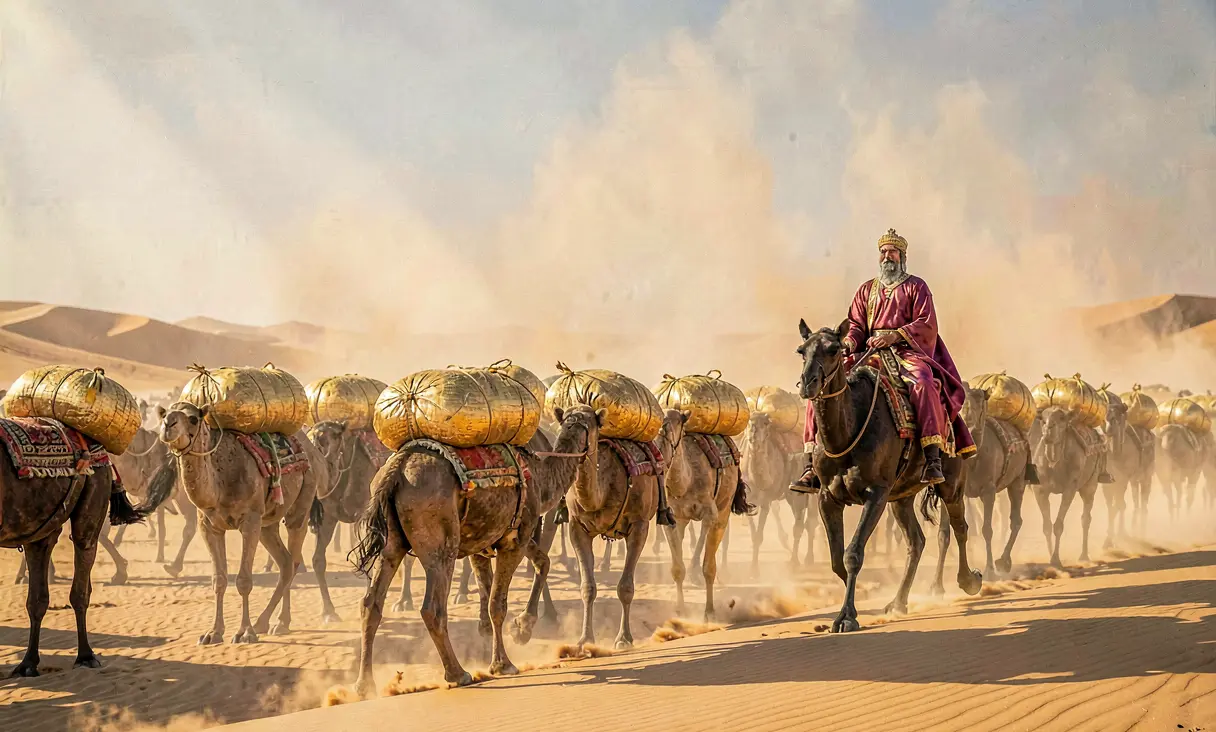 CivilizationMansa Musa Pilgrimage to Mecca1324 CE · Timbuktu, MaliMali Empire ruler travels with immense wealth, destabilizing economies along his route to Mecca.
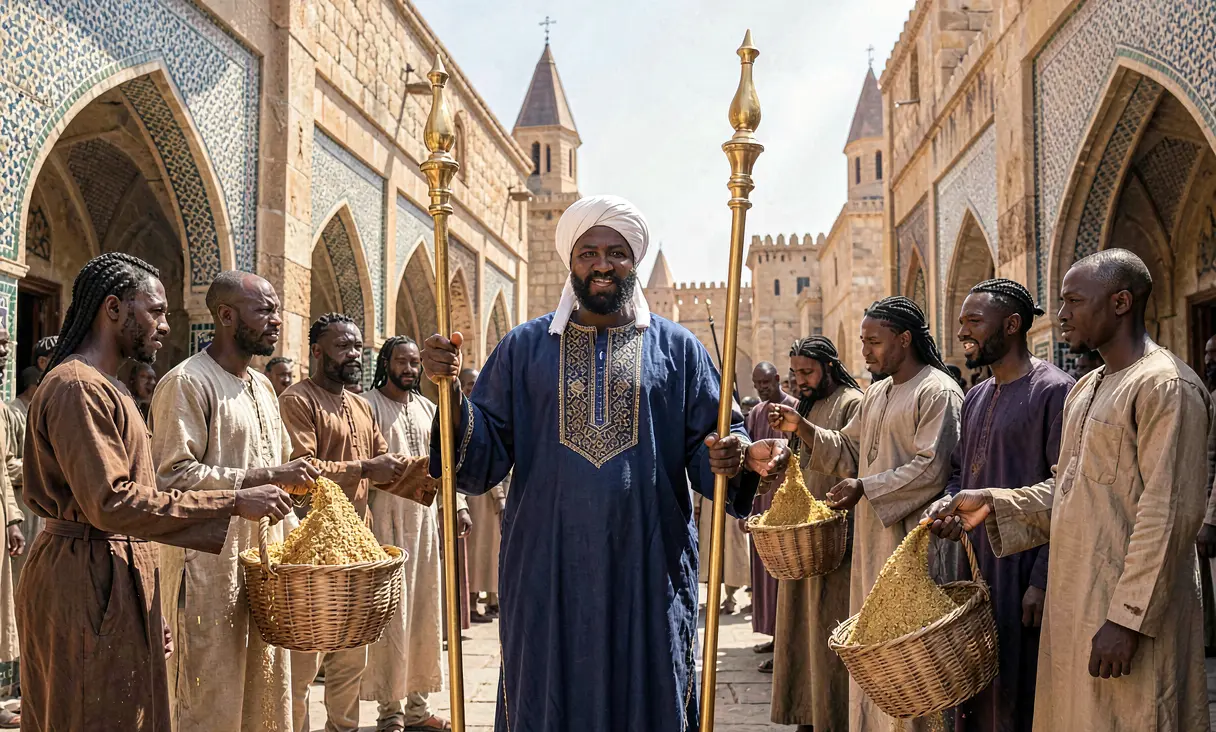 tradeMansa Musa's Pilgrimage and Gold Economy1324 CE · Cairo, Egypt (en route)Mansa Musa's pilgrimage disrupts gold markets in Cairo with massive displays of wealth.
Discussion
Loading…