
Le Dynasty Restoration (Lam Son Uprising)
The Lam Son Uprising expelled two decades of Ming occupation, restoring Vietnamese independence in 1427 and establishing the centuries-long Later Le Dynasty.
The Shadow of Ming Occupation
By the early 15th century, Vietnam had lost its sovereignty for two decades under the brutal administration of the Ming Dynasty. Following the collapse of the Ho Dynasty in 1407, Emperor Yongle annexed the territory as Jiaozhi Province, imposing heavy taxation, dismantling local institutions, and attempting to erase Vietnamese cultural identity through forced assimilation. The occupation sparked widespread resentment among the scholar-gentry and peasantry alike, creating a volatile atmosphere ripe for rebellion. It was into this crucible of discontent that Le Loi, a wealthy landlord from Lam Son in Thanh Hoa province, emerged as the focal point of resistance.
The Spark at Lam Son
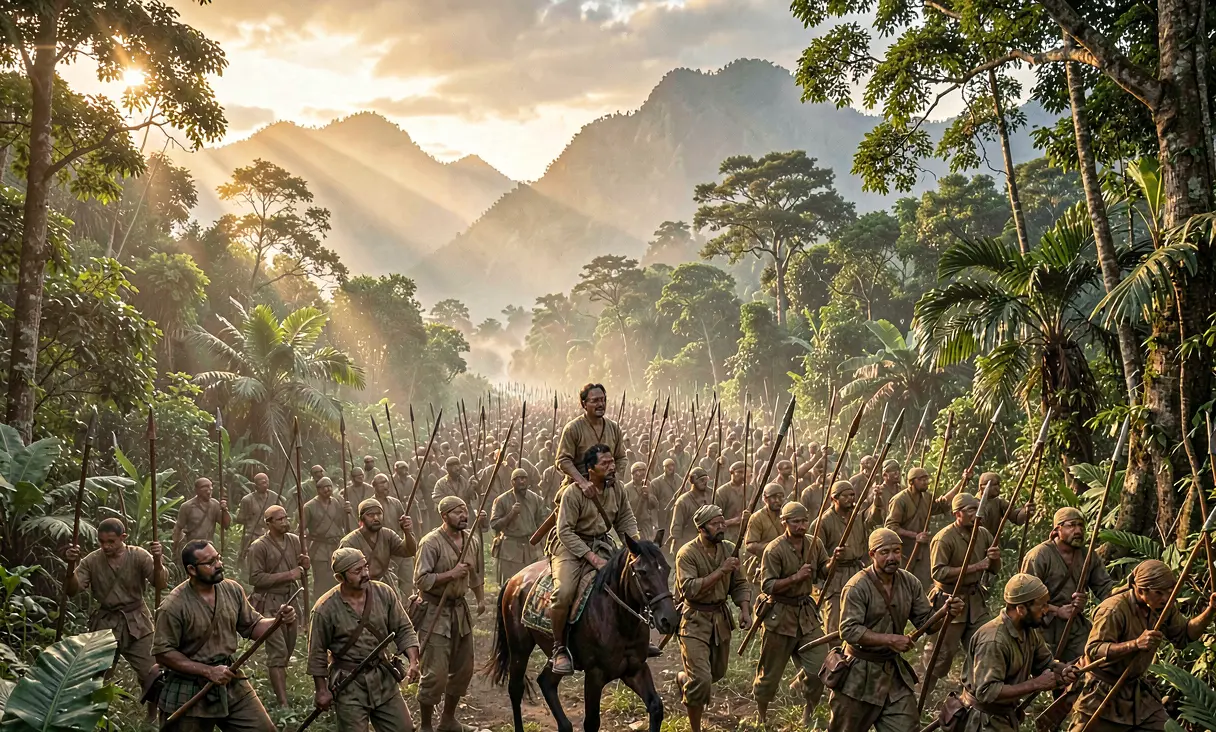
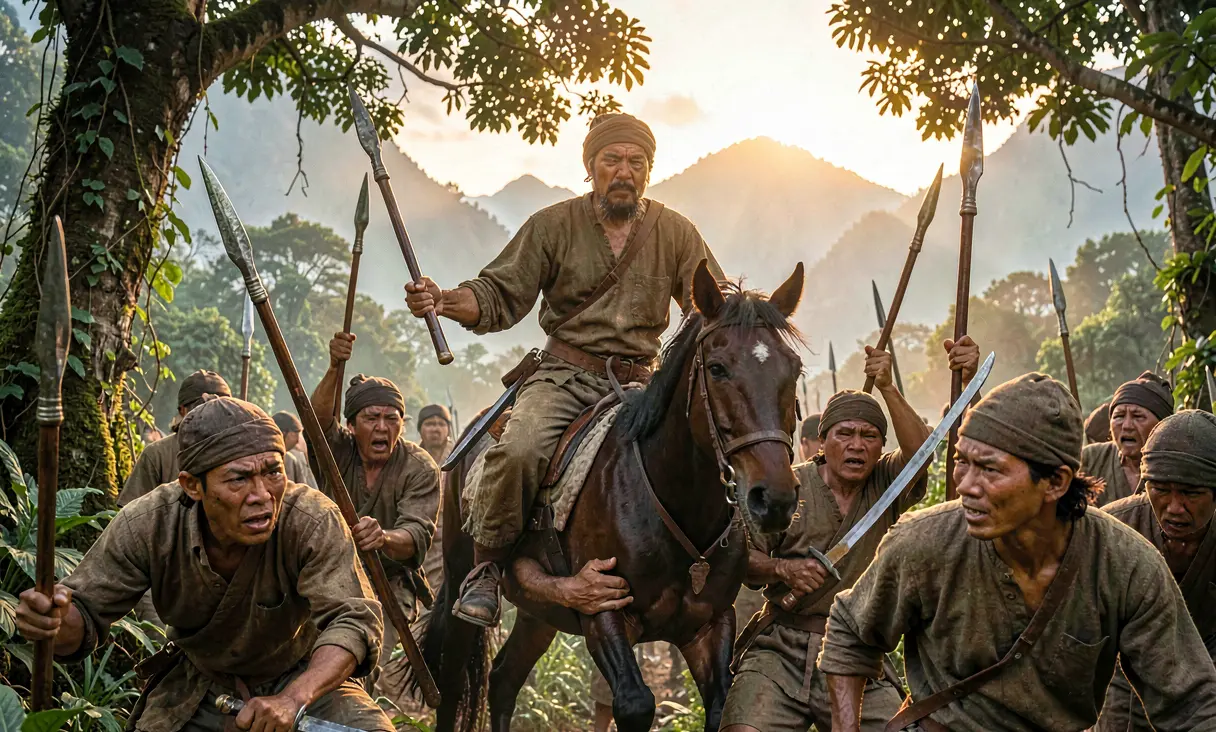
On February 2, 1418, Le Loi proclaimed himself 'King of the Vietnamese' and raised the banner of revolt at Lam Son. Accompanied by his most trusted confidant, the brilliant strategist Nguyen Trai, Le Loi gathered a small but determined force of roughly 100 men, including his cousin Le Trien and future general Nguyen Chich. The initial phase of the uprising was characterized by desperate guerrilla warfare; facing a vastly superior Ming army equipped with firearms and cavalry, Le Loi's forces retreated into the rugged mountains of Thanh Hoa, utilizing their intimate knowledge of the terrain to launch surprise attacks before vanishing into the jungle.
Trials of Survival and Strategic Evolution
The years between 1418 and 1423 were marked by near-catastrophic defeats, most notably at the Battle of Tot Dong-Chu Dong in 1420, which forced Le Loi to temporarily seek a truce with the Ming. However, these setbacks served as a brutal education in military strategy. Under Nguyen Trai's guidance, the rebellion shifted from isolated skirmishes to a coordinated national movement. Le Loi mastered the art of attrition, systematically cutting supply lines and isolating Ming garrisons while cultivating deep support among the local populace, who provided intelligence and provisions essential for survival.
The Decisive Campaign of 1426-1427
By 1426, the balance of power had shifted decisively. Le Loi launched a general offensive that culminated in the Battle of Tot Dong-Chu Dong and the subsequent siege of Dong Quan (modern Hanoi). When the Ming dispatched a massive relief force under General Wang Tong, Le Loi executed a masterful trap at the Battle of Chi Lang-Suoi Trong in late 1427. Utilizing the narrow passes of Chi Lang to bottleneck the Chinese column, Vietnamese forces annihilated the relief army and captured Wang Tong. This decisive victory shattered Ming morale and convinced the court in Beijing that holding Vietnam was no longer strategically viable.
Restoration and the Later Le Dynasty
Following the withdrawal of Chinese troops in 1427, Le Loi formally established the Later Le Dynasty in 1428, ending over a millennium of intermittent foreign domination. He crowned himself as Emperor Le Thai To, moving the capital to Thang Long (Hanoi) and instituting sweeping reforms based on Confucian principles while preserving distinct Vietnamese traditions. The new administration reorganized the bureaucracy, restored land rights to the peasantry, and codified laws that would govern the nation for centuries, effectively ending the era of Ming occupation.
A Legacy of National Identity
The Lam Son Uprising stands as a defining moment in Vietnamese history, not merely for its military success but for its profound cultural impact. It solidified the concept of an independent Vietnamese state distinct from China, fostering a national identity that would endure through subsequent dynasties and foreign invasions. The Later Le Dynasty, which followed, became one of Vietnam's most prosperous eras, known for literary achievements like Nguyen Trai's 'Great Proclamation upon the Pacification of the Wu' (Binh Ngo Dai Cao), a document that articulated the nation's right to self-determination with eloquence and pride.
It ended the brief period of direct Chinese rule and re-established an independent Vietnamese state.
Where it happened
Lam Son (Thanh Hoa, Vietnam) — see it on the interactive map →
Explore related history
 WarIslamic Conquest of the Sasanian Empire637 CE · Ctesiphon, Iraq (Persia)Arab Muslim forces defeat the Sasanian Empire at the Battle of al-Qadisiyyah, ending centuries of Persian rule.
 WarViking Siege of Paris885 CE · Paris, FranceViking raiders led by Sigfred besiege Paris for over a year, testing the defenses of West Francia.
 WarChola Conquest of Sri Lankac. 993 CE · Anuradhapura, Sri LankaRajaraja Chola launches a massive amphibious invasion of Sri Lanka, defeating the Sinhalese kingdom and annexing the island.
 TechnologyExpansion of Aztec Chinampa Agriculturec. 1420 CE · Lake Xochimilco, Mexico CityThe Aztecs expand the chinampa system to feed Tenochtitlan's massive population with highly productive artificial islands.
 WarMing Occupation of Vietnam Ends1427 CE · Dong Da (Hanoi), VietnamLe Loi defeats the Ming army at Dong Da, ending occupation.
 PoliticsLe Loi Crowned Emperor of Dai Viet1428 CE · Hanoi (Thang Long), VietnamLe Loi is crowned Le Thai To, founding the Later Le Dynasty.
Discussion
Loading…