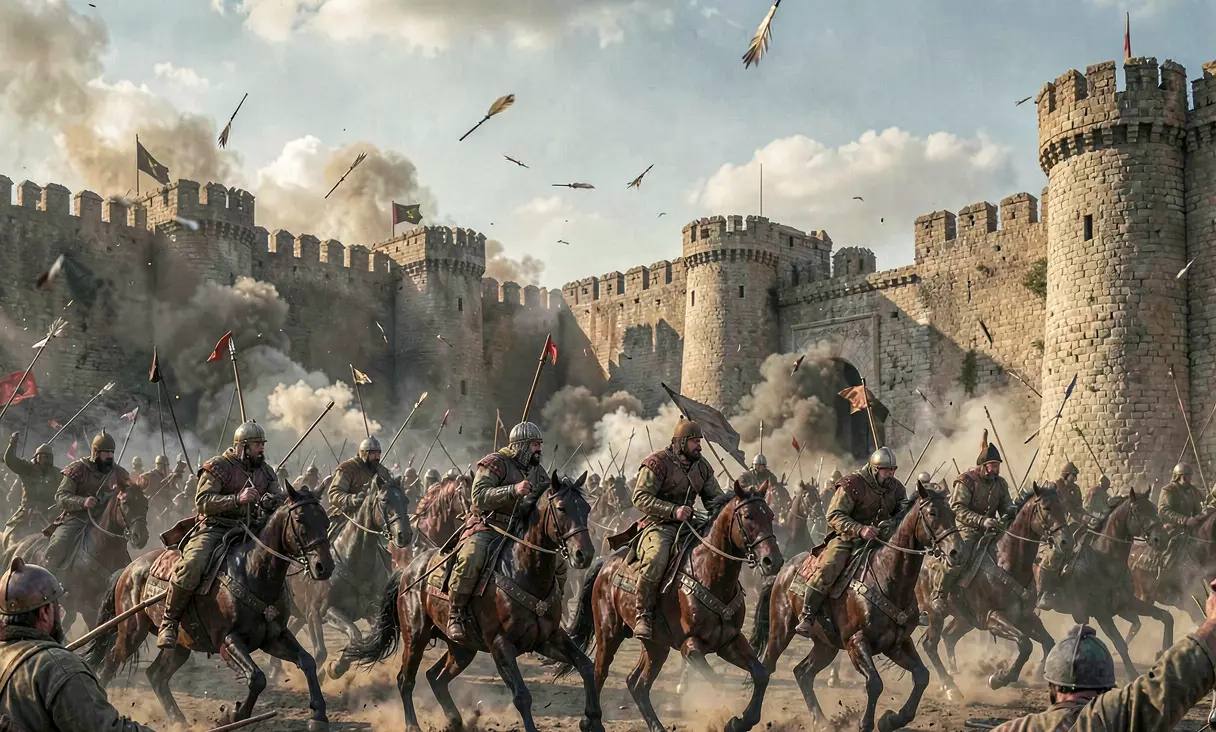
Mongol Invasion of the Delhi Sultanate
The 1241 CE Mongol sack of Lahore shattered Delhi's security, forcing the Sultanate to militarize its frontier and centralize power against the steppe threat.
The Shadow of the Steppe
By the early 13th century, the Mongol Empire had swept across Eurasia with terrifying velocity, shattering empires from China to Persia. The Delhi Sultanate, established by Qutb al-Din Aibak and consolidated under Iltutmish, found itself on the southern frontier of this expanding hegemony. While the primary Mongol thrusts were directed toward the Islamic heartlands in Central Asia and the Middle East, the ripples of their conquests reached the Indus Valley with devastating force. The Sultanate's strategic vulnerability was acute; the Punjab region served as the gateway to the Indian subcontinent, making it the first line of defense against any eastern incursion.
The Invasion of 1241
In late 1240 or early 1241 CE, a substantial Mongol force, estimated by contemporary chroniclers to number around 30,000 cavalrymen, crossed the Indus River. Led by general Qarachar Noyan (often confused in later historiography with Tarmashirin, who would lead a much larger invasion decades later), this army bypassed the main garrisons and struck directly at Lahore, then the second city of the Delhi Sultanate under the rule of Sultan Razia Sultana. The Mongols, masters of siege warfare and psychological terror, quickly overwhelmed the city's defenses. They sacked Lahore with brutal efficiency, massacring a significant portion of the population, destroying infrastructure, and seizing vast quantities of plunder before retreating back across the frontier.
Key Figures in Crisis
The defense of the Sultanate during this period was complicated by internal political instability. The Delhi throne was occupied by Razia Sultana, the first and only female ruler of the dynasty, whose reign was already contested by the nobility. Her inability to effectively mobilize a rapid response against the Mongol incursion highlighted the fragility of her authority. On the Mongol side, Qarachar Noyan demonstrated the tactical flexibility characteristic of Ilkhanate commanders, utilizing speed and shock to maximize damage before the Delhi forces could coalesce. The event underscored a critical weakness in the Sultanate's command structure, which would later be addressed by more autocratic rulers.
The Sack of Lahore
The assault on Lahore was not merely a raid but a calculated demonstration of power. The city, a major commercial and cultural hub, suffered catastrophic destruction. Contemporary accounts describe the burning of markets, the desecration of mosques, and the enslavement or slaughter of thousands of civilians. The Mongols utilized their superior mobility to outmaneuver the heavier, slower Delhi cavalry, striking deep into the hinterland before retreating with their loot. This event shattered the illusion of security in northern India and forced the Sultanate to confront the reality that no region was safe from the steppe war machine.
Strategic Reforms and Fortification
The 1241 sack served as a catalyst for profound military and administrative reforms within the Delhi Sultanate. Successive Sultans, particularly Ghiyas ud din Balban who rose to power in the following decades, recognized that ad-hoc defenses were insufficient against Mongol tactics. Balban established a permanent standing army, the 'Chihalgani' (the Forty), and initiated a massive program of fortification along the northwestern frontier. He constructed a chain of forts manned by loyal troops, implemented a rigorous spy network to monitor Mongol movements, and adopted Mongol-style cavalry tactics to neutralize their advantage in speed and archery.
Legacy of the Steppe Threat
Although the Mongols never established permanent rule over northern India, their persistent threat throughout the 13th century fundamentally reshaped the political geography of the subcontinent. The constant pressure forced the Delhi Sultanate to centralize power, modernize its military apparatus, and shift its economic focus toward a war economy. This era of conflict fostered a distinct Indo-Islamic martial culture that would define the region for centuries. The resilience shown by the Sultanate in repelling these invasions prevented India from suffering the same level of demographic collapse seen in Persia or China, preserving a unique cultural continuity amidst the chaos of the Mongol Age.
The Mongol invasions forced the Delhi Sultanate to strengthen its military and administration, shaping the political dynamics of medieval India.
Where it happened
Lahore (modern Pakistan) — see it on the interactive map →
Explore related history
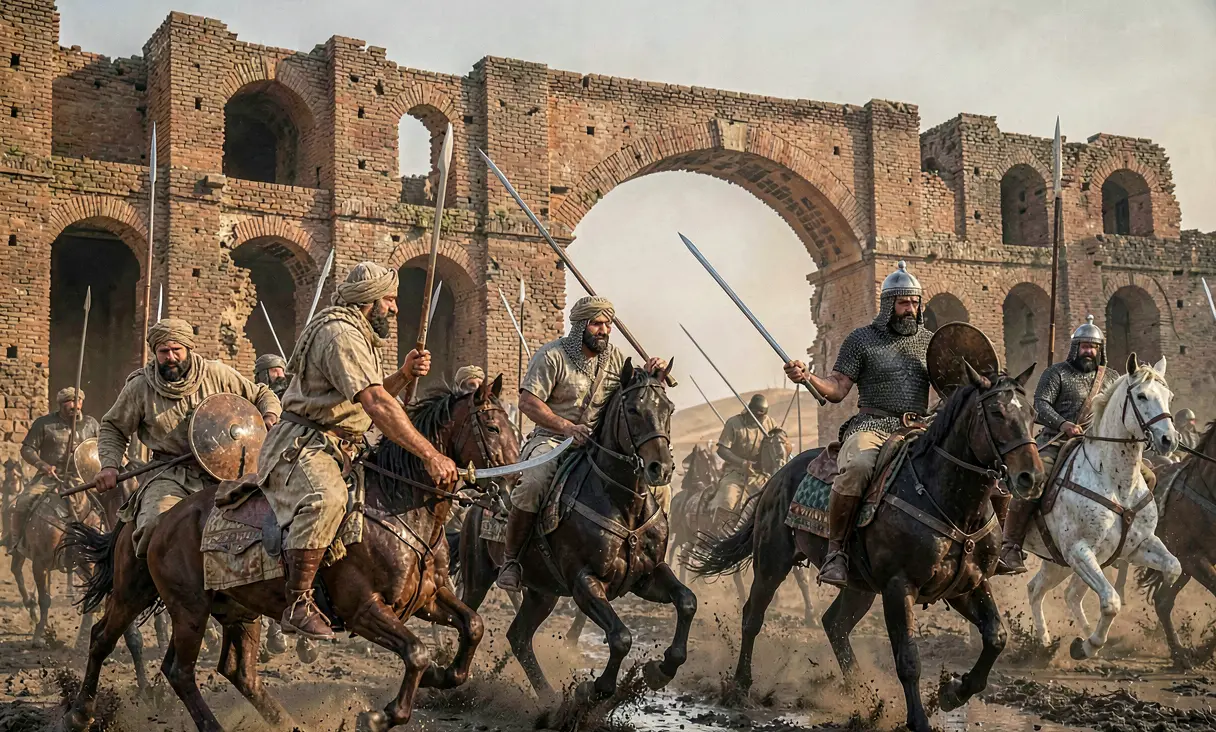 WarIslamic Conquest of the Sasanian Empire637 CE · Ctesiphon, Iraq (Persia)Arab Muslim forces defeat the Sasanian Empire at the Battle of al-Qadisiyyah, ending centuries of Persian rule.
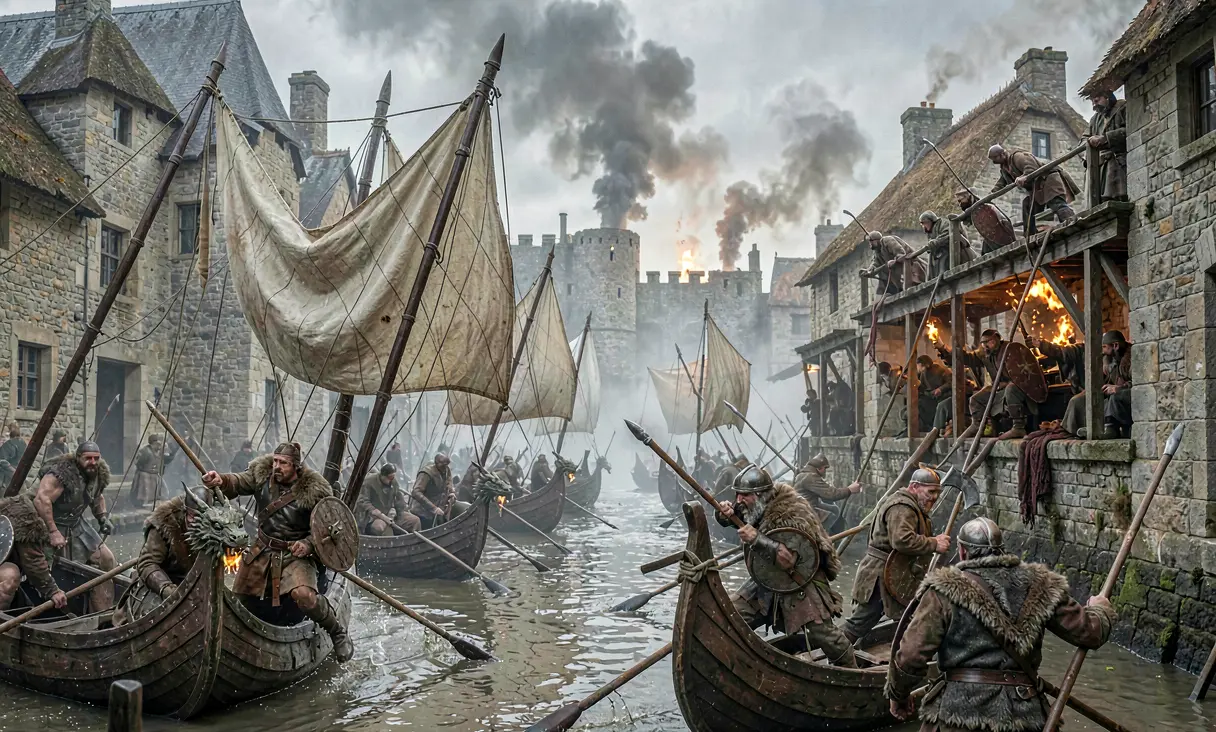 WarViking Siege of Paris885 CE · Paris, FranceViking raiders led by Sigfred besiege Paris for over a year, testing the defenses of West Francia.
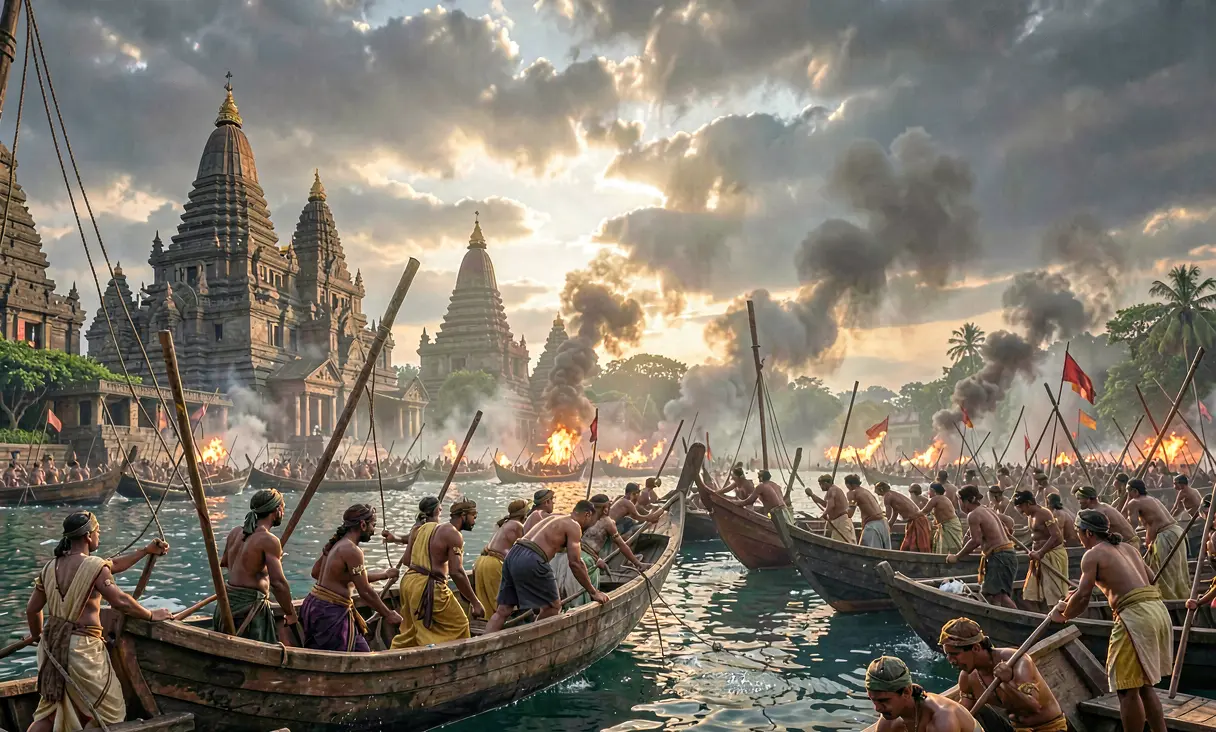 WarChola Conquest of Sri Lankac. 993 CE · Anuradhapura, Sri LankaRajaraja Chola launches a massive amphibious invasion of Sri Lanka, defeating the Sinhalese kingdom and annexing the island.
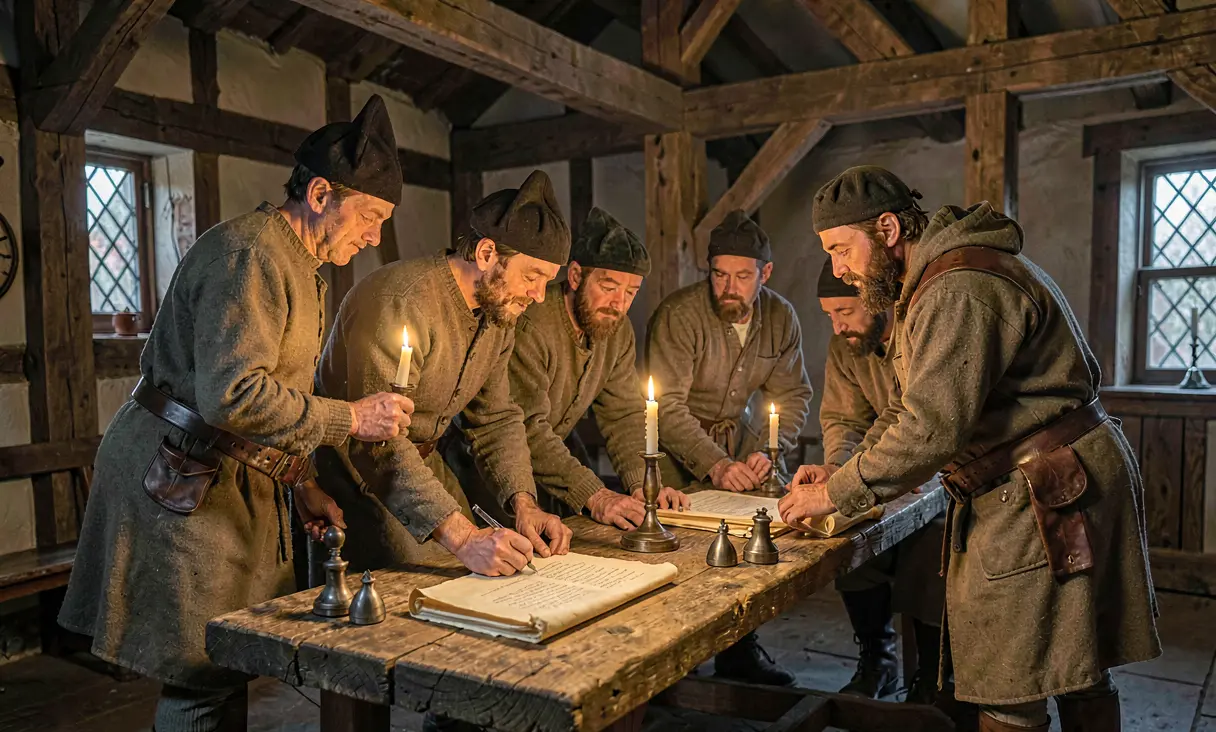 tradeFormation of the Hanseatic Leaguec. 1241 CE · Lübeck, GermanyNorthern German merchants form a powerful commercial and defensive alliance.
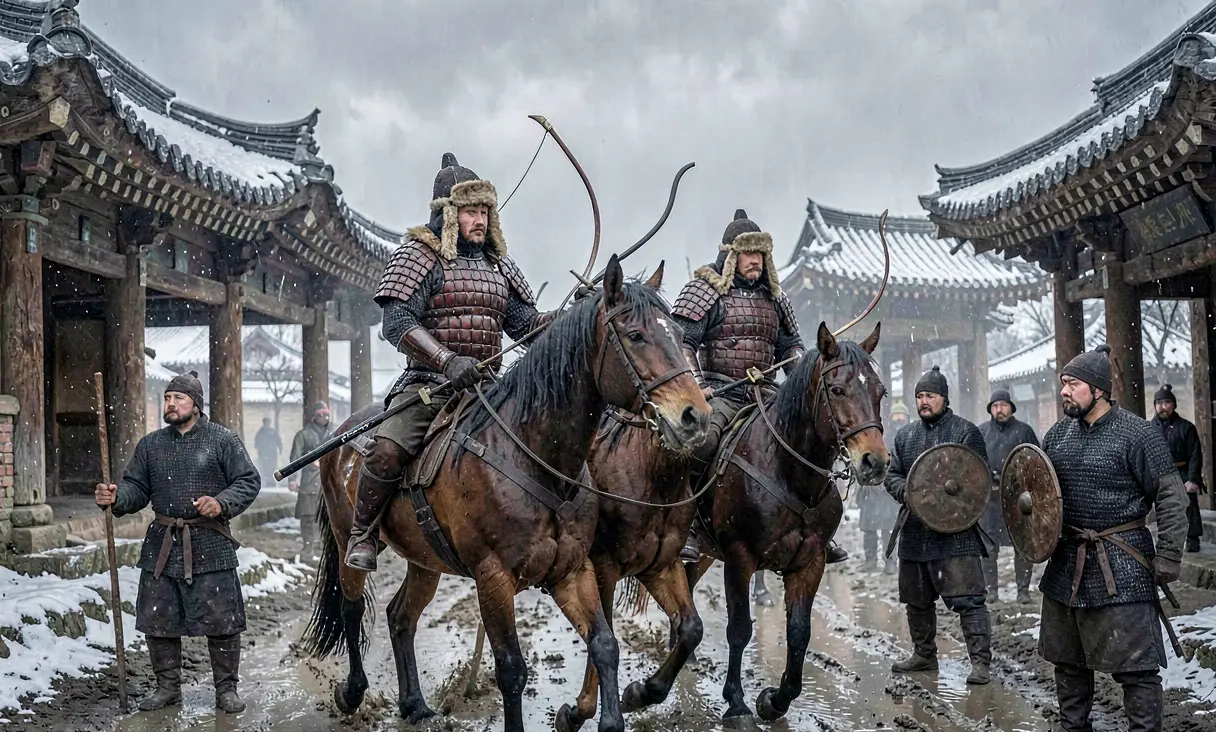 WarMongol Invasion of Goryeo Begins1231 CE · Seoul (Kaesong), KoreaMongol forces under Sartai invade Goryeo, initiating decades of conflict.
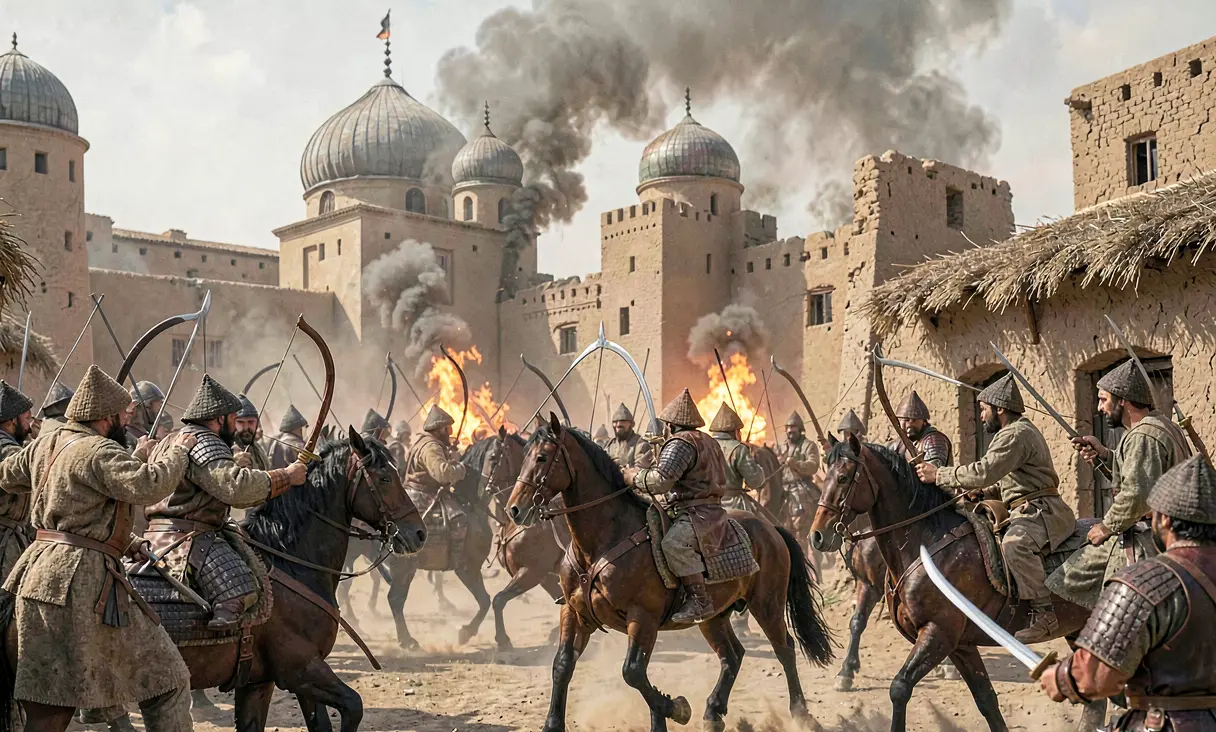 WarMongol Destruction of the Khwarazmian Empirec. 1220 CE · Samarkand/Urgench, Central AsiaGenghis Khan's armies devastate the Khwarazmian Empire, razing cities and altering the demographic map of Central Asia.
Discussion
Loading…