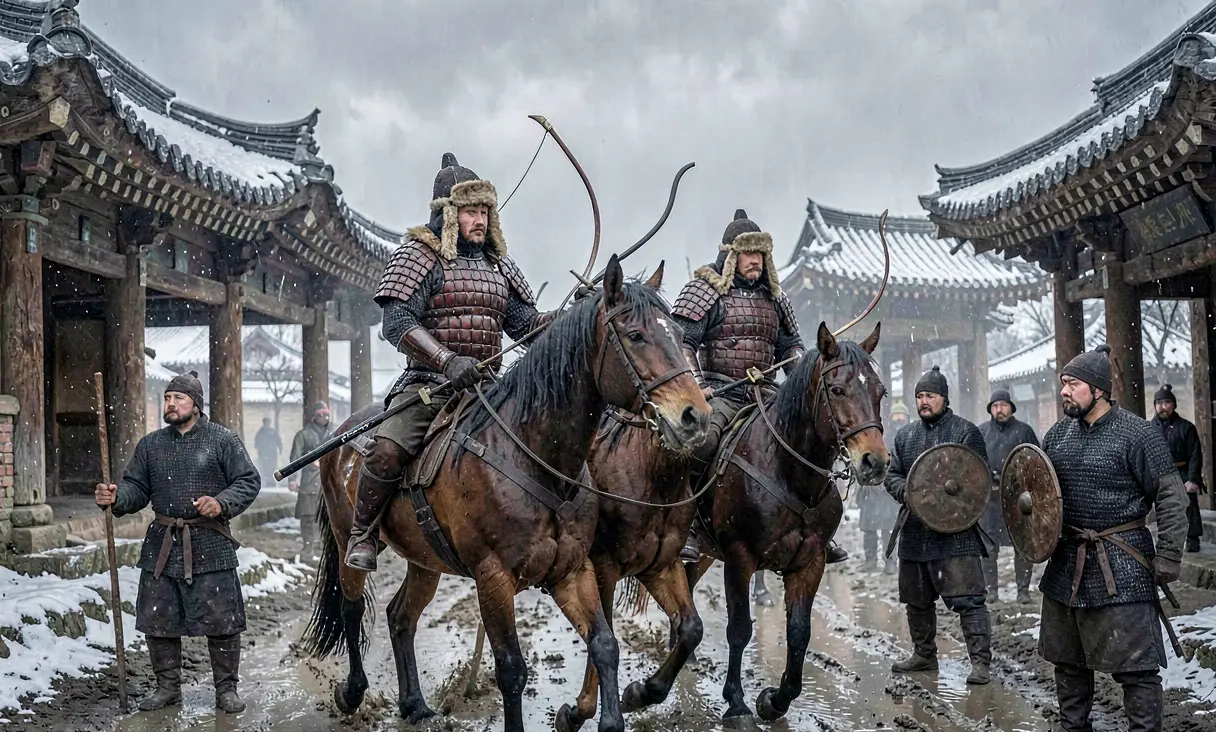
Mongol Invasion of Goryeo Begins
The 1231 Mongol invasion of Goryeo triggered a thirty-year war that devastated the Korean countryside and forced the royal court to exile on Ganghwa Island, ultimately integrating Korea into the Mongo
Geopolitical Context and Rising Tensions
By the early 13th century, the Goryeo Dynasty (918–1392) had established itself as a sophisticated Buddhist kingdom on the Korean Peninsula, maintaining a delicate balance of tributary relations with the declining Jin Dynasty in northern China. However, the meteoric rise of the Mongol Empire under Genghis Khan shattered this equilibrium. After subduing the Jin and absorbing their territory by 1230, the Mongols turned their gaze southward toward Goryeo. The Goryeo court, led by King Gojong (r. 1213–1259), initially adopted a policy of cautious diplomacy, sending tribute to avoid conflict while secretly fortifying defenses. This hesitation was compounded by internal strife; the military regime that had seized power in 1170 remained deeply suspicious of both foreign powers and the aristocratic civil bureaucracy, creating a fractured political landscape ill-prepared for total war.
The First Invasion: Sartai's Campaign
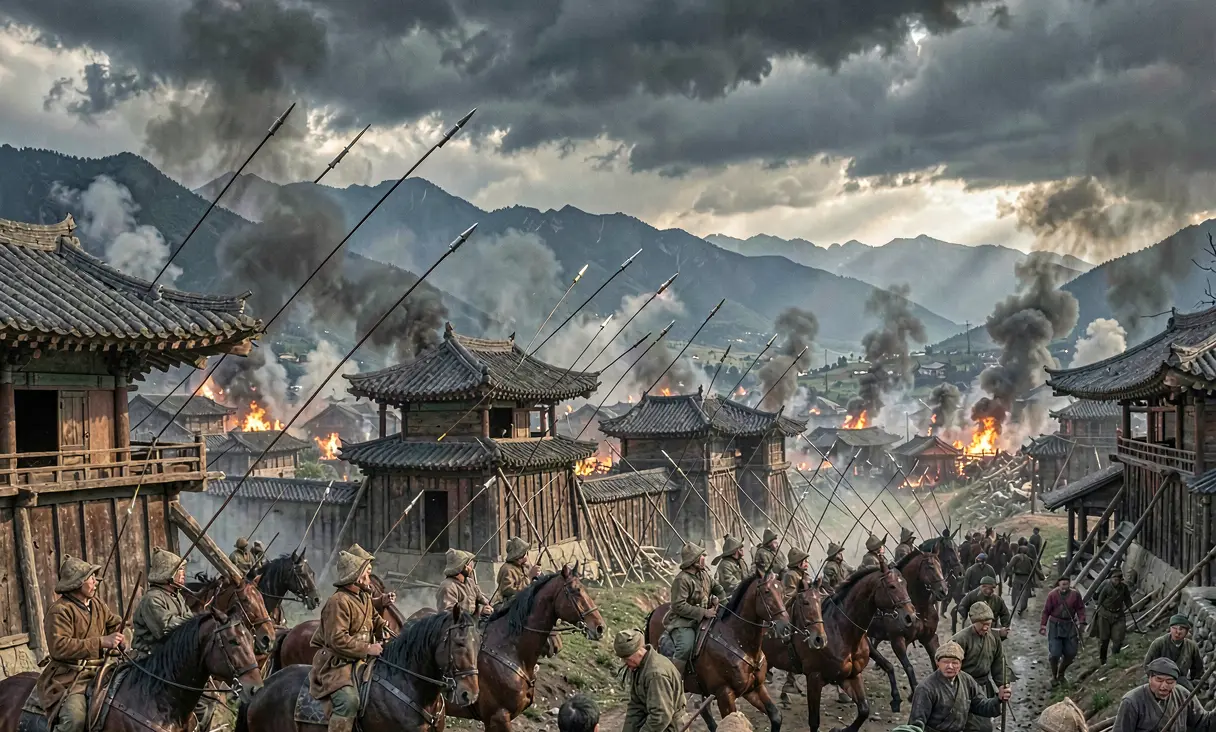
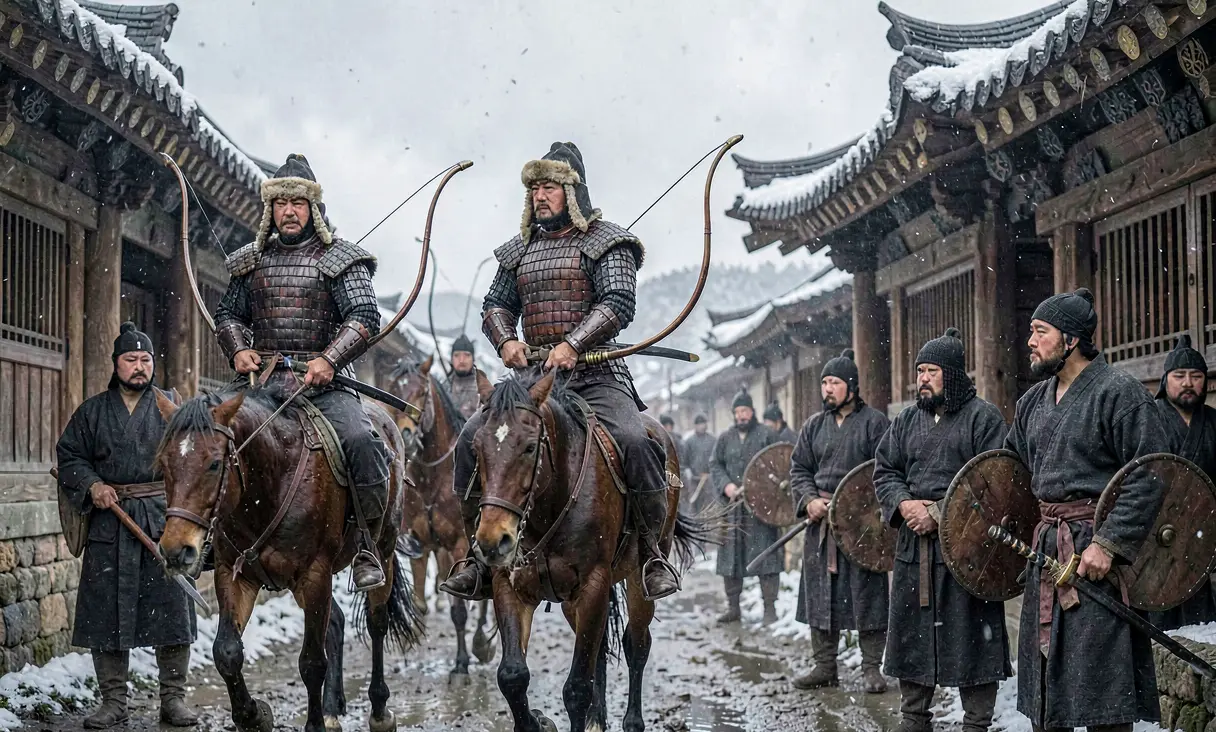
In the summer of 1231, General Sartai (also known as Saritai or Sadatu), acting under the orders of Ögedei Khan, crossed the Yalu River with a formidable force estimated at 50,000 cavalry. The Mongol objective was explicit: compel Goryeo's immediate submission and integrate the peninsula into the empire's administrative web. Sartai's forces moved with terrifying speed, bypassing major fortifications to devastate the countryside, burning crops, and slaughtering civilians to break the will of resistance. By late 1231, the Mongols had captured the northern provinces and advanced toward the capital, Kaesong (modern-day Seoul). The sheer scale of destruction in the northern territories forced King Gojong into a desperate decision; rather than surrendering the royal seat, he ordered the court to abandon the mainland.
The Flight to Ganghwa Island
In late 1231, the Goryeo royal family and key government officials fled across the Han River to the fortified island of Ganghwa-do. This strategic relocation utilized the surrounding waters as a natural moat against Mongol cavalry, effectively neutralizing their primary military advantage. The move signaled a shift from conventional warfare to prolonged resistance. While the mainland cities fell one by one under Sartai's relentless assault, the court on Ganghwa maintained a functioning government in exile. This decision preserved the dynasty's legitimacy and administrative continuity but left the vast majority of the population on the peninsula exposed to Mongol reprisals, turning the conflict into a brutal war of attrition that would plague the region for decades.
Key Figures: Sartai and the Goryeo Resistance
General Sartai was the architect of the initial devastation, known for his ruthlessness in enforcing Mongol demands. His tactics involved the systematic destruction of agricultural infrastructure to starve out resistance, a strategy that resulted in famine and mass displacement across the northern provinces. On the Goryeo side, the conflict was defined by the resilience of King Gojong and the military commanders who organized local militias. Although the royal court remained isolated on Ganghwa, figures like Kim Ch'un-ch'i and various provincial governors led sporadic but fierce counter-attacks against Mongol garrisons. The death of Sartai in 1232, reportedly killed by a Goryeo archer during a diplomatic parley that turned violent, marked a temporary turning point, though it only intensified the Mongols' resolve to subjugate the kingdom completely.
The Long War and Forced Submission
Following Sartai's death, the conflict entered a grueling phase lasting nearly three decades. The Mongols launched six subsequent invasions between 1235 and 1259, each aimed at crushing the resistance on Ganghwa Island. Goryeo forces utilized guerrilla tactics and the difficult terrain of the peninsula to delay total conquest, but the cost was catastrophic. Entire regions were depopulated, and the cultural heritage of the north suffered irreparable loss. By 1258, internal coup attempts within the military regime on Ganghwa weakened the kingdom's resolve. Finally, in 1259, King Gojong's successor, Wonjong, was forced to leave the island for the Mongol court in Karakorum (and later Dadu) to swear personal allegiance to Kublai Khan, effectively ending the active phase of resistance.
Legacy and Historical Significance
The Mongol invasion of Goryeo stands as a defining chapter in East Asian history, marking the first time Korea was fully integrated into a transcontinental empire. While the war caused immense demographic collapse and physical destruction, it did not erase Korean sovereignty; instead, Goryeo retained its distinct administrative structure, language, and Buddhist culture under the status of a semi-autonomous vassal state. This period facilitated unprecedented cultural exchange between the Mongols and Koreans, introducing new technologies and diplomatic practices while solidifying the Confucian bureaucratic traditions that would later define the Joseon Dynasty. The resilience displayed during these thirty years forged a national identity rooted in survival against overwhelming odds, leaving an indelible mark on Korea's historical consciousness.
It forced a long-term submission to the Yuan dynasty while shaping Goryeo's military and diplomatic strategies for centuries.
Where it happened
Seoul (Kaesong), Korea — see it on the interactive map →
Explore related history
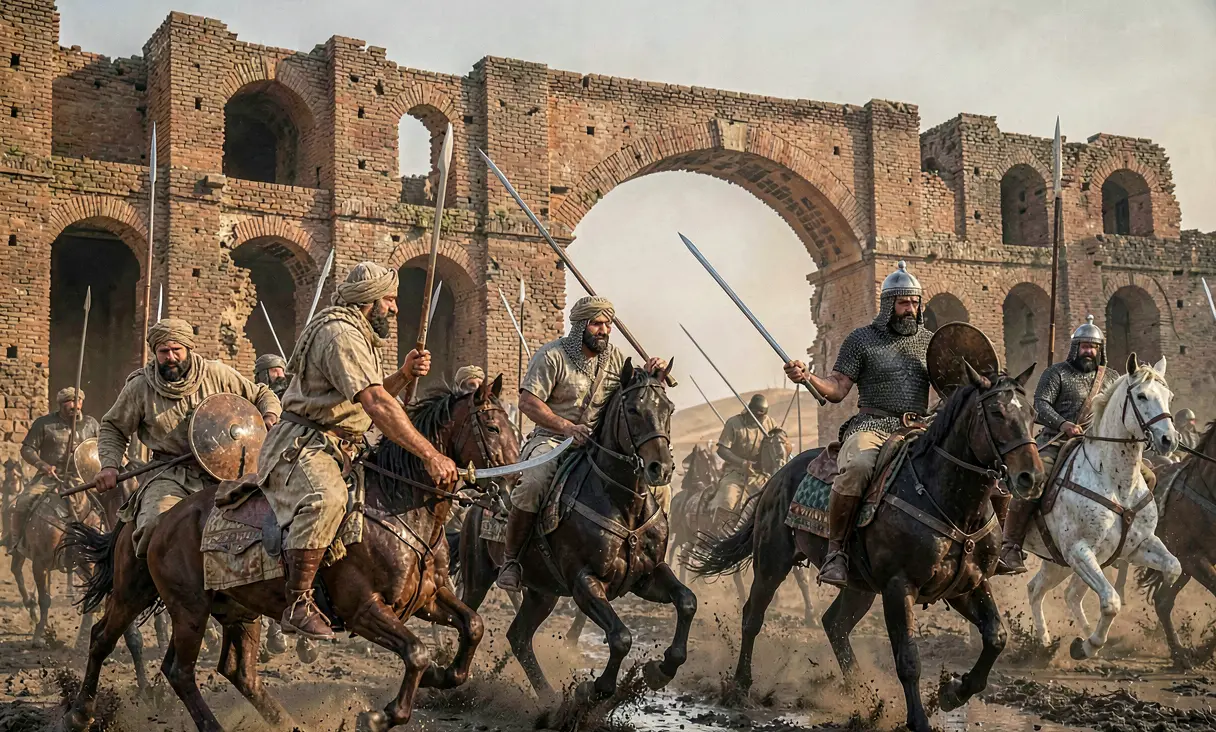 WarIslamic Conquest of the Sasanian Empire637 CE · Ctesiphon, Iraq (Persia)Arab Muslim forces defeat the Sasanian Empire at the Battle of al-Qadisiyyah, ending centuries of Persian rule.
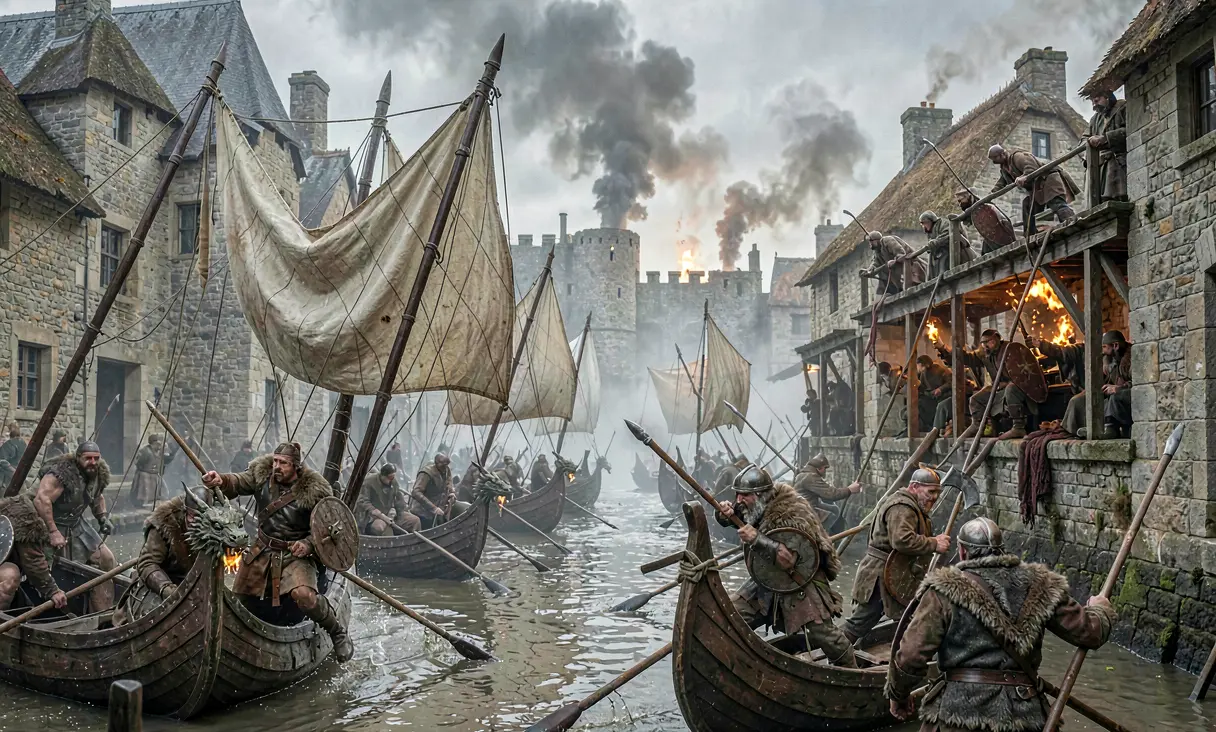 WarViking Siege of Paris885 CE · Paris, FranceViking raiders led by Sigfred besiege Paris for over a year, testing the defenses of West Francia.
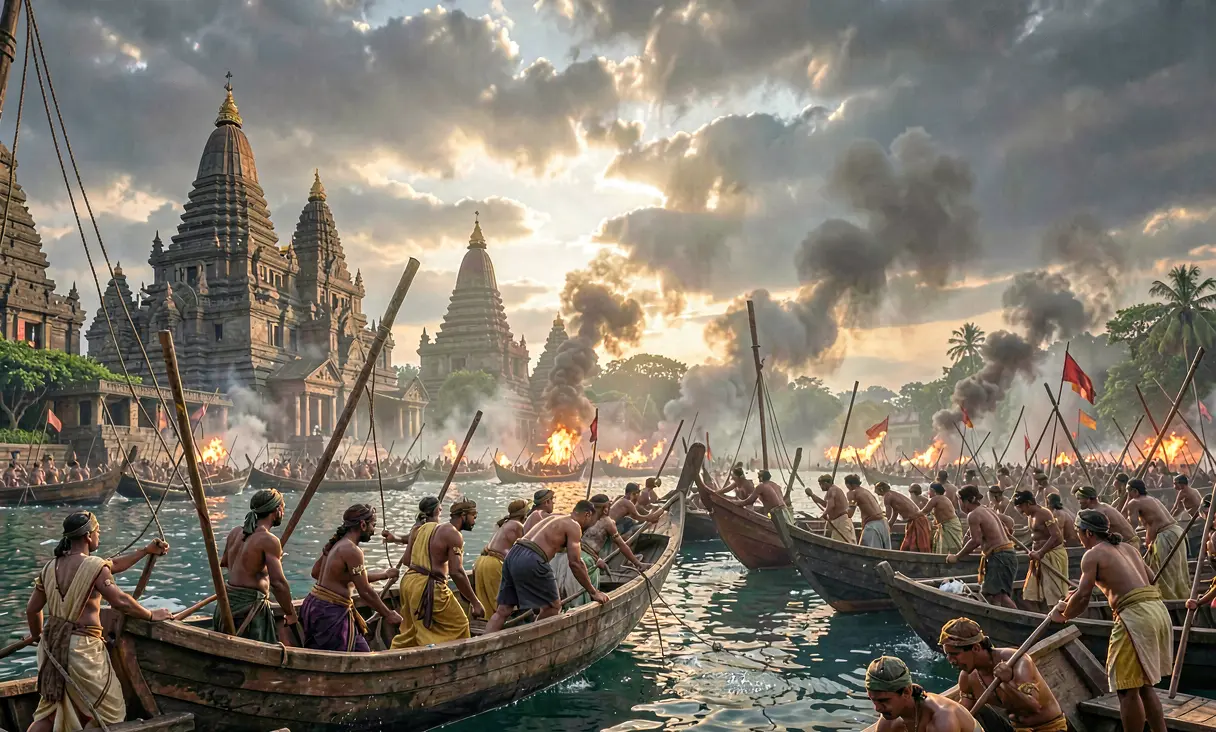 WarChola Conquest of Sri Lankac. 993 CE · Anuradhapura, Sri LankaRajaraja Chola launches a massive amphibious invasion of Sri Lanka, defeating the Sinhalese kingdom and annexing the island.
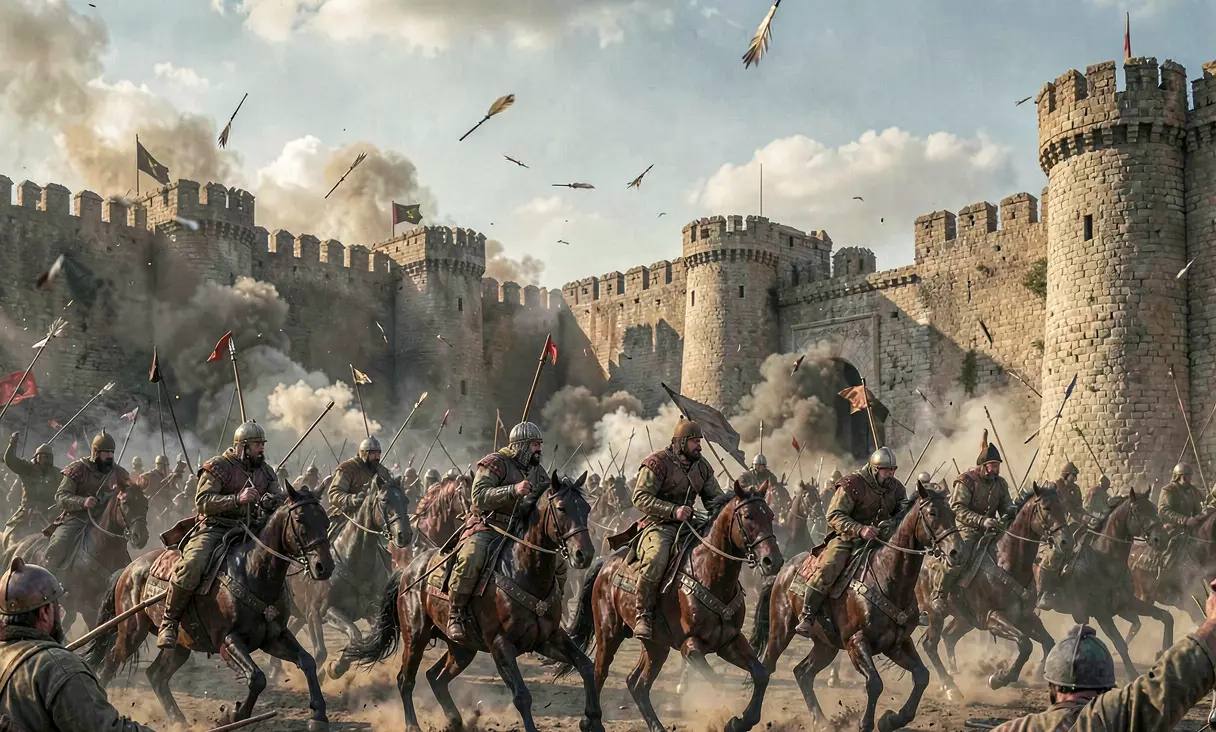 WarMongol Invasion of the Delhi Sultanatec. 1241 CE · Lahore (modern Pakistan)Mongol forces under Tarmashirin invade the Punjab and sack Lahore, testing the defenses of the Delhi Sultanate.
 tradeFormation of the Hanseatic Leaguec. 1241 CE · Lübeck, GermanyNorthern German merchants form a powerful commercial and defensive alliance.
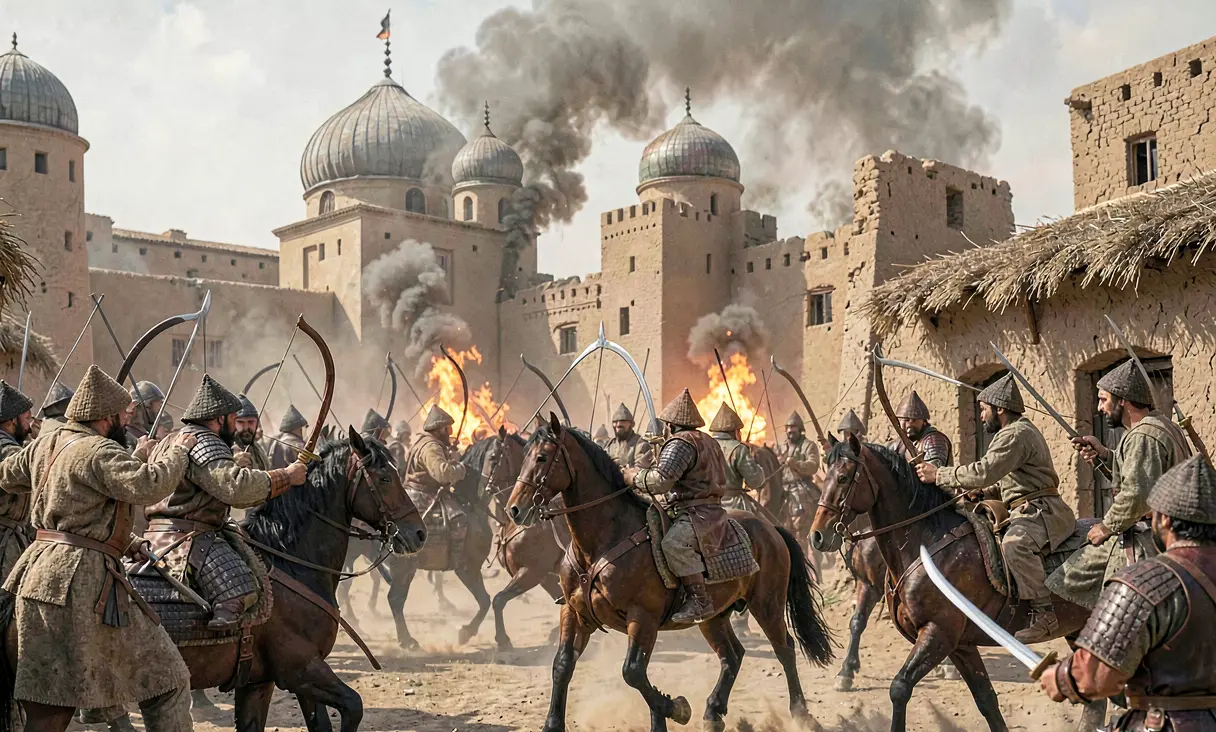 WarMongol Destruction of the Khwarazmian Empirec. 1220 CE · Samarkand/Urgench, Central AsiaGenghis Khan's armies devastate the Khwarazmian Empire, razing cities and altering the demographic map of Central Asia.
Discussion
Loading…