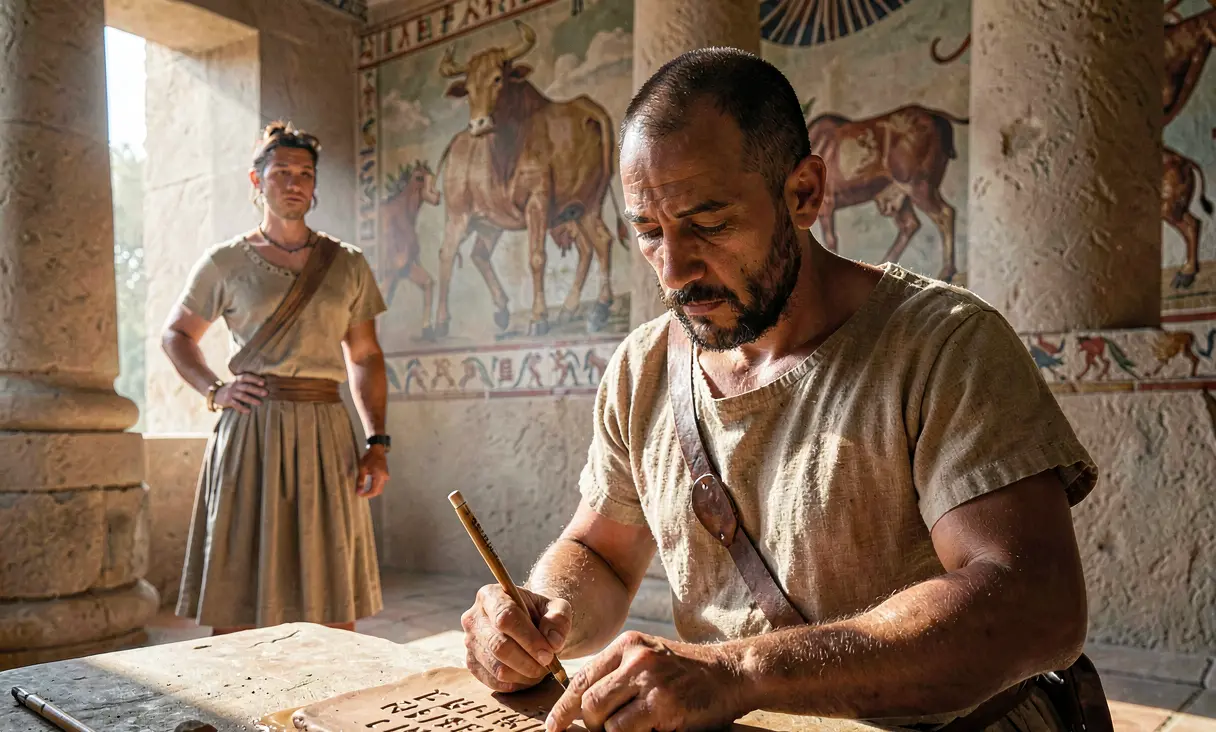
Adoption of Linear B by Mycenaean Greeks in Crete
The adaptation of Linear A into Linear B around 1450 BCE created the first written record of the Greek language, transforming Minoan Knossos into a Mycenaean administrative center and rewriting the ti
The Collapse of Minoan Hegemony
By the mid-15th century BCE, the island of Crete had long been dominated by the sophisticated, non-Greek-speaking Minoan civilization, centered at the great palace of Knossos. Their administration relied on Linear A, an undeciphered script that recorded a language unrelated to any known Indo-European tongue. However, around 1450 BCE, a catastrophic event—likely a combination of seismic activity and invasion by mainland Mycenaean Greeks from the Peloponnese—shattered Minoan political unity. While other palaces on Crete were destroyed or abandoned, Knossos survived as the sole administrative hub, now under the control of foreign overlords who spoke an early form of Greek.
The Linguistic Adaptation
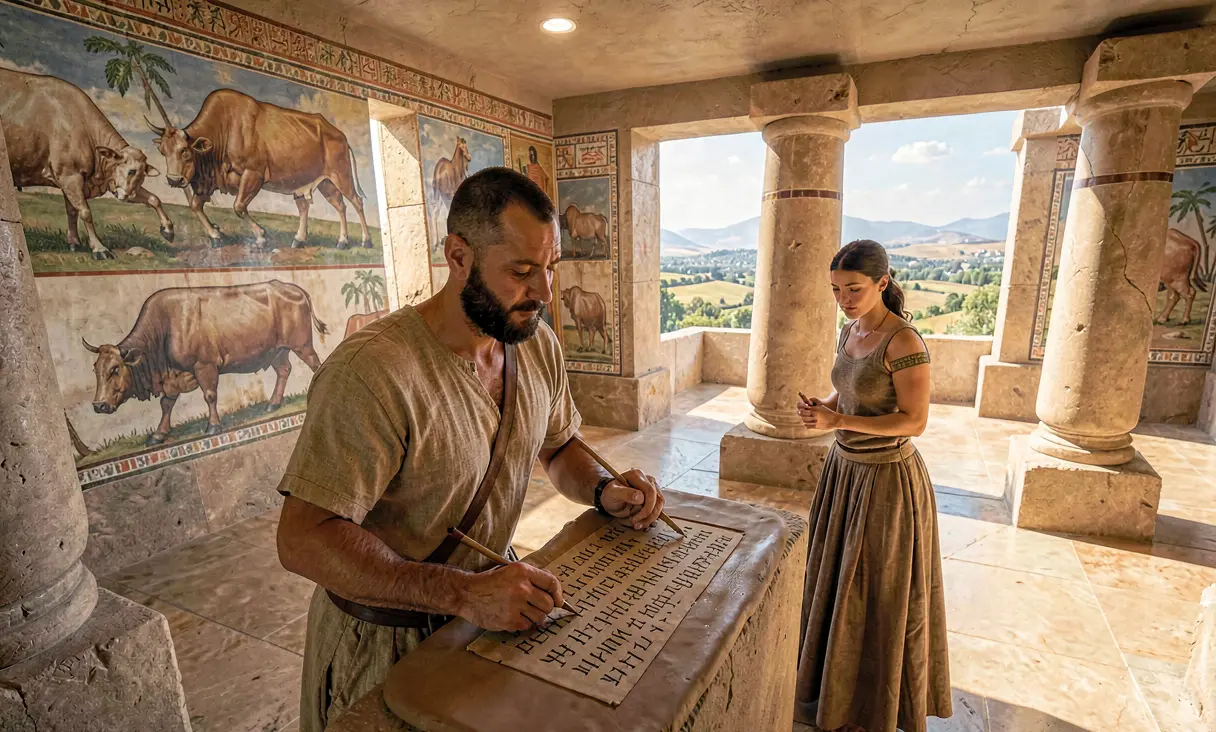
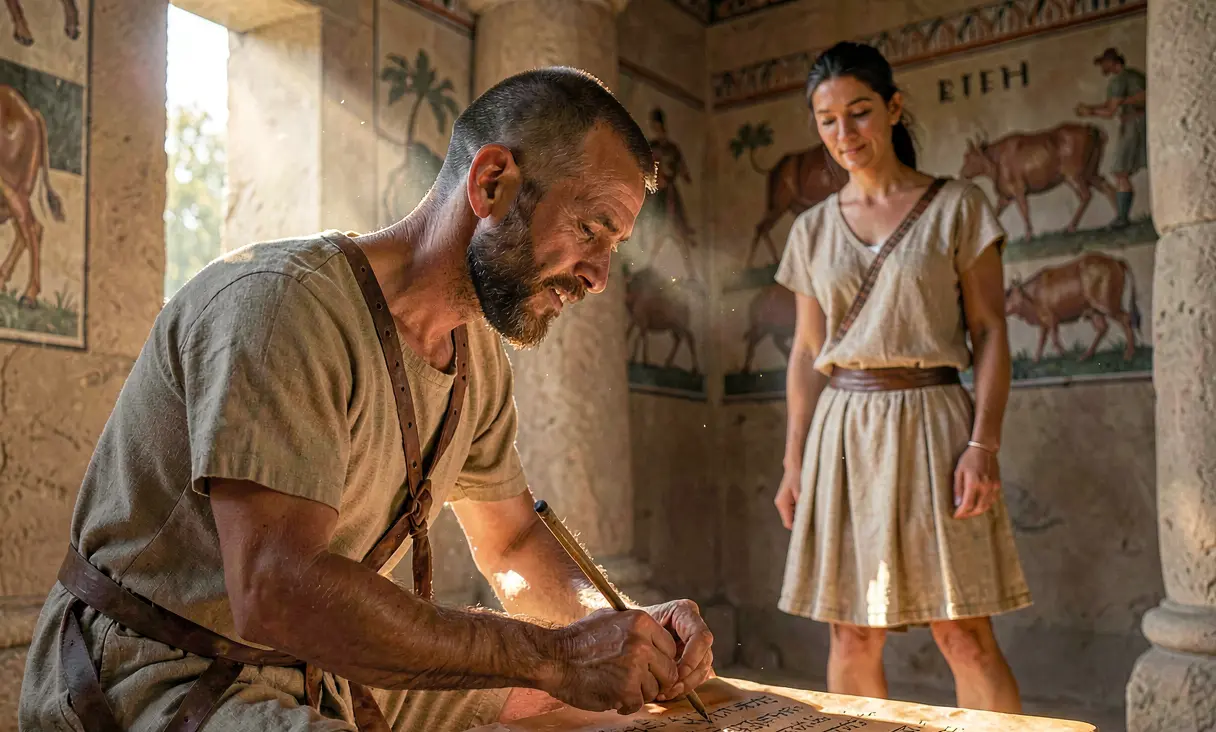
Faced with the necessity of managing a complex palace economy inherited from their predecessors, the Mycenaean administrators did not discard the existing bureaucratic framework. Instead, they pragmatically adapted the Linear A script to fit the phonological structure of their own language. This process involved retaining many syllabic signs but reassigning them to represent Greek sounds while introducing new characters for consonants and vowels absent in Minoan. The result was Linear B, a syllabary capable of recording Mycenaean Greek, marking the first time the Greek language was committed to writing.
The Knossos Archives
The primary evidence for this transition comes from the thousands of clay tablets unearthed at Knossos by Sir Arthur Evans in the early 20th century. These documents, fired accidentally during the palace's final destruction around 1375 BCE, preserve a snapshot of daily life under Mycenaean rule. The texts are overwhelmingly administrative, detailing vast inventories of sheep, goats, cattle, grain, olive oil, and wool. They also record religious offerings to deities whose names—such as *Di-we* (Zeus), *Po-ti-ni-ja* (Potnia/Mistress), and *A-re-na* (Artemis)—reveal a pantheon that would later define classical Greek religion.
The Decipherment Revolution
For decades, the identity of the language recorded in Linear B remained a subject of intense scholarly debate. Many prominent archaeologists, including Evans himself, believed the script still represented a Minoan language. It was not until 1952 that Michael Ventris, an English architect and linguist working with classicist John Chadwick, definitively proved that the tablets contained Greek. By analyzing the distribution of signs and applying rigorous structural analysis, they demonstrated that the underlying grammar and vocabulary were unmistakably Mycenaean Greek, pushing the history of written Greek back by nearly a millennium.
Societal Implications
The adoption of Linear B reveals a society deeply stratified and centrally controlled. The tablets describe a rigid hierarchy headed by the *wanax* (king), beneath whom served various officials, priests, and specialized workers like chariot-makers and textile producers. Unlike the fluid, maritime-focused Minoan culture depicted in frescoes, the Mycenaean administration reflected a militaristic, land-based economy obsessed with resource accumulation and redistribution. The script was not used for literature, history, or philosophy, but strictly as a tool of statecraft to ensure the palace's economic survival.
Legacy of the First Greek Script
The significance of Linear B extends far beyond its utility in ancient accounting. It serves as the critical bridge between the prehistoric Bronze Age and the historical Iron Age, confirming that the Greeks were present in the Aegean centuries before the Homeric epics were composed. Although the script disappeared with the collapse of the palace system around 1200 BCE during the Late Bronze Age Collapse, its decipherment validated the historicity of the Mycenaean civilization and provided the earliest attested forms of names, titles, and religious concepts that would permeate later Greek culture.
Linear B provides the first written record of the Greek language, bridging the gap between myth and history for early Greece.
Where it happened
Knossos, Crete (Greece) — see it on the interactive map →
Explore related history
 ScienceDomestication of the Turkey in Mesoamericac. 1000 BCE · Central MexicoAncient Mesoamericans successfully domesticate the wild turkey for meat and ritual feathers.
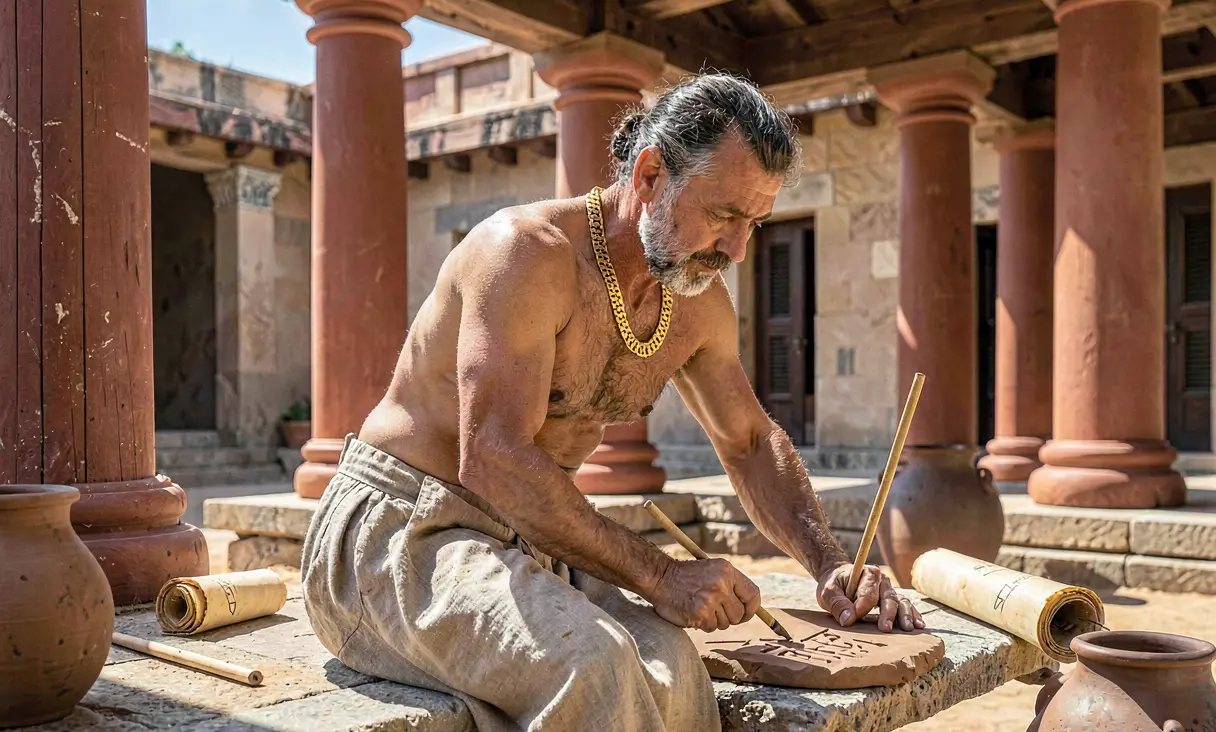 ScienceDevelopment of Linear A Script by Minoansc. 1800 BCE · Knossos, Crete (Greece)The Minoans develop Linear A, a still undeciphered writing system for administration.
 ScienceSankore Madrasah Becomes a Center of Learning in Timbuktuc. 1450 CE · Timbuktu, MaliThe Sankore Madrasah emerges as a premier university for Islamic scholarship in West Africa.
 ArtCreation of the Benin Bronzes under Oba Ewuarec. 1450 CE · Benin City, NigeriaOba Ewuare commissions the famous bronze and ivory plaques documenting court life and military victories.
 PoliticsOba Ewuare Centralizes the Kingdom of Beninc. 1450 CE · Benin City, NigeriaOba Ewuare reorganizes the kingdom into a centralized state with a professional army and bureaucracy.
 DisasterAbandonment of Great Zimbabwec. 1450 CE · Great Zimbabwe, ZimbabweEnvironmental degradation and shifting trade routes lead to the gradual abandonment of Great Zimbabwe.
Discussion
Loading…