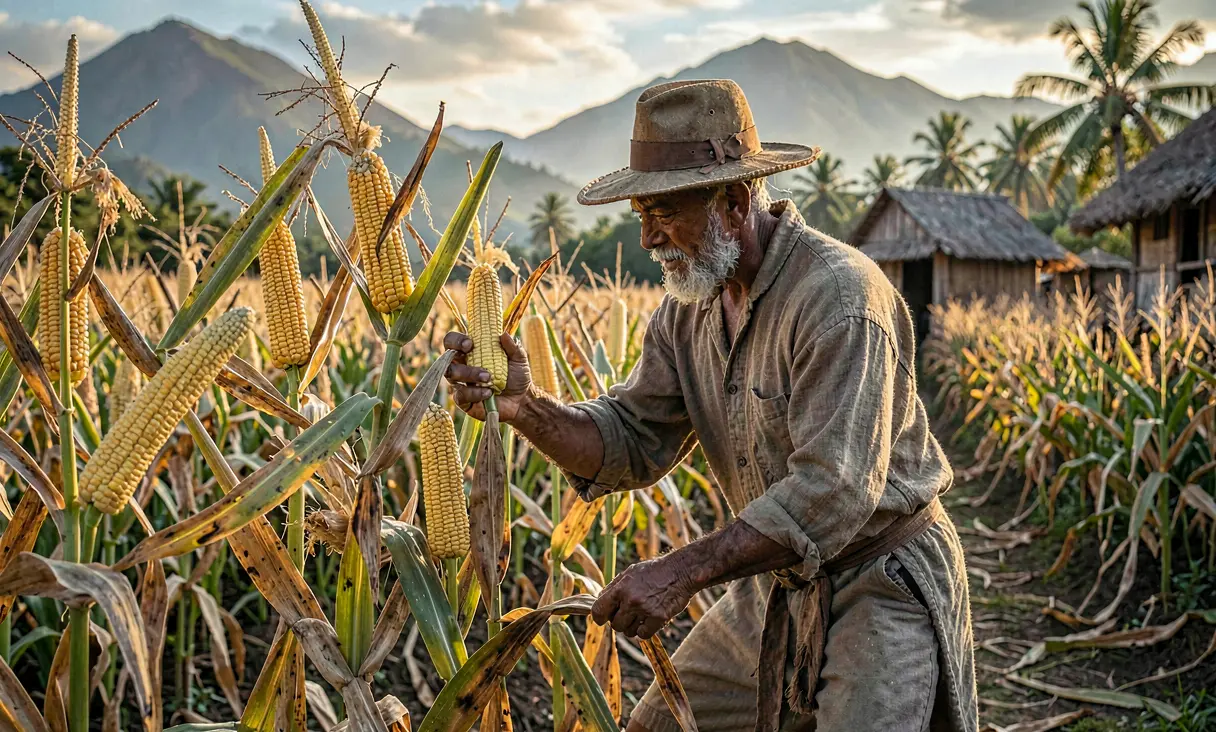
Final Domestication of Maize from Teosinte in Mesoamerica
Around 5000 BCE, indigenous farmers in Mexico's Balsas River Valley genetically transformed wild teosinte into maize through selective breeding, creating the caloric foundation for Mesoamerican civili
The Wild Ancestor and the Mesoamerican Context
Prior to the Neolithic revolution in the Americas, the Balsas River Valley of southwestern Mexico hosted a diverse ecosystem where early Holocene hunter-gatherers relied on a mosaic of wild resources. Among these was teosinte (Zea mays subsp. parviglumis), a hardy, branching grass that produced tiny, angular kernels encased in a rock-hard fruit case. Unlike modern maize, teosinte did not retain its seeds upon ripening; instead, the ears shattered immediately to scatter seeds for natural propagation, making harvest by human hands nearly impossible without extensive processing. For millennia, these populations interacted with this grass, likely utilizing it for flour or fermentation, but the plant remained a wild entity, genetically distinct from the staple crop that would eventually sustain empires.
The Genetic Bottleneck and Selective Breeding
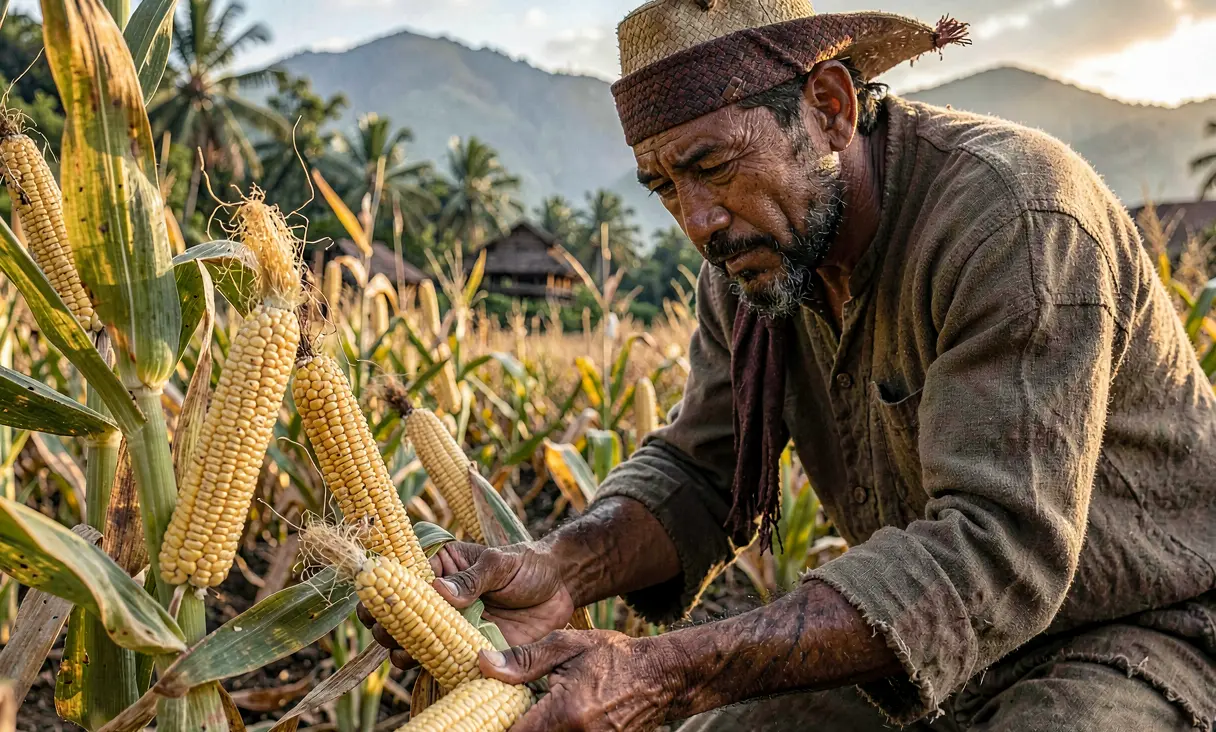
Around 5000 BCE, a pivotal shift occurred as indigenous farmers in the Balsas Valley began an unconscious yet rigorous program of artificial selection. By consistently harvesting plants that exhibited even slight deviations from the wild norm—such as kernels with softer casings or ears that remained intact after ripening—they initiated a genetic bottleneck. This process targeted specific loci, most notably the *tb1* gene which controls branching architecture and the *tga1* gene responsible for kernel casing hardness. Over several centuries of generational turnover, these minute phenotypic changes compounded, transforming a scattered grass into a plant with a centralized cob bearing rows of exposed, edible grains. This was not a singular discovery but a slow, deliberate manipulation of plant genetics that predated the understanding of heredity by thousands of years.
Archaeological Evidence from Guilá Naquitz and Beyond
The timeline of this domestication is anchored by robust archaeological data, particularly from the Guilá Naquitz cave in Oaxaca, which provides a continuous record of plant remains dating back to 8000 BCE. However, it is the macrobotanical evidence found in sites like Coxcatlán Cave and later studies of ancient DNA that pinpoint the rapid divergence between teosinte and maize occurring by 5000 BCE. Microfossil analysis of phytoliths (silica bodies unique to grasses) recovered from grinding stones and soil samples reveals a dramatic morphological shift: the transition from the small, triangular kernels of parviglumis to the larger, rounded grains of early domesticated maize. These findings confirm that by the mid-Holocene, the Balsas River Valley had become the primary locus for this biological transformation.
The Transformation of Plant Architecture
The resulting crop was biologically unrecognizable from its ancestor. Where teosinte grew as a multi-stalked bush with numerous small ears, early maize developed a single, sturdy stalk topped by one or two large cobs. The kernel arrangement shifted from a random scattering to organized rows on a central cob, and the fruit case softened to allow for direct consumption and easy threshing. This architectural restructuring required a complete reliance on human intervention; without planting and harvesting, the new maize varieties could not reproduce effectively in the wild. This mutualism between farmer and plant created an evolutionary dead end for the crop outside of agricultural systems, cementing the bond between Mesoamerican societies and their primary caloric source.
Societal Metamorphosis and Population Growth
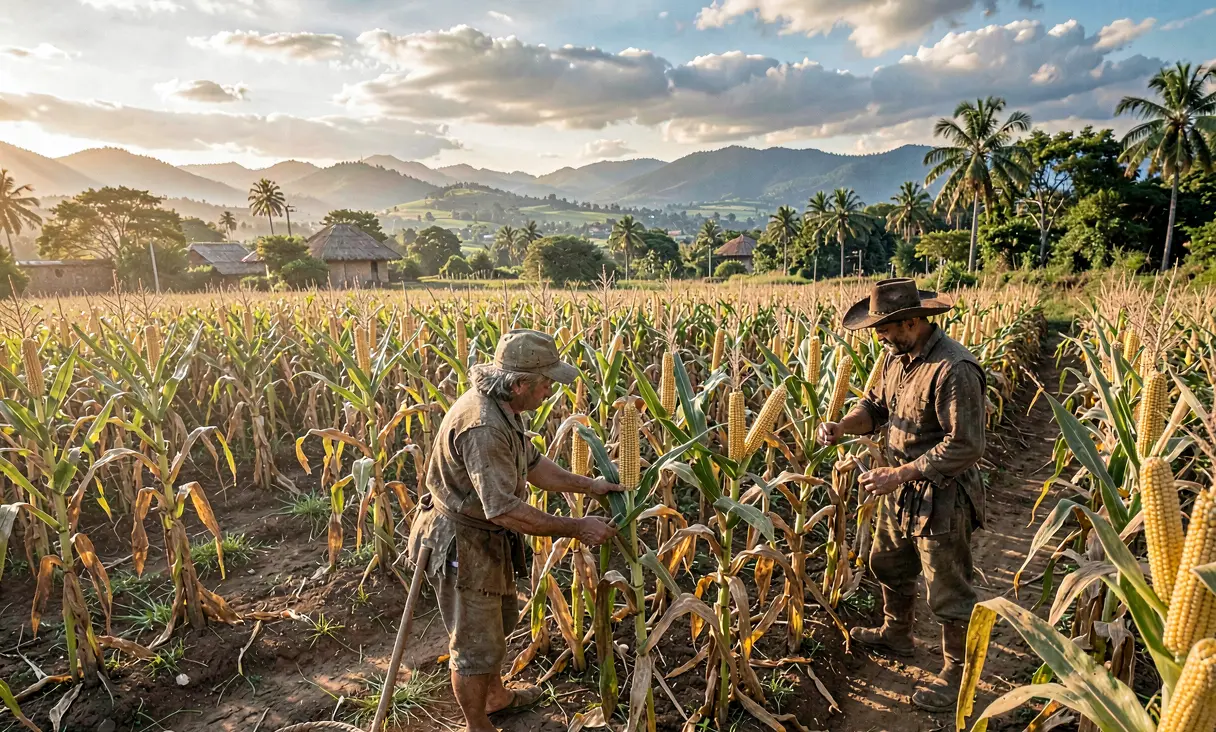
The domestication of maize acted as a catalyst for profound societal changes across Mesoamerica. Unlike wild foraging, which required constant mobility to track seasonal resources, maize agriculture allowed for sedentary lifestyles and the accumulation of surplus calories. By 3000 BCE, this agricultural foundation supported the first significant population booms in the region, facilitating the transition from small, egalitarian villages to complex, stratified societies. The caloric density of domesticated maize enabled the specialization of labor, giving rise to artisans, priests, and rulers who could be sustained by the food surplus generated by a relatively small farming class. This demographic shift laid the groundwork for the eventual rise of the Olmec, Maya, and Aztec civilizations.
Legacy as a Global Staple
The significance of this event extends far beyond the borders of ancient Mexico; it represents one of the most consequential biological manipulations in human history. Maize eventually spread throughout the Americas, adapting to diverse climates from the Canadian north to the Patagonian south, and following European contact, became a global commodity that underpins modern food security. Today, maize is the most produced cereal grain on Earth, essential for human consumption, livestock feed, and industrial ethanol production. The genetic legacy of those 5000 BCE farmers in the Balsas Valley persists in every kernel grown worldwide, serving as a testament to the ingenuity of pre-Columbian agriculturalists who turned a wild grass into the backbone of global civilization.
The domestication of maize provided the agricultural basis for the rise of complex civilizations throughout the Americas.
Where it happened
Balsas River Valley, Mexico — see it on the interactive map →
Explore related history
 ScienceCodification of Aboriginal Songlines Across Australiac. 5000 BCE onwards · Central AustraliaAboriginal peoples develop Songlines that map the continent through oral narratives and star paths.
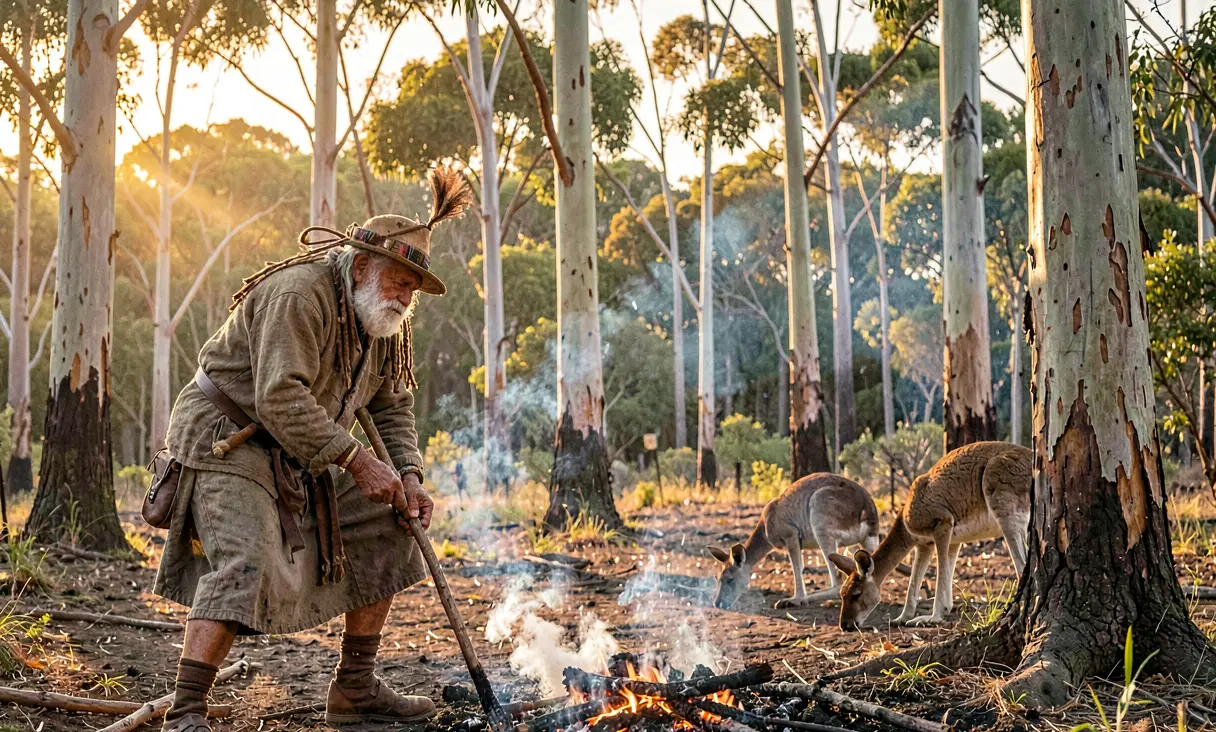 TechnologyAboriginal Fire-Stick Farming Practicesc. 5000 BCE onwards · Central AustraliaAboriginal Australians develop controlled burning techniques to manage landscapes and enhance biodiversity.
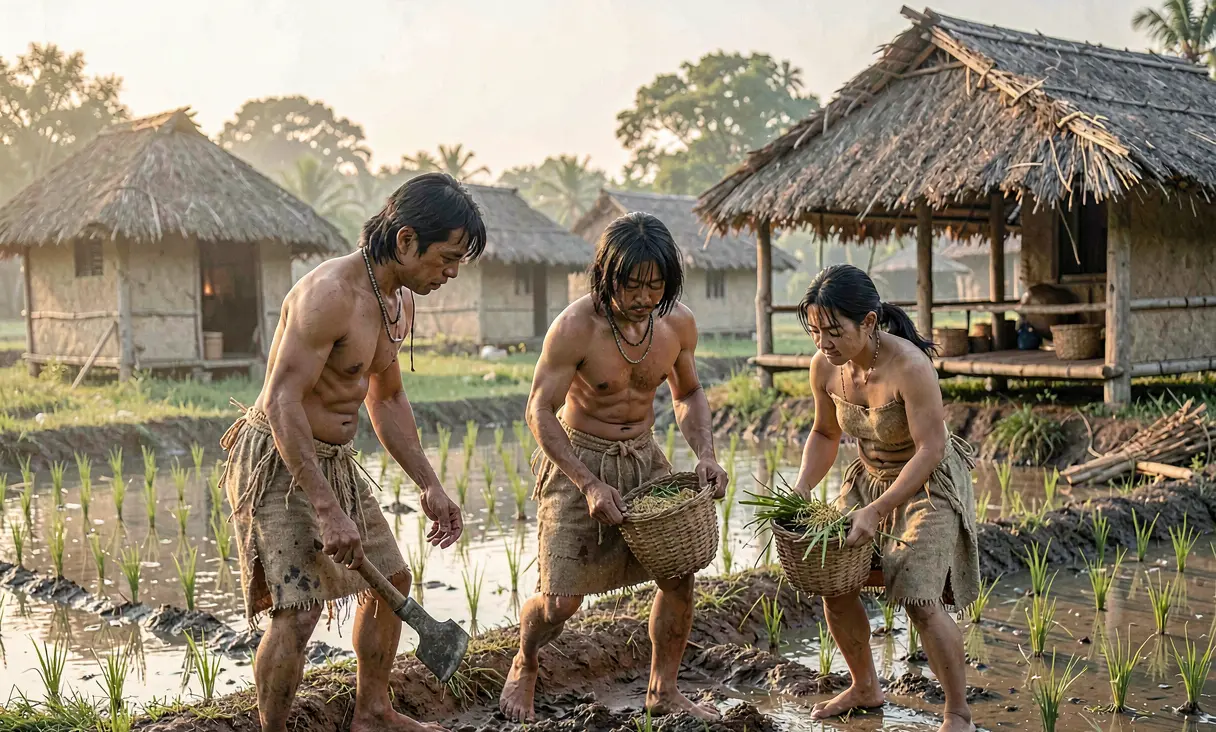 CivilizationDomestication of Rice in the Yangtze Valleyc. 4000 BCE · Yangtze River Valley, ChinaRice cultivation begins in the Yangtze River valley, transforming East Asian agriculture and supporting massive population growth.
 CivilizationEmergence of Ubaid Culture in Southern Mesopotamiac. 6500 BCE · Tell al-Ubaid, Southern Mesopotamia (Iraq)The Ubaid culture establishes the first widespread agricultural settlement pattern in southern Iraq.
Discussion
Loading…