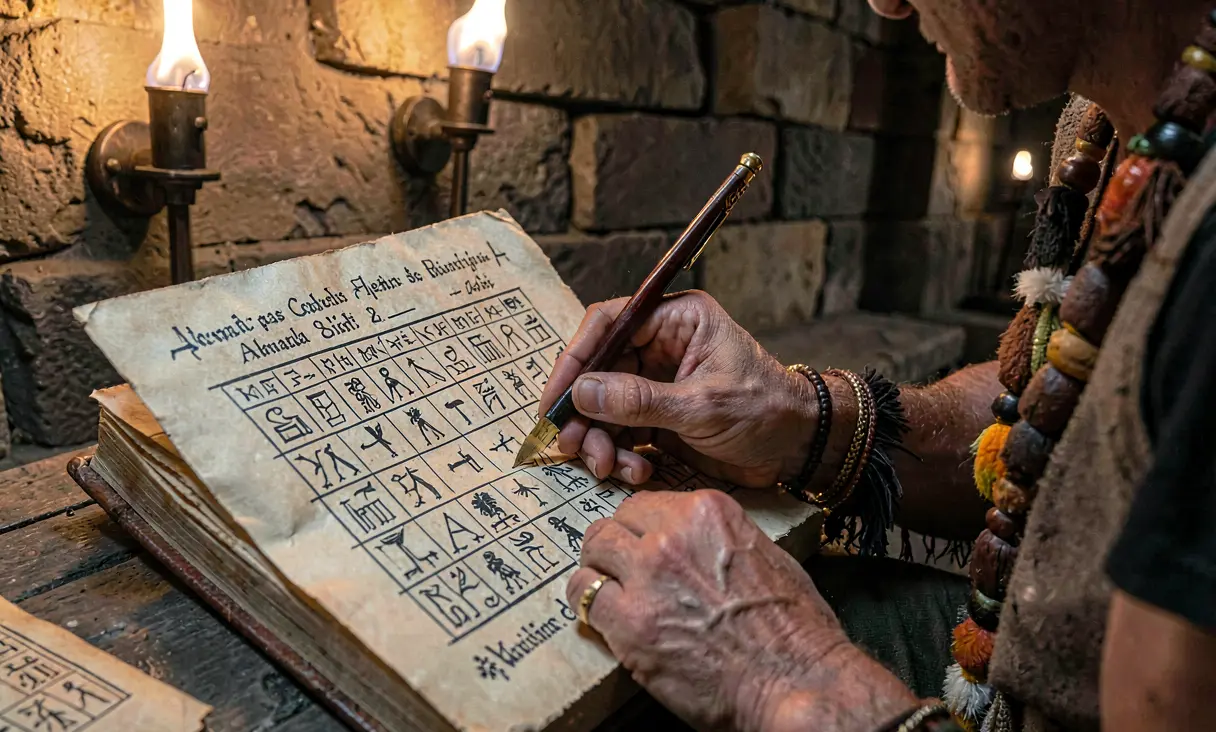
Survival of the Madrid Codex Amidst Destruction
The Madrid Codex survived Bishop de Landa's 1562 book burnings, preserving unique Postclassic Maya astronomical data and rituals that would otherwise have been lost forever.
The Postclassic Context of Maya Scholarship
By the mid-15th century, the great Classic period city-states had long collapsed, yet the Maya civilization persisted in a vibrant Postclassic era centered on trade hubs like Mayapán and Chichén Itzá. In this dynamic environment, the priest-scholars of the Yucatán Peninsula continued to refine complex systems of astronomy, agriculture, and divination. The Madrid Codex, likely produced around 1450 CE in or near the region of Tayasal (modern-day Petén) before being transported to Chichén Itzá or Maní, represents the zenith of this intellectual tradition. Unlike earlier monumental inscriptions carved in stone, these screenfold books were crafted from amate paper coated with lime plaster, allowing for portable, intricate illustrations and hieroglyphic texts that served as practical manuals for the priesthood.
The Systematic Erasure of Indigenous Knowledge
Following the Spanish conquest of the Yucatán in the 1540s, a campaign of cultural destruction was launched by Catholic missionaries intent on eradicating indigenous idolatry. The most devastating blow occurred in July 1562 at Maní, where Bishop Diego de Landa ordered the burning of countless Maya codices and idols. De Landa, who later expressed regret for his actions in his *Relación de las cosas de Yucatán*, documented that he destroyed 'more than forty books' containing only superstition and lies. This systematic purge aimed to sever the link between the Maya people and their ancestral cosmology, effectively silencing a written tradition that had spanned millennia. Most of these texts were lost forever, leaving the Madrid Codex as one of only four known surviving pre-Columbian Maya manuscripts in existence.
The Mechanics of Survival: Hidden in Plain Sight
While the precise circumstances of the Madrid Codex's survival remain a subject of scholarly debate, historical consensus suggests it was not discovered by Spanish authorities during the initial purges. Unlike the books burned at Maní, this specific volume appears to have been concealed within a community cache or retained by a lineage of priests who successfully evaded detection. Some theories posit that the codex was hidden in a sealed cave system or buried beneath a structure in the Yucatán interior, only to be rediscovered centuries later. Its survival is not merely an accident of fate but likely the result of deliberate preservation efforts by indigenous custodians who understood the sacred nature of the text and the lethal consequences of its discovery by colonial forces.
Decoding the Almanacs and Rituals
The Madrid Codex, consisting of 56 pages divided into two distinct parts—the 'Tzolk'in' almanac and the 'Chilam Balam' section—offers an unparalleled window into late Postclassic Maya science. The text is densely packed with astronomical tables tracking the movements of Venus, Mars, and the moon, alongside detailed agricultural cycles for planting maize based on celestial alignments. It also contains elaborate ritual sequences for rain ceremonies (cha'a), healing rites, and divination practices that reveal a sophisticated understanding of time as cyclical rather than linear. The illustrations depict deities such as Chaac, the rain god, and Itzamná, the creator deity, engaged in rituals that mirror those described in later colonial-era texts like the *Popol Vuh* and the books of Chilam Balam.
Rediscovery and Academic Awakening
The codex resurfaced in Europe during the 19th century, initially misidentified as a Mexican Aztec manuscript before scholars recognized its distinct Maya iconography and script. It was first noted by Spanish antiquarians in Madrid, hence its name, and later studied extensively by figures such as Léon de Rosny and Ernst Förstemann. The realization that this artifact predated the Spanish conquest by centuries revolutionized the understanding of Maya civilization, proving that their astronomical knowledge remained robust well into the 15th century. Today, housed in the Museo de América in Madrid, it stands as a primary source for deciphering the Maya script and reconstructing their scientific worldview.
Legacy: A Bridge Across Centuries
The survival of the Madrid Codex is of paramount importance to modern historiography and cultural heritage. It serves as the only surviving indigenous source that details the specific ritualistic and astronomical practices of the Postclassic Maya, filling critical gaps left by the destruction of other codices. For contemporary Maya communities, it represents a tangible link to their ancestral wisdom, validating oral traditions and providing a foundation for cultural revitalization. Scientifically, its data on Venus cycles has allowed modern astronomers to verify the accuracy of ancient calculations, demonstrating a level of precision that rivals later European observations. The manuscript stands as an enduring testament to the resilience of knowledge against the tides of conquest and erasure.
It preserves critical data on Postclassic Maya astronomy and ritual life that would otherwise be lost.
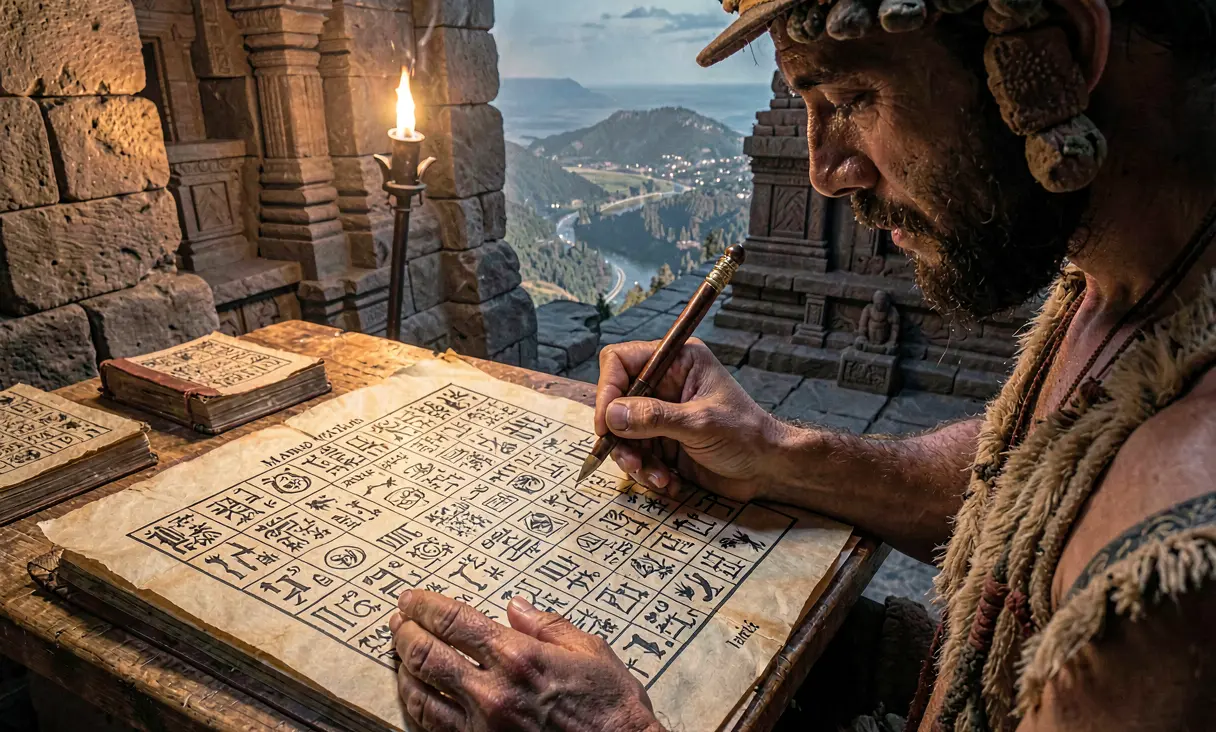
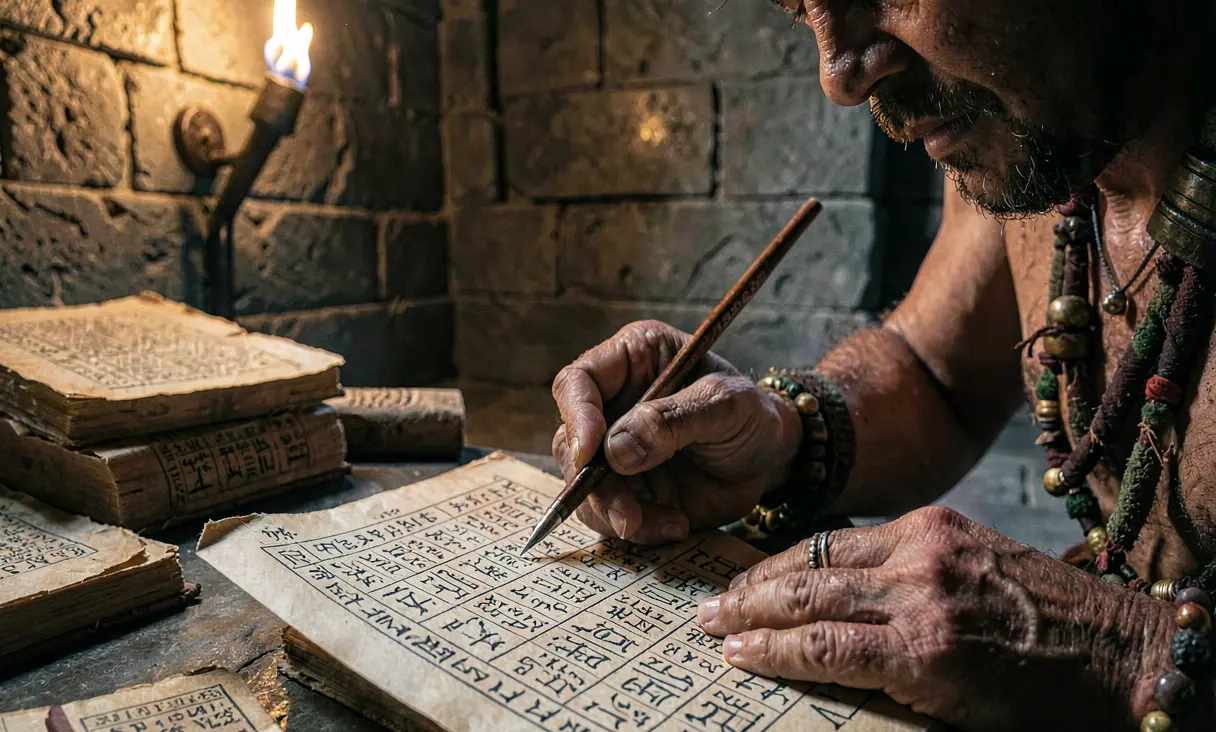
Where it happened
Maya Region (Yucatán), Mexico — see it on the interactive map →
Explore related history
 ScienceDomestication of the Turkey in Mesoamericac. 1000 BCE · Central MexicoAncient Mesoamericans successfully domesticate the wild turkey for meat and ritual feathers.
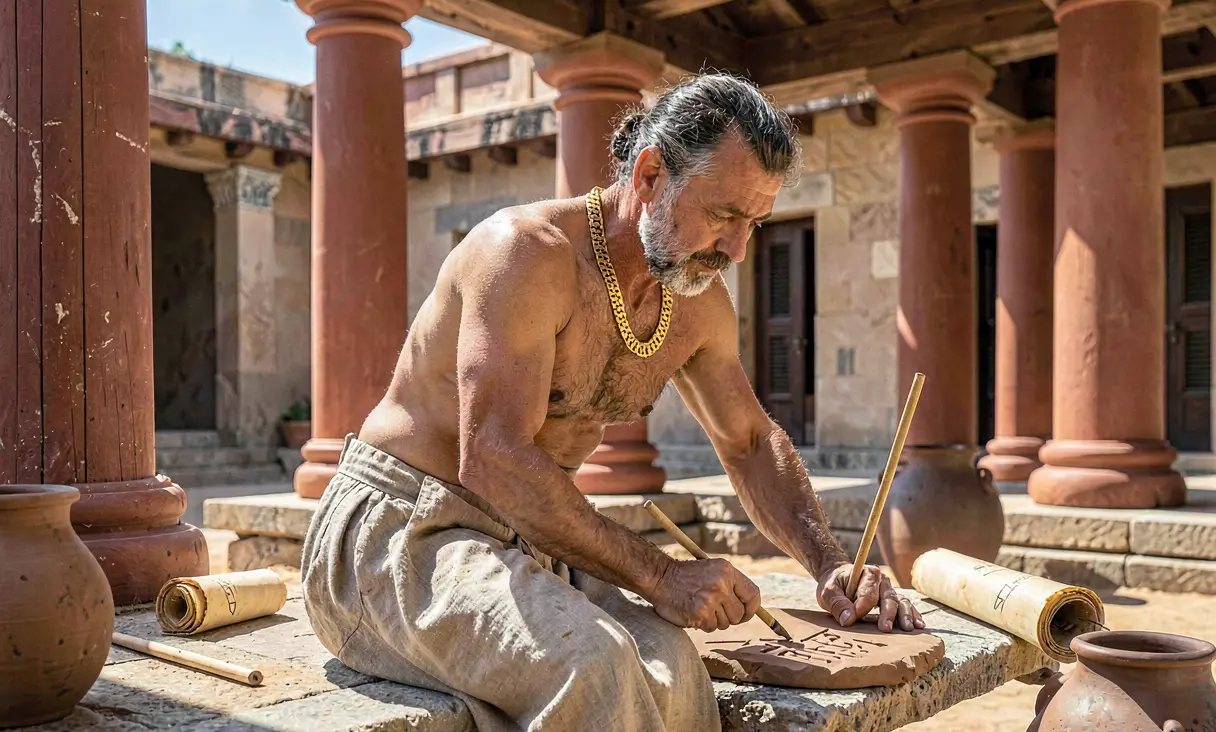 ScienceDevelopment of Linear A Script by Minoansc. 1800 BCE · Knossos, Crete (Greece)The Minoans develop Linear A, a still undeciphered writing system for administration.
 ScienceSankore Madrasah Becomes a Center of Learning in Timbuktuc. 1450 CE · Timbuktu, MaliThe Sankore Madrasah emerges as a premier university for Islamic scholarship in West Africa.
 ArtCreation of the Benin Bronzes under Oba Ewuarec. 1450 CE · Benin City, NigeriaOba Ewuare commissions the famous bronze and ivory plaques documenting court life and military victories.
 PoliticsOba Ewuare Centralizes the Kingdom of Beninc. 1450 CE · Benin City, NigeriaOba Ewuare reorganizes the kingdom into a centralized state with a professional army and bureaucracy.
 DisasterAbandonment of Great Zimbabwec. 1450 CE · Great Zimbabwe, ZimbabweEnvironmental degradation and shifting trade routes lead to the gradual abandonment of Great Zimbabwe.
Discussion
Loading…