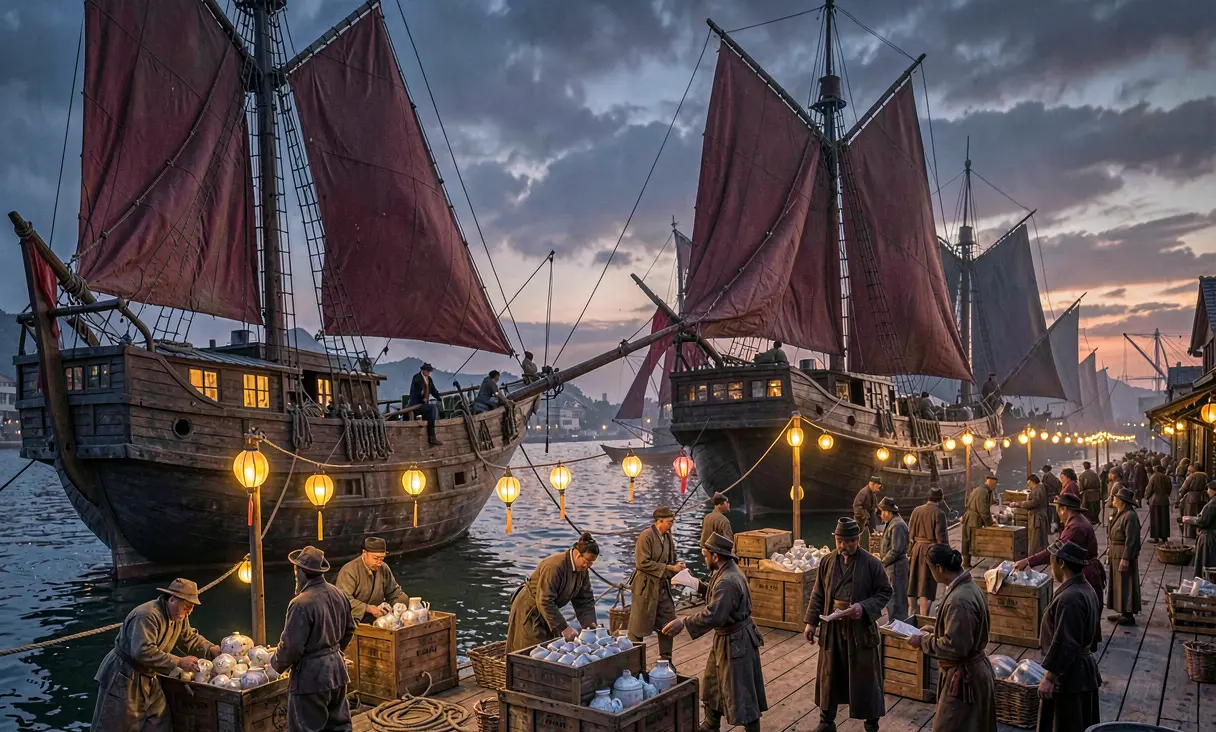
Peak of the Maritime Silk Road under Song Dynasty
Following the loss of northern China in 1127, the Southern Song Dynasty pivoted to sea trade, utilizing advanced junks and paper money to dominate Indian Ocean commerce and link directly with African
Geopolitical Pivot and Economic Necessity
The year 1127 CE marks a definitive rupture in Chinese history with the fall of Kaifeng to the Jurchen Jin dynasty, forcing the Song court to retreat south and establish the Southern Song capital at Lin'an (modern Hangzhou). This catastrophic loss of the northern heartland severed traditional overland trade routes along the Silk Road and deprived the state of its primary tax base. In response, the Southern Song administration executed a radical strategic pivot toward the sea, transforming maritime commerce from a supplementary revenue stream into the empire's economic lifeline. By 1127, the court recognized that survival depended on maximizing customs duties from foreign vessels, leading to an unprecedented state-sponsored expansion of oceanic trade networks.
The Institutional Framework: The Shibosi System
To harness this new maritime potential, the government rigorously expanded the Maritime Trade Supervisorates (Shibosi), institutions originally established in the Northern Song but now critical to state survival. While major hubs like Guangzhou and Quanzhou were central, the prompt's reference to Hankou requires historical clarification: Hankou was an inland river port on the Yangtze that served as a crucial transshipment node connecting southern maritime goods to the interior, rather than a coastal Shibosi headquarters. The true centers of this 1127-era boom were Quanzhou and Guangzhou, where officials systematically levied tariffs on high-value imports such as pepper, ivory, frankincense, and rhino horn. This bureaucratic machinery ensured that foreign trade generated up to 20% of the imperial treasury's revenue, a proportion unmatched in pre-modern history.
Technological Supremacy: The Chinese Junk
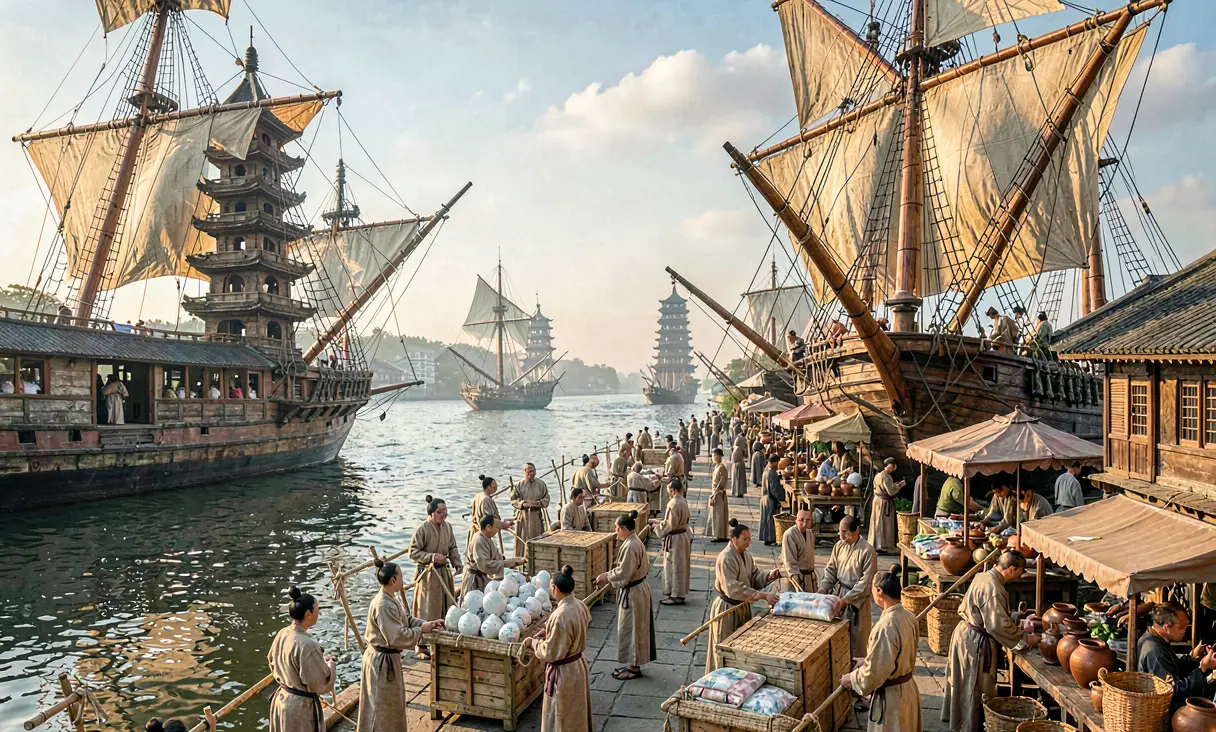
The dominance of Song merchants was underpinned by revolutionary shipbuilding technology. The era saw the widespread deployment of massive ocean-going junks, some exceeding 100 feet in length and capable of carrying hundreds of tons of cargo. These vessels featured watertight bulkheads, a Chinese innovation that prevented total sinking upon hull breach, and stern-post rudders that allowed for precise maneuverability in open waters. Coupled with the magnetic compass, which had become standard navigation equipment by the early 12th century, Song sailors could navigate the monsoon cycles of the Indian Ocean with reliable precision. This technological edge allowed Chinese fleets to bypass intermediate Arab or Persian middlemen, establishing direct commercial links that stretched from the South China Sea to the Swahili coast of East Africa.
The Financial Revolution: Paper Money and Global Exchange
Perhaps the most transformative aspect of this era was the monetization of international trade through the 'jiaozi' and other forms of paper currency. While initially developed to solve copper shortages in Sichuan, by 1127 these notes began circulating more broadly as a medium for large-scale transactions, including foreign exchange. The Song government attempted to standardize these instruments to facilitate the settlement of massive trade deficits with Southeast Asian and Indian partners. Although inflation would later plague the system, the initial adoption represented a financial leap that allowed Chinese merchants to conduct high-volume commerce without the logistical burden of transporting heavy metal bullion across vast distances.
The Global Reach: From Quanzhou to Swahili
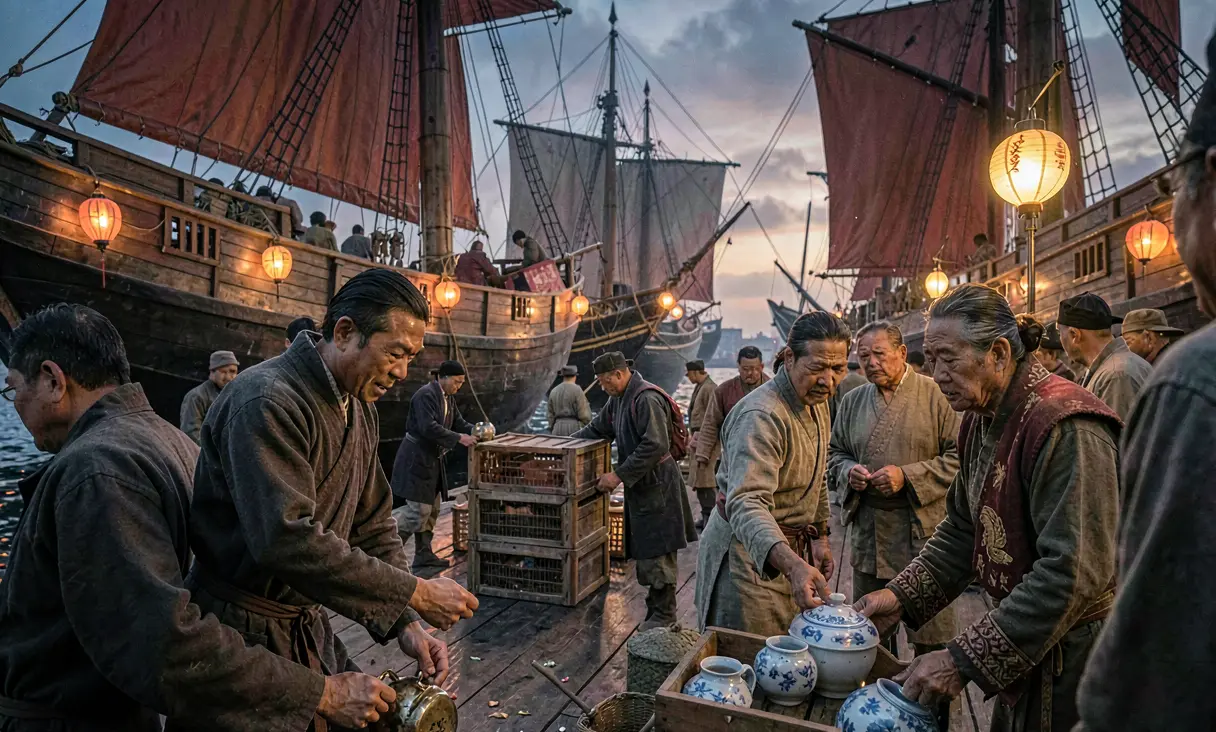
By the mid-12th century, the maritime network had integrated China into a truly global economy. Archaeological evidence from shipwrecks like the 'Nanhai One' (though slightly later) confirms the export of vast quantities of celadon and blue-and-white porcelain to markets in Southeast Asia, India, the Persian Gulf, and East Africa. In Swahili city-states such as Kilwa Kisiwani, Chinese ceramics became status symbols, while African ivory and gold flowed northward into Song ports. This direct connectivity bypassed the traditional overland Silk Road intermediaries, creating a vibrant exchange of goods, technologies, and cultural practices that defined the medieval Indian Ocean world.
Legacy: The Blueprint for Globalization
The maritime boom initiated in 1127 laid the groundwork for the economic globalization of the subsequent centuries. It shifted the center of gravity in East Asia from the northern plains to the southeastern coast, a demographic and economic reality that persists today. The Song Dynasty's ability to monetize trade, innovate nautical technology, and integrate into global supply chains set a precedent that would influence the Ming voyages of Zheng He and eventually European Age of Discovery explorers. The era demonstrated that a civilization could thrive through maritime dominance even after losing its traditional continental heartland.
It established China as the world's leading maritime economic power and integrated the Indian Ocean into a cohesive global trade system centuries before European arrival.
Where it happened
Hankou, China — see it on the interactive map →
Explore related history
 tradeFormation of the Hanseatic Leaguec. 1241 CE · Lübeck, GermanyNorthern German merchants form a powerful commercial and defensive alliance.
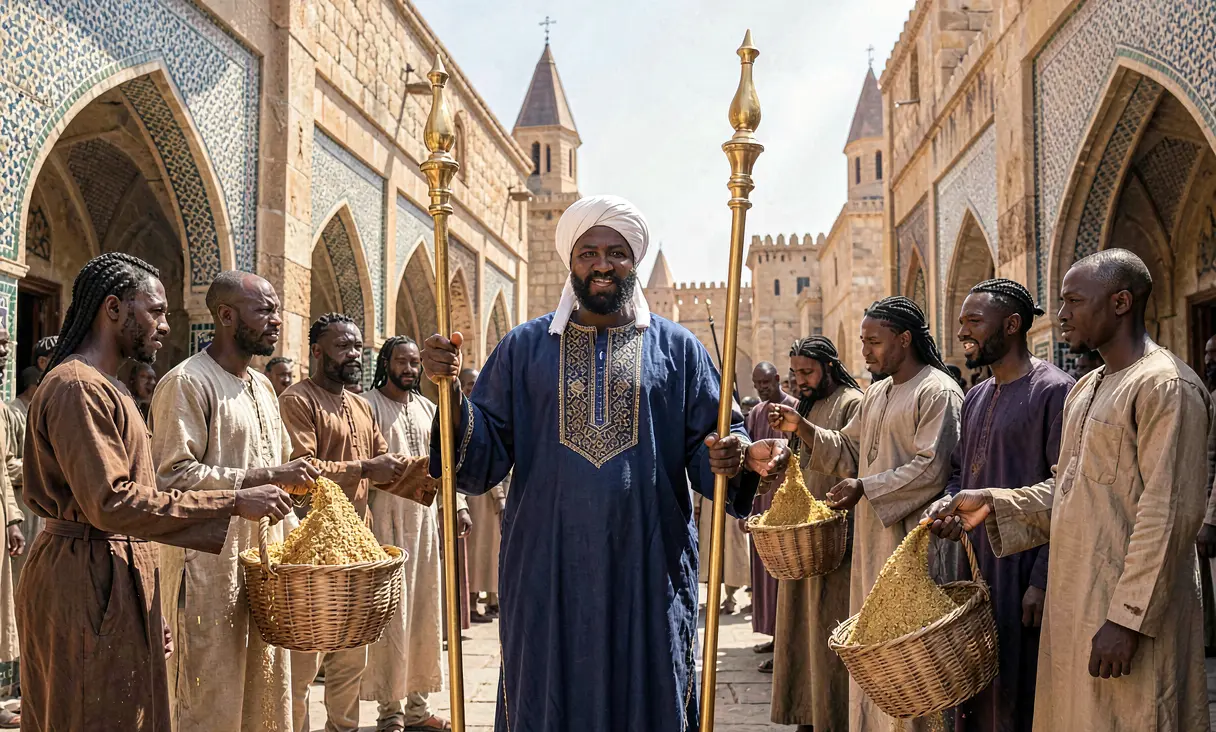 tradeMansa Musa's Pilgrimage and Gold Economy1324 CE · Cairo, Egypt (en route)Mansa Musa's pilgrimage disrupts gold markets in Cairo with massive displays of wealth.
 architectureConstruction of Angkor Wat Beginsc. 1113 CE · Angkor, CambodiaKing Suryavarman II begins building Angkor Wat as a Hindu temple complex dedicated to Vishnu.
 CivilizationConstruction of Great Zimbabwec. 1100 CE · Masvingo, ZimbabweShona people build the largest pre-colonial stone structure in Africa without mortar.
 ScienceComposition of the Mitakshara Law Codec. 1100 CE · Kalyan (modern Karnataka/India)Vijnaneshwara writes the Mitakshara, a seminal commentary on Hindu law that influences legal systems across India.
Discussion
Loading…