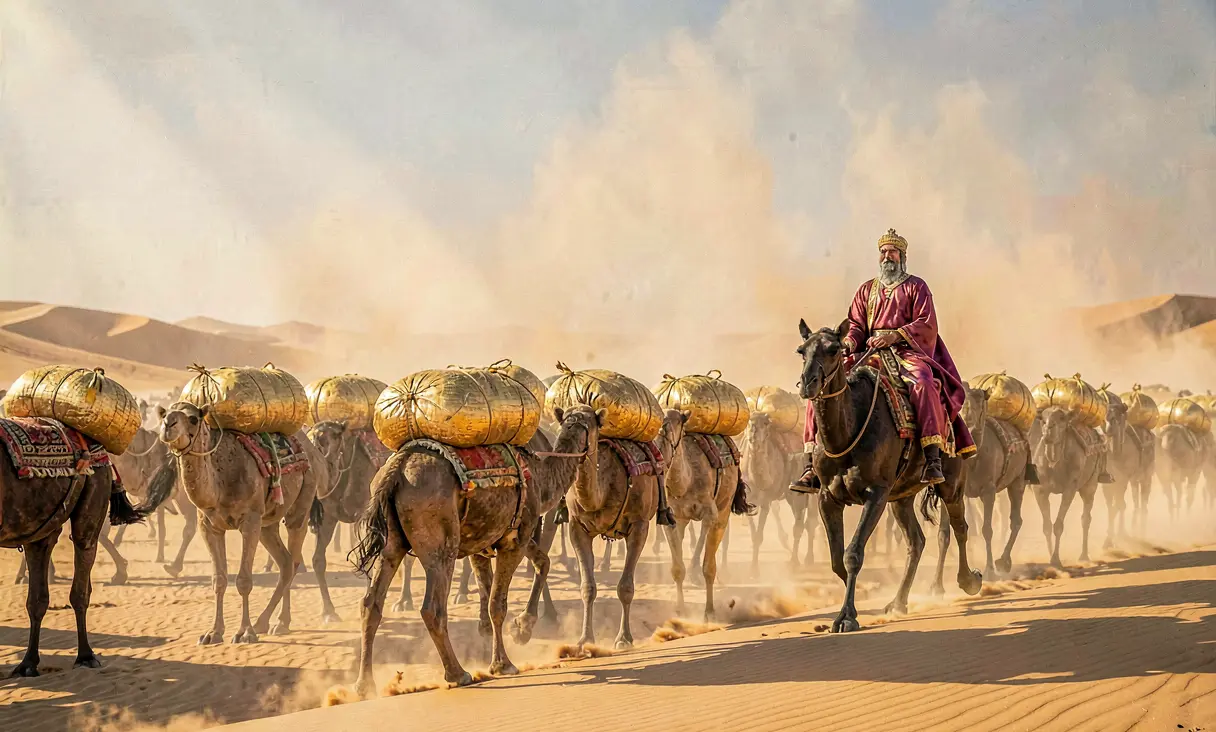
Mansa Musa Pilgrimage to Mecca
Mansa Musa's 1324 Hajj unleashed unprecedented gold into the Mediterranean economy, permanently placing West Africa on the global map as a superpower of wealth and Islamic scholarship.
The Zenith of the Mali Empire
By the early 14th century, the Mali Empire had transcended its origins as a collection of Mandinka city-states to become the dominant political and economic force in West Africa. Under the rule of Mansa Musa I, who ascended the throne around 1312 CE following his predecessor Abu Bakr II's mysterious expedition into the Atlantic, the empire controlled vast trans-Saharan trade routes linking the gold fields of Wangara to the Mediterranean markets. The state's wealth was not merely accumulated but institutionalized; it relied on the systematic taxation of salt and gold, commodities that were traded in equal measure across the desert. This era marked a golden age of Islamic scholarship and urbanization, with cities like Niani serving as administrative hubs where scholars, architects, and merchants flourished under imperial patronage.
The Grand Pilgrimage of 1324
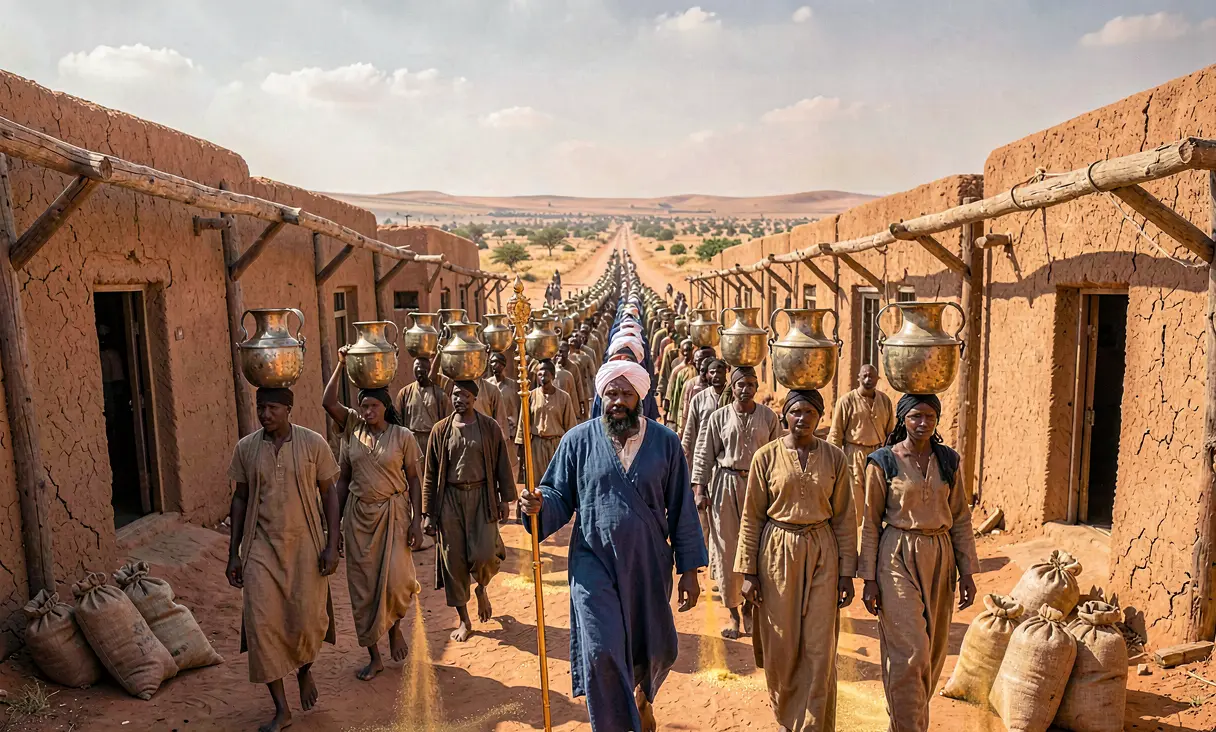
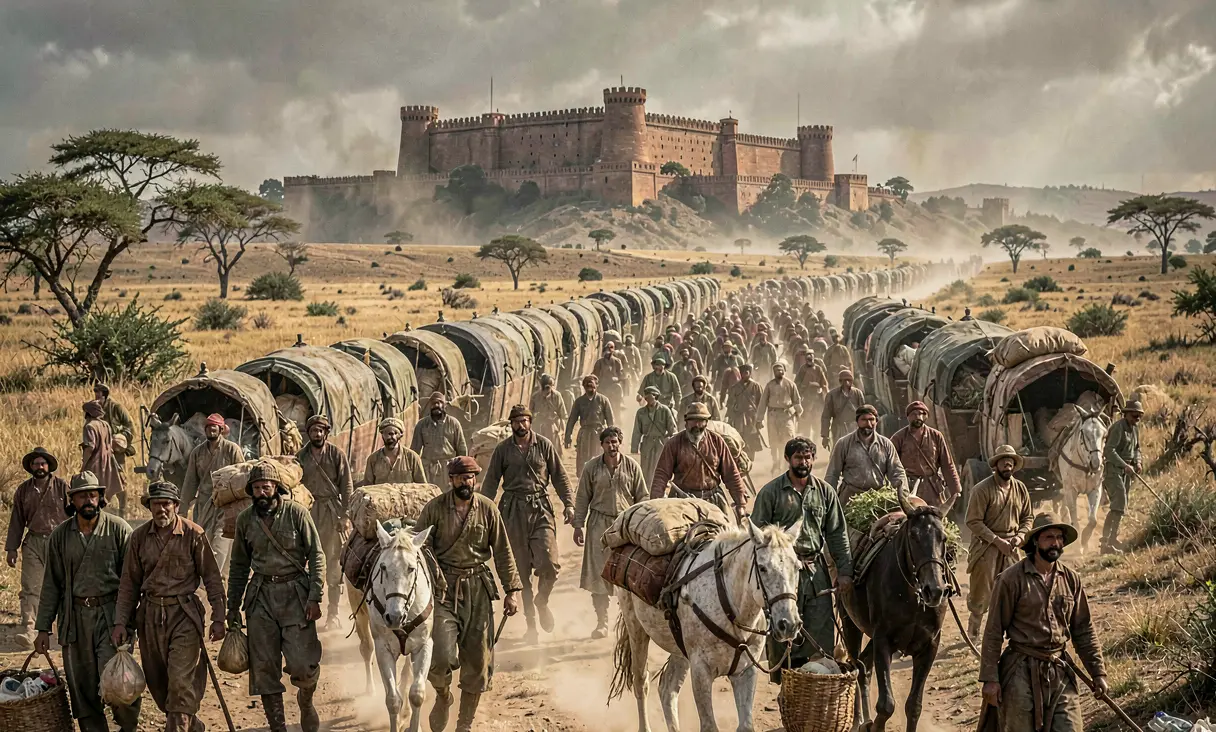
In 1324 CE, Mansa Musa embarked on the Hajj, the Islamic pilgrimage to Mecca, transforming a religious obligation into one of the most spectacular displays of wealth and power in human history. Historical accounts, primarily derived from Arab scholars such as Al-Umari who interviewed participants decades later, describe an entourage of staggering magnitude: 60,000 men, including 12,000 enslaved servants dressed in Persian silk, 500 attendants carrying staffs of pure gold, and a caravan of camels laden with provisions. The most legendary element was the distribution of gold; it is estimated that Musa carried approximately 18 tons (roughly 8 metric tonnes) of gold dust and bars. This procession did not merely travel from Timbuktu to Mecca; it traversed the entire breadth of the known Islamic world, leaving an indelible mark on every city it visited.
The Cairo Incident and Economic Shockwaves
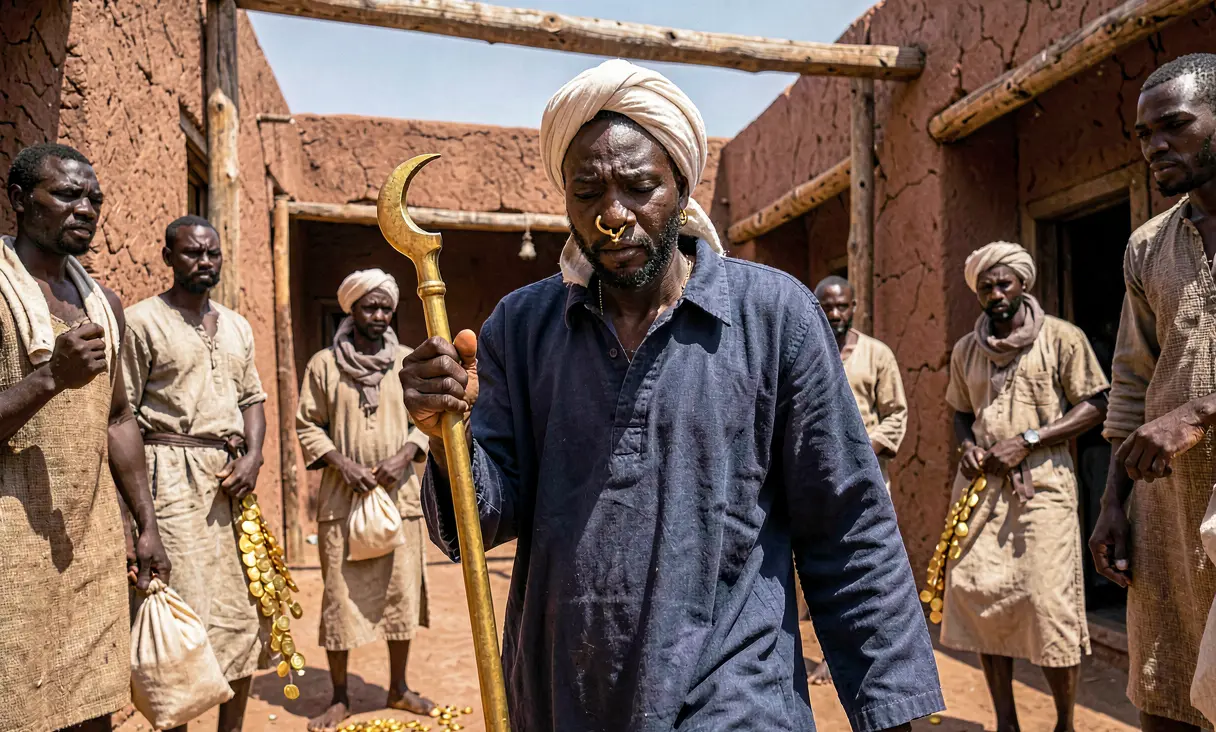
The caravan's stopover in Cairo, Egypt, in July 1324 became the focal point of the journey's economic impact. Musa, adhering to the Islamic tradition of charity (sadaqah), distributed gold so lavishly to the poor, officials, and scholars that he inadvertently destabilized the local economy. By flooding the market with gold, he caused a massive devaluation of the metal; the price of gold in Cairo plummeted by as much as 20 percent and took over a decade to recover its pre-pilgrimage value. This event was not merely a display of generosity but a demonstration of economic power that rivaled the great monarchs of Europe and Asia. The sheer volume of currency introduced into the Mamluk Sultanate's economy served as a stark reminder that the source of this wealth lay far to the south, in the mysterious lands of the Niger River.
Mansa Musa: The Scholar-King
While famous for his opulence, Mansa Musa was equally significant as a devout Muslim and a patron of learning. His pilgrimage was deeply spiritual; he fasted rigorously and performed the rites with humility, yet his political acumen ensured that the journey served diplomatic purposes. During his stay in Cairo, he met with Sultan Al-Nasir Muhammad, establishing formal diplomatic ties between Mali and Egypt that facilitated future trade and cultural exchange. Musa's commitment to Islam extended beyond the Hajj; upon his return, he brought back Andalusian architects and scholars, most notably Abu Ishaq al-Sahili, who is credited with designing the Djinguereber Mosque in Timbuktu. This mosque became a center of Islamic jurisprudence and astronomy, cementing Mali's reputation as a beacon of intellectual life in medieval Africa.
Cartographic Revolution and Global Recognition
The most enduring legacy of Musa's pilgrimage was the sudden appearance of West Africa on world maps. Prior to 1324, European and Arab cartographers often depicted the African interior as a void or a land of myth. Following the pilgrimage, the Catalan Atlas of 1375 famously illustrated Mansa Musa seated on a throne, holding a golden orb and scepter, with an inscription declaring him the richest king in the world. This map did more than chart geography; it integrated Mali into the global consciousness as a major economic superpower equal to any kingdom in Europe or Asia. The visual representation of his wealth corrected centuries of ignorance regarding the sophistication and resources of sub-Saharan Africa, forcing the Mediterranean world to acknowledge the existence of a powerful Islamic civilization south of the Sahara.
Enduring Significance
The pilgrimage of 1324 stands as a singular event that redefined the geopolitical landscape of the Middle Ages. It demonstrated that the center of gravity in the global economy had shifted, at least partially, to West Africa, challenging Eurocentric narratives of medieval history. The infrastructure built during Musa's reign, including the great libraries and universities of Timbuktu, Sankore, and Djenné, preserved knowledge for centuries, influencing the intellectual heritage of the Islamic world. While the empire eventually declined due to internal strife and external pressures, the memory of Mansa Musa's Hajj endured as a testament to African agency, wealth, and cultural achievement, proving that the continent was not on the periphery of history but at its very center.
His pilgrimage highlighted the global reach and wealth of medieval African empires.
Where it happened
Timbuktu, Mali — see it on the interactive map →
Explore related history
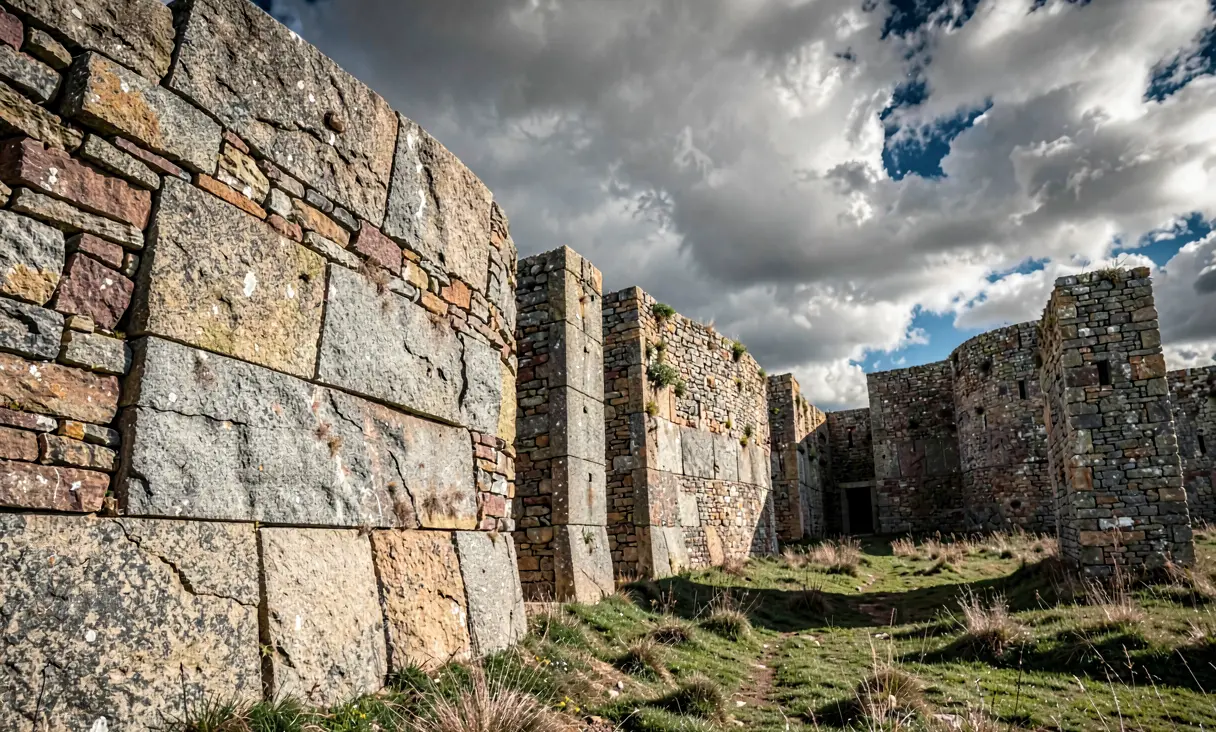 CivilizationConstruction of Great Zimbabwec. 1100 CE · Masvingo, ZimbabweShona people build the largest pre-colonial stone structure in Africa without mortar.
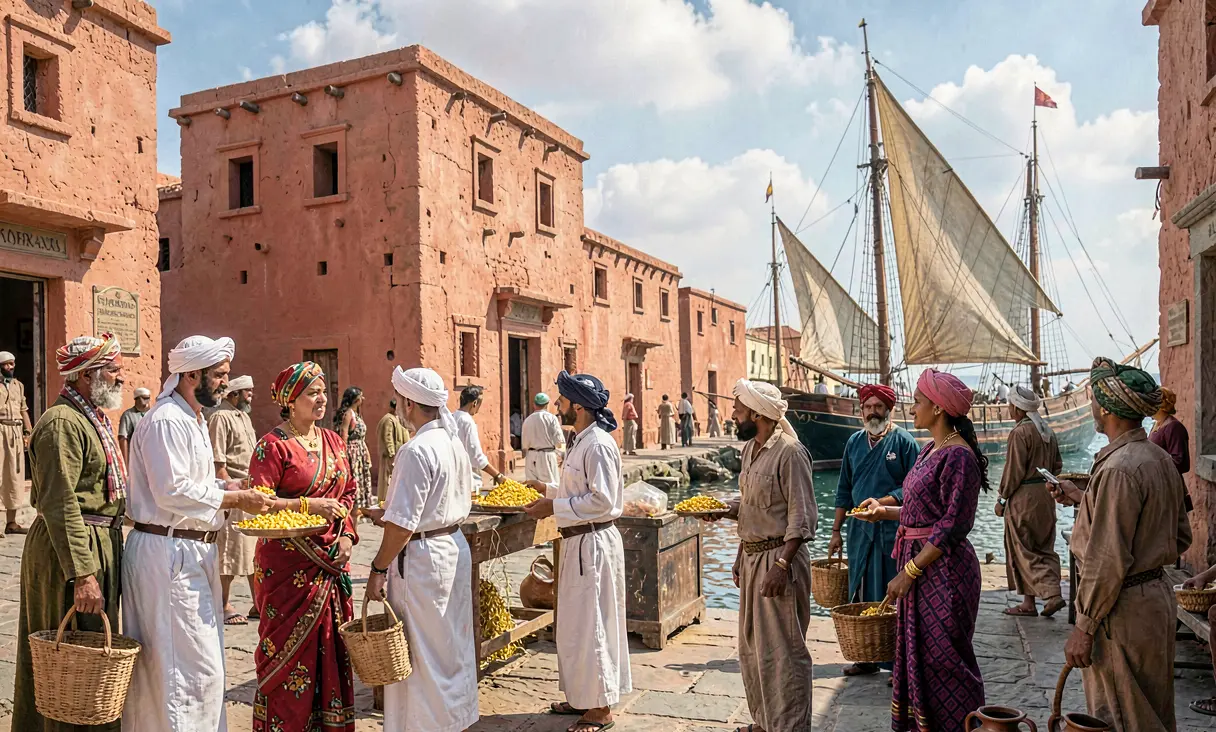 CivilizationRise of Swahili City-States on the East African Coastc. 1200 CE · Kilwa Kisiwani, TanzaniaSwahili city-states flourish as cosmopolitan hubs of Indian Ocean trade, blending African and Islamic cultures.
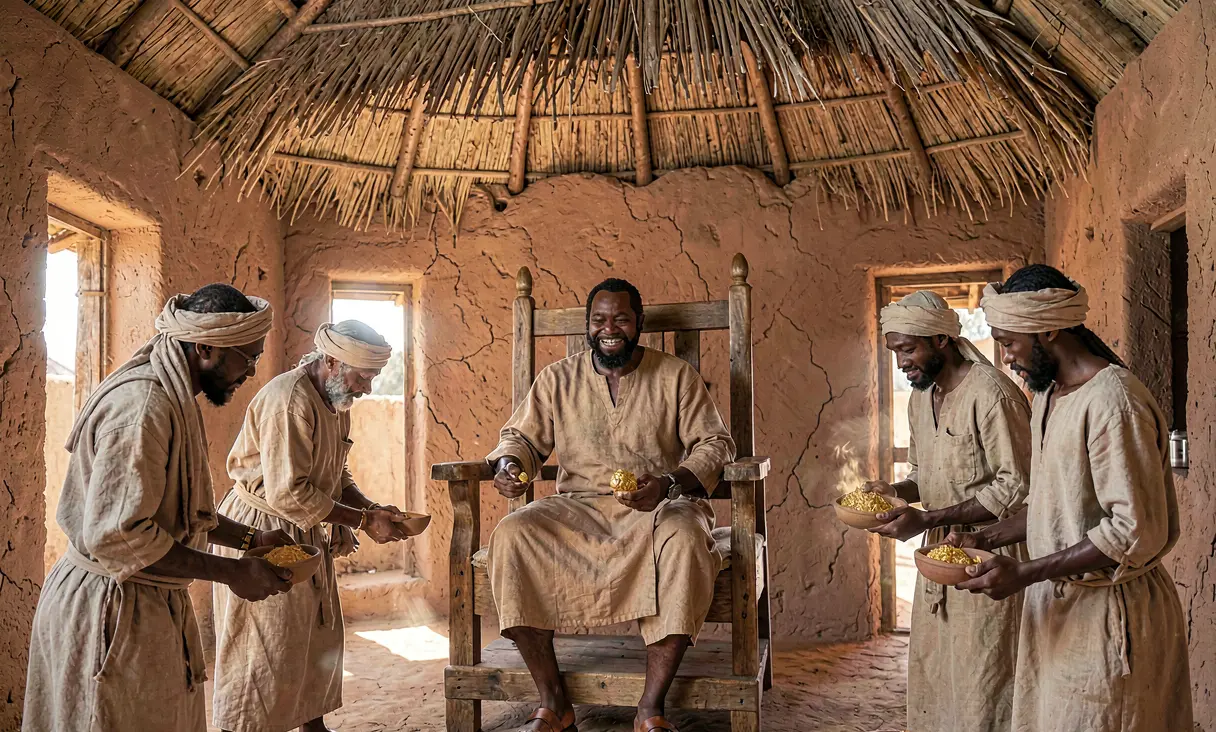 CivilizationMansa Musa's Control of Trans-Saharan Gold Tradec. 1307 CE · Niani, Mali Empire (Guinea/Mali border)Mansa Musa consolidates the Mali Empire's control over West African gold mines and trans-Saharan trade routes.
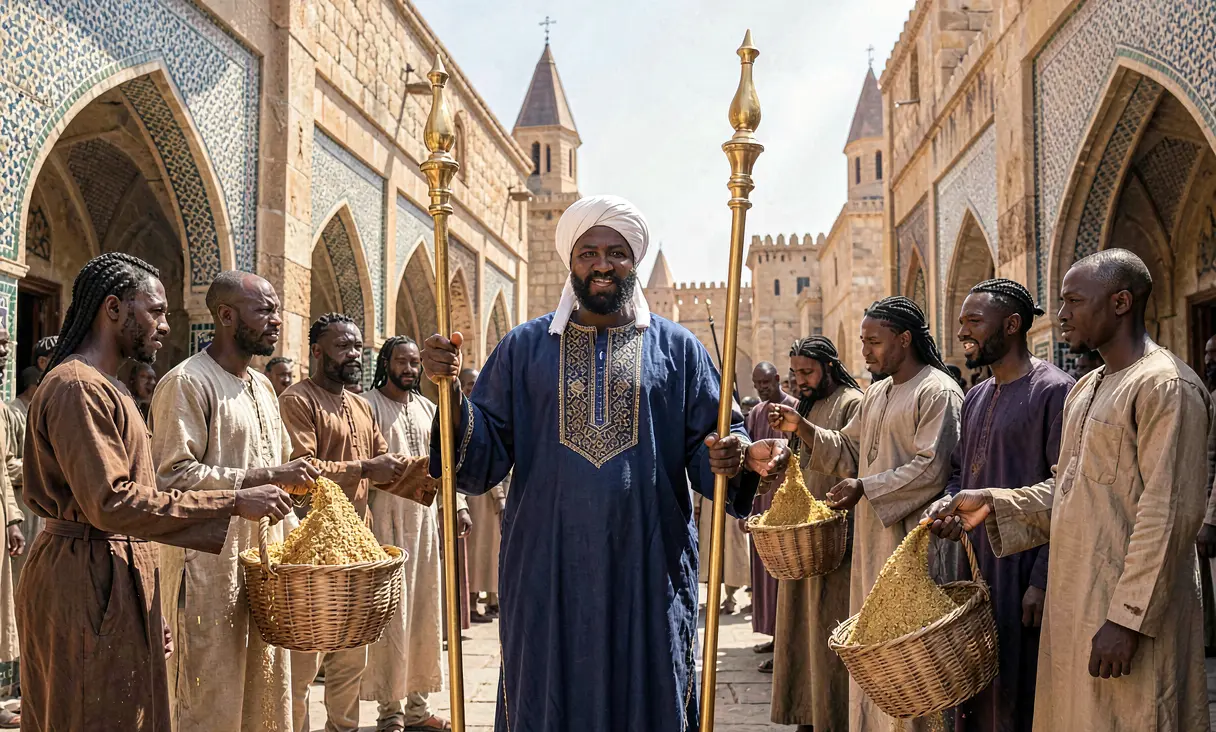 tradeMansa Musa's Pilgrimage and Gold Economy1324 CE · Cairo, Egypt (en route)Mansa Musa's pilgrimage disrupts gold markets in Cairo with massive displays of wealth.
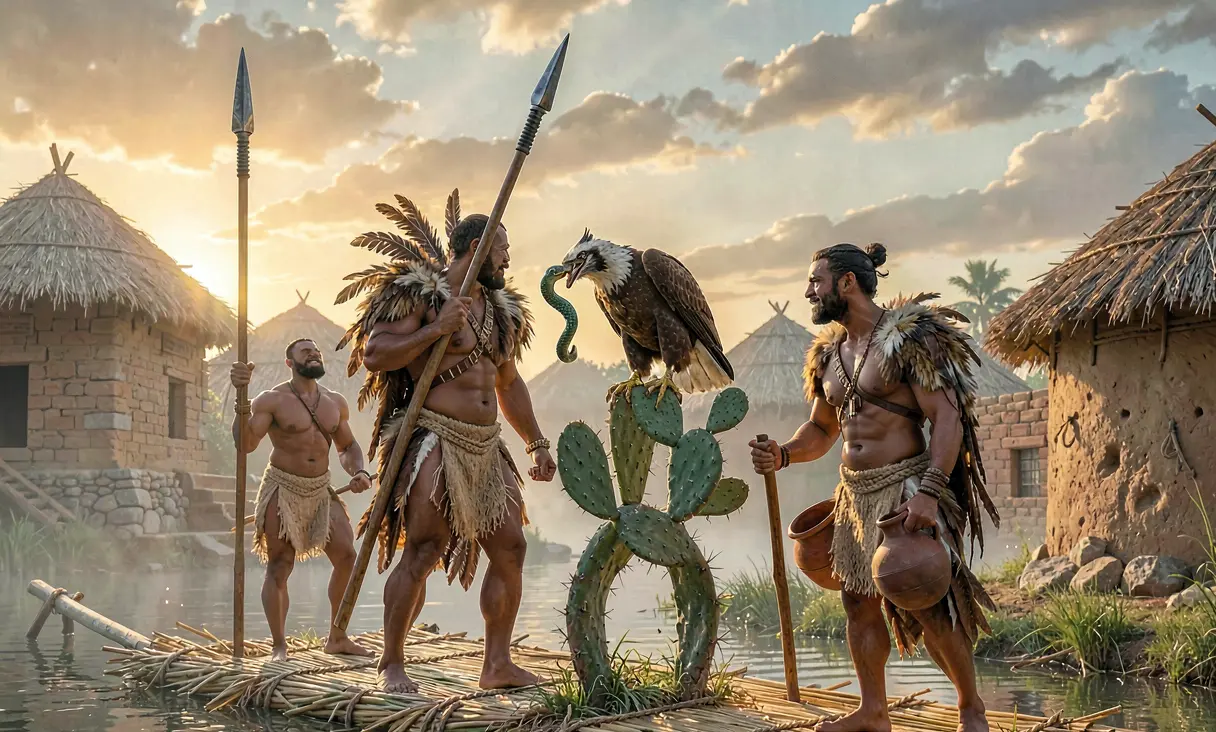 CivilizationFounding of Tenochtitlan1325 CE · Mexico City, MexicoAztecs build a magnificent island city on Lake Texcoco that becomes the largest in the Americas.
 PoliticsMuhammad bin Tughlaq Moves Capital to Daulatabadc. 1327 CE · Daulatabad, Maharashtra, IndiaIn a controversial move, Muhammad bin Tughlaq forces the migration of Delhi's population to Daulatabad to better control southern territories.
Discussion
Loading…