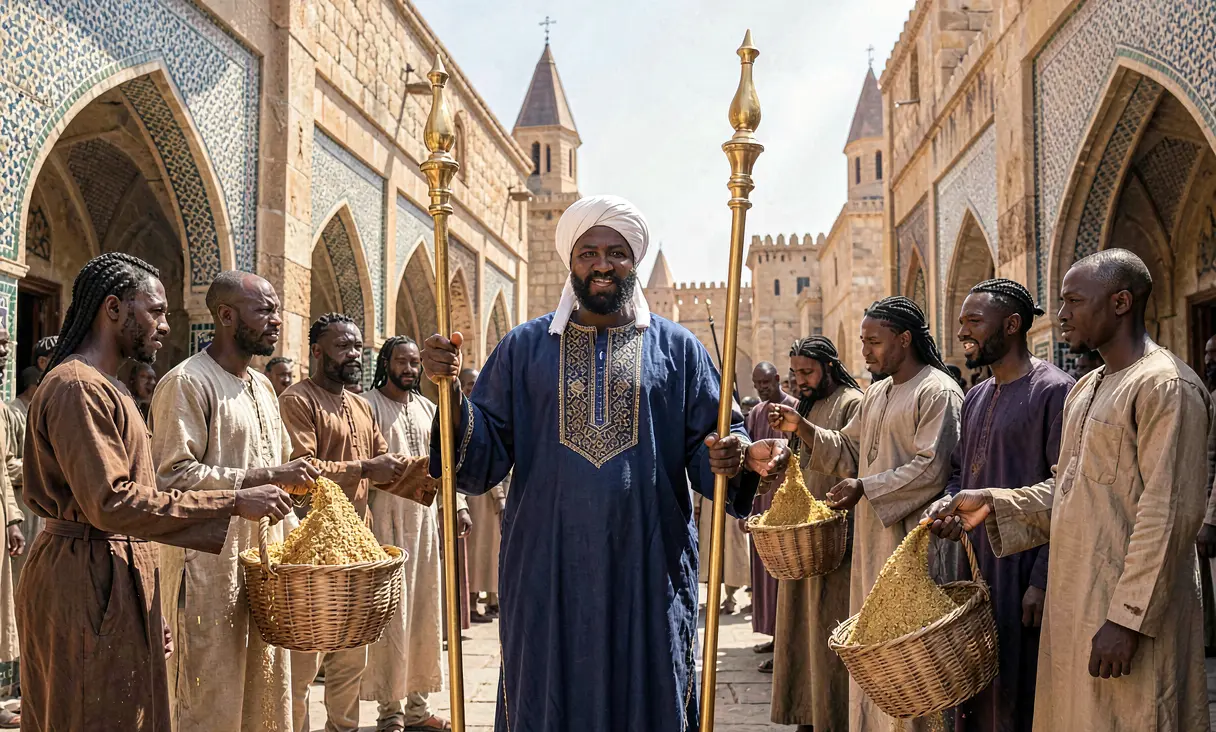
Mansa Musa's Pilgrimage and Gold Economy
Mansa Musa's 1324 Hajj to Mecca flooded Cairo with gold, crashing Egypt's economy for a decade and permanently placing Mali on the world map as a superpower of immense wealth.
The Zenith of the Mali Empire
By the early 14th century, the Mali Empire had consolidated its dominance over the trans-Saharan trade routes, controlling the vital gold fields of Bambuk and Bure alongside the salt mines of Taghaza. Mansa Musa, who ascended to the throne around 1312 CE following the disappearance of his predecessor, Abu Bakr II, inherited an empire that was already the wealthiest in Africa. Unlike many rulers who sought isolation, Musa sought to integrate Mali into the broader Islamic world, recognizing that spiritual legitimacy and economic power were inextricably linked. His reign marked a golden age of cultural synthesis, where Timbuktu began its transformation into a renowned center of scholarship and commerce.
The Departure: A Caravan Unmatched
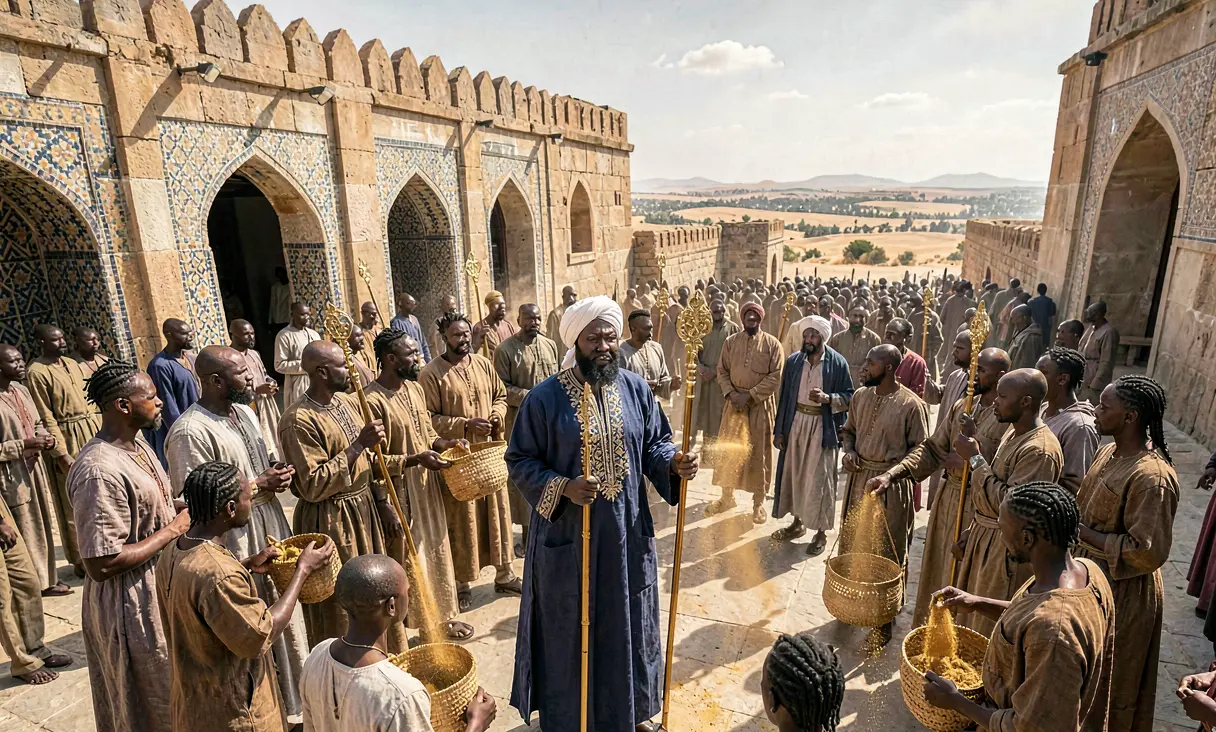
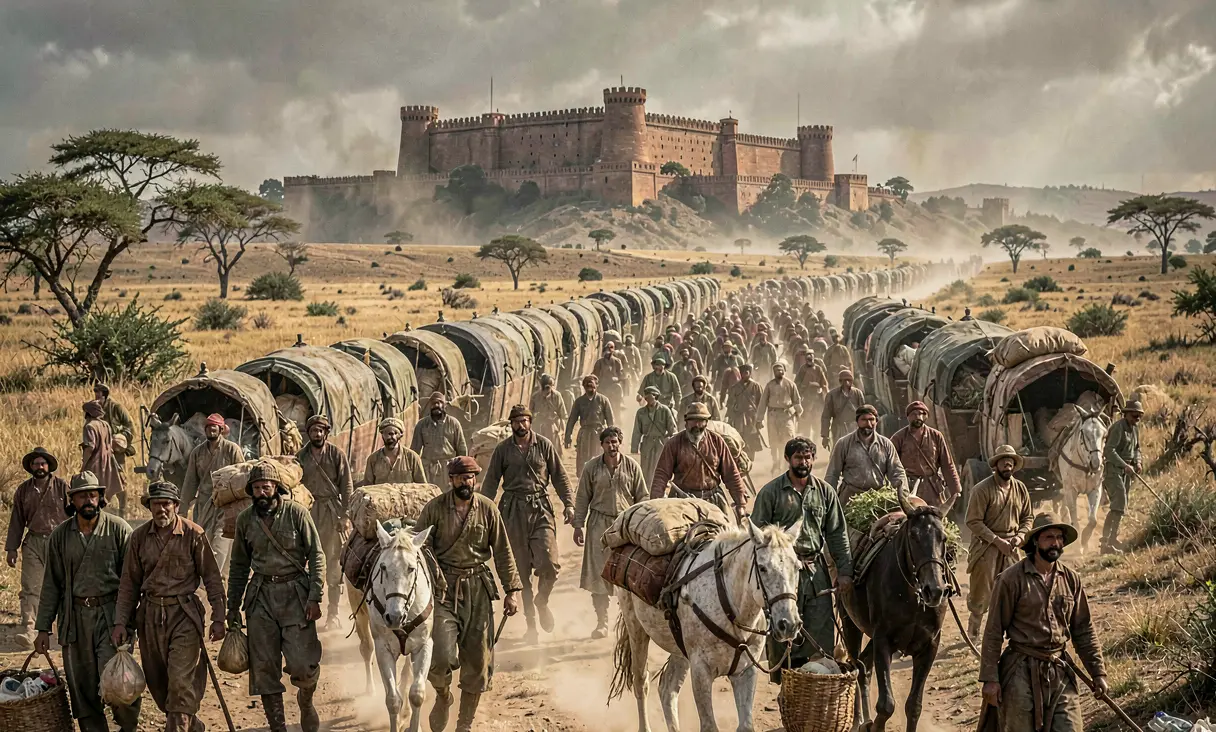
In 1324 CE, Mansa Musa departed from Niani, the capital of Mali, to perform the Hajj. The scale of his procession was unprecedented in recorded history, comprising an estimated 60,000 men, including 12,000 enslaved servants dressed in fine Persian brocade and silk. The logistical feat required to sustain this entourage across the Sahara is staggering; they were accompanied by a vast number of camels, with historical accounts specifically noting 80 beasts laden exclusively with gold dust, each carrying approximately 300 pounds (136 kg). This was not merely a religious journey but a mobile display of imperial might designed to assert Mali's status on the global stage.
The Cairo Shock: Inflation and Diplomacy
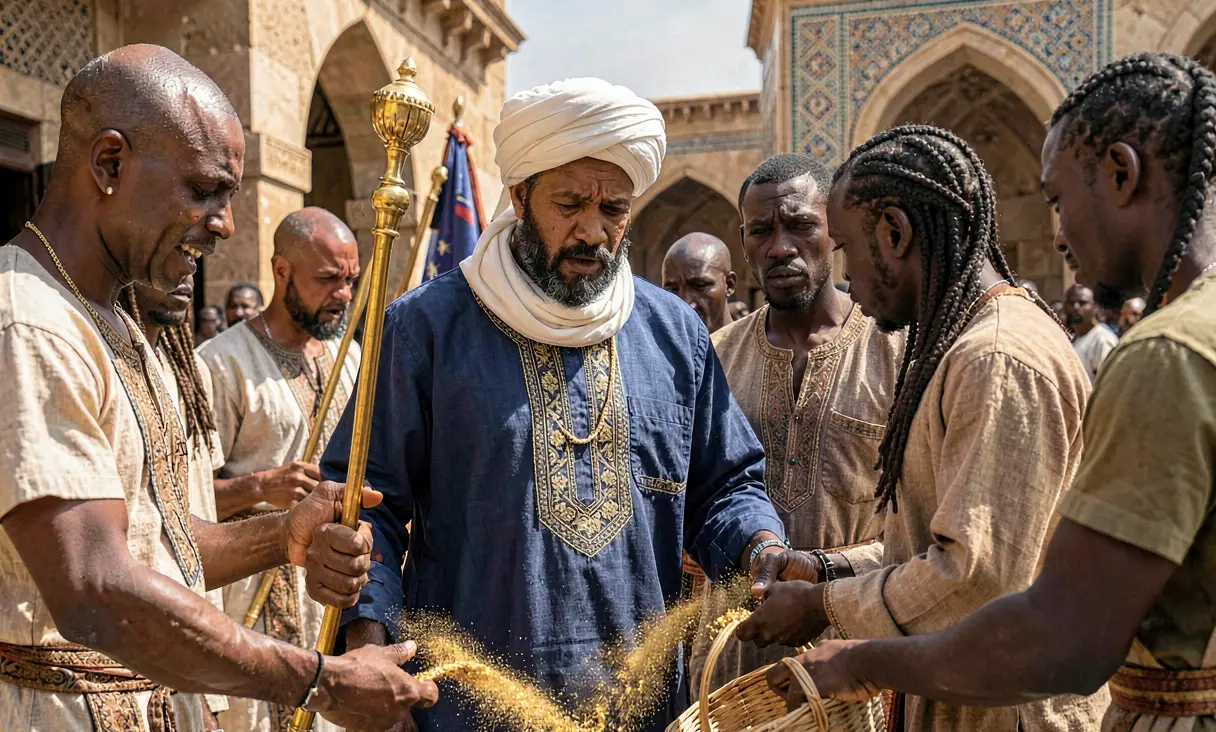
Upon arriving in Cairo in July 1324, Musa's generosity became the stuff of legend. He stayed for three months, distributing gold to the poor, officials, and scholars with such reckless abandon that it disrupted the local economy. Contemporary Arab historian Al-Umari recorded that Musa's spending was so excessive that he caused a massive devaluation of gold in Egypt; the price of a mithqal of gold plummeted from 25 silver dirhams to 22, a deficit that took over twelve years to correct. This event was not merely an act of charity but a geopolitical maneuver that forced the Mamluk Sultanate and the wider Mediterranean world to acknowledge Mali as a superpower.
Key Figures: Mansa Musa and Al-Umari
Mansa Musa, whose name translates to 'King of Kings' or 'Emperor of Emperors,' was the central architect of this event. A devout Muslim who commissioned the construction of mosques and madrasas across his realm, he utilized his wealth to foster intellectual exchange. His interaction with the Egyptian historian Al-Umari is crucial; during Musa's stay in Cairo, Al-Umari interviewed members of the entourage, gathering the detailed accounts that survive today. Without these specific testimonies, the magnitude of the pilgrimage might have been lost to myth, as it was through Al-Umari's writings that European and Arab scholars first learned of the 'Kingdom of Gold' in West Africa.
The Aftermath: Economic Repercussions
The economic fallout in Cairo was severe and long-lasting. The sudden influx of gold into a closed market saturated the currency, leading to rampant inflation that persisted for over a decade. Egyptian merchants found their assets devalued, and the Sultanate had to intervene to stabilize the market, eventually buying back gold at higher rates once Musa had departed. Despite this economic shock, the pilgrimage solidified diplomatic ties; upon his return, Musa brought back Andalusian architects like Abu Ishaq al-Sahili, who would design the famous Djinguereber Mosque in Timbuktu, further cementing the city's status as a hub of Islamic learning.
Legacy: The Catalan Atlas and Global Recognition
The most enduring visual legacy of Musa's pilgrimage is his depiction on the 1375 Catalan Atlas. Created by Jewish cartographer Abraham Cresques, this map features a regal figure of Mansa Musa seated on a throne, holding a golden scepter and orb, with an inscription declaring him the richest and noblest king in all the land. This image effectively launched West Africa onto the European geopolitical radar for centuries to come, inspiring later explorers like Leo Africanus and fueling the Portuguese quest for a southern route to the source of this wealth. It remains one of the few instances where an African ruler defined the early modern European perception of global geography.
Significance: Redefining World History
Mansa Musa's pilgrimage stands as a defining moment in pre-colonial African history, demonstrating that West Africa was not on the periphery but at the center of the medieval global economy. The event challenged Eurocentric narratives by showcasing an African state capable of manipulating international markets and projecting soft power across continents. It serves as a testament to the sophistication of the Mali Empire's administration and its deep integration into the Islamic world, proving that wealth in the 14th century was not solely the domain of Europe or Asia but flourished profoundly in the Sahel.
This journey demonstrated the sheer economic power of West African empires and integrated Sub-Saharan Africa directly into the Mediterranean and Middle Eastern economic spheres.
Where it happened
Cairo, Egypt (en route) — see it on the interactive map →
Explore related history
 tradePeak of the Maritime Silk Road under Song Dynastyc. 1127 CE · Hankou, ChinaThe Song Dynasty establishes a global maritime trade network connecting China to East Africa.
 tradeFormation of the Hanseatic Leaguec. 1241 CE · Lübeck, GermanyNorthern German merchants form a powerful commercial and defensive alliance.
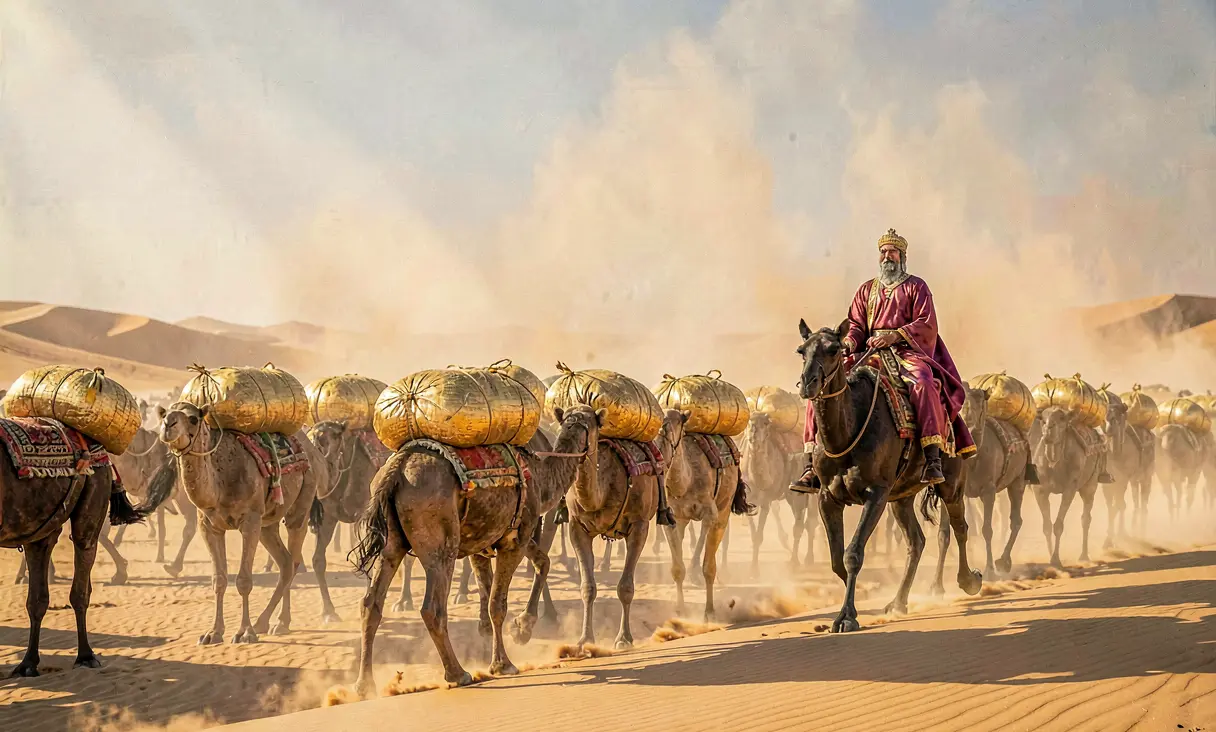 CivilizationMansa Musa Pilgrimage to Mecca1324 CE · Timbuktu, MaliMali Empire ruler travels with immense wealth, destabilizing economies along his route to Mecca.
 CivilizationFounding of Tenochtitlan1325 CE · Mexico City, MexicoAztecs build a magnificent island city on Lake Texcoco that becomes the largest in the Americas.
 PoliticsMuhammad bin Tughlaq Moves Capital to Daulatabadc. 1327 CE · Daulatabad, Maharashtra, IndiaIn a controversial move, Muhammad bin Tughlaq forces the migration of Delhi's population to Daulatabad to better control southern territories.
Discussion
Loading…