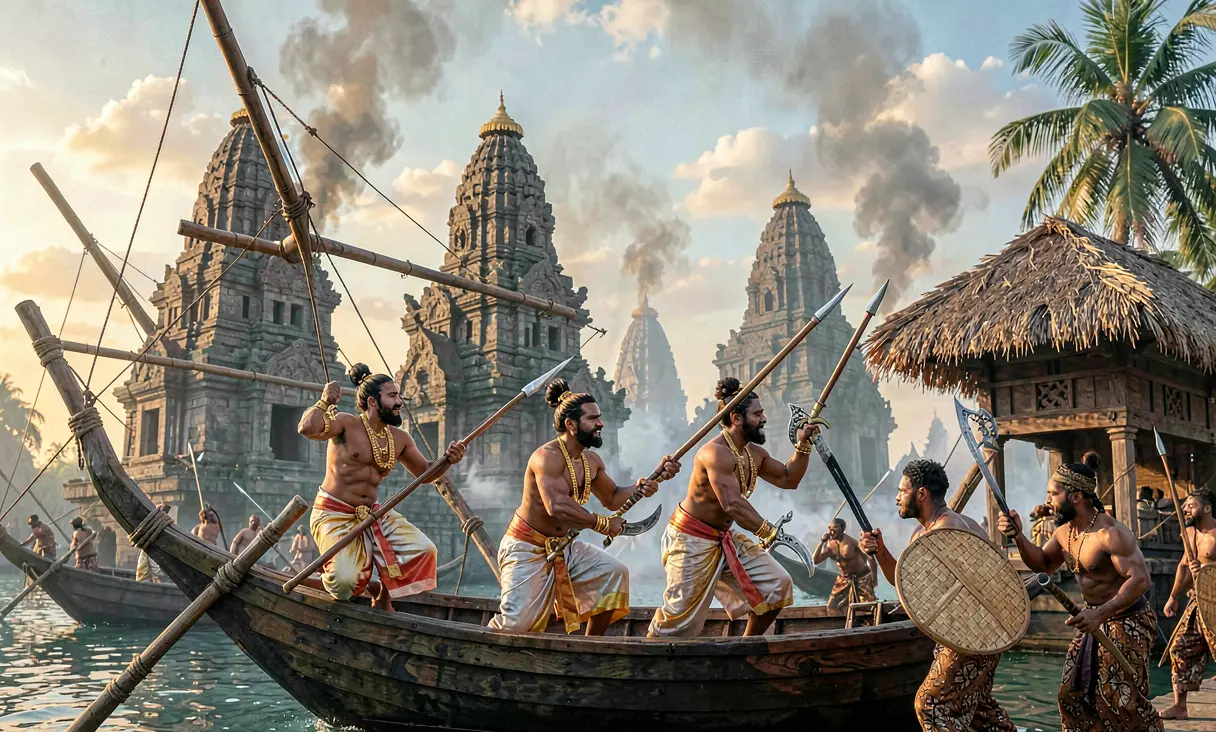
Chola Naval Expedition to Southeast Asia
In 1025 CE, Rajendra Chola I's unprecedented naval expedition shattered the Srivijaya Empire's trade monopoly, projecting Indian power thousands of miles into Southeast Asia and reshaping regional geo
The Maritime Ambitions of the Chola Empire
By the early 11th century, the Chola dynasty under Rajendra Chola I had transformed southern India into a hegemonic power, dominating the subcontinent's political landscape. However, Rajendra's vision extended far beyond terrestrial conquests; he sought to secure the lucrative maritime trade routes that connected India with East Asia. The Strait of Malacca and the Sunda Strait were controlled by the Srivijaya Empire, a Buddhist thalassocracy based in Sumatra, which levied heavy tolls on merchant vessels passing through its waters. For Indian merchants, particularly those dealing in spices, silk, and precious stones, this monopoly was an economic stranglehold. Rajendra Chola I recognized that to ensure the prosperity of his realm and assert imperial prestige, he needed a navy capable of projecting power across the Bay of Bengal.
The Target: Srivijaya and the Archipelago
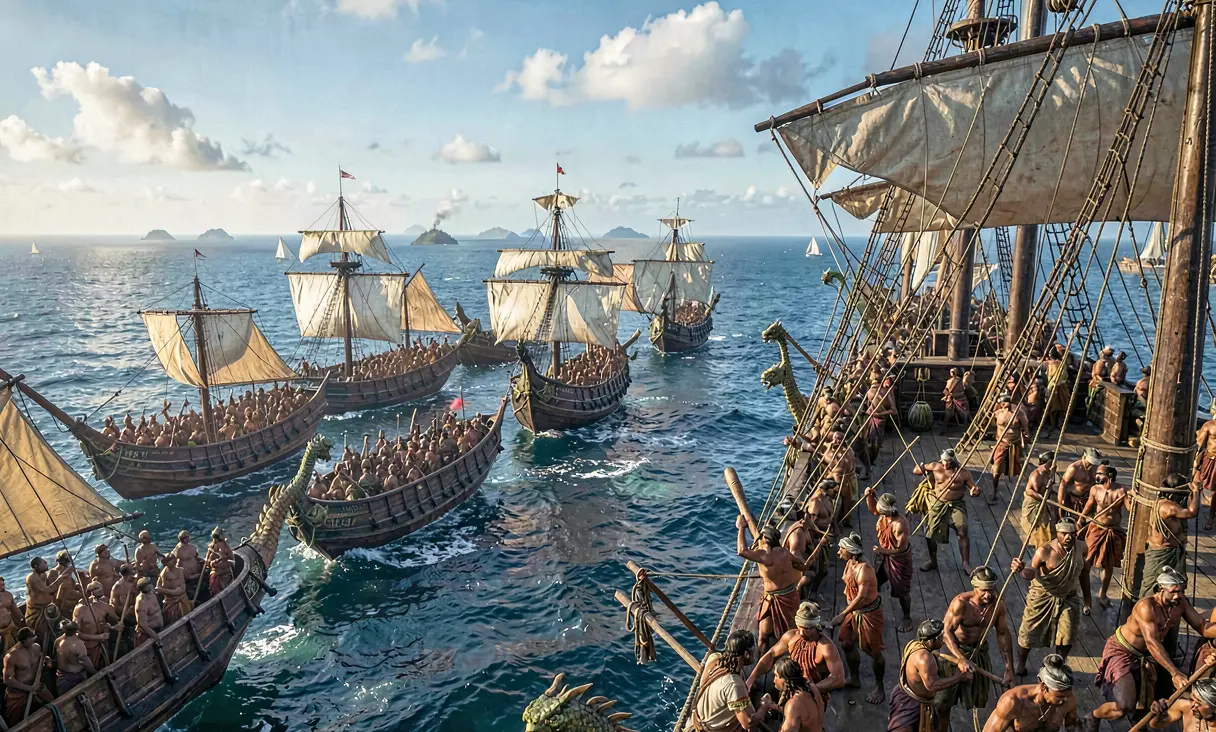
In 1025 CE, Rajendra Chola I launched one of the most audacious naval expeditions in pre-modern history. The primary target was the Srivijaya Empire, which at its zenith controlled much of modern-day Indonesia, Malaysia, and southern Thailand. Inscriptions found at Tanjore, known as the Thanjavur inscription, meticulously list the campaign's objectives: to punish the Srivijaya king for obstructing trade and to demonstrate Chola naval supremacy. The expedition was not merely a raid but a calculated military operation involving hundreds of warships carrying thousands of soldiers, archers, and elephants. The fleet sailed from the Coromandel Coast, navigating the treacherous waters of the Bay of Bengal with remarkable navigational skill, aiming directly at the heart of Southeast Asian power.
The Campaign: Conquest of Kadaram and Beyond
The Chola fleet struck swiftly and decisively. The first major objective was Kadaram (modern Kedah in Malaysia), a crucial port city that served as a gateway to the Malay Peninsula. Following its capture, the Cholas pressed on to attack the Srivijayan capital of Palembang in Sumatra. Historical records indicate that the Chola forces successfully sacked the city, capturing the Srivijaya king and seizing vast quantities of treasure. The campaign did not stop there; the inscriptions list a staggering number of conquered territories, including Mapappalam (Malay Peninsula), Panai (Pattani), and even distant cities in Java such as Mataram and She-pu-ti. This demonstrated an unprecedented ability to coordinate simultaneous attacks across a vast archipelago, effectively shattering the Srivijayan naval dominance in a single campaigning season.
The Mechanics of a Naval Hegemony
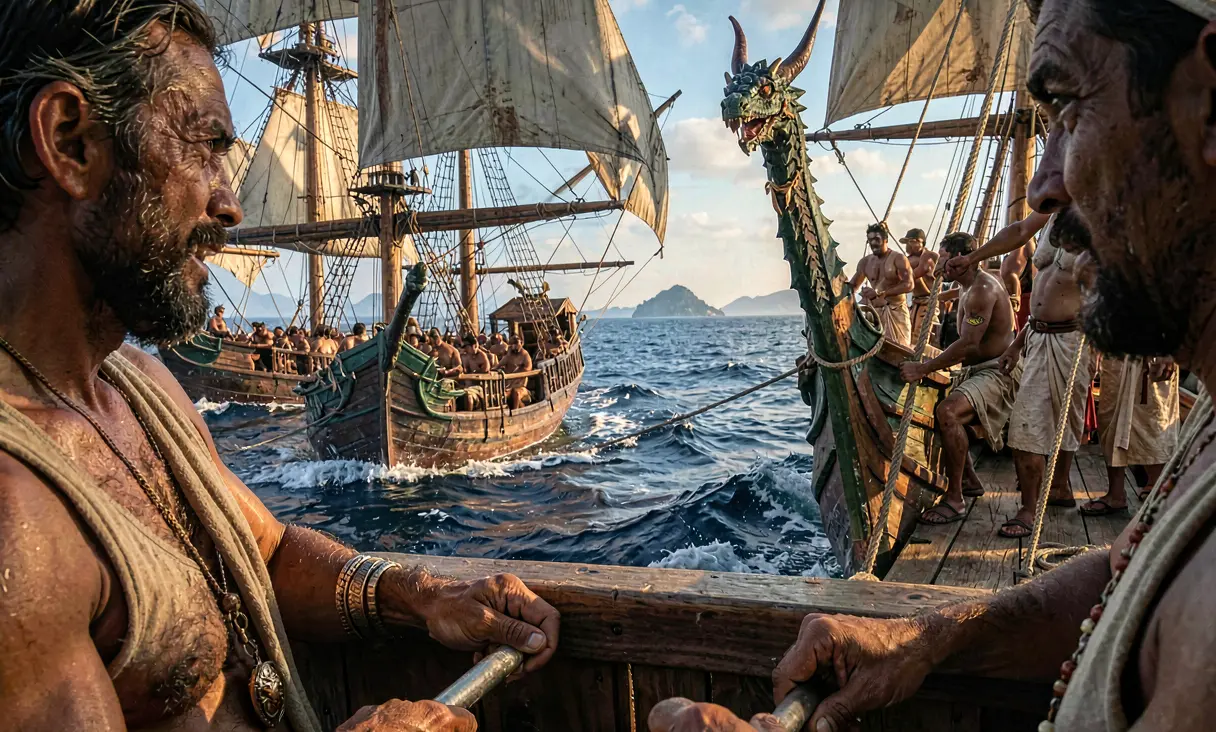
The success of the 1025 expedition relied on sophisticated maritime logistics and superior naval architecture. The Chola navy utilized large, multi-decked vessels capable of carrying heavy artillery and troops, a stark contrast to the smaller coastal craft typical of the region. The campaign showcased the Cholas' mastery of monsoon winds, allowing them to time their arrival with precision. Unlike previous Indian interactions with Southeast Asia, which were largely cultural or commercial, this was a direct application of hard military power. The sheer scale of the operation—covering thousands of miles and engaging multiple fortified cities—highlighted a level of naval organization that would not be seen again in the region until the rise of European colonial powers centuries later.
Immediate Aftermath: A Shift in Regional Balance
The immediate aftermath of the expedition was a dramatic shift in the geopolitical landscape of Southeast Asia. While Rajendra Chola I did not establish permanent administrative colonies or garrisons in Java or Sumatra, the psychological and economic impact was profound. The Srivijaya Empire was severely weakened, losing its monopoly on the Malacca Strait trade routes. This disruption forced local rulers to acknowledge Chola suzerainty, at least nominally, and opened the doors for Indian merchants to operate freely throughout the archipelago. The campaign effectively broke the stranglehold of a single regional power, leading to a more fragmented but competitive political environment in which new city-states could rise.
Legacy: Cultural Exchange and Historical Memory
The legacy of Rajendra's naval expedition extends far beyond the military victory. It cemented the Chola dynasty's reputation as a global power, with inscriptions proudly declaring that the king's name was known from the Himalayas to the islands of the Indian Ocean. The event facilitated an intensification of cultural and religious exchanges; while the political control was transient, the flow of Hindu-Buddhist art, architecture, and literature between India and Southeast Asia accelerated in the centuries following the raid. The expedition remains a testament to the sophisticated maritime capabilities of medieval India, challenging the notion that pre-modern Asian powers were solely land-based. It stands as a unique chapter where an Indian empire successfully projected naval force across the ocean to reshape the destiny of a distant continent.
It was a rare example of long-distance naval projection by an Indian power into Southeast Asia.
Where it happened
Java and Sumatra (Modern Indonesia) — see it on the interactive map →
Explore related history
 ExplorationViking Settlement of Iceland874 CE · Reykjavik, IcelandNorse explorers led by Ingólfr Arnarson settle Iceland, establishing the first permanent European community in the North Atlantic.
 ExplorationKorean Tribute Trade with China918 CE · Sungnyemun Gate (Kaesong), KoreaGoryeo establishes formal tributary relations with the Song Dynasty.
 ExplorationLeif Erikson's Voyage to Vinlandc. 1000 CE · L'Anse aux Meadows, Newfoundland, CanadaLeif Erikson establishes a short-lived Norse settlement in North America, five centuries before Columbus.
 WarRajendra Chola I's Ganges Expeditionc. 1025 CE · Bengal to Ganges Delta, IndiaRajendra Chola I leads a northern expedition reaching the Ganges River, defeating Pala kings and bringing holy water back to Thanjavur.
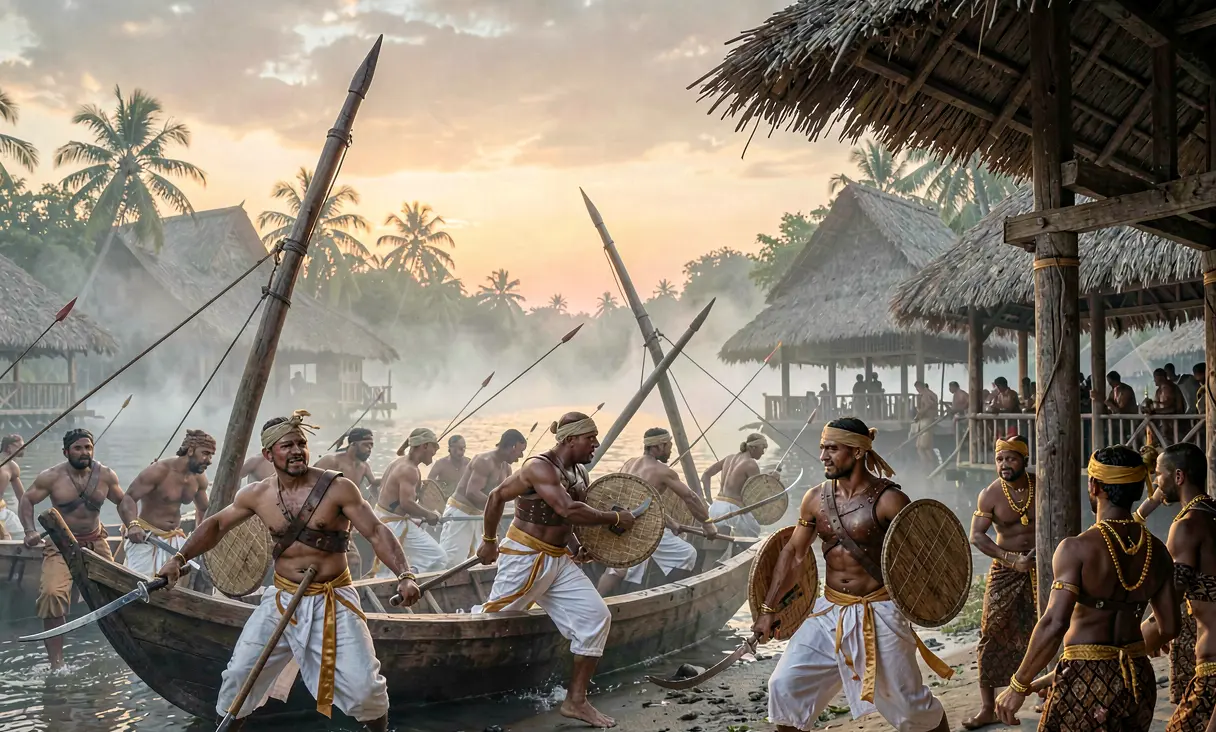 WarChola Invasion of Srivijayac. 1025 CE · Palembang, Sumatra, IndonesiaRajendra Chola I launches a naval raid on the Srivijaya Empire, disrupting its control over the Strait of Malacca and securing trade routes.
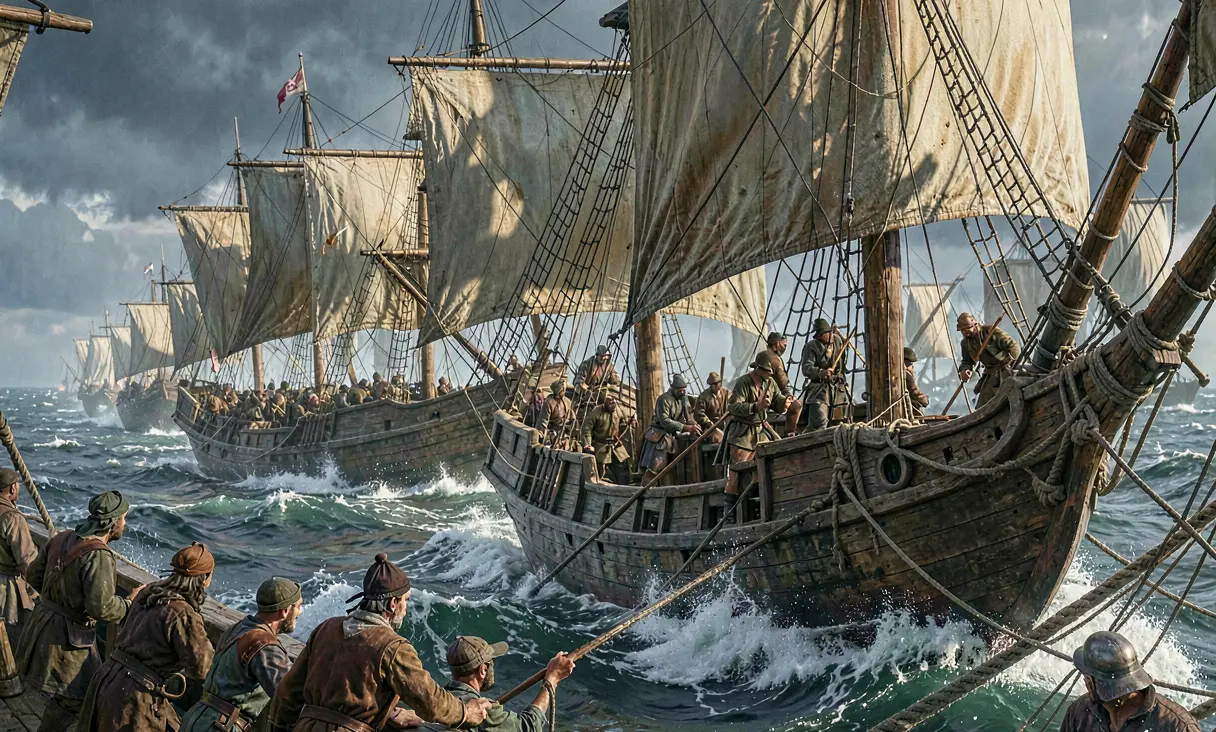 WarRajendra Chola I's Expedition to Southeast Asiac. 1025 CE · Kedah (modern Malaysia)Chola Emperor Rajendra I launches a massive naval raid on Srivijaya, projecting Indian power across the Bay of Bengal.
Discussion
Loading…