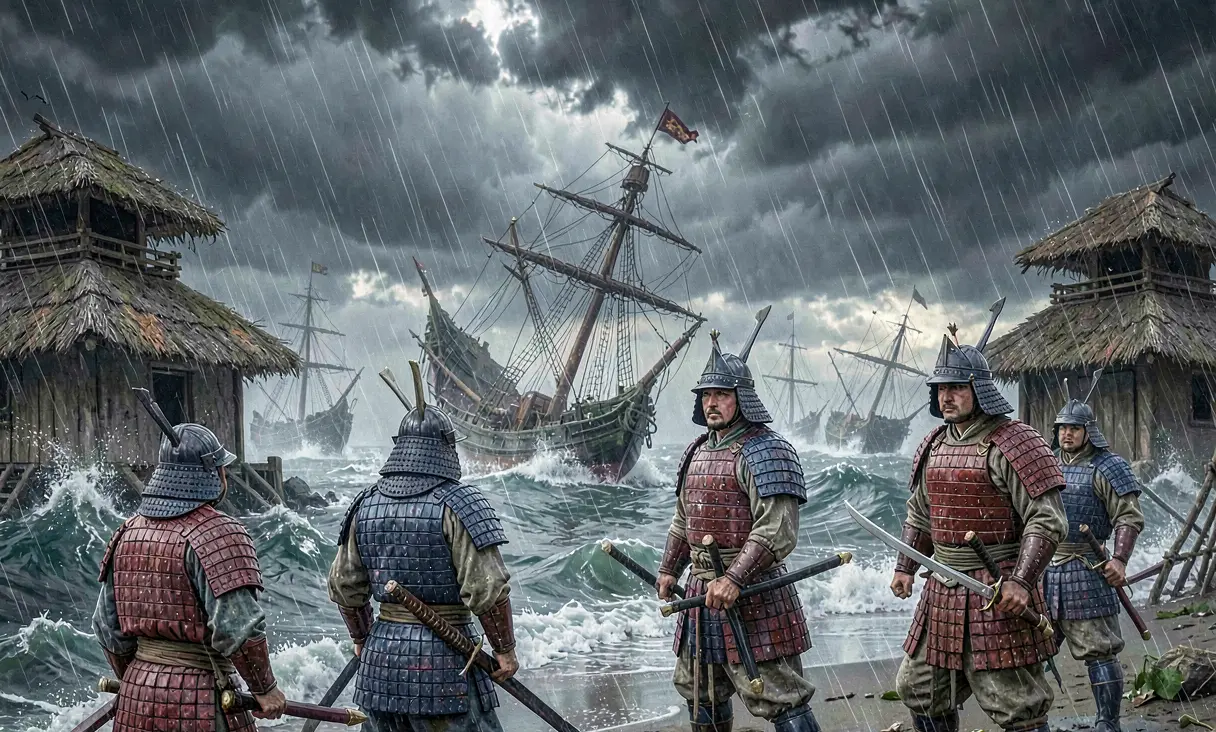
Mongol Invasion of Japan (Kamikaze)
In 1281, a massive Yuan fleet was annihilated by a typhoon while invading Japan, an event revered as 'Kamikaze' that preserved Japanese independence and shaped national identity for centuries.
The Shadow of the Yuan
By the mid-13th century, the Mongol Empire under Kublai Khan had swept across Eurasia, subjugating China and establishing the Yuan Dynasty. Having consolidated power in Korea and conquered the Southern Song, Kublai turned his gaze toward Japan, viewing its refusal to submit as a challenge to his universal sovereignty. In 1268, he dispatched envoys demanding Japanese submission; the Kamakura Shogunate, led by Hojo Tokimune, flatly refused, executing the messengers in 1274. This defiance precipitated the first invasion attempt that year, known as Bun'ei no Eki, which was repelled but left Japan on high alert. For seven years, the Japanese samurai class fortified Hakata Bay with stone walls and prepared for a return of the Mongol juggernaut, aware that the Yuan possessed superior naval technology and a vast army.
The Armada Assembles
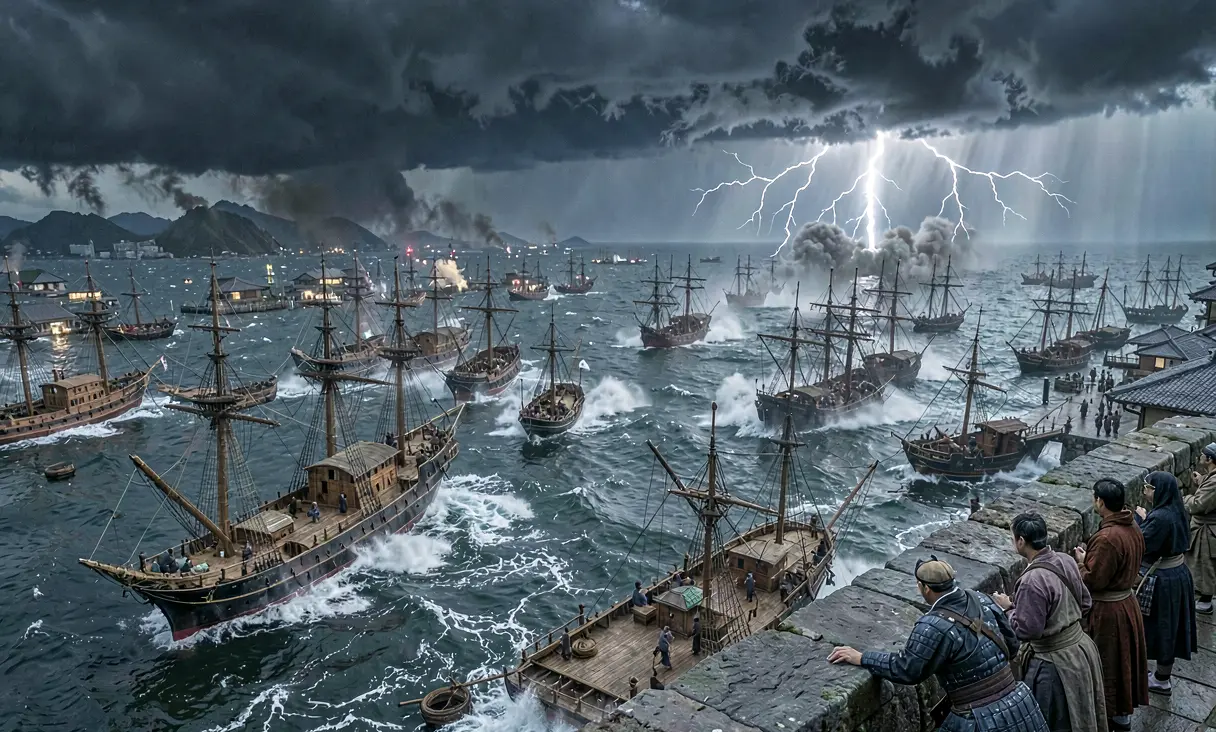
In 1281, Kublai Khan launched his second, massive assault, the Kōan no Eki. The invasion force was split into two distinct fleets: the Eastern Army, comprising roughly 40,000 Mongol and Korean troops under generals Hong Dagu and Liu Fuxiang, departed from Korea; the Southern Army, consisting of over 100,000 Chinese and Han troops led by Fan Wenhu, sailed from the Yangtze River. Combined with support vessels, the total fleet numbered approximately 4,400 ships, carrying an estimated 140,000 soldiers. The sheer scale of this armada was unprecedented in East Asian history, representing a logistical marvel intended to overwhelm Japanese defenses through brute force and pincer movements.
Defenders of the Divine Land
The Japanese defense was orchestrated by Hojo Tokimune, the de facto ruler of Japan as the regent (Shikken) of the Kamakura Shogunate. Unlike previous conflicts where samurai engaged in individual duels, the Japanese adopted a collective defensive strategy centered on the newly constructed 'Genko Borui,' a two-meter-high stone wall stretching 20 kilometers along Hakata Bay. This fortification neutralized the Mongol advantage in boarding tactics and cavalry charges. Key commanders included local daimyo such as Shimazu Tokihisa of Satsuma and Otomo Satoru, who coordinated the samurai clans to hold the line. The Japanese forces, though outnumbered roughly four to one, utilized their knowledge of the terrain and superior archery to inflict heavy casualties during initial skirmishes.
Stalemate and the Storm
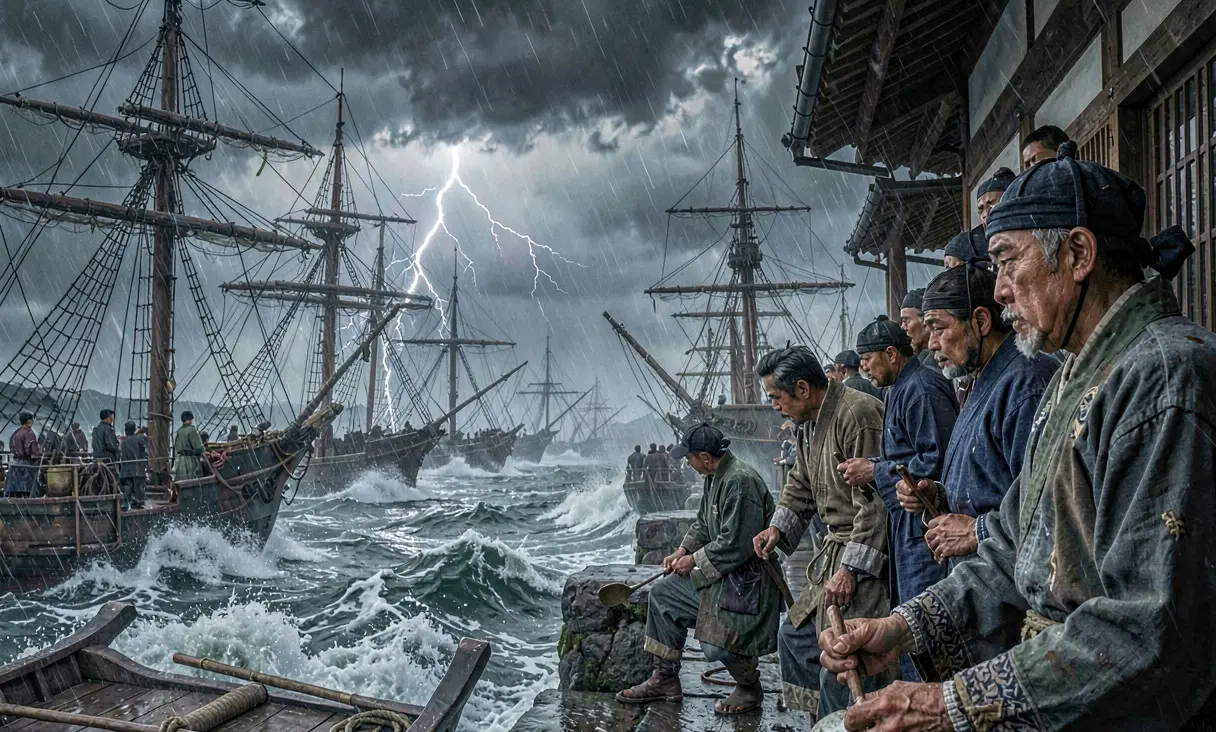
The invasion began in late May 1281. The Eastern Army landed first but was repelled by the stone walls, forcing them into a prolonged stalemate where they could not secure a beachhead. By July, the Southern Army arrived, attempting to land at different points, yet they too were stalled by Japanese resistance and internal discord among the Mongol commanders. For over two months, the fleets remained anchored in Hakata Bay, suffering from disease, supply shortages, and constant harassment by small Japanese boats. On August 15, a catastrophic typhoon struck the bay with ferocious force, lasting for two days. The storm capsized thousands of ships, drowning an estimated 70% to 90% of the invasion force. Survivors were hunted down by samurai or enslaved and executed by local villagers.
The Kamikaze Legacy
The typhoon was interpreted by the Japanese as a divine intervention, a 'Kamikaze' (divine wind) sent by the gods to protect the land of the Sun Goddess Amaterasu. This belief became a cornerstone of Japanese national identity and Shinto ideology for centuries, reinforcing the concept of Japan's spiritual invincibility. The victory preserved Japan's independence from Mongol rule, ensuring a distinct cultural and political trajectory separate from mainland Asia. However, the war exacted a heavy toll; the cost of building defenses and maintaining the army strained the Kamakura economy, leading to land disputes that weakened the Shogunate's authority and contributed to its eventual collapse in 1333.
Historical Resonance
The failure of the Mongol invasions marked a turning point in global history, preventing the integration of Japan into the Yuan sphere of influence. It demonstrated that even the most powerful land empire could be checked by geography and weather. The event left a profound imprint on Japanese psychology, fostering a sense of isolationism and divine destiny that would persist until the Meiji Restoration and resurface tragically during World War II with the suicide pilots who adopted the name 'Kamikaze.' Archaeological evidence recovered from Hakata Bay in recent decades, including sunken ships and Mongol armor, confirms the historical accounts of this cataclysmic clash.
It prevented the only successful foreign conquest of mainland Japan in pre-modern history.
Where it happened
Hakata Bay (Fukuoka), Japan — see it on the interactive map →
Explore related history
 WarIslamic Conquest of the Sasanian Empire637 CE · Ctesiphon, Iraq (Persia)Arab Muslim forces defeat the Sasanian Empire at the Battle of al-Qadisiyyah, ending centuries of Persian rule.
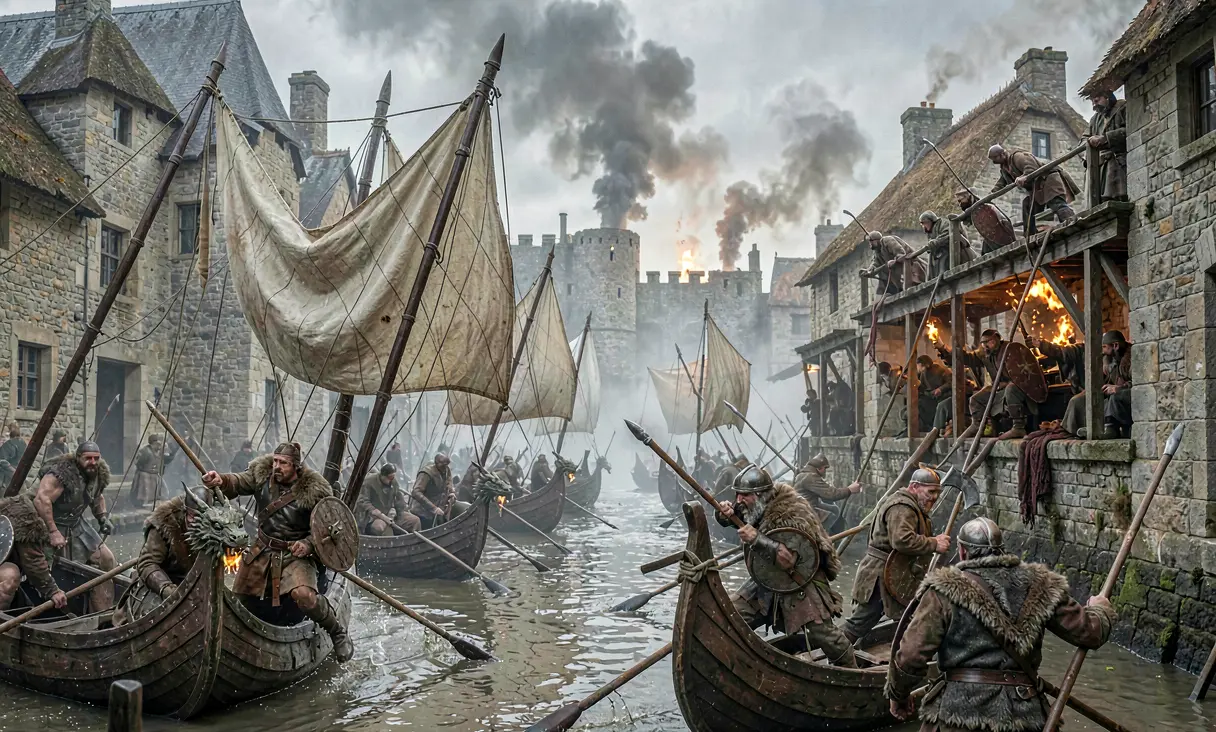 WarViking Siege of Paris885 CE · Paris, FranceViking raiders led by Sigfred besiege Paris for over a year, testing the defenses of West Francia.
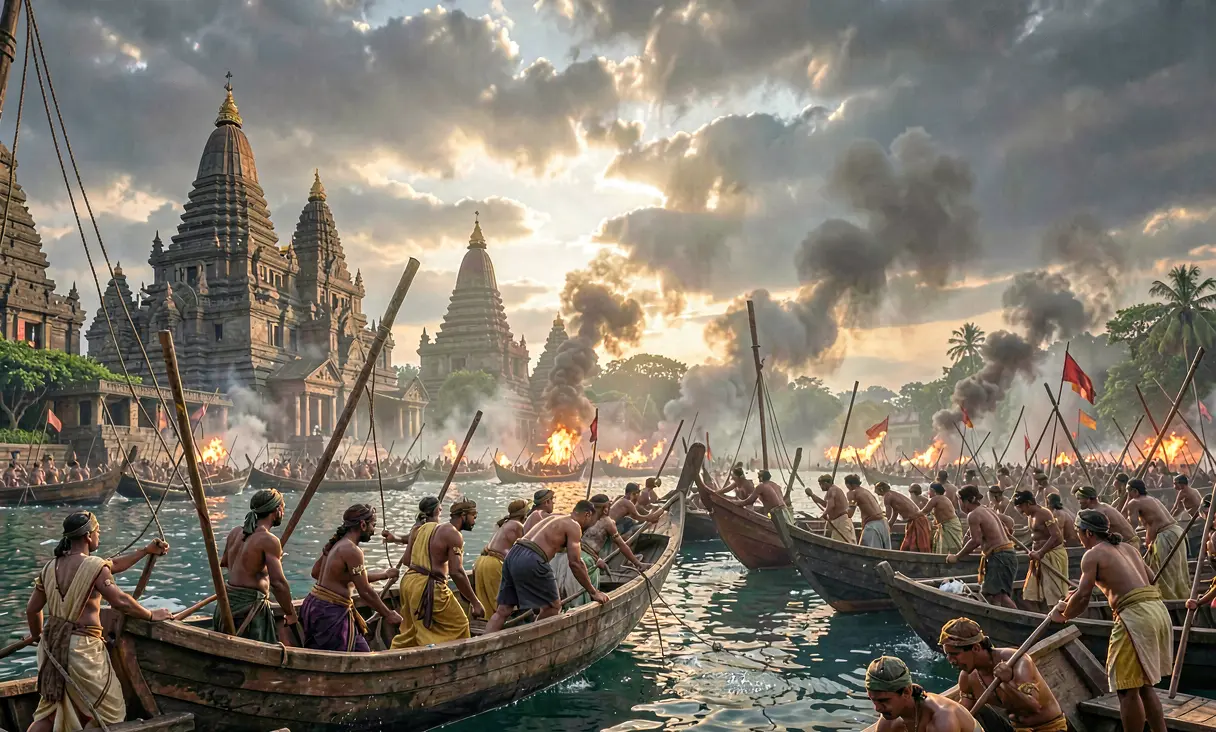 WarChola Conquest of Sri Lankac. 993 CE · Anuradhapura, Sri LankaRajaraja Chola launches a massive amphibious invasion of Sri Lanka, defeating the Sinhalese kingdom and annexing the island.
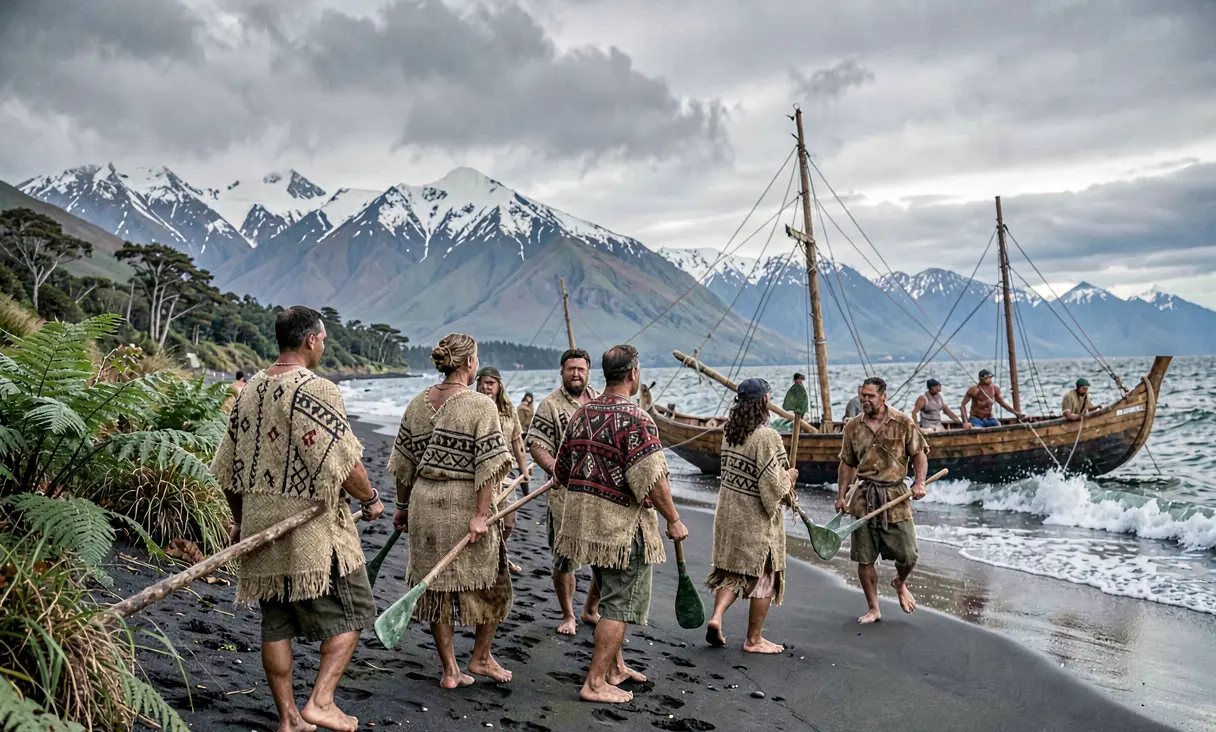 ExplorationPolynesian Settlement of New Zealand (Aotearoa)c. 1280 CE · Canterbury, New Zealand (South Island)Polynesian navigators arrive in New Zealand, founding the Māori culture and adapting to a temperate environment.
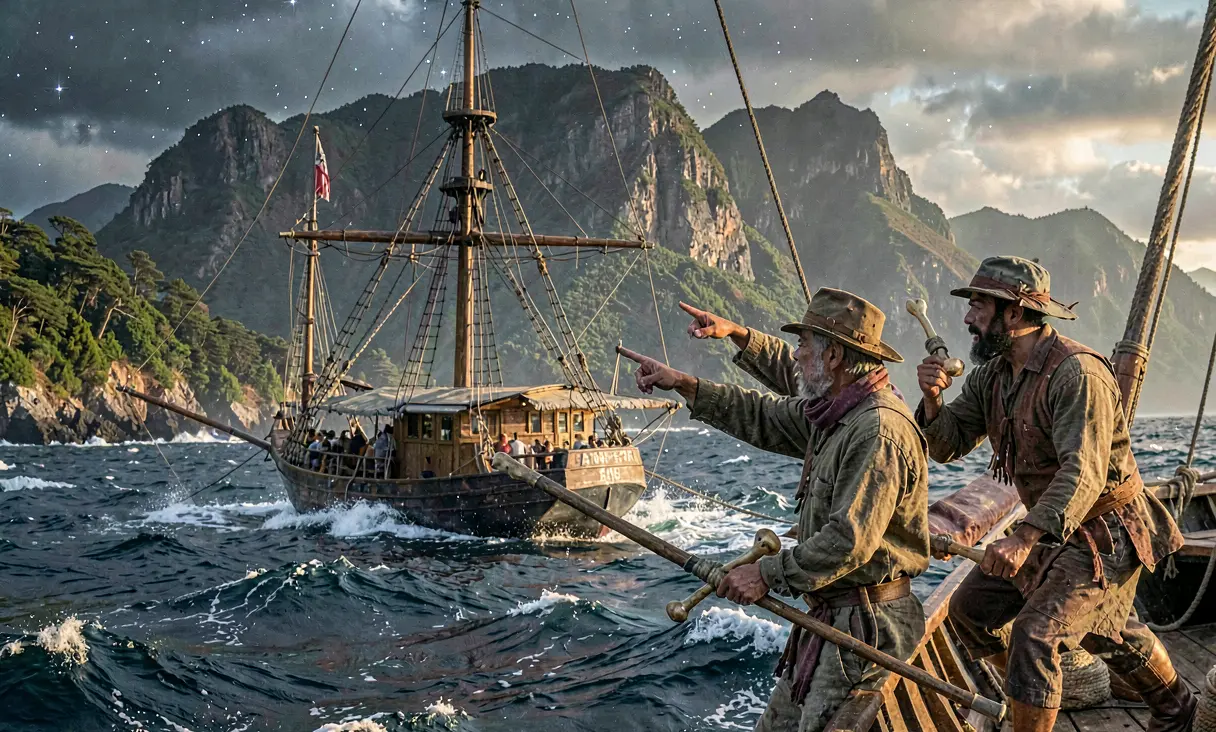 ExplorationPolynesian Voyaging to New Zealandc. 1280 CE · South Island, New ZealandPolynesian navigators arrive in Aotearoa using double-hulled canoes and celestial navigation.
 PoliticsFoundation of the Khalji Dynastyc. 1290 CE · Delhi, IndiaJalal-ud-din Khalji overthrows the Mamluk dynasty, establishing the first Afghan-dominated Sultanate in Delhi.
Discussion
Loading…