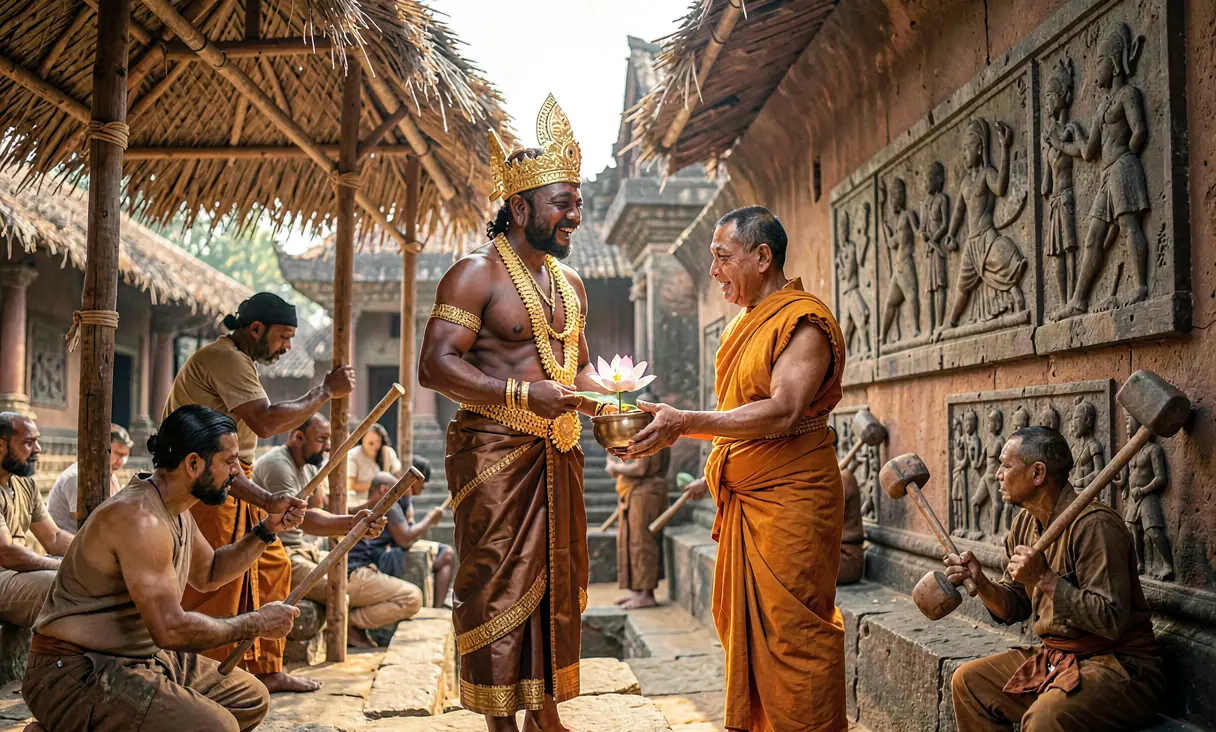
Jayavarman VII Converts to Mahayana Buddhism
In 1181 CE, Jayavarman VII transformed the Khmer Empire from a Hindu theocracy into a Mahayana Buddhist state, replacing divine kingship with a revolutionary focus on public welfare and compassion.
The Shadow of Champa and the Collapse of Order
By the late 12th century, the Khmer Empire, once the undisputed hegemon of mainland Southeast Asia, faced an existential crisis. In 1177 CE, a surprise naval invasion by the Cham people from neighboring Champa devastated the capital, Yasodharapura (modern-day Angkor). The city was sacked, its temples desecrated, and King Tribhuvanadityavarman killed in battle. This catastrophe shattered the traditional Hindu social and cosmic order that had governed the empire for centuries under the devaraja cult, which equated the king with Shiva or Vishnu. For four years, Cambodia remained in a state of chaos and occupation until a royal prince, previously exiled to Champa, returned to lead the resistance.
The Ascension of Jayavarman VII
In 1181 CE, Prince Jayavarman VII successfully expelled the Cham forces and ascended the throne, marking a pivotal turning point in Khmer history. Unlike his predecessors who were staunch adherents to Shaivism or Vaishnavism, Jayavarman VII was a devout follower of Mahayana Buddhism. His conversion was not merely a personal spiritual choice but a calculated political and ideological shift designed to heal a fractured nation. He rejected the exclusive, elite-focused nature of the devaraja cult, which had served to elevate the king above the common populace, in favor of a more inclusive doctrine centered on compassion (karuna) and the Bodhisattva ideal.
The Construction of Angkor Thom and the Bayon
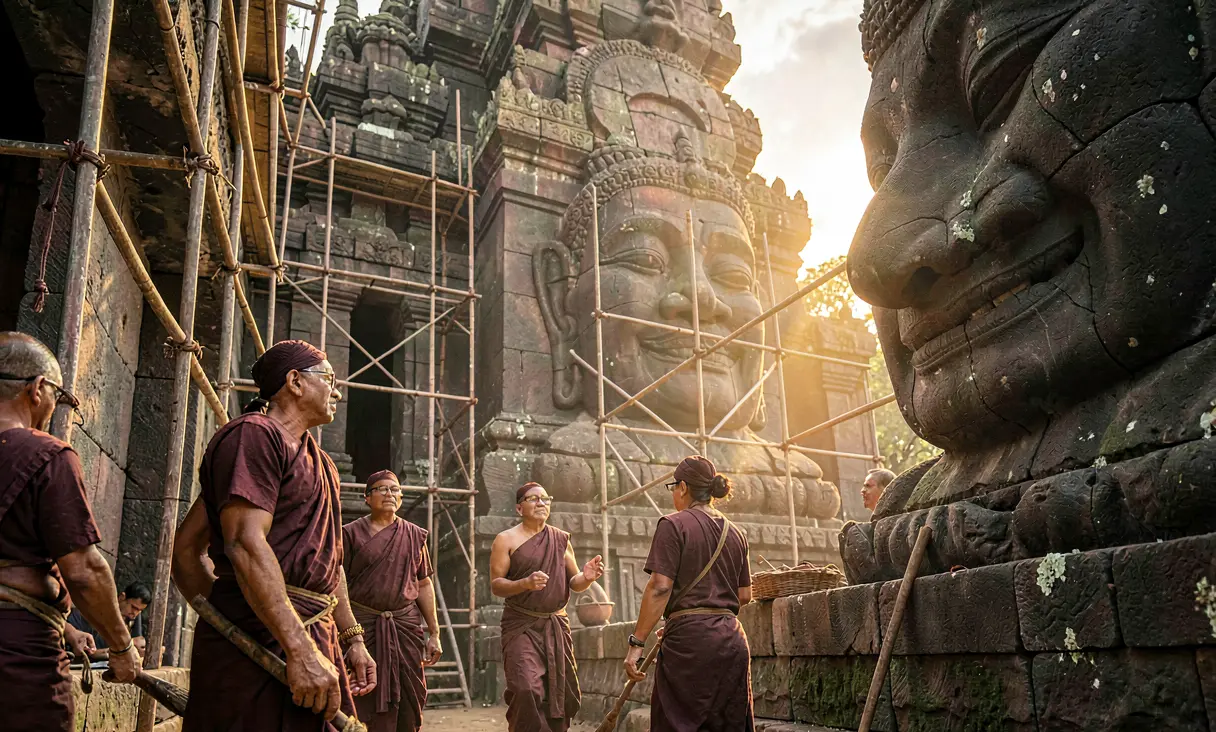
To manifest his new vision, Jayavarman VII initiated an unprecedented building program that physically reshaped the capital. He constructed Angkor Thom, a massive walled city covering nearly one square kilometer, with the Bayon temple at its heart. The Bayon is unique in Khmer architecture for its 216 serene, smiling faces carved into stone towers, widely interpreted as representations of Avalokiteshvara (the Bodhisattva of Compassion) or a syncretic blend of the king and the deity. These faces, gazing outward in all directions, symbolized a benevolent ruler watching over his subjects with empathy rather than the distant, terrifying majesty of previous Hindu kings.
A State Built on Compassion: Infrastructure and Welfare
Jayavarman VII's reign was distinguished by a profound commitment to public welfare, a direct application of Mahayana principles. He constructed 102 hospitals (known as 'Arogyasala') across the empire, staffed with physicians and equipped with herbal medicines, making them among the earliest state-run medical facilities in human history. Furthermore, he built rest houses along major roads to aid travelers and merchants, and established a network of reservoirs and canals to ensure agricultural stability. His inscriptions explicitly detail his sorrow for the suffering of his people, stating that their pain was as painful to him as his own, reflecting a radical departure from the self-aggrandizing narratives of earlier monarchs.
Artistic Synthesis and Religious Transition
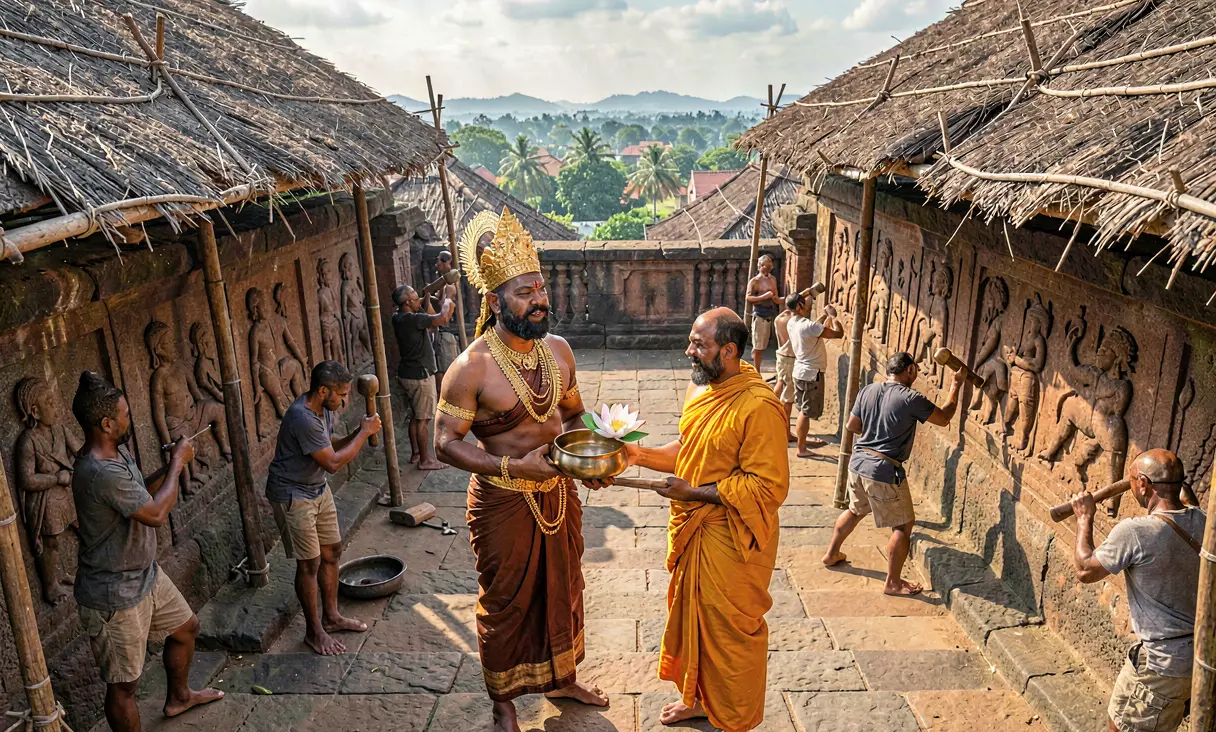
The conversion sparked a golden age of artistic innovation where Buddhist iconography merged seamlessly with established Khmer traditions. While earlier temples depicted scenes from Hindu epics like the Ramayana, Jayavarman VII's era saw the rise of narrative bas-reliefs depicting daily life, battles, and market scenes alongside Buddhist motifs. The bronze and stone statues of this period exhibit a new naturalism and emotional depth, moving away from rigid formalism to capture human vulnerability and spiritual serenity. This artistic shift reinforced the message that the divine was accessible through compassion and service to humanity.
Legacy and the Limits of a Buddhist Empire
Although Jayavarman VII's successors eventually reverted to Hinduism, his reign left an indelible mark on Cambodian identity and the region's religious landscape. The infrastructure he built sustained the empire for centuries, and his emphasis on social welfare established a precedent for state responsibility that resonates in modern Cambodia. However, the immense cost of his construction projects contributed to the economic strain that eventually led to the decline of Angkor. Nevertheless, Jayavarman VII remains the most celebrated figure in Cambodian history, remembered not just as a conqueror, but as the 'Buddha King' who transformed a war-torn kingdom into a beacon of compassion.
It transformed the religious landscape of the Khmer Empire and left an enduring architectural legacy.
Where it happened
Angkor Thom, Cambodia — see it on the interactive map →
Explore related history
 ReligionHijra of Prophet MuhammadSeptember 24, 622 CE · Medina, Saudi ArabiaMuhammad migrates to Medina establishing the first Muslim community and calendar.
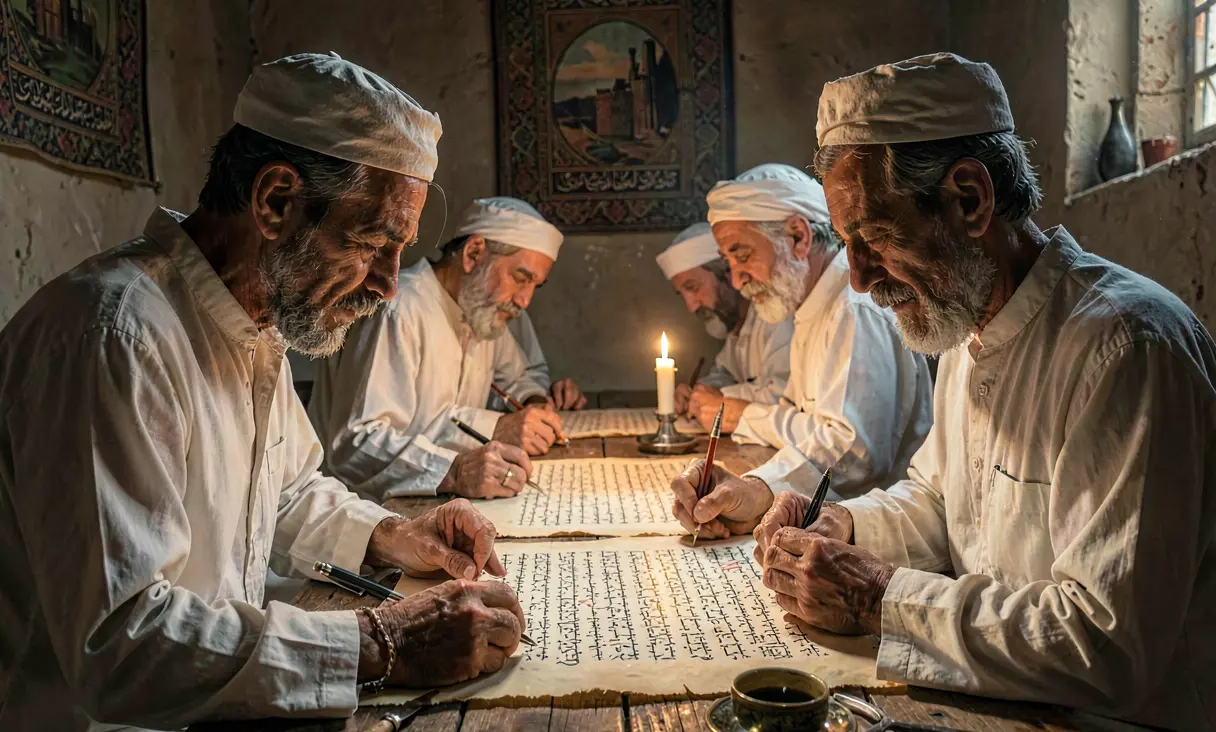 ReligionStandardization of the Quranic Textc. 650 CE · Medina (and Damascus), Arabia/SyriaCaliph Uthman commissions the definitive written codex of the Quran.
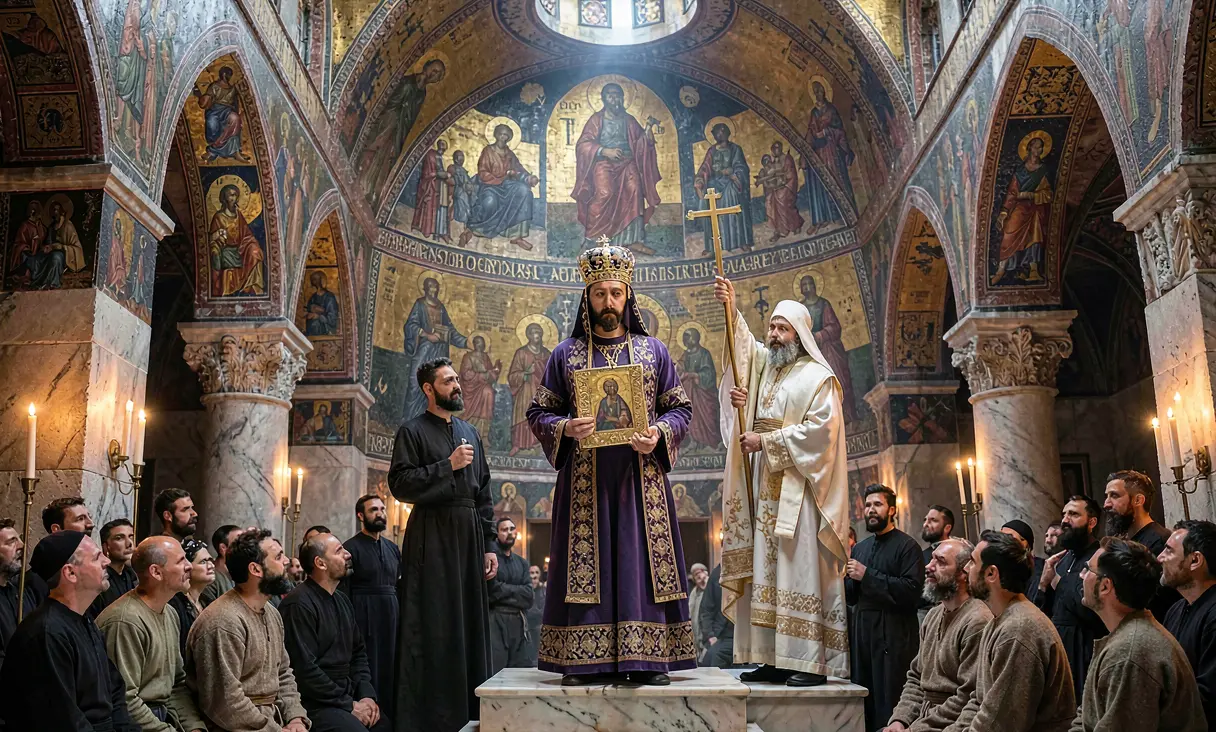 ReligionEnd of Byzantine Iconoclasm843 CE · Constantinople, TurkeyEmpress Theodora restores the veneration of icons in the Byzantine Empire, ending a century-long theological conflict.
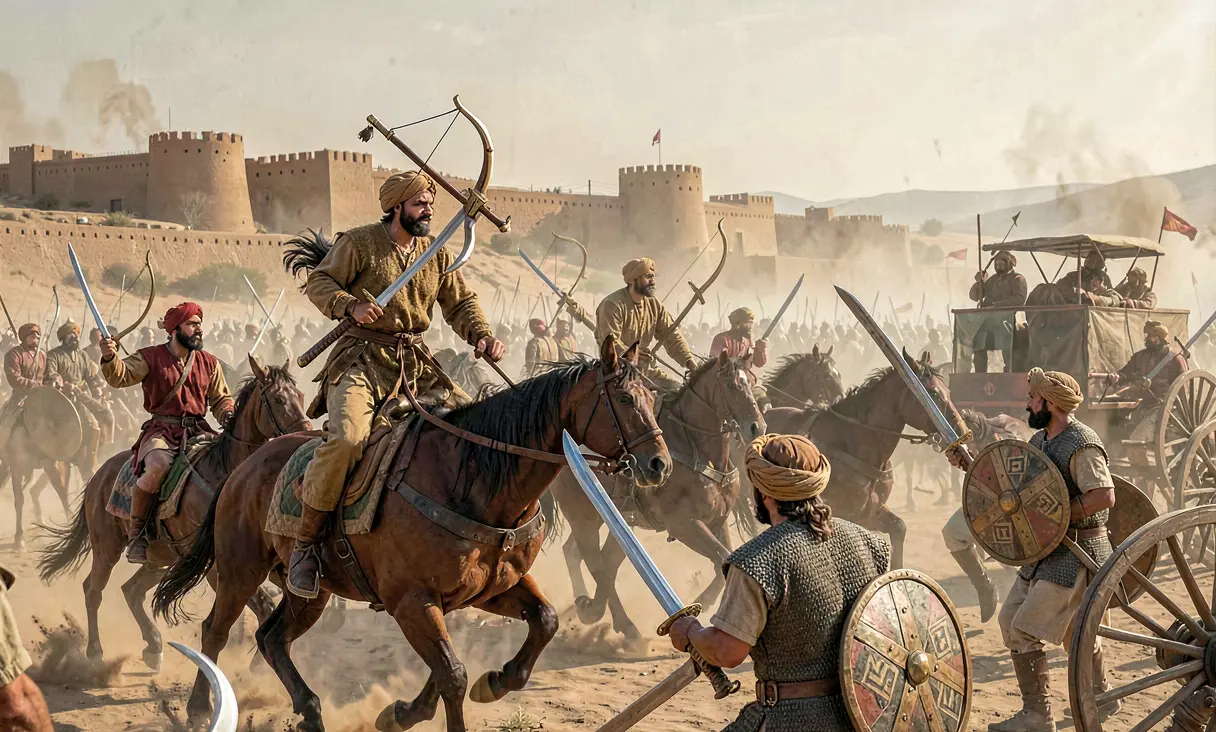 WarGhurid Conquest of Delhic. 1192 CE · Delhi, IndiaMuhammad of Ghor defeats Prithviraj Chauhan in the Second Battle of Tarain, establishing Muslim rule over North India.
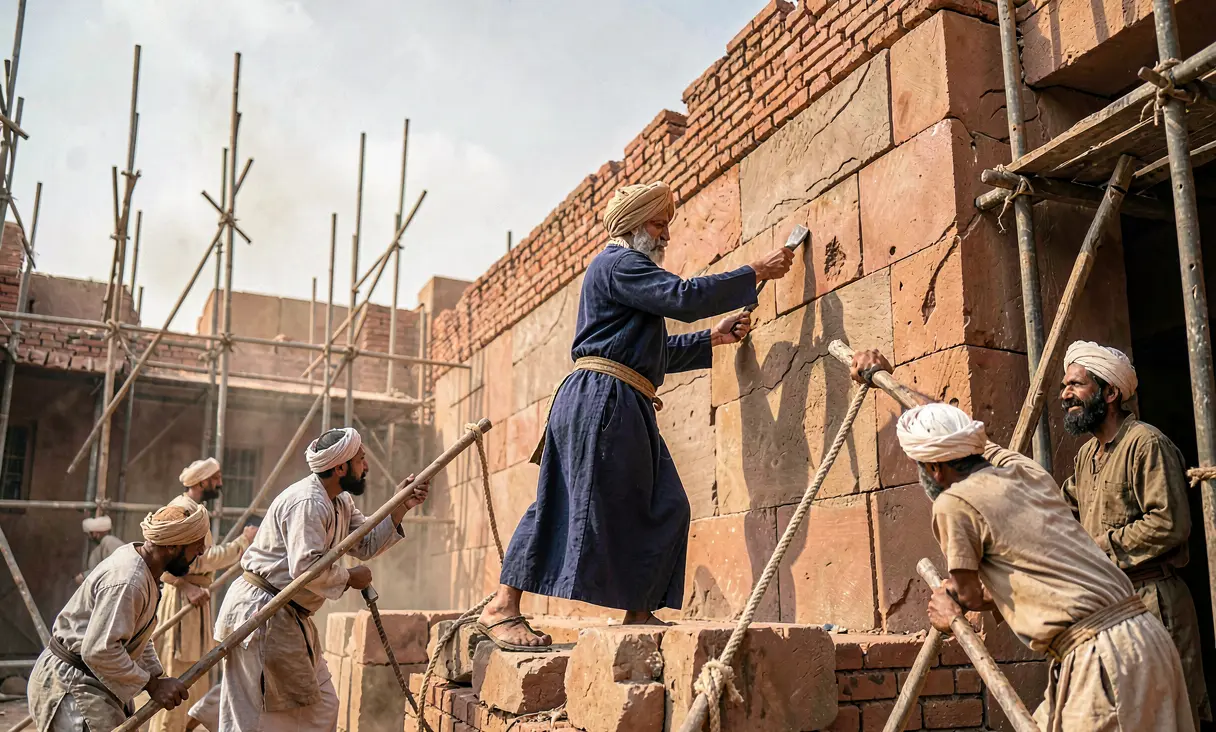 ArtConstruction of Qutub Minar Beginsc. 1199 CE · Delhi, IndiaQutb-ud-din Aibak begins construction of the Qutub Minar, a victory tower symbolizing the establishment of the Delhi Sultanate.
 CivilizationRise of Swahili City-States on the East African Coastc. 1200 CE · Kilwa Kisiwani, TanzaniaSwahili city-states flourish as cosmopolitan hubs of Indian Ocean trade, blending African and Islamic cultures.
Discussion
Loading…