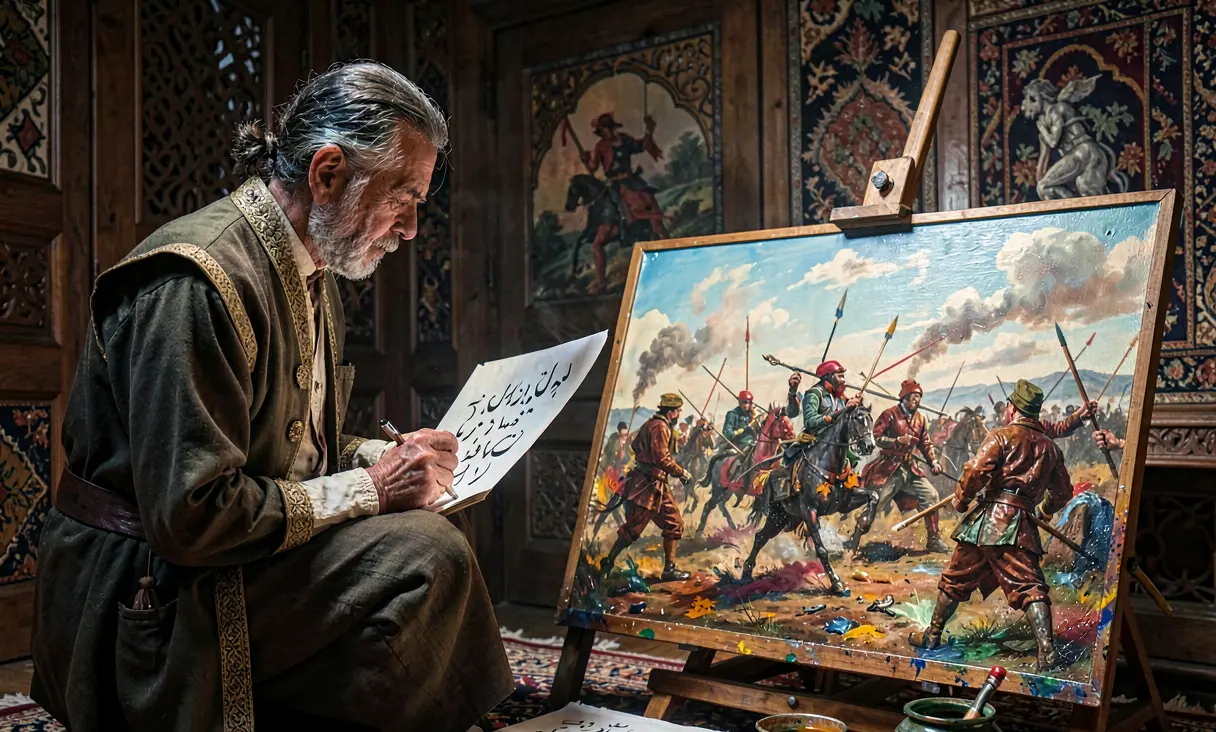
Production of the Shahnama Manuscript
The c. 1330 Tabriz production of the Shahnama fused Persian epic tradition with Chinese artistic influences under Mongol patronage, creating a revolutionary visual language that defined the golden age
The Ilkhanid Context and Cultural Synthesis
In the early 14th century, Tabriz served as the glittering capital of the Mongol Ilkhanate, a realm that stretched from Anatolia to the borders of India. Following the conquests of Genghis Khan and his successors, the region had undergone a profound demographic and cultural shift. By the reign of Abu Sa'id Bahadur Khan (r. 1304–1335), the Mongol elite had largely converted to Islam and sought legitimacy through the patronage of Persian culture. This era witnessed an unprecedented fusion of traditions: the nomadic steppe heritage of the conquerors merged with the sophisticated sedentary civilization of Iran, while new artistic currents flowed in from China via the Silk Road under Mongol protection.
The Commissioning of the Great Shahnama
Around 1330 CE, a monumental project was undertaken in the royal workshops of Tabriz to produce an illustrated copy of the *Shahnama* (Book of Kings), Ferdowsi's epic poem chronicling the mythological and historical past of Iran. Unlike earlier, more austere copies, this commission demanded a visual splendor befitting the Ilkhanid court. The resulting codex, often referred to by scholars as the 'Great Mongol Shahnama' or the Demotte Shahnama (after its later owner), consisted of over 200 folios featuring full-page miniatures. It was not merely a book but a political statement, aligning the Ilkhanid rulers with the legendary kings of antiquity and asserting their role as the rightful heirs to Persian sovereignty.
Artistic Innovation and the Chinese Influence
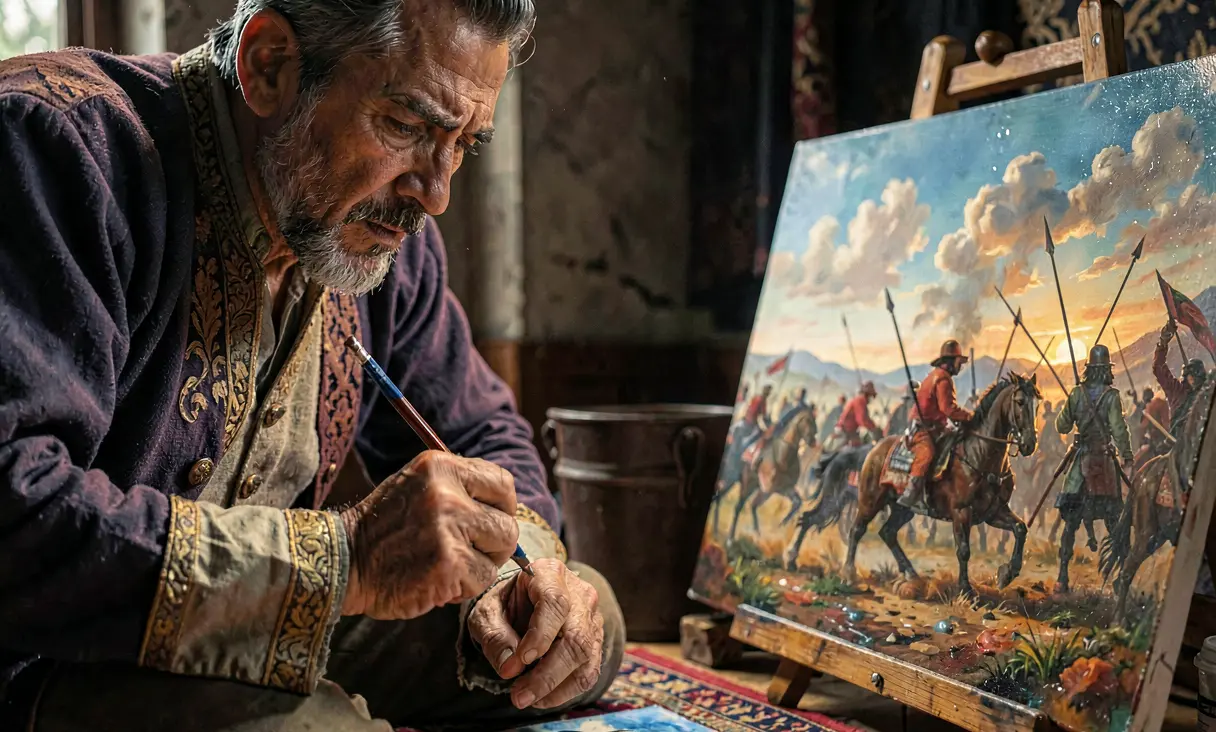
The visual language of the 1330s Tabriz school represented a radical departure from previous Persian illumination. Artists introduced dynamic compositions, swirling clouds derived from Chinese cloud bands (*yunwen*), and a new sense of atmospheric depth. The palette expanded to include vibrant lapis lazuli, malachite, and gold leaf, applied with a boldness that echoed the grandeur of the Mongol court. Figures were depicted with softer, more rounded faces and flowing drapery, reflecting Chinese portraiture techniques, yet they retained the distinct Persian narrative intensity. This synthesis created a unique aesthetic where the chaos of battle was rendered with both lyrical beauty and dramatic tension.
The Workshop and Key Masters
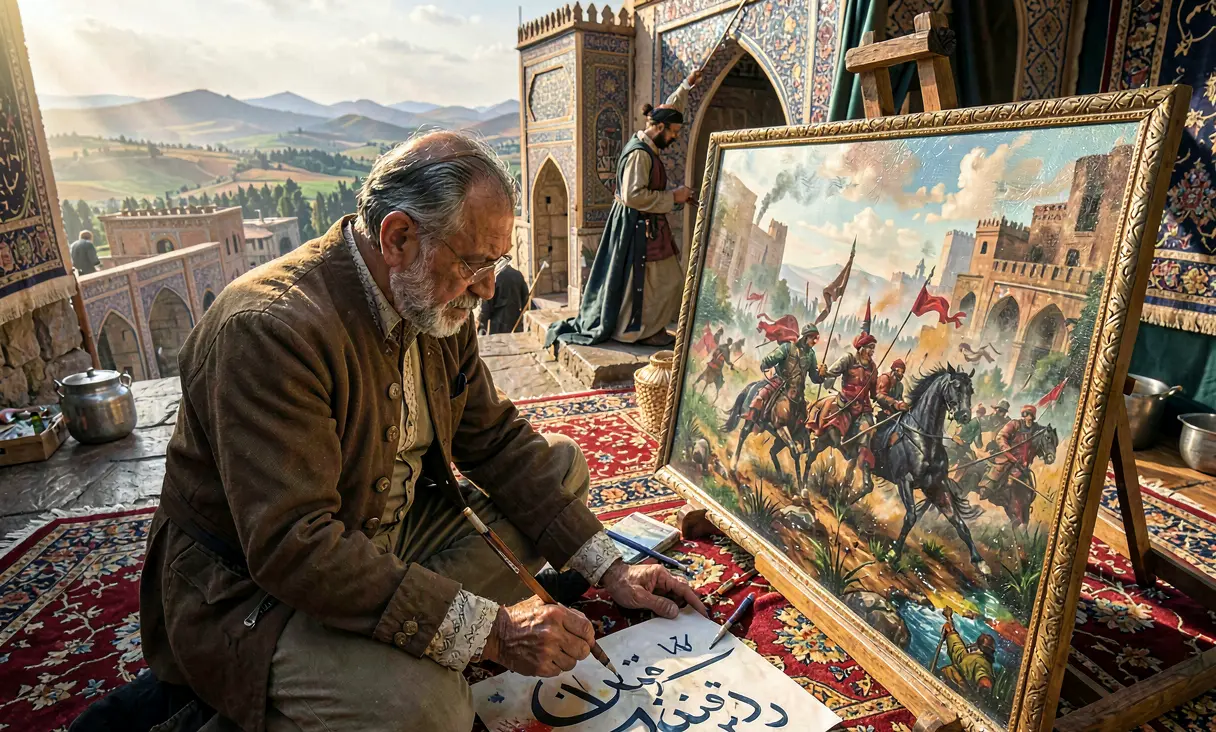
While specific names of the painters remain largely anonymous, historical records indicate that these works were produced in state-sponsored workshops (*kitabkhana*) where calligraphers, illuminators, and painters collaborated closely. The style is attributed to a generation of masters who likely included artists of diverse origins—Persians, Mongols, and perhaps Chinese artisans brought west by the empire's expansion. The sheer scale of the project suggests a highly organized production line, yet individual hands can be discerned in the variation of brushwork, from the delicate rendering of facial expressions to the vigorous depiction of clashing armies.
Narrative Scope and Visual Storytelling
The manuscript illustrated key episodes from Ferdowsi's epic, such as the tragic duel between Rostam and Sohrab, the heroic exploits of Kay Khosrow, and the mystical journey of Siyavash. The artists did not merely illustrate the text; they interpreted it, often expanding a single line of poetry into a sprawling landscape filled with symbolic detail. Battles were depicted not as static formations but as swirling maelstroms of movement, emphasizing the emotional weight of heroism and loss. This approach transformed the reading experience, allowing the viewer to inhabit the legendary world of Iran's past through a lens that was simultaneously ancient and strikingly modern.
Fragmentation and Historical Aftermath
Following the collapse of the Ilkhanate in 1335, the political unity that supported such grand commissions dissolved. The Great Mongol Shahnama itself was eventually dismembered; its folios were separated and scattered across museums and private collections worldwide, including the Metropolitan Museum of Art in New York, the Freer Gallery of Art in Washington, D.C., and the Gulistan Palace Library in Tehran. Despite this fragmentation, the surviving pages remain some of the most celebrated examples of Islamic art ever created, testifying to a brief but brilliant moment when Tabriz stood as the undisputed center of the artistic world.
Legacy and the Golden Age of Miniatures
The production of the c. 1330 Shahnama established the foundational style for centuries of Persian miniature painting that followed. It set a precedent for the integration of foreign influences into local traditions, a practice that would define later schools in Herat and Shiraz under the Timurids and Safavids. The 'Great Mongol' style demonstrated that epic literature could be elevated through visual art to become a vehicle for national identity and royal propaganda. Today, these manuscripts are studied not only as literary artifacts but as pivotal documents of cross-cultural exchange during the Pax Mongolica.
The illustrated Shahnama codices preserved the Persian national identity and established the high standards of Islamic book art.
Where it happened
Tabriz, Iran — see it on the interactive map →
Explore related history
 literatureCreation of the Beowulf Manuscriptc. 1016 CE · England (likely Canterbury or Winchester)A single scribe transcribes the epic poem Beowulf onto parchment.
 PoliticsMuhammad bin Tughlaq Moves Capital to Daulatabadc. 1327 CE · Daulatabad, Maharashtra, IndiaIn a controversial move, Muhammad bin Tughlaq forces the migration of Delhi's population to Daulatabad to better control southern territories.
 CivilizationFounding of Tenochtitlan1325 CE · Mexico City, MexicoAztecs build a magnificent island city on Lake Texcoco that becomes the largest in the Americas.
 CivilizationMansa Musa Pilgrimage to Mecca1324 CE · Timbuktu, MaliMali Empire ruler travels with immense wealth, destabilizing economies along his route to Mecca.
Discussion
Loading…