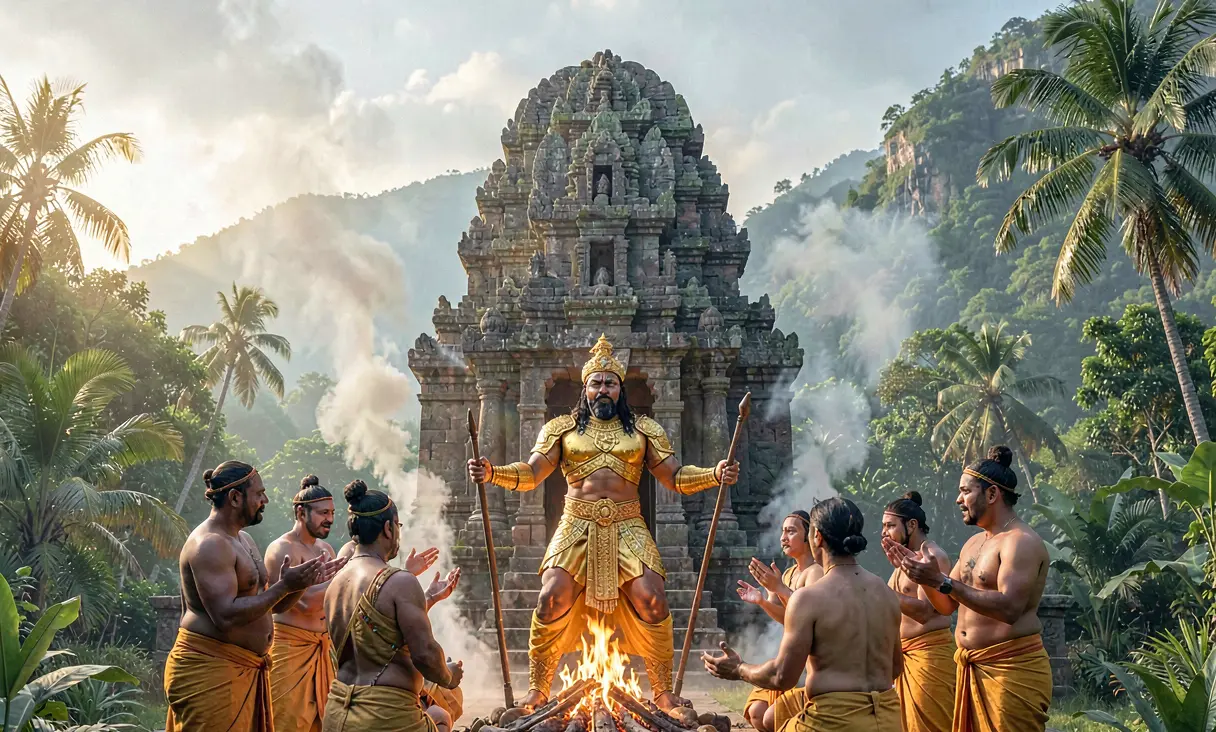
Jayavarman II Declares Khmer Independence
In 802 CE, Jayavarman II declared Khmer independence from Java on Mount Phnom Kulen, establishing the divine devaraja cult that unified the region into the mighty Angkorian Empire.
The Shadow of Java and the Fragmented Khmer
By the late 8th century, the region now known as Cambodia was a patchwork of competing principalities, often referred to by Chinese chroniclers as 'Chenla.' These territories were frequently subject to the influence or direct control of the maritime empire of Sailendra in Java. The Khmer elite were culturally indebted to Indian traditions but politically subservient to foreign overlordships that extracted tribute and demanded loyalty. This era of fragmentation stifled the potential for a unified state, leaving local chieftains vulnerable to external manipulation and internal strife. The need for a decisive break from Javanese suzerainty was not merely political; it was an existential imperative to forge a distinct Khmer identity capable of commanding the resources of the Mekong basin.
The Ascension of Jayavarman II
Emerging from this complex web of rivalries was Jayavarman II, a prince who had reportedly spent time in Java, possibly as a hostage or exile, before returning to his homeland with a vision of absolute sovereignty. Unlike previous rulers who operated within the constraints of regional hegemony, Jayavarman II sought to consolidate power through a radical reimagining of kingship. He began his campaign by subduing local rivals and securing control over key territories in the northern highlands. His military successes were matched by his diplomatic acumen, as he cultivated alliances with powerful priestly families who could legitimize his rule through religious sanction.
The Sacred Ritual on Phnom Kulen
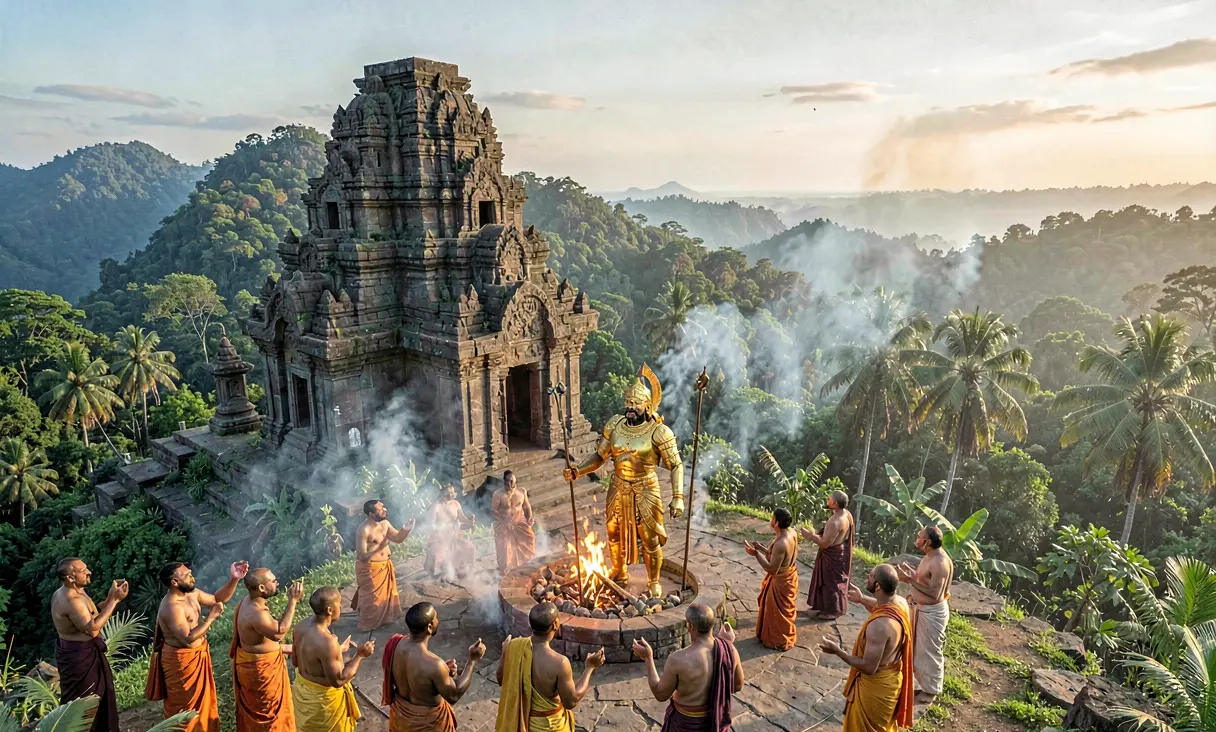
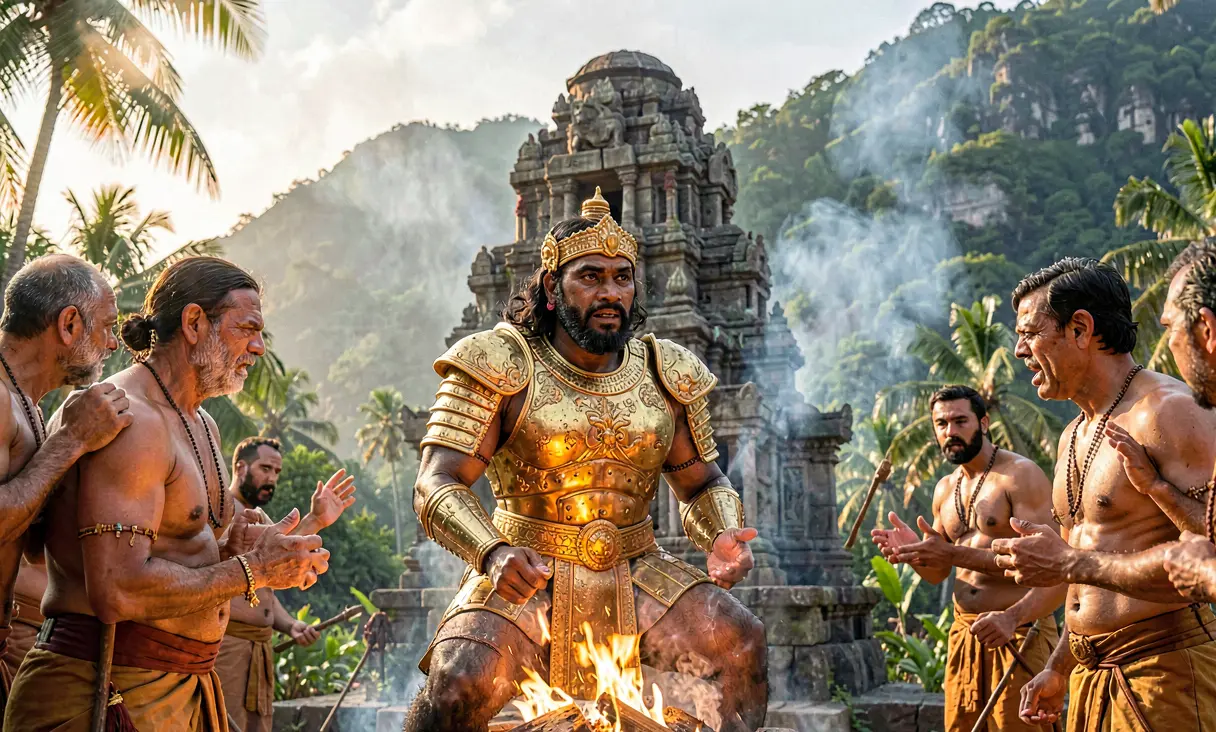
In 802 CE, Jayavarman II ascended the sacred slopes of Mount Phnom Kulen, a site of immense spiritual significance located northwest of the Tonle Sap lake. There, he summoned the renowned Brahmin priest Hiranyadama, who had been invited specifically to perform a life-altering ceremony. The ritual was not a simple coronation but a profound theological declaration: Jayavarman II declared his independence from Java and proclaimed himself 'chakravartin,' or universal ruler, a title implying sovereignty over the entire world according to Hindu cosmology. Central to this rite was the establishment of the devaraja cult, or 'god-king' worship, which posited that the king was not merely a representative of Shiva but the very embodiment of the deity on earth.
Theological Foundations and Statecraft
The introduction of the devaraja cult fundamentally altered the political landscape of Southeast Asia. By fusing the king's person with the divine, Jayavarman II created an unassailable ideological foundation for his empire. This was not merely religious symbolism; it was a mechanism of state control that centralized authority and demanded absolute loyalty from vassals and subjects alike. The ritual on Phnom Kulen effectively severed the spiritual and political ties to Java, replacing foreign overlordship with a native divine mandate. This innovation allowed subsequent Khmer kings to mobilize vast labor forces for monumental construction projects, as building temples became an act of religious devotion rather than just royal vanity.
Consolidation and the Birth of Angkor
Following the declaration at Phnom Kulen, Jayavarman II spent the remainder of his reign consolidating his control over the fragmented principalities. He moved his capital several times, eventually settling in the region that would become the heart of the Angkorian empire. His successors, particularly Yasovarman I and Suryavarman II, expanded upon this foundation to create a state that dominated mainland Southeast Asia for centuries. The hydraulic engineering feats that characterized the Angkorian period—massive reservoirs known as barays and intricate canal systems—were made possible by the centralized authority established through the devaraja ideology. This system allowed for the coordination of thousands of workers, transforming the landscape to support a burgeoning population.
A Legacy of Divine Kingship
The events of 802 CE marked the definitive beginning of the Angkorian period, a golden age that would last until the 15th century. The concept of the god-king became the enduring political paradigm for the Khmer Empire and influenced neighboring states throughout Southeast Asia. Temples like Angkor Wat stand today as stone testaments to this ideology, designed not just as places of worship but as earthly replicas of Mount Meru, the center of the Hindu universe. Jayavarman II's declaration did more than secure independence; it created a civilization whose architectural and cultural legacy continues to define Cambodia's national identity and captivate the world.
It established the religious and political ideology that fueled the construction of Angkor Wat and the Khmer Empire's golden age.
Where it happened
Phnom Kulen, Cambodia — see it on the interactive map →
Explore related history
 PoliticsRise of Srivijaya as Maritime Hegemon683 CE · Palembang, Sumatra (Modern Indonesia)Srivijaya emerges as the dominant maritime empire controlling the Strait of Malacca.
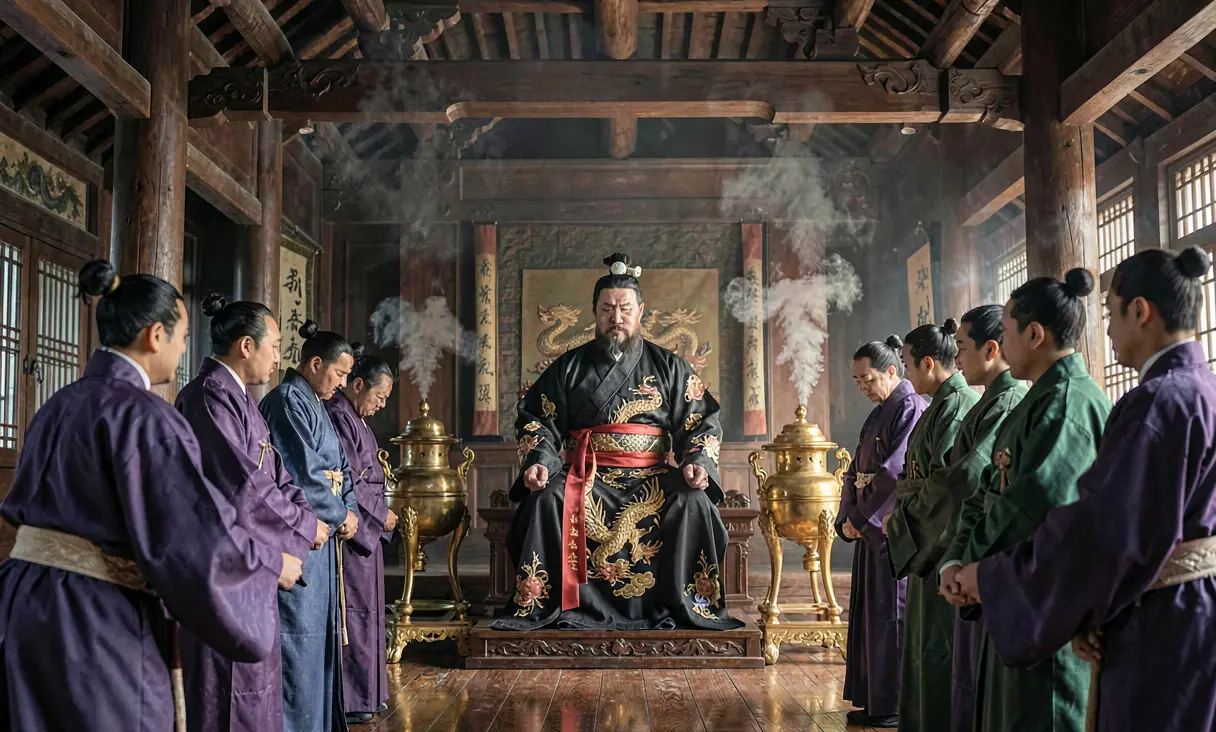 PoliticsEmperor Xuanzong Ascends the Tang Throne712 CE · Chang'an, ChinaEmperor Xuanzong begins his reign, ushering in the High Tang golden age.
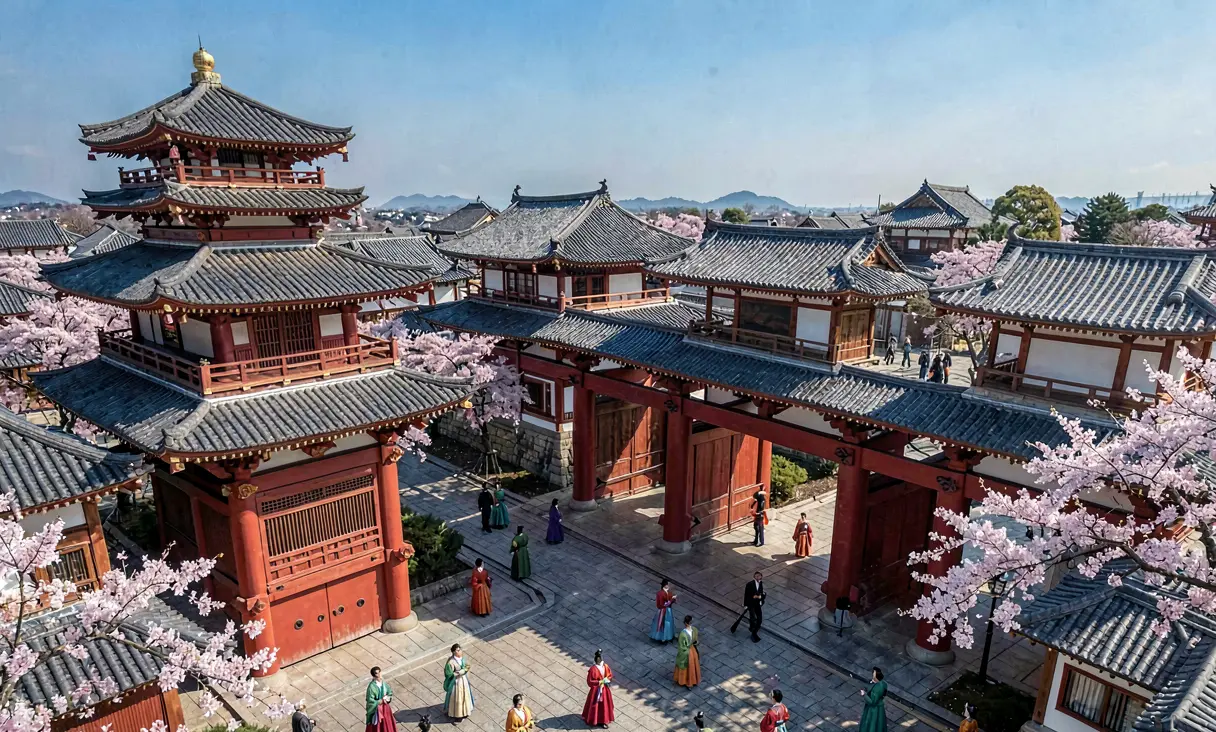 PoliticsFounding of Heian-kyo794 CE · Kyoto, JapanEmperor Kammu moves the capital to Heian-kyo, beginning the Heian period.
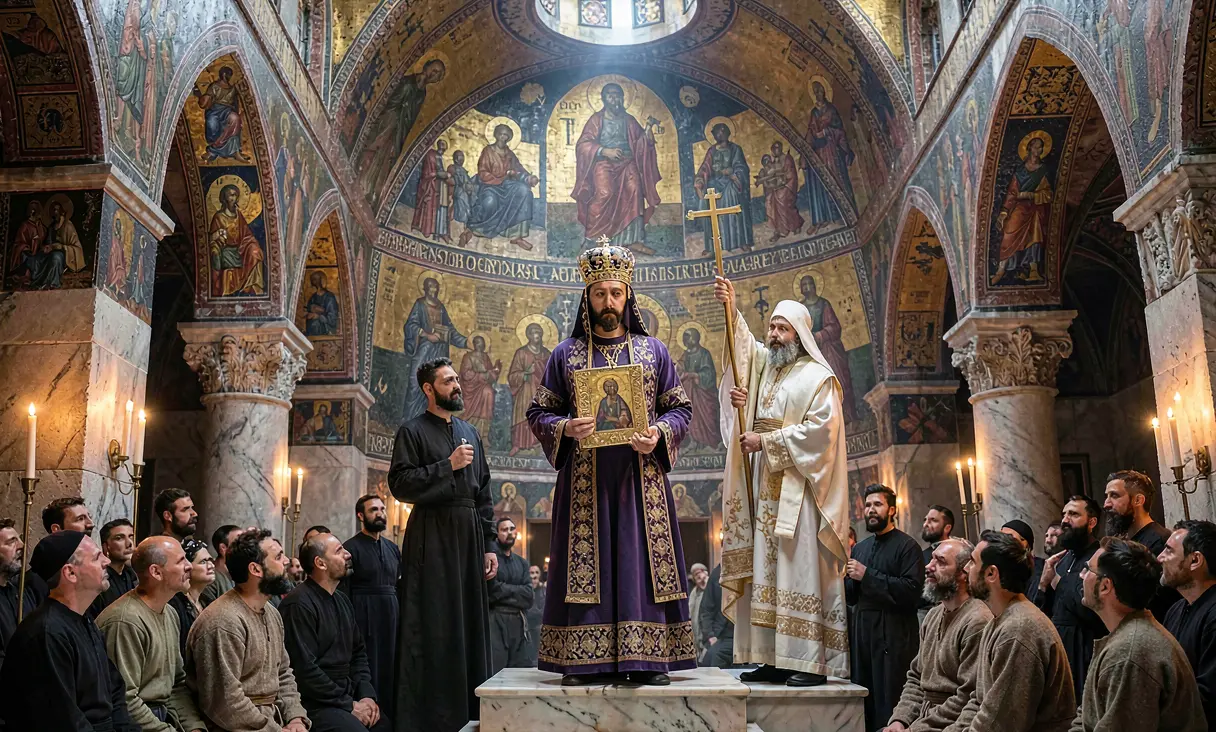 ReligionEnd of Byzantine Iconoclasm843 CE · Constantinople, TurkeyEmpress Theodora restores the veneration of icons in the Byzantine Empire, ending a century-long theological conflict.
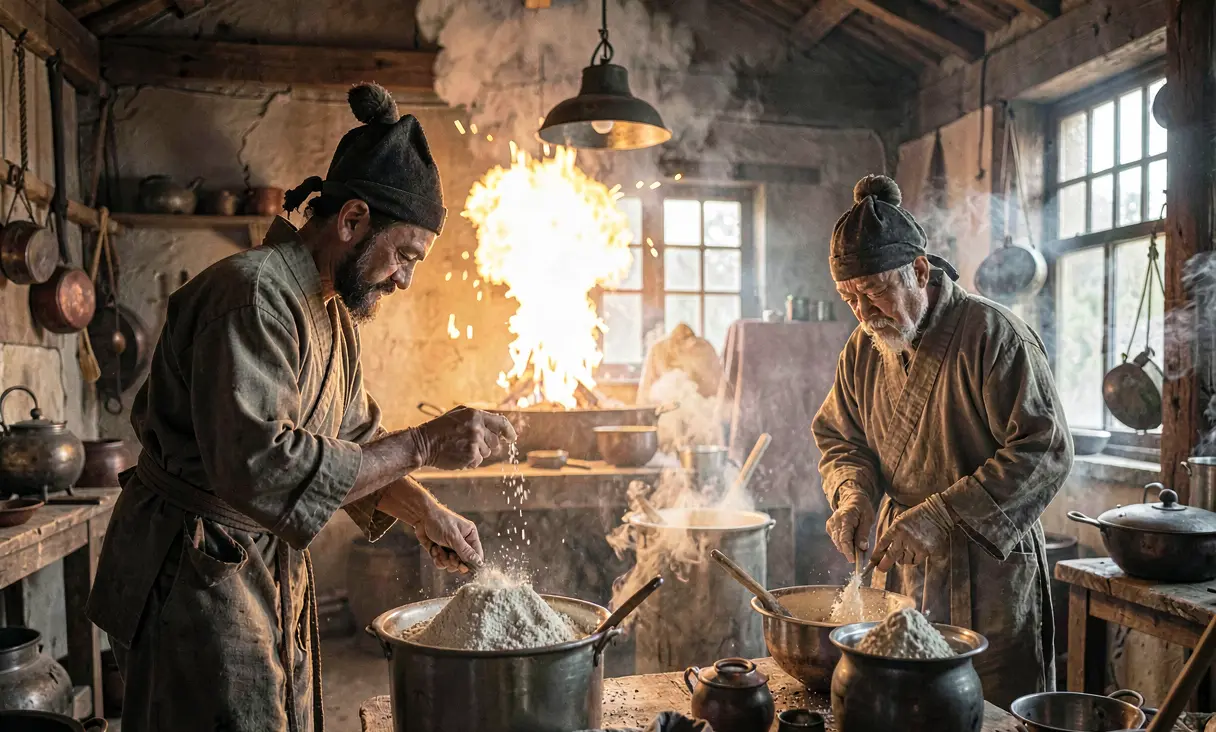 TechnologyDiscovery of Gunpowder by Tang Dynasty Alchemistsc. 850 CE · Chang'an, ChinaTang alchemists accidentally discover gunpowder while seeking an elixir of immortality.
 ScienceConstruction of El Caracol Observatory at Chichen Itzac. 850 CE · Chichen Itza, MexicoMaya astronomers build a circular observatory aligned with Venus cycles.
Discussion
Loading…