Morant Bay Rebellion
The 1865 Morant Bay Rebellion was a pivotal uprising by impoverished Black Jamaicans against colonial injustice, brutally suppressed by Governor Eyre's martial law, which reshaped the island's governa
Post-Emancipation Disillusionment
By the mid-19th century, Jamaica stood as a cauldron of social tension following the abolition of slavery in 1834. Although freedom had been legally granted to the enslaved population, the economic structures that had supported plantation dominance remained largely intact. The majority of the formerly enslaved Black peasantry found themselves landless and impoverished, unable to access fertile soil which was monopolized by a white planter class. This systemic dispossession was compounded by a legal system heavily biased against the poor; high court fees and corrupt local magistrates ensured that justice was often inaccessible to those without means. The island's economy had stagnated due to falling sugar prices, leaving thousands of small farmers in a state of desperate precarity, fueling a simmering resentment toward the colonial administration.
The Spark at Morant Bay
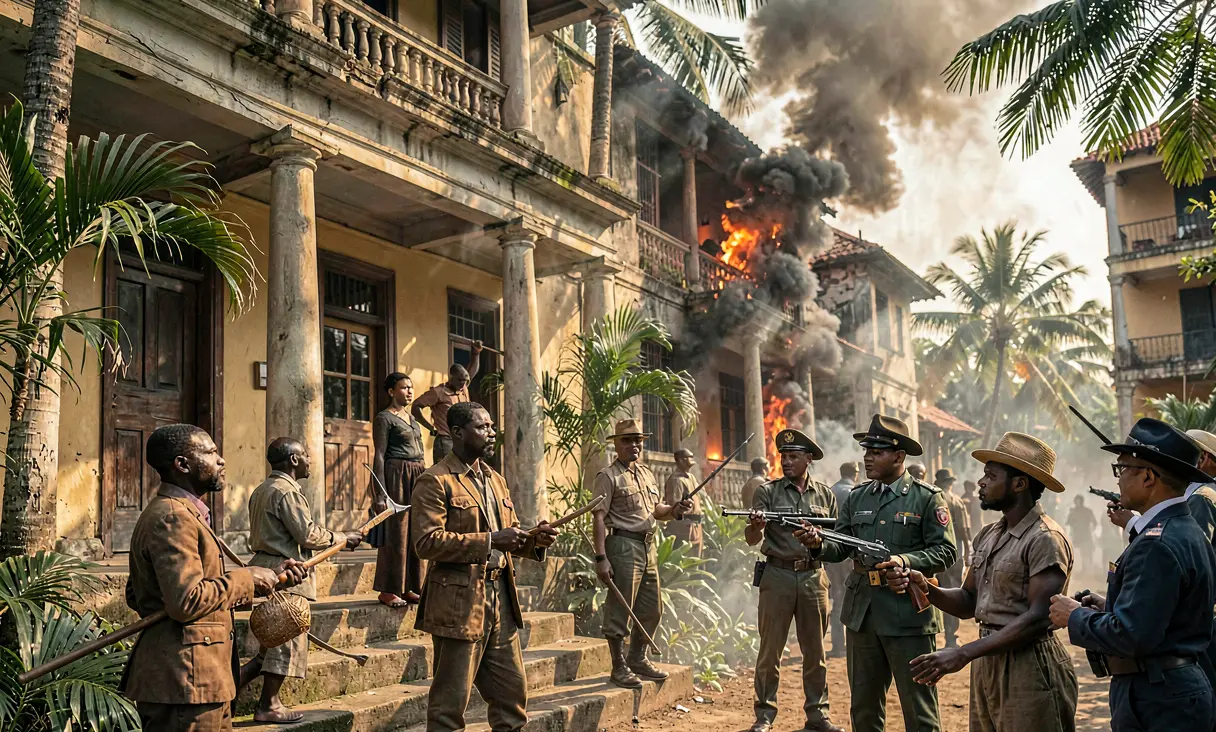
On October 7, 1865, a minor dispute over land rights and unfair taxation ignited the powder keg in the parish of St. Thomas-in-the-East. A Black farmer named George William Gordon was arrested on trumped-up charges, prompting a massive outcry among the local peasantry who viewed his detention as a miscarriage of justice. Led by Paul Bogle, a Baptist deacon and respected community leader, a group of several hundred impoverished farmers marched toward Morant Bay to petition the governor for redress. Their procession was orderly and unarmed initially, carrying only sticks and agricultural tools, but their demands for land reform and judicial fairness were met with hostility by local authorities who viewed any collective action by Black Jamaicans as an insurrectionary threat.
The Escalation of Violence
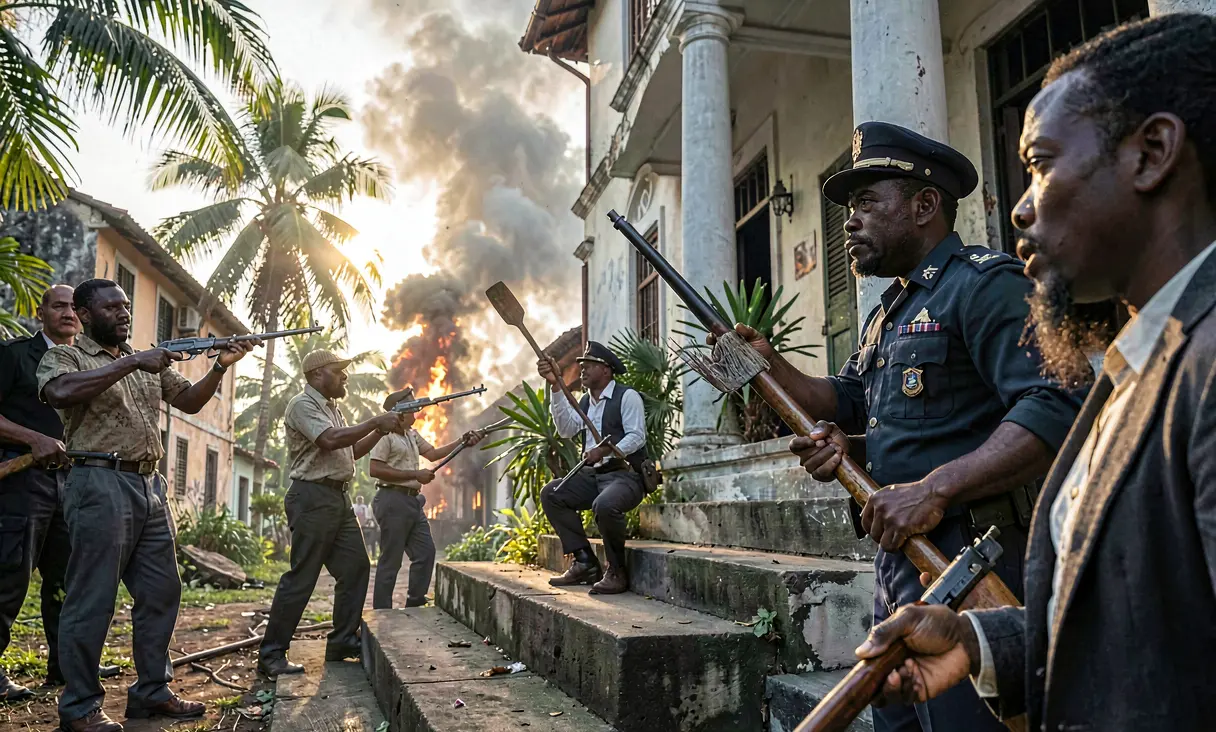
The situation deteriorated rapidly on October 11, 1865, when the crowd gathered outside the courthouse in Morant Bay. Tensions flared as the police attempted to arrest a man within the group, leading to a scuffle that resulted in the fatal shooting of a constable by a member of the crowd. In response, the magistrates and police opened fire on the demonstrators, killing at least one protester instantly. Panic ensued, and the crowd, now enraged and fearing for their lives, stormed the courthouse. The violence escalated into a chaotic melee where officials were killed, including the chief magistrate, and the building was set ablaze. By nightfall, the rebellion had claimed the lives of approximately 18 white officials and civilians, while dozens of Black participants were also slain in the initial clash.
Martial Law and Retribution
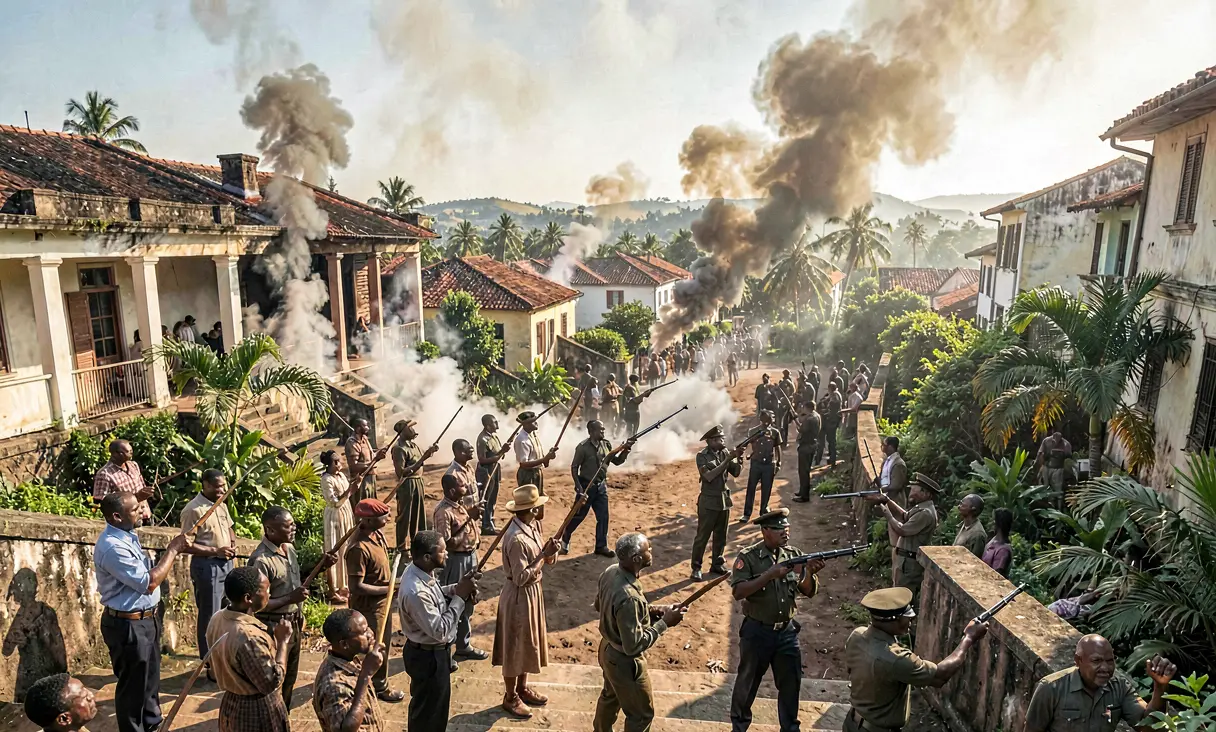
Governor Edward John Eyre, upon receiving news of the uprising, declared martial law in the parish of St. Thomas-in-the-East, a decision that would define his legacy and ignite an international controversy. Under this decree, the rule of law was suspended, granting military authorities the power to execute suspects without trial. The suppression was swift and brutal; over the next month, British troops and local militia conducted a reign of terror across the countryside. More than 400 Black Jamaicans were summarily executed, many after sham trials or no trial at all. Thousands more were flogged, some receiving hundreds of lashes, and numerous homes and villages were burned to the ground. George William Gordon, who had been arrested in Kingston under martial law despite having no connection to the violence, was tried by a court-martial and hanged.
The Eyre Controversy
The brutality of the suppression sparked a fierce debate that divided British public opinion. Prominent intellectuals and liberals, including Charles Darwin, Thomas Huxley, and John Stuart Mill, formed the 'Jamaica Committee' to demand Eyre's prosecution for murder, arguing that martial law was an illegal overreach and that the executions were acts of state-sanctioned murder. Conversely, a powerful faction known as the 'Eyre Defence Committee,' supported by figures like Thomas Carlyle and Charles Dickens, argued that Eyre had saved British rule in Jamaica from total collapse and that his actions, however severe, were necessary to maintain order. The controversy reached the highest levels of government, with Queen Victoria eventually supporting Eyre, who was never successfully prosecuted, though he was removed from his post.
Legacy and Historical Significance
The Morant Bay Rebellion marked a watershed moment in Jamaican history and the broader British Empire. It effectively ended the era of the old plantation oligarchy; the colonial government realized that the existing system was unsustainable, leading to the abolition of the House of Assembly in 1866 and Jamaica's transition to direct Crown Colony rule. While the rebellion crushed immediate political agitation for decades due to fear of reprisal, it planted the seeds of modern Jamaican nationalism. Paul Bogle and George William Gordon were posthumously recognized as National Heroes of Jamaica in 1969, symbolizing the enduring struggle for justice, land rights, and human dignity against systemic oppression.
The Morant Bay Rebellion exposed the fragility of colonial justice and spurred reforms in British Caribbean administration while cementing Bogle as a national hero.
Where it happened
Morant Bay, Jamaica — see it on the interactive map →
Explore related history
 WarAlgerian War of Independence BeginsNovember 1, 1954 · Algiers, AlgeriaThe National Liberation Front launches coordinated attacks marking the start of the Algerian War against France.
 WarMau Mau Uprising Begins in KenyaOctober 20, 1952 · Nairobi, KenyaThe Kikuyu-led Mau Mau rebellion begins against British colonial rule and white settler land ownership.
 WarTurkish War of Independence BeginsMay 19, 1919 · Samsun, TurkeyMustafa Kemal Atatürk lands in Samsun to organize resistance against Allied occupation and the Ottoman Sultanate.
 WarThe Indian Rebellion of 1857 BeginsMay 10, 1857 · Meerut, IndiaIndian sepoys mutiny against the British East India Company, sparking a widespread uprising across northern India.
 PoliticsLaunch of La SolidaridadFebruary 15, 1889 · Barcelona, Spain (Philippine context)Filipino reformists launch a newspaper advocating for equal rights and representation within the Spanish Empire.
 WarStart of the Cuban War of IndependenceFebruary 24, 1895 · CubaJosé Martí and Máximo Gómez launch a coordinated uprising against Spanish colonial rule in Cuba.
Discussion
Loading…