
Use of Quipu for Inca Record Keeping
The Inca quipu system revolutionized governance in the pre-Columbian Americas, enabling a vast empire to manage complex logistics through intricate knotted strings without a written alphabet.
The Administrative Imperative of the Tawantinsuyu
By the mid-15th century, the Inca Empire, or Tawantinsuyu, had expanded to encompass over two million square kilometers along the Andean spine, stretching from modern-day Colombia to Chile. Governing such a vast, topographically fragmented territory without a written script presented an unprecedented administrative challenge. The imperial capital of Cusco required a mechanism to track tribute, census data, and labor obligations (mit'a) across diverse ecological zones. In response, state administrators refined the quipu system from a local mnemonic device into a sophisticated bureaucratic instrument capable of managing the world's largest pre-Columbian empire.
The Mechanics of Knotted String
The quipu was not merely a collection of strings but a complex data structure composed of cotton or camelid fiber cords. A primary cord served as the backbone, from which subsidiary cords hung in a hierarchical arrangement. Information was encoded through a decimal positional system: knots represented units (single knots), tens (long knots with multiple turns), and hundreds (figure-eight knots), while the position of the knot along the string denoted its magnitude. Crucially, color coding provided categorical data; red might signify soldiers or warfare, yellow gold, white silver, and green agricultural produce. This chromatic and topological syntax allowed for the precise recording of millions of items.
The Quipucamayocs: Keepers of the State
The integrity of this system relied entirely on the quipucamayoc, a specialized class of professional record-keepers who underwent rigorous training. These individuals were not merely accountants but high-ranking officials trusted with state secrets and census data. They memorized the specific configurations of thousands of quipu, capable of reciting population counts, tribute quotas, and harvest yields from memory while physically manipulating the cords. Their role was so critical that they often accompanied military campaigns to ensure real-time logistical tracking, acting as the living hard drives of the Inca bureaucracy.
Operation in Cusco and Beyond
Around 1450 CE, under the reign of Pachacuti and his successors, the quipu system reached its zenith of complexity. In Cusco, vast archives stored thousands of these devices, organized by region and function. When a new province was conquered, local quipucamayocs would travel to the capital or send their records to be cross-referenced with imperial standards. The system facilitated the redistribution of resources; if a region suffered drought, the quipu records allowed the state to redirect grain from surplus areas with mathematical precision. This centralized data management enabled the Inca to maintain a standing army and massive public works projects without a single written word.
Beyond Accounting: The Linguistic Hypothesis
For centuries, scholars dismissed the quipu as purely numerical. However, recent ethnographic and structural analyses suggest a more profound function. Some researchers argue that specific knot sequences and cord arrangements may have encoded narrative history, genealogies, or even phonetic information, effectively functioning as a proto-writing system. While the full linguistic capacity remains debated, evidence indicates that quipu were used to record myths and royal lineages, serving as mnemonic anchors for oral historians who could recite entire epics based on the tactile prompts of the strings.
The Collapse and Enduring Mystery
The Spanish conquest in the 1530s marked a catastrophic end to the quipu tradition. Conquistadors, viewing the devices as idolatrous or incomprehensible, systematically destroyed vast archives. Many quipucamayocs were killed or forced to convert, severing the oral chain of knowledge required to interpret the remaining strings. Today, approximately 1,000 surviving quipu exist in museums and private collections worldwide. While their numerical data is often decipherable, the potential narrative codes remain largely undeciphered, representing one of history's most significant lost libraries.
Legacy of a Non-Literate Civilization
The quipu stands as a testament to human ingenuity in information management. It challenges the Eurocentric definition of literacy, proving that complex bureaucracy and historical record-keeping can thrive without alphabetic script. The system's sophistication rivals contemporary paper-based accounting methods of 15th-century Europe. Its legacy endures not only in Andean cultural identity but also in modern computer science, where binary logic and data structures echo the fundamental principles of knots and strings used by the Inca to map their universe.
The quipu demonstrates a unique non-written method of data management that sustained the largest pre-Columbian empire.


Where it happened
Cusco, Peru — see it on the interactive map →
Explore related history
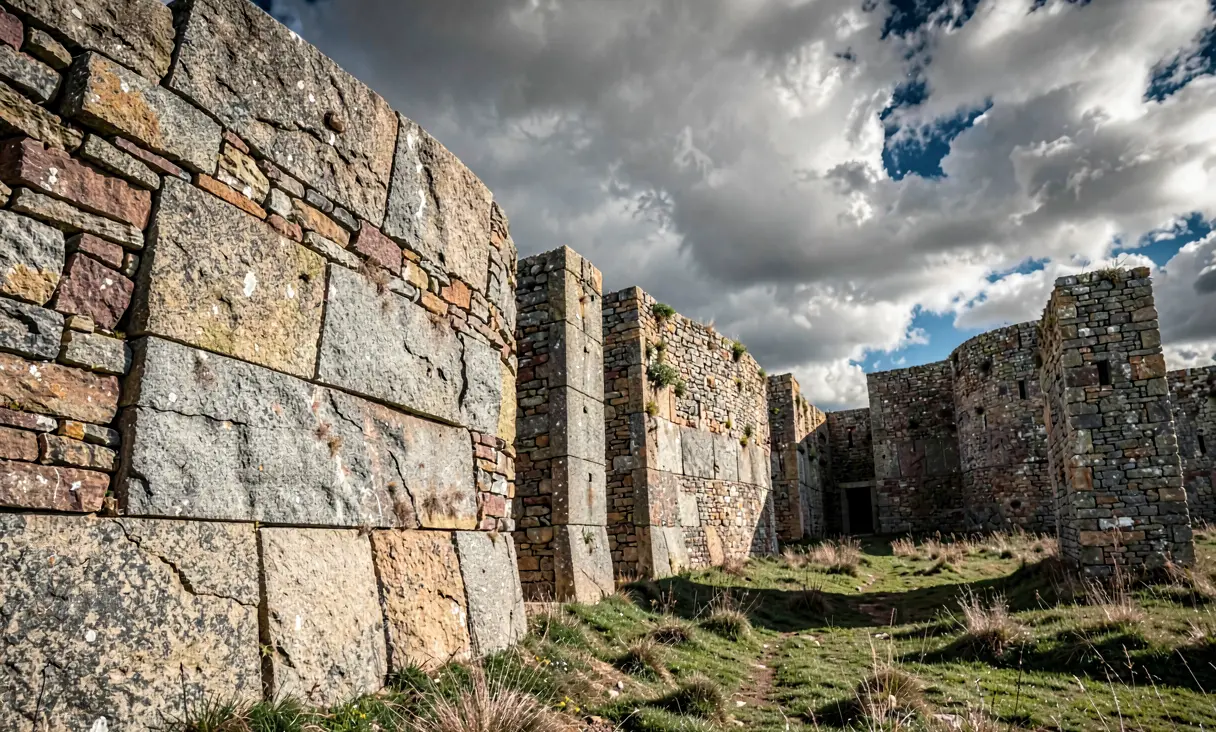 CivilizationConstruction of Great Zimbabwec. 1100 CE · Masvingo, ZimbabweShona people build the largest pre-colonial stone structure in Africa without mortar.
 CivilizationRise of Swahili City-States on the East African Coastc. 1200 CE · Kilwa Kisiwani, TanzaniaSwahili city-states flourish as cosmopolitan hubs of Indian Ocean trade, blending African and Islamic cultures.
 CivilizationMansa Musa's Control of Trans-Saharan Gold Tradec. 1307 CE · Niani, Mali Empire (Guinea/Mali border)Mansa Musa consolidates the Mali Empire's control over West African gold mines and trans-Saharan trade routes.
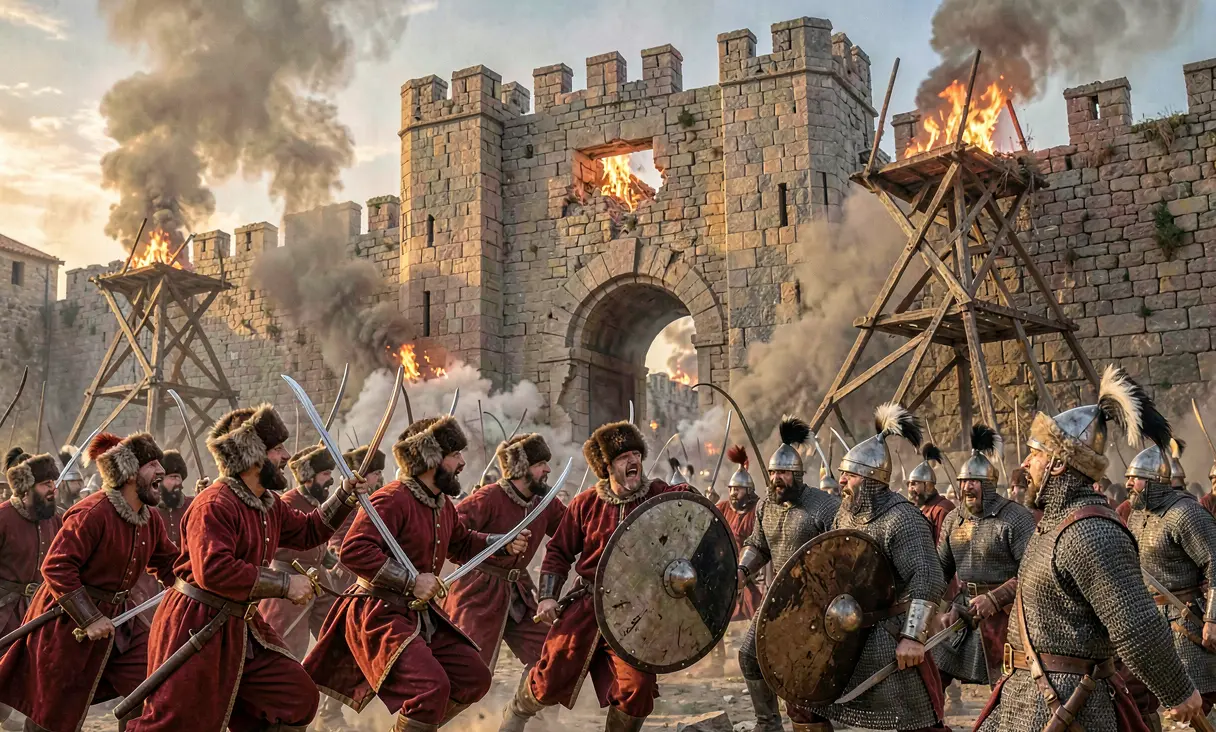 WarFall of ConstantinopleMay 29, 1453 · Constantinople (Istanbul), TurkeyOttoman Turks conquer the Byzantine capital, ending the Roman Empire.
 TechnologyPrinting of the Gutenberg Biblec. 1455 CE · Mainz, GermanyJohannes Gutenberg prints the first major book using movable type.
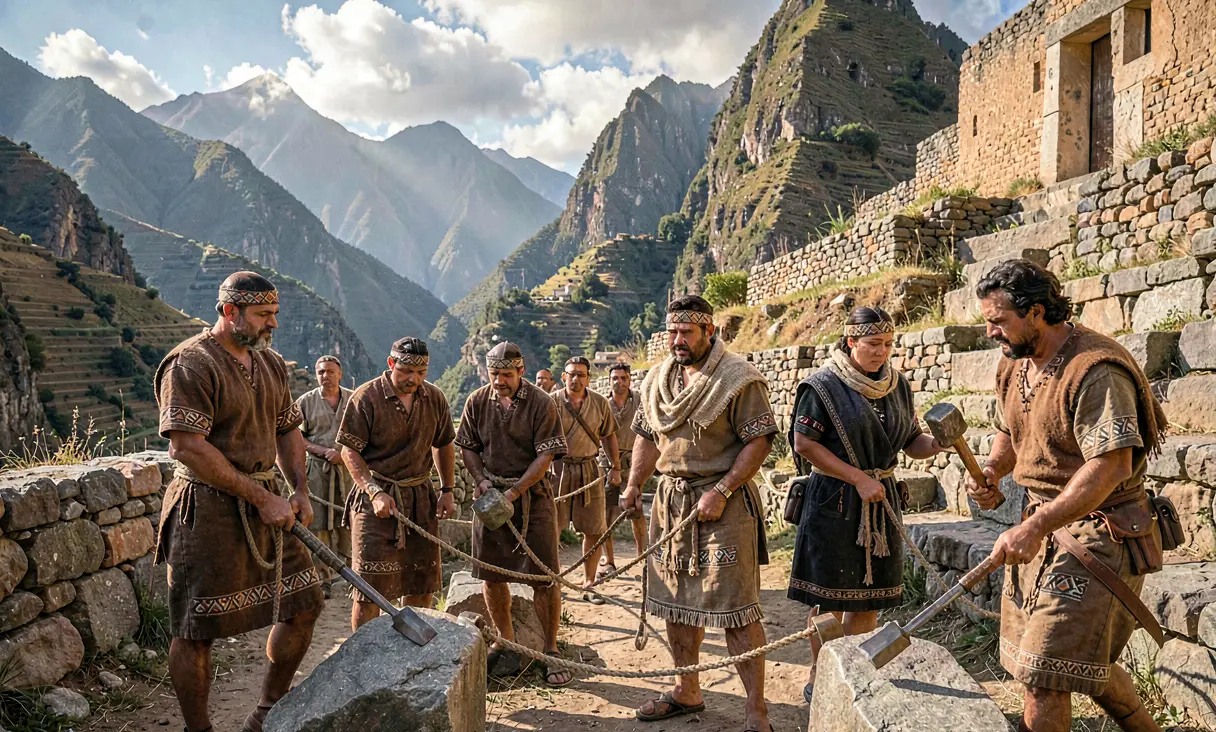 CivilizationConstruction of the Inca Road System (Qhapaq Ñan)c. 1438 CE · Cusco, Peru (Expansion Phase)Pachacuti initiates the expansion of the Qhapaq Ñan, a vast road network connecting the Inca Empire across the Andes.
Discussion
Loading…