
Formation of the Hanseatic League
The 1241 pact between Lübeck and Hamburg forged the Hanseatic League, a medieval commercial superpower that dominated Baltic trade, waged war on kings, and established extraterritorial trading posts a
The Genesis of a Commercial Confederation
By the early 13th century, the Baltic and North Seas had become the crucible for a new economic order, driven by the insatiable demand in Western Europe for raw materials from the East. German merchants, particularly those from Lübeck and Hamburg, faced significant challenges: rampant piracy, arbitrary tolls imposed by local feudal lords, and the lack of legal protection when operating far from home. The pivotal moment arrived around 1241 CE, not as a sudden revolution, but as the formalization of an evolving alliance between Lübeck and Hamburg. This pact established a mutual defense agreement and a unified commercial front, effectively creating the nucleus of what would become the Hanseatic League. While earlier informal gatherings had occurred, the 1241 accord marked the transition from ad-hoc cooperation to a structured confederation capable of projecting power across the seas.
The Architecture of Trade and Diplomacy
The Hanseatic League was not a nation-state in the traditional sense, but rather a loose confederation of autonomous merchant guilds and city-states that operated with surprising cohesion. Its power derived from its ability to control the flow of essential commodities: timber, furs, wax, and grain flowed westward from Novgorod and Scandinavia, while salt, cloth, and wine moved eastward from Flanders and France. To facilitate this massive exchange, the League established fortified trading posts known as Kontors in key foreign cities. The most prominent included the Peterhof in Novgorod, the Steelyard in London, the Bryggen in Bergen, and the Kontor in Bruges. These enclaves operated under extraterritorial rights, governed by their own laws, and served as secure warehouses where Hanseatic merchants could conduct business immune to local interference.
From Merchant Pact to Military Power
The League's influence quickly transcended mere commerce; it evolved into a de facto supranational entity capable of waging war against monarchs. When trade interests were threatened, the Hanseatic cities could levy taxes on their citizens to fund a formidable navy, often outmatching the fleets of individual kings. A defining example of this military prowess occurred in 1367-1370 during the Great Danish-Hanseatic War. The League, led by Lübeck, formed the Cologne Confederation and launched a massive naval campaign against King Valdemar IV of Denmark. The conflict concluded with the Treaty of Stralsund in 1370, which forced Denmark to cede control of several strategic fortresses and granted the Hanseatic cities the right to veto the election of future Danish kings for fifteen years—a level of political interference unprecedented in medieval Europe.
The Mechanism of Governance
Governance within the League was conducted through the Hansetag, or Diet, which convened irregularly in Lübeck, the league's de facto capital. Decisions were made by representatives from member cities, though the influence of major ports like Lübeck, Hamburg, Bremen, and Cologne often outweighed that of smaller towns. The League maintained a strict code of conduct; members who violated trade agreements or failed to contribute to the common defense could be expelled, effectively cutting them off from the lucrative Baltic trade network. This internal discipline, combined with the standardization of weights, measures, and commercial law (the Lübeck Law), created a stable environment that encouraged investment and long-distance commerce across a vast and often dangerous region.
The Twilight of the League
Despite its dominance for centuries, the Hanseatic League began to fracture in the late 15th century due to shifting geopolitical tides. The rise of centralized nation-states like England and Sweden, which sought to reclaim control over their own trade policies, eroded the League's privileges. Simultaneously, the discovery of new sea routes around Africa and across the Atlantic diminished the strategic importance of the Baltic-North Sea corridor. By 1630, the League had effectively ceased to function as a political or military power, surviving only as a nominal association of merchants until its formal dissolution in 1862. The decline was marked by the loss of key Kontors and the inability to adapt to the emerging mercantilist economies of early modern Europe.
Enduring Legacy of the Hanse
The legacy of the Hanseatic League is etched into the urban landscape and cultural identity of Northern Europe. The distinctive Brick Gothic architecture of Lübeck, Visby, and Tallinn stands as a testament to the wealth generated by this medieval confederation. Beyond architecture, the League established enduring legal precedents regarding maritime law, commercial contracts, and diplomatic immunity that influenced European jurisprudence for centuries. It demonstrated that economic integration could foster political stability and mutual defense long before the concept of the modern European Union was conceived. The Hanseatic cities remain a symbol of civic autonomy and the power of collective action in the face of overwhelming external forces.
The Hanseatic League created the first major transnational economic union in European history, dominating Baltic trade and fostering urbanization across the region.


Where it happened
Lübeck, Germany — see it on the interactive map →
Explore related history
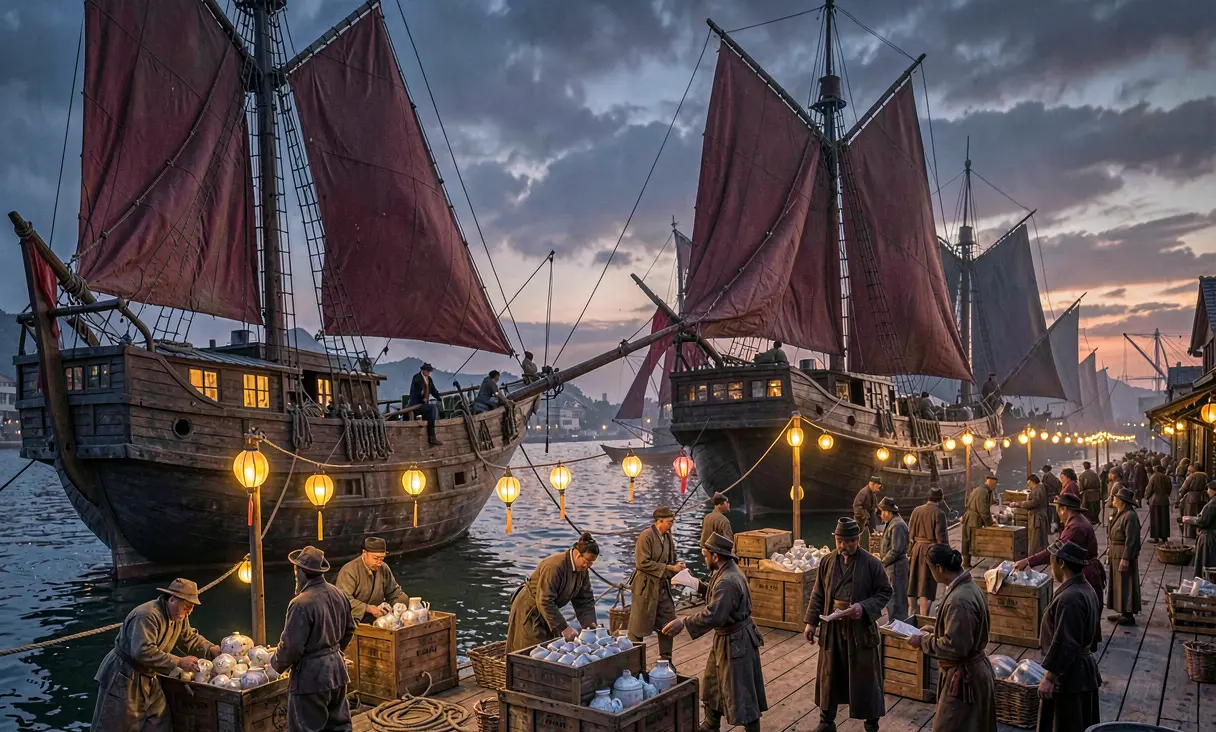 tradePeak of the Maritime Silk Road under Song Dynastyc. 1127 CE · Hankou, ChinaThe Song Dynasty establishes a global maritime trade network connecting China to East Africa.
 tradeMansa Musa's Pilgrimage and Gold Economy1324 CE · Cairo, Egypt (en route)Mansa Musa's pilgrimage disrupts gold markets in Cairo with massive displays of wealth.
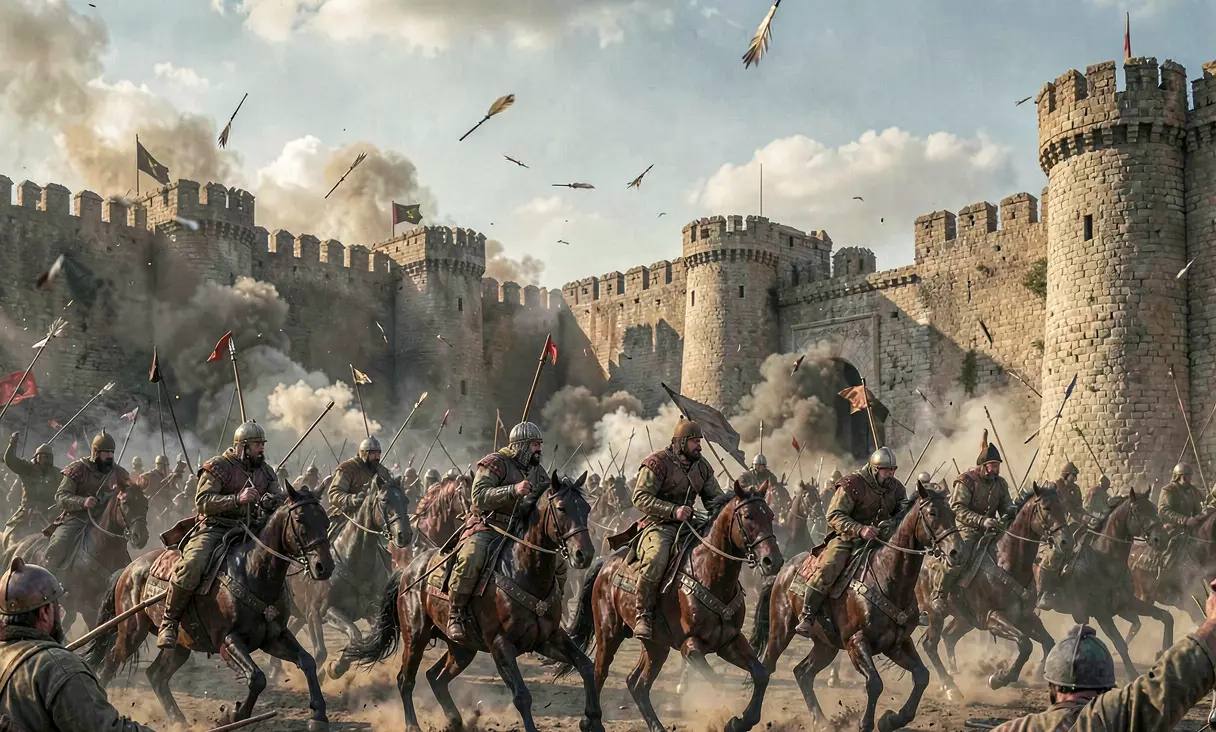 WarMongol Invasion of the Delhi Sultanatec. 1241 CE · Lahore (modern Pakistan)Mongol forces under Tarmashirin invade the Punjab and sack Lahore, testing the defenses of the Delhi Sultanate.
 WarMongol Invasion of Goryeo Begins1231 CE · Seoul (Kaesong), KoreaMongol forces under Sartai invade Goryeo, initiating decades of conflict.
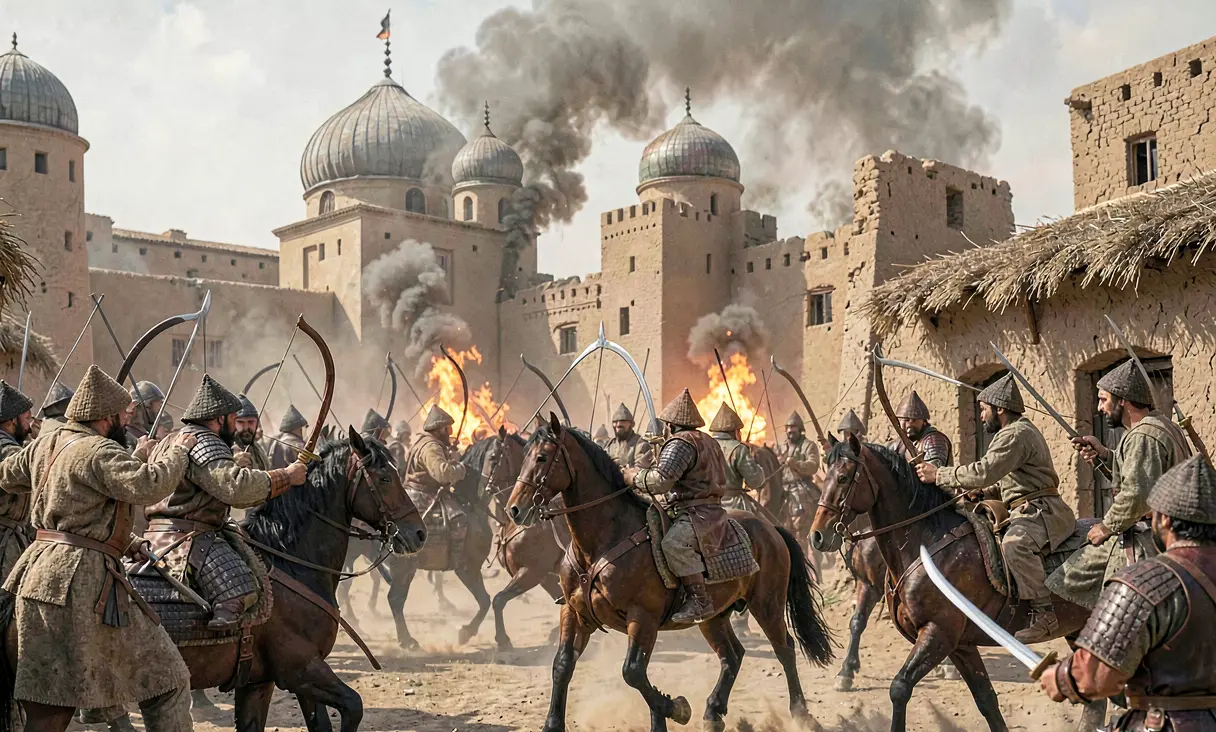 WarMongol Destruction of the Khwarazmian Empirec. 1220 CE · Samarkand/Urgench, Central AsiaGenghis Khan's armies devastate the Khwarazmian Empire, razing cities and altering the demographic map of Central Asia.
Discussion
Loading…