
Fall of Han Dynasty and Three Kingdoms Period Begins
In 220 CE, Cao Pi forced Emperor Xian to abdicate, ending four centuries of Han rule and fracturing China into the warring states of Wei, Shu, and Wu.
The Erosion of Imperial Authority
By the late 2nd century CE, the Eastern Han Dynasty had been hollowed out by a perfect storm of internal decay and external pressure. The reign of Emperor Ling (r. 168–189) saw the rise of eunuch factions that purged loyal scholars, culminating in the catastrophic Yellow Turban Rebellion of 184 CE. This peasant uprising, fueled by famine and corruption, forced the central court to delegate military power to regional governors and warlords to restore order. Among these figures rose Cao Cao, who nominally served the Han while consolidating control over northern China under the banner of 'holding the Emperor to command the vassals.' The assassination of Dong Zhuo in 192 CE further fragmented the empire, leaving a vacuum where military might superseded legal legitimacy.
The Abdication at Luoyang
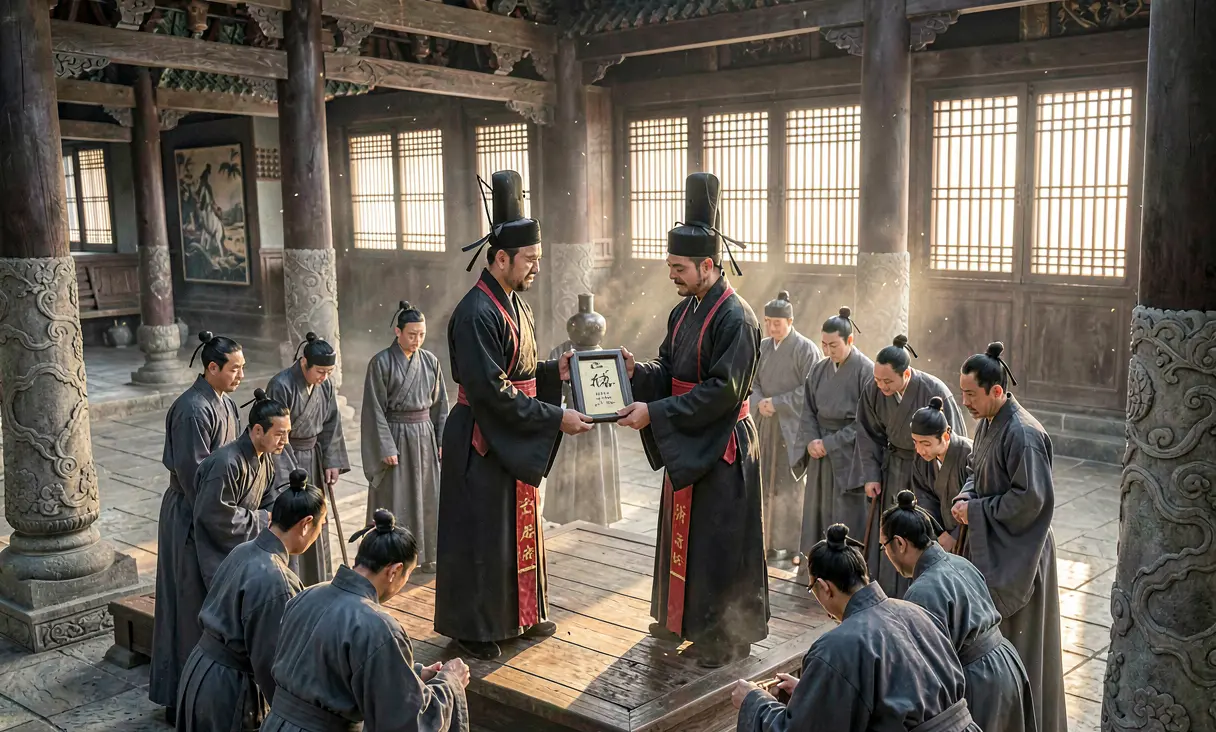
On December 10, 220 CE, in the imperial capital of Luoyang (not Chang'an, which had been abandoned decades prior), the final act of the Han Dynasty was played out. Cao Pi, son and successor to the de facto ruler Cao Cao who had died earlier that year, orchestrated a formal transfer of power. Under immense political pressure and likely military coercion, Emperor Xian abdicated his throne, signing an edict that ceded the Mandate of Heaven to the Cao family. This was not merely a coup but a carefully staged ritual designed to legitimize the new regime through Confucian precedent rather than raw force alone. The Han Dynasty, which had ruled China for 405 years since its establishment by Emperor Gaozu in 202 BCE, officially ceased to exist.
The Rise of Wei and the Tripartite Division
With the abdication complete, Cao Pi proclaimed himself Emperor Wen of Wei, establishing the state of Cao Wei. This act triggered a domino effect across the fractured peninsula. In 221 CE, Liu Bei, a distant relative of the Han imperial house who had long claimed to be the rightful protector of the dynasty, declared himself Emperor of Shu Han in Chengdu, asserting that his authority was the continuation of the Han line. Simultaneously, Sun Quan, the warlord controlling the wealthy Yangtze Delta, waited until 229 CE to formally declare himself Emperor of Eastern Wu. Thus, the Three Kingdoms period (Sanguo) began, characterized by a precarious balance of power between these three rival states, each claiming moral and political supremacy.
Key Figures: Cao Pi, Liu Bei, and Sun Quan
The transition was defined by the ambitions of three distinct leaders. Cao Pi was a scholar-emperor who sought to institutionalize his father's conquests through the Nine-Rank System, a method of selecting officials that entrenched aristocratic power. Liu Bei, driven by a narrative of Han restoration and personal charisma, built Shu on a foundation of loyalty and moral righteousness, though his realm remained the smallest and most vulnerable. Sun Quan represented the pragmatic regional warlord who leveraged the natural defenses of the Yangtze River to create a stable, albeit independent, southern kingdom. Their rivalry transformed Chinese politics from a centralized bureaucracy into a feudal struggle for survival.
Demographic and Economic Consequences
The collapse of central authority precipitated one of the most severe demographic catastrophes in pre-modern history. Decades of warfare, famine, and plague reduced China's registered population from an estimated 56 million in the late Han to significantly lower figures by the mid-3rd century. The great migration saw millions flee southward or into mountainous fortifications, leading to the abandonment of vast tracts of agricultural land in the north. While the Three Kingdoms regimes attempted to stabilize their economies through military farming (tuntian) systems, the loss of life and the fragmentation of trade routes caused a long-term stagnation that would not be reversed until the Sui reunification centuries later.
Legacy: The End of Ancient Unity
The fall of Han marked a definitive end to the classical era of Chinese unity, ushering in an age of division that lasted nearly four centuries. However, it was not a period of pure stagnation; it fostered significant cultural and technological innovations, including advancements in cavalry warfare, papermaking, and literature, exemplified by the epic 'Romance of the Three Kingdoms' which would later romanticize this era. Politically, the shift from imperial centralism to military feudalism set a precedent for future dynastic cycles, demonstrating that without strong central control, regional warlords could easily fracture the state. The eventual reunification under the Jin Dynasty in 280 CE proved temporary, but the patterns of governance and conflict established during this period would echo through Chinese history.
This event shattered China's first long-term unified empire, initiating an era of intense military competition that reshaped Chinese political geography.

Where it happened
Chang'an, China — see it on the interactive map →
Explore related history
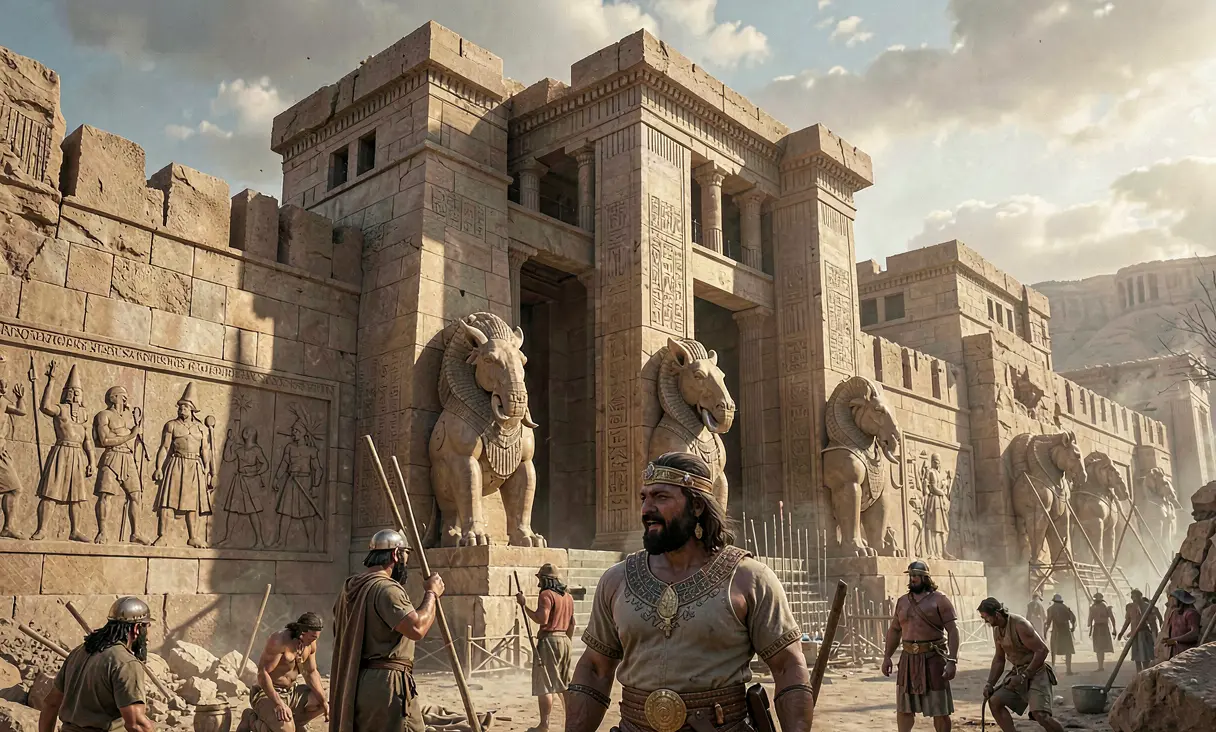 PoliticsFounding of Dur-Sharrukin by Sargon IIc. 717 BCE · Khorsabad (Dur-Sharrukin), IraqSargon II builds a new capital city to project Assyrian power and administrative control.
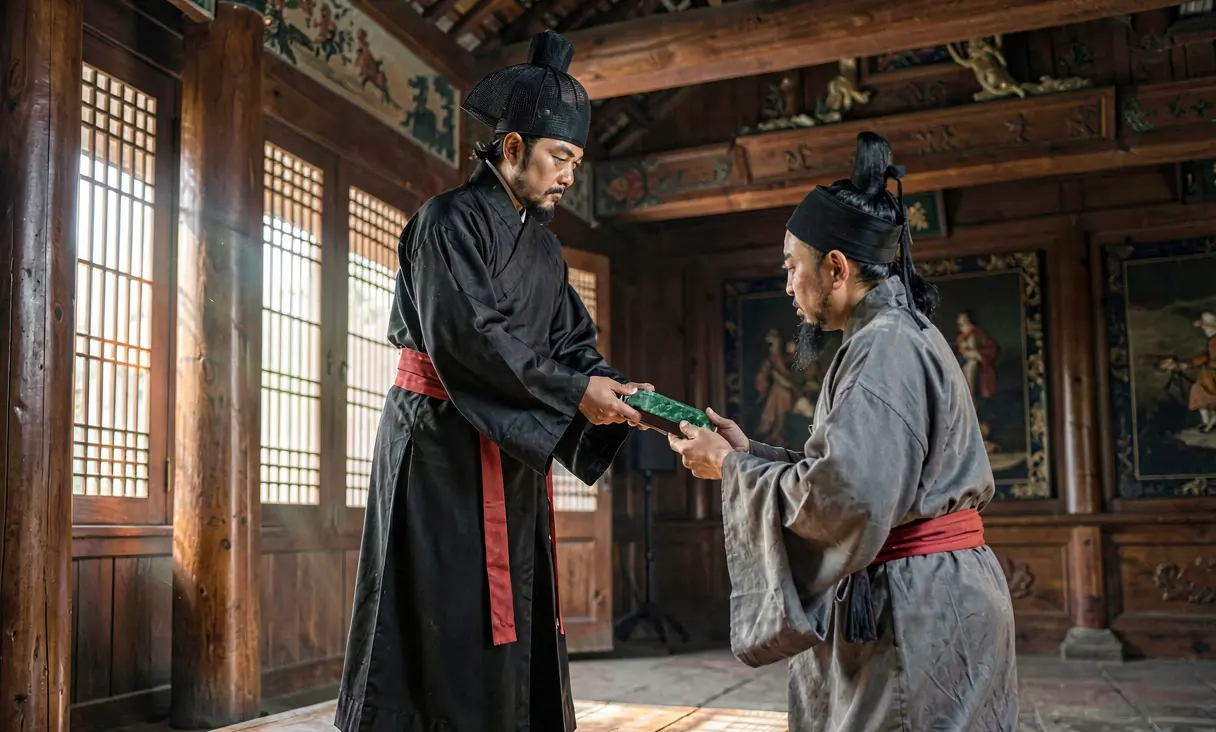 PoliticsReign of Emperor Taizong and the Zhenguan Era626 CE · Chang'an, ChinaLi Shimin ascends the throne after the Xuanwu Gate Incident, ushering in a golden age of governance.
 PoliticsRise of the Sixteen Mahajanapadasc. 600 BCE · Gangetic Plain (modern Uttar Pradesh/India)Sixteen great kingdoms and republics emerge across the Gangetic plain, marking the transition from tribal chiefdoms to state-level societies.
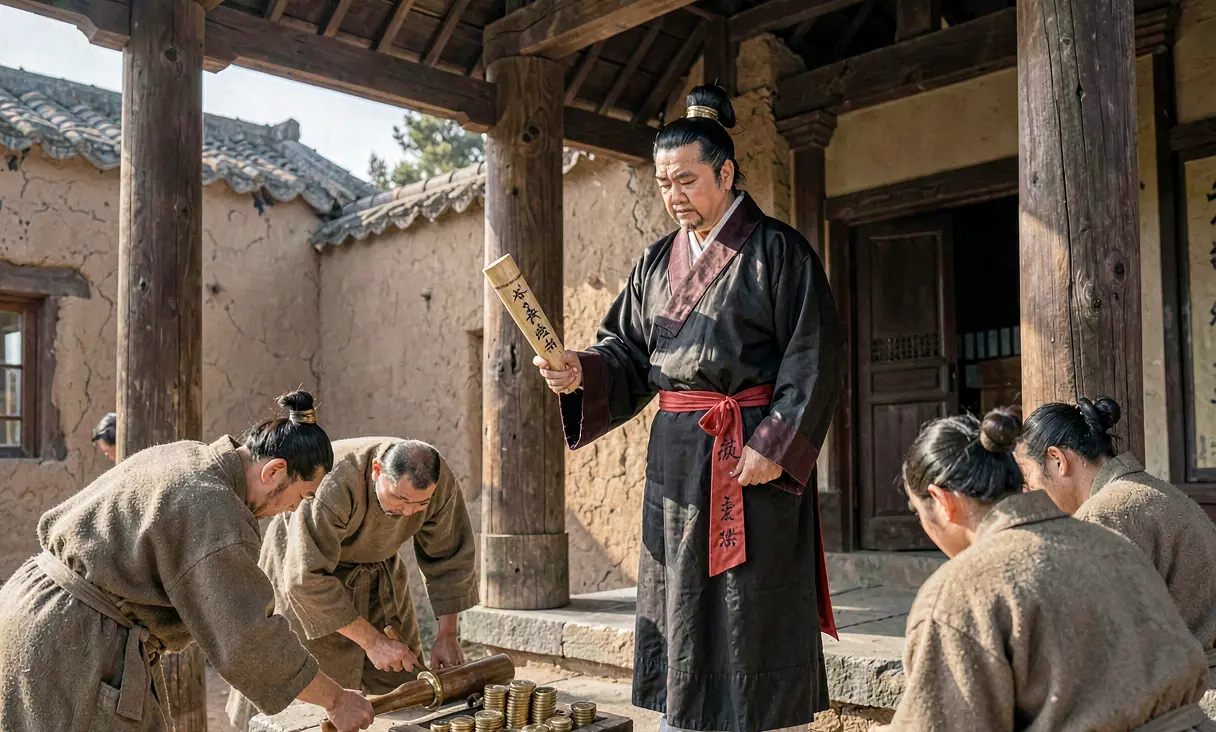 PoliticsQin Shi Huang Unifies China221 BCE · Xianyang, Shaanxi, ChinaQin Shi Huang conquers warring states to create the first unified Chinese empire, standardizing script and currency.
 WarHannibal Barca Crosses the Alps into Italyc. 218 BCE · Alps (Col de Montgenèvre), France/Italy BorderHannibal leads his Carthaginian army and war elephants over the Alps to surprise Rome.
 PoliticsRise of the Satavahana Empirec. 230 BCE · Deccan Plateau (modern Maharashtra/India)The Satavahana Dynasty emerges in the Deccan, becoming a major power that controlled trade routes between northern and southern India.
Discussion
Loading…