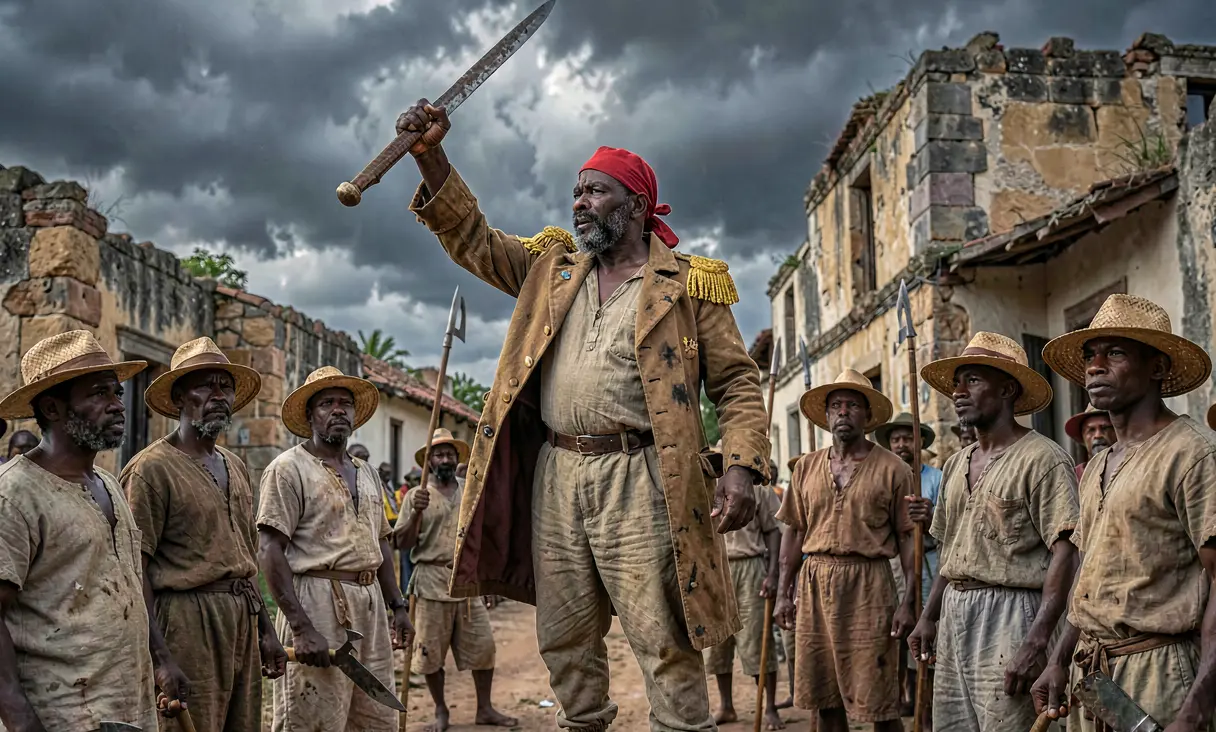
Declaration of Haitian Independence
The 1804 Declaration of Haitian Independence marked history's only successful slave revolt leading to nationhood, shattering colonial racial hierarchies and terrifying global slave powers while inspir
The Crucible of Saint-Domingue
By the late 18th century, the French colony of Saint-Domingue stood as the crown jewel of the Atlantic world, generating immense wealth through sugar and coffee plantations worked by an enslaved population exceeding 500,000. This demographic imbalance created a powder keg of social tension, exacerbated by the brutal hierarchy that placed white colonists at the apex, followed by free people of color (gens de couleur), and finally the vast majority of enslaved Africans at the bottom. The French Revolution of 1789 initially promised liberty but quickly fractured the colony's fragile stability as competing factions fought over the interpretation of universal rights. When a massive slave uprising erupted in August 1791, it ignited a decade-long war that would consume the colony and draw in Spanish, British, and American forces, transforming a local revolt into a global geopolitical struggle.
The Road to Gonaïves
Following the death of Toussaint Louverture in a French prison in 1803, leadership passed to Jean-Jacques Dessalines, a former slave who had risen through the ranks of the revolutionary army. Dessalines recognized that Napoleon Bonaparte's expeditionary force, sent to re-establish slavery and colonial control, intended not merely to defeat the rebels but to annihilate them as a political entity. After a series of decisive victories at Vertières and Crête-à-Pierrot in late 1803, Dessalines' forces pushed the French remnants toward the coast. Realizing that the war was won militarily but that true sovereignty required a formal rupture from France, Dessalines marched his army to the city of Gonaïves, selecting it as the historic stage for the final declaration.
The Proclamation of Independence
On January 1, 1804, under a canopy of trees in Gonaïves, General Jean-Jacques Dessalines addressed a gathering of military leaders and civil authorities. In a moment that would echo through history, he tore the white stripe from the French tricolor flag, symbolically removing the color associated with colonial oppression, and proclaimed the birth of Haiti, taking its name from the indigenous Taíno word for the island, Ayiti. The declaration was not merely a political separation but a radical rejection of the entire Atlantic slave system. Dessalines read aloud the proclamation which stated that the new nation would never again tolerate slavery or foreign domination, asserting that the people had reclaimed their natural rights and dignity against a France that sought to enslave them once more.
A Radical Reimagining of Society
The declaration was immediately followed by constitutional measures that fundamentally dismantled European racial hierarchies. The 1804 Constitution abolished slavery permanently and, in a stunning sociological pivot, mandated that all citizens be classified as 'Black,' regardless of their actual skin tone or mixed ancestry. This legal reclassification was a deliberate act to erase the colonial color line that had divided free people of color from enslaved Africans, uniting the population under a single identity defined by resistance and liberation rather than pigment. The document also stripped French citizenship from any white person who did not swear allegiance to the new state, reflecting the deep trauma and fear of re-enslavement that permeated the revolutionary consciousness.
Global Shockwaves and Diplomatic Isolation
The birth of Haiti sent shockwaves through the slave-holding empires of the 19th century, striking terror into the hearts of plantation owners from Virginia to Brazil. The existence of a black republic proved that enslaved people could not only organize but also defeat the most powerful military force in Europe. Consequently, Haiti faced immediate and severe diplomatic isolation; the United States refused to recognize its independence until 1862, fearing the inspiration it might provide to American slaves, while European powers imposed crippling trade embargoes. Despite this, the event served as a beacon of hope for abolitionists and revolutionaries across the Americas, fundamentally altering the trajectory of the Atlantic world by demonstrating that human liberty was achievable against impossible odds.
Enduring Legacy
The Declaration of Haitian Independence remains the only successful slave revolt in history to result in the founding of an independent nation. It stands as a watershed moment in human rights, challenging the very foundations of racial capitalism and colonialism that defined the modern era. While the new nation faced decades of economic strangulation and political instability due to external pressures and internal strife, its birth irrevocably changed the global consciousness regarding slavery. The revolution forced the world to confront the moral contradictions of enlightenment ideals and set a precedent for anti-colonial movements that would eventually dismantle empires across Africa, Asia, and Latin America in the centuries that followed.
Haiti became the first independent black republic and the only nation born from a successful slave revolt, fundamentally challenging the transatlantic slave system.

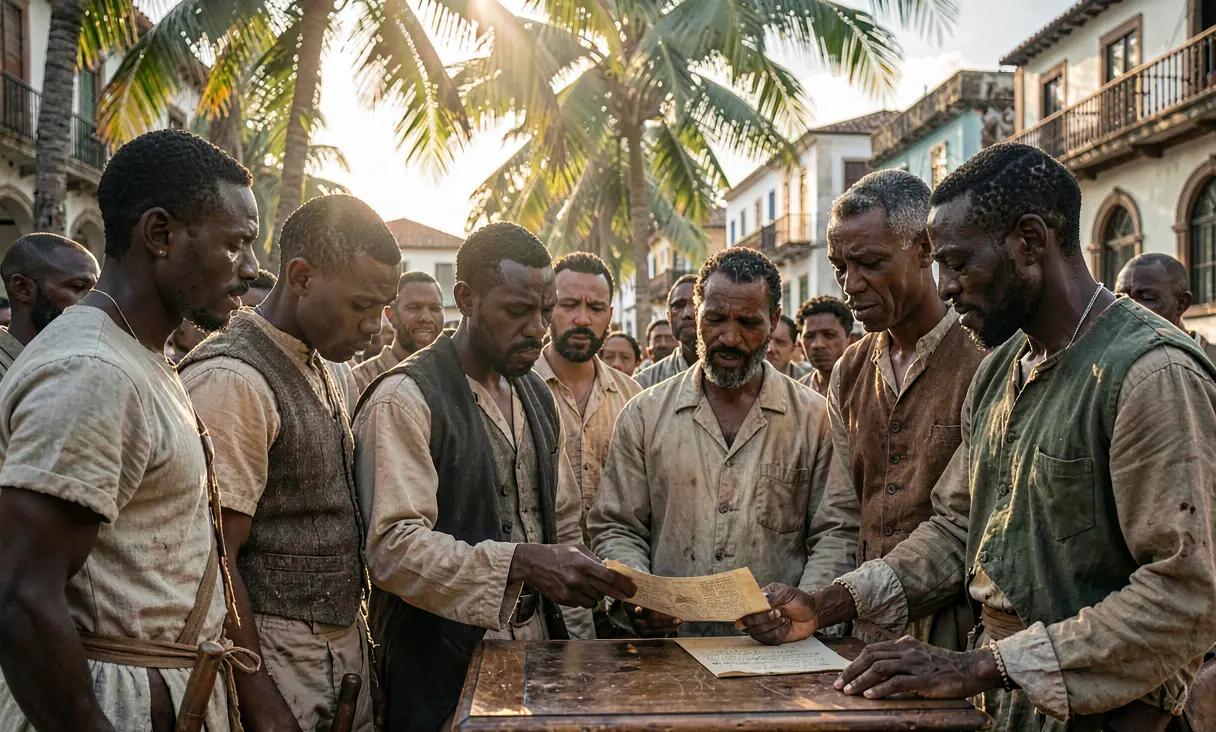
Where it happened
Gonaïves, Saint-Domingue — see it on the interactive map →
Explore related history
 PoliticsSargon of Akkad Establishes the First Empirec. 2334 BCE · Akkad (Location uncertain, near Baghdad, Iraq)Sargon unifies Sumerian city-states to create the world's first multi-ethnic empire.
 PoliticsPromulgation of the Code of Ur-Nammuc. 2100 BCE · Ur, Southern Mesopotamia (Iraq)The earliest known surviving law code is established in the Sumerian city of Ur.
 PoliticsNelson Mandela Elected President of South AfricaApril 27, 1994 · Cape Town, South AfricaSouth Africa holds its first democratic election, ending the apartheid regime and establishing a multiracial government.
 ScienceDevelopment of Linear A Script by Minoansc. 1800 BCE · Knossos, Crete (Greece)The Minoans develop Linear A, a still undeciphered writing system for administration.
 PoliticsCry of Dolores: Mexican War of Independence BeginsSeptember 16, 1810 · Dolores Hidalgo, MexicoMiguel Hidalgo y Costilla issues a call to arms against Spanish rule, igniting the Mexican War of Independence.
 PoliticsCongress of Tucumán Declares Argentine IndependenceJuly 9, 1816 · San Miguel de Tucumán, ArgentinaDelegates from the United Provinces of the Río de la Plata formally declare independence from Spain.
Discussion
Loading…