
Printing of the Gutenberg Bible
Around 1455 in Mainz, Gutenberg's invention of movable metal type produced the first major printed Bible, shattering the manuscript monopoly and igniting a global information revolution that democrati
The Scribal Era and the Demand for Knowledge
Prior to the mid-15th century, books in Europe were rare, expensive commodities produced exclusively by hand. Monastic scribes spent months or even years copying a single volume onto parchment, a labor-intensive process that restricted literacy to the clergy and the ultra-wealthy. The demand for texts, particularly religious scriptures like the Latin Vulgate Bible, far outstripped the supply capabilities of the scriptorium system. While earlier attempts at printing with woodblocks existed in Asia and Europe, these methods were ill-suited for the complex typography required by Western alphabets, creating a technological bottleneck that stifled the rapid dissemination of ideas.
Johannes Gutenberg and the Mainz Experiment
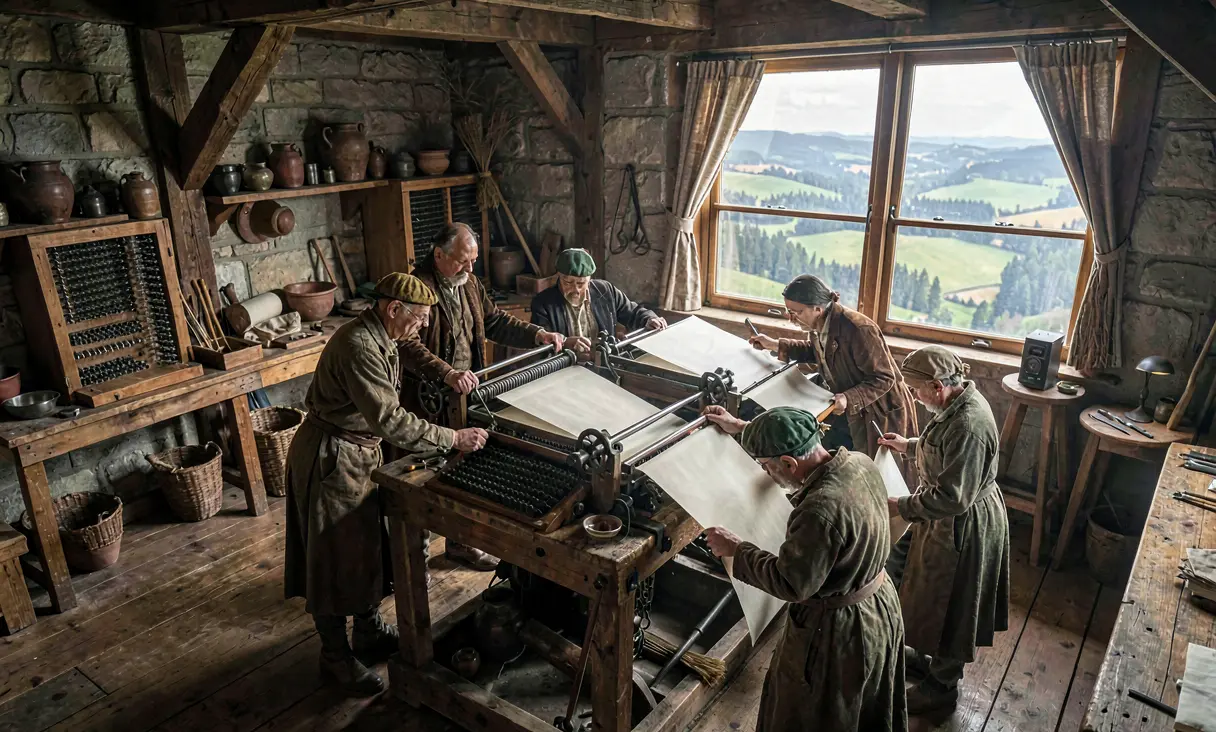
In the bustling trading city of Mainz, Germany, goldsmith Johannes Gutenberg embarked on a clandestine project to revolutionize book production. Around 1450, backed by loans from financier Johann Fust, Gutenberg began developing a system that combined movable metal type, an oil-based ink, and a modified screw press adapted from wine and olive presses. His breakthrough lay in creating durable, interchangeable metal letters cast from a lead-antimony-tin alloy, which could be arranged into lines of text, printed, and then rearranged for new pages. This innovation allowed for the precise replication of text with unprecedented speed and consistency.
The Production of the 42-Line Bible
By approximately 1455, Gutenberg's workshop had produced the first major book printed in Europe: the Biblia Sacra Latina, now known as the Gutenberg Bible. The project was monumental in scale; it required casting thousands of individual letters for each page and setting over 200 pages per copy. Approximately 180 copies were planned, with about 150 on paper and 30 on high-quality vellum. The text was set in a dense blackletter typeface that meticulously mimicked the Gothic script of contemporary manuscripts, ensuring the new technology would be accepted by traditionalists who valued the aesthetic of handwritten works. Notably, the red rubrication and illuminated initials were often added by hand after printing, further blurring the line between craft and machine.
Financial Collapse and Legal Disputes
Despite the technical triumph, the project was a financial disaster for Gutenberg. The costs of materials, labor, and the extended production timeline exhausted his capital, leading to a bitter legal battle with Johann Fust in 1455. Fust sued for repayment of his loans, and the court ruled in his favor, effectively seizing control of the printing shop and the remaining unsold Bibles. Gutenberg lost ownership of his greatest achievement just as it was being completed; Fust and his son-in-law Peter Schöffer took over the business, selling the remaining copies and continuing to print under the new management.
Immediate Aftermath and Dissemination
The surviving copies of the Gutenberg Bible were distributed across Europe, reaching major cultural centers in Italy, France, Germany, and England. The sheer quality of the work silenced skeptics who doubted that mechanical printing could match the beauty of scribal art. Within a decade of its completion, the technology had spread to Venice, Cologne, and other cities, sparking an explosion of print shops. The cost of books began to plummet, making texts accessible to a growing merchant class and university students, fundamentally altering the intellectual landscape of the continent.
Legacy and Historical Significance
The Gutenberg Bible stands as the catalyst for the Printing Revolution, an event that fundamentally reshaped human history by democratizing knowledge. It facilitated the rapid spread of Renaissance humanism, the Protestant Reformation, and the Scientific Revolution, breaking the monopoly on information held by religious and political elites. Today, only 49 copies are known to survive in whole or in part, scattered across libraries and museums from the British Library to the Vatican Library. Each surviving leaf is a testament to the moment humanity transitioned from the age of the manuscript to the age of mass communication.
The Enduring Symbol of Innovation
Beyond its rarity, the Gutenberg Bible represents the birth of the modern information age. The specific mechanics developed in Mainz—movable type, standardized fonts, and efficient press methods—became the global standard for centuries until the digital revolution. It serves as a poignant reminder that technological advancement is often born from precarious financial risks and personal conflict, yet its impact can ripple through millennia, defining the trajectory of civilization itself.
The Gutenberg Bible marks the beginning of the Printing Revolution, transforming the dissemination of knowledge globally.

Where it happened
Mainz, Germany — see it on the interactive map →
Explore related history
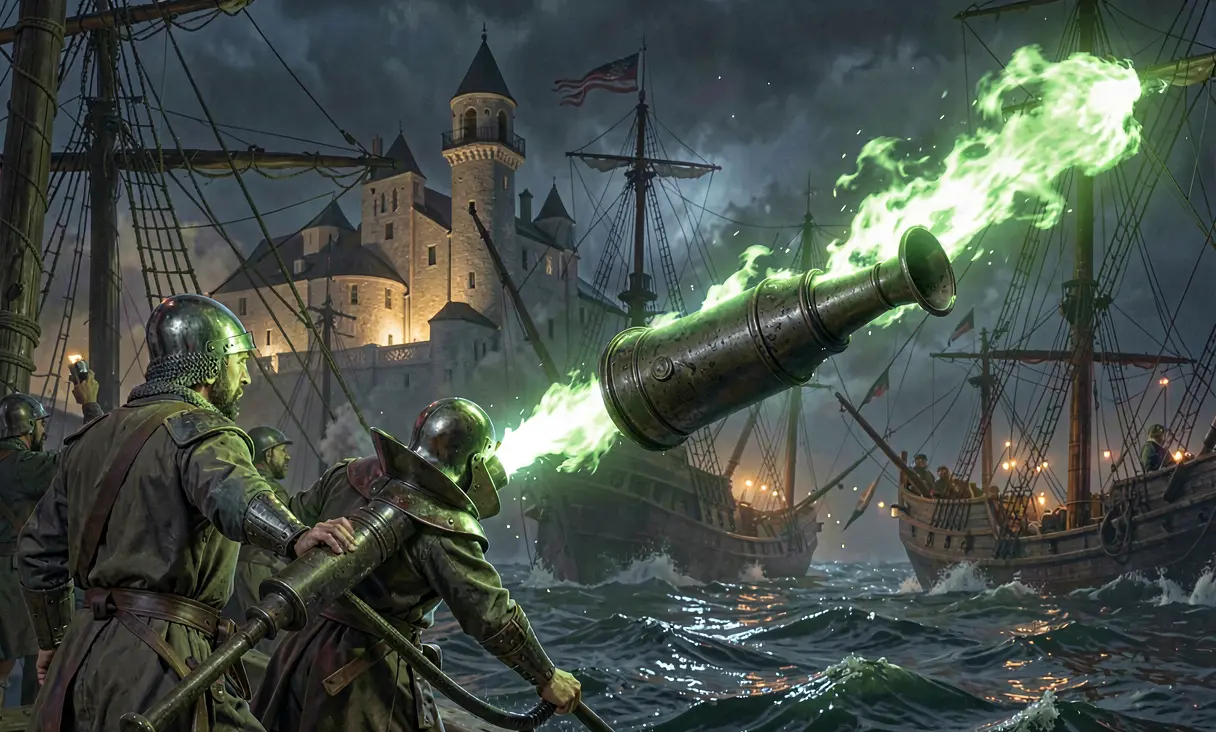 TechnologyInvention of Greek Fire by Kallinikosc. 673 CE · Constantinople, TurkeyByzantine engineers develop a liquid incendiary weapon that burns on water.
 TechnologyDiscovery of Gunpowder by Tang Dynasty Alchemistsc. 850 CE · Chang'an, ChinaTang alchemists accidentally discover gunpowder while seeking an elixir of immortality.
 TechnologyUse of Astrolabes for Celestial Navigation by Arab Sailorsc. 1000 CE · Jeddah, Saudi ArabiaArab navigators utilize refined astrolabes to cross the Indian Ocean.
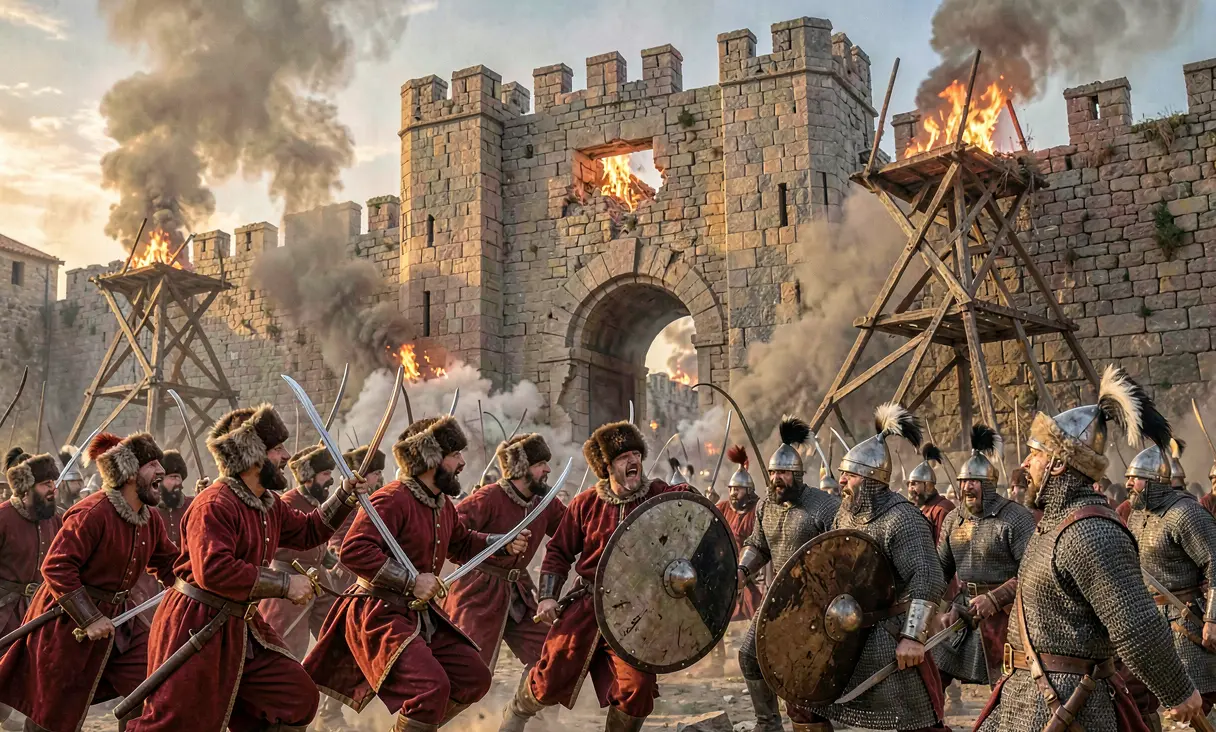 WarFall of ConstantinopleMay 29, 1453 · Constantinople (Istanbul), TurkeyOttoman Turks conquer the Byzantine capital, ending the Roman Empire.
 CivilizationUse of Quipu for Inca Record Keepingc. 1450 CE · Cusco, PeruInca administrators use knotted strings to record census and tax data.
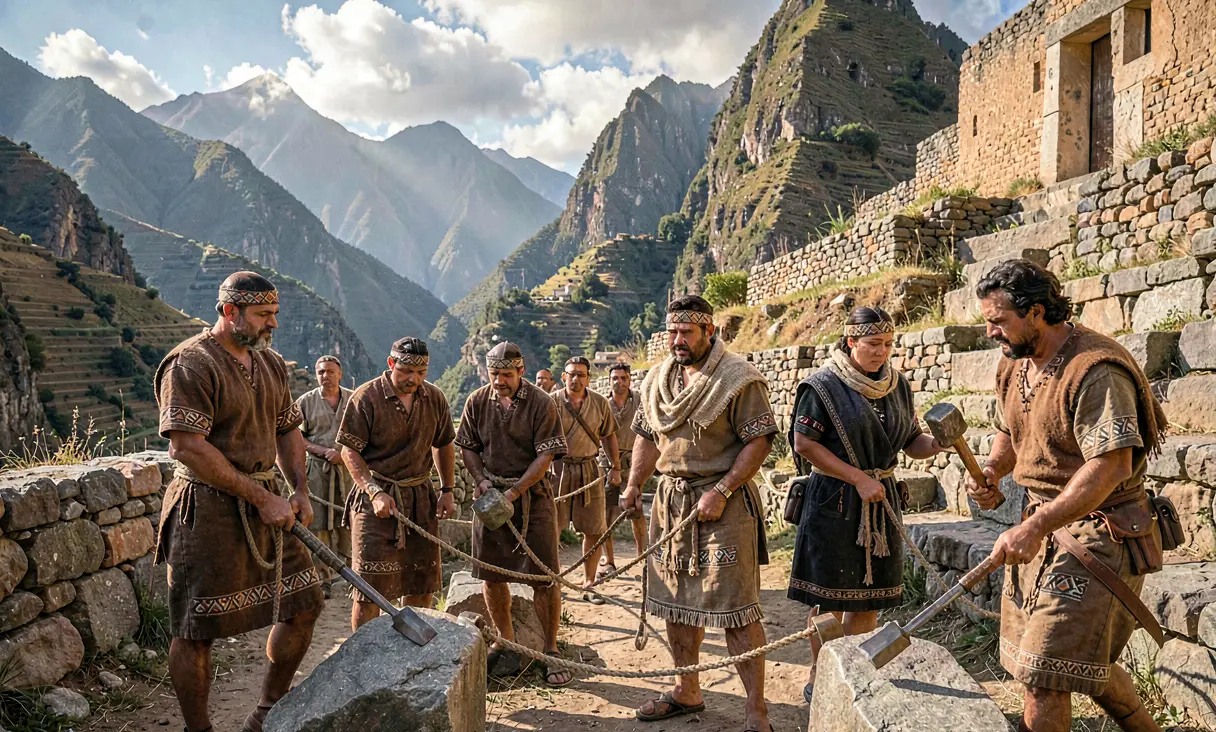 CivilizationConstruction of the Inca Road System (Qhapaq Ñan)c. 1438 CE · Cusco, Peru (Expansion Phase)Pachacuti initiates the expansion of the Qhapaq Ñan, a vast road network connecting the Inca Empire across the Andes.
Discussion
Loading…