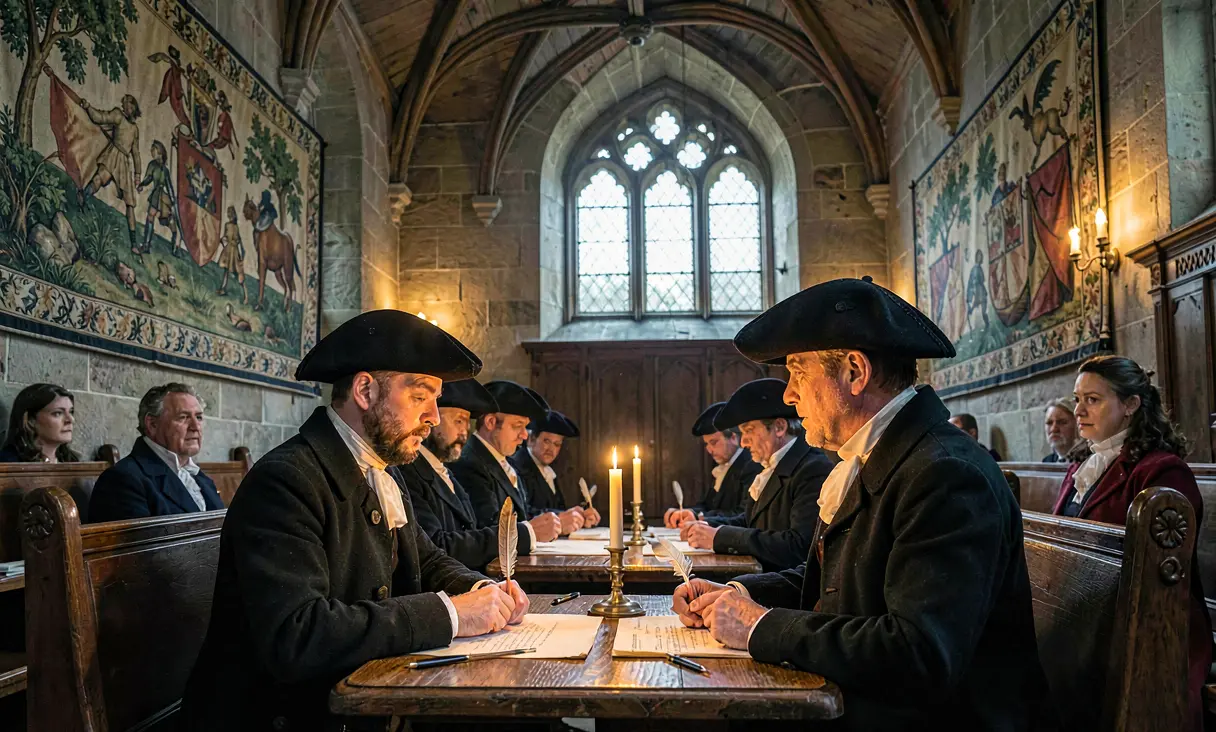
The Glorious Revolution
The bloodless 1688 coup that deposed James II established constitutional monarchy in England, permanently limiting royal power and inspiring global democratic revolutions.
The Crisis of Legitimacy
By the late 1680s, the Stuart dynasty faced a precipitous collapse of political legitimacy. King James II, a devout Roman Catholic who ascended to the throne in 1685, aggressively pursued policies that alienated the Anglican establishment and the broader Protestant populace. His suspension of penal laws against Catholics through royal prerogative, coupled with the appointment of Catholic officials to high military and civil offices, violated the established legal framework of England. The situation reached a breaking point on June 10, 1688, when James's second wife, Mary of Modena, gave birth to a son, James Francis Edward Stuart. This birth displaced the Protestant heir presumptive, James's eldest daughter Mary, creating the terrifying prospect of a permanent Catholic dynasty and triggering an unprecedented political crisis.
The Invitation and the Landing
In response to the birth of the Prince of Wales, seven prominent English nobles, known as the Immortal Seven, secretly extended an invitation to William III, Prince of Orange and Stadtholder of the Netherlands. William was not only a skilled military commander but also James II's son-in-law, being married to Mary, the Protestant heir. On November 5, 1688—coinciding with the anniversary of the Gunpowder Plot—William landed at Torbay in Devon with an invasion force of approximately 14,000 troops, including Dutch cavalry and German mercenaries. The date was chosen for its symbolic resonance against Catholic plots, yet the operation itself was a calculated act of statecraft rather than a mere military raid. William's army marched toward London with little resistance, as James II's own army began to defect en masse, most notably the defection of John Churchill (later the Duke of Marlborough) and Princess Anne.
The Flight of the King
As William's forces advanced without firing a shot in anger, James II found his authority evaporating. Panic-stricken by the realization that he had lost the loyalty of his commanders and the support of the political class, James attempted to flee to France on December 11, 1688. He was intercepted near Faversham but subsequently allowed to escape, finally reaching the safety of Louis XIV's court in January 1689. This flight was legally construed by Parliament as an abdication, effectively creating a vacancy on the throne. The event is historically termed 'bloodless' because it involved no major battles or significant loss of life within England, distinguishing it from the brutal civil wars of the previous century. However, the political ramifications were violent and absolute, marking the end of the Stuart attempt at absolutism.
The Constitutional Settlement
In February 1689, a Convention Parliament declared that James II had abdicated and offered the throne jointly to William III and Mary II. This unprecedented arrangement established a dual monarchy, ensuring that power would not rest solely in the hands of a Catholic or an absolute ruler. The settlement was formalized through the Bill of Rights 1689, which codified specific limitations on royal authority. Key provisions prohibited the monarch from suspending laws without Parliament's consent, levying taxes without parliamentary approval, or maintaining a standing army during peacetime. Furthermore, it affirmed the right of subjects to petition the king and guaranteed free elections and frequent parliaments. This document transformed the English monarchy from an absolute institution into a constitutional one, making the Crown dependent on the will of Parliament.
Global Ripples and Lasting Legacy
The Glorious Revolution did not merely reshape England; it sent shockwaves through the Atlantic world. The principles enshrined in the Bill of Rights directly influenced the American Declaration of Independence and the United States Constitution, particularly regarding the separation of powers and individual liberties. In Ireland and Scotland, the revolution sparked further conflict, most notably the Williamite War in Ireland (1689–1691), which solidified Protestant Ascendancy but left deep sectarian scars that persist today. Historically, the event is viewed as the definitive pivot point where the concept of popular sovereignty began to supersede the divine right of kings. It established a precedent for peaceful regime change through parliamentary consent, setting a template for modern democratic transitions and influencing revolutionary movements across Europe and beyond.
It established a constitutional monarchy in England, permanently limiting royal power and affirming parliamentary sovereignty.
Where it happened
London, England — see it on the interactive map →
Explore related history
 PoliticsFounding of Fatehpur Sikric. 1571 CE · Fatehpur Sikri, Uttar Pradesh, IndiaAkbar establishes Fatehpur Sikri as the new capital of the Mughal Empire to honor his spiritual guide and centralize administration.
 PoliticsPeace of WestphaliaOctober 24, 1648 · Münster and Osnabrück, GermanyTreaties end the Thirty Years' War, establishing state sovereignty.
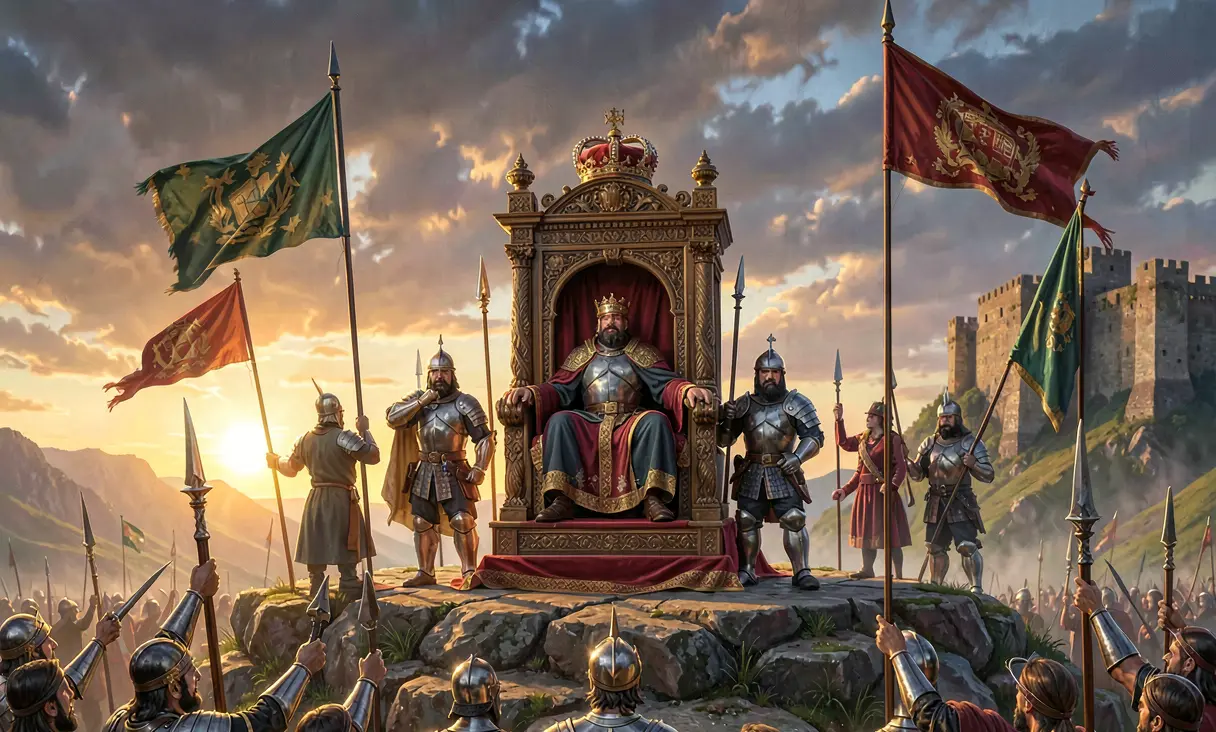 PoliticsShivaji Maharaj Coronation and Maratha Empirec. 1674 CE · Raigad Fort (modern Maharashtra/India)Chhatrapati Shivaji is crowned as the sovereign ruler of the Marathas, establishing an independent Hindu kingdom against Mughal dominance.
 SciencePublication of Newton's PrincipiaJuly 5, 1687 CE · Cambridge, EnglandIsaac Newton defines laws of motion and universal gravitation revolutionizing physics.
 WarAurangzeb's Decades-Long Deccan Campaignc. 1681 CE · Deccan Plateau, IndiaEmperor Aurangzeb moves his court to the Deccan for a prolonged military campaign against the Marathas and Sultanates.
 ReligionBirth of Bulleh Shahc. 1680 CE · Uch (modern Pakistan)The birth of Bulleh Shah, a pivotal Sufi poet who challenged religious orthodoxy and promoted universal love.
Discussion
Loading…