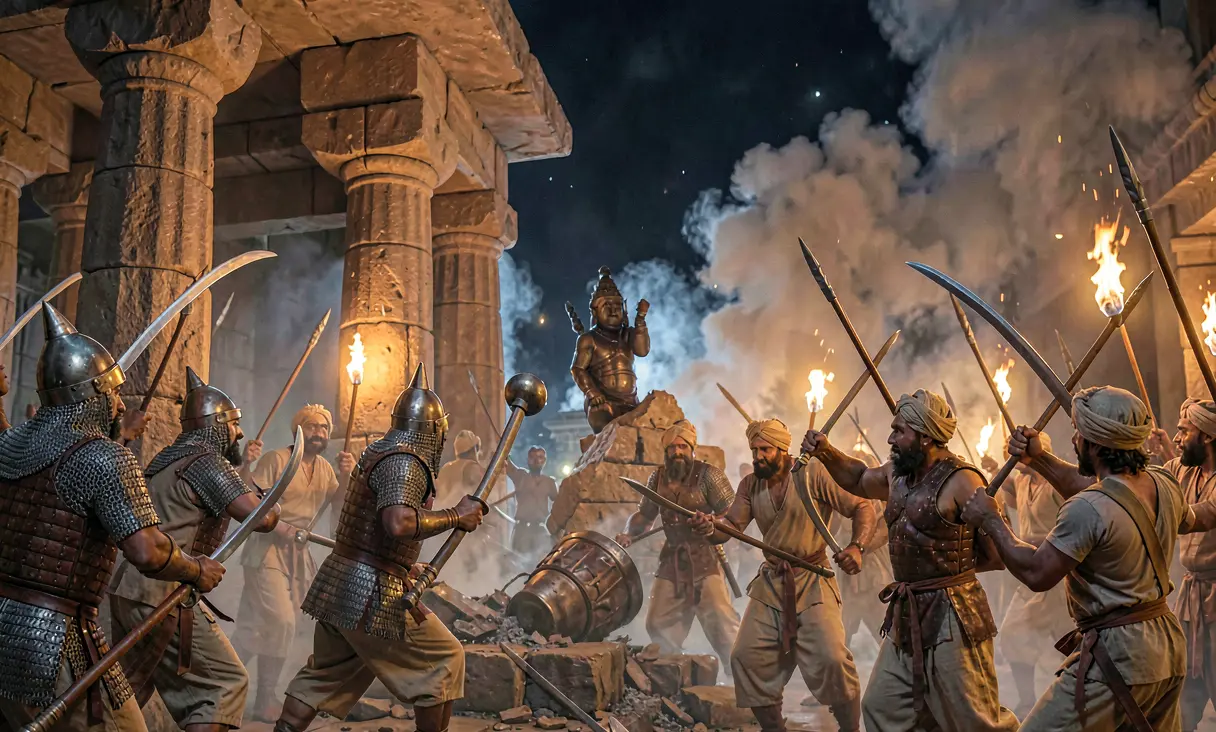
Mahmud of Ghazni's Sack of Somnath
In 1026 CE, Mahmud of Ghazni sacked the wealthy Somnath Temple, shattering its sacred idol and seizing vast treasures that funded his empire while igniting centuries of religious and political conflic
The Wealth of the Coast
By the early 11th century, the Somnath Temple in Prabhas Patan, Gujarat, stood as the preeminent shrine dedicated to Lord Shiva in the Indian subcontinent. Situated on the rugged Saurashtra coast, it was a beacon of maritime trade and religious devotion, attracting pilgrims from across India and beyond. The temple's sanctity was matched only by its legendary opulence; centuries of patronage by the Chalukyas, Chandelas, and local Solanki rulers had filled its vaults with gold, silver, pearls, and diamonds. Contemporary Persian chronicles, notably those of Al-Biruni and Utbi, describe the temple as a repository of wealth so vast that its destruction would fund an empire for years. This accumulation made Somnath not merely a spiritual center but a strategic economic target for any power seeking to destabilize the region or replenish state coffers.
The Ghaznavid Ambition
Mahmud of Ghazni, the Sultan of the Ghaznavid Empire based in present-day Afghanistan, had spent two decades conducting a series of devastating raids into northern India. His campaigns were driven by a dual motive: the expansion of his empire's borders and the acquisition of resources to fund his military machine and patronize scholars in Ghazni. By 1025 CE, Mahmud had already sacked Mathura and Kanauj, but Somnath remained unconquered. The Solanki ruler Bhima I, who governed Gujarat, was aware of the approaching threat but faced internal political fragmentation and a lack of unified military response from neighboring Hindu kingdoms. Mahmud's decision to target Somnath specifically was calculated; it promised a return on investment far exceeding any previous raid, while simultaneously striking a blow against the cultural heart of Hinduism.
The March to Prabhas Patan
In late 1025 or early 1026 CE, Mahmud led his army, estimated by historians to number between 30,000 and 40,000 cavalry and infantry, out of Ghazni. The march was arduous, traversing the deserts of Sindh and navigating the hostile terrain of Rajasthan before entering Gujarat. Unlike previous raids that relied on speed and surprise, this expedition was a deliberate siege operation. Mahmud's forces bypassed major fortified cities to strike directly at the coastal sanctuary. Upon arrival, they found the temple defenses formidable; the Solankis had mobilized local militias and perhaps regular troops to protect the shrine. However, the Ghaznavid army, seasoned by years of campaigning against Indian dynasties, possessed superior cavalry tactics and siege engineering.
The Breach and Destruction
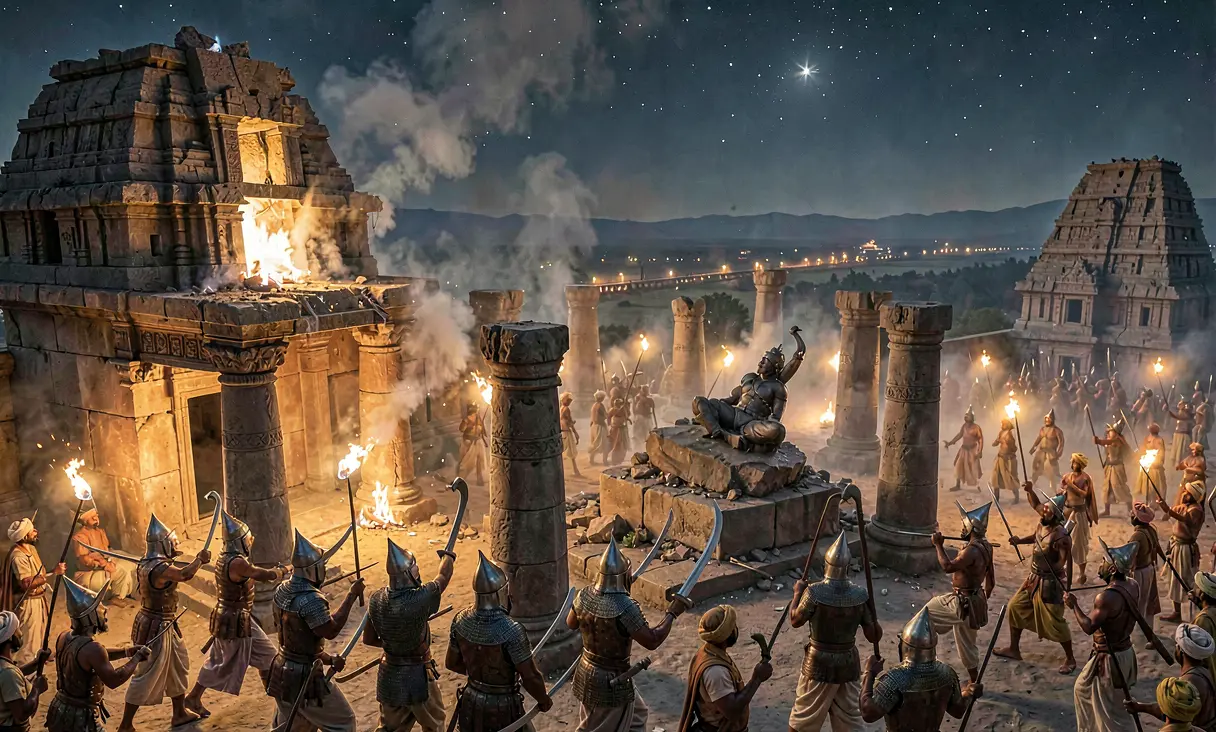
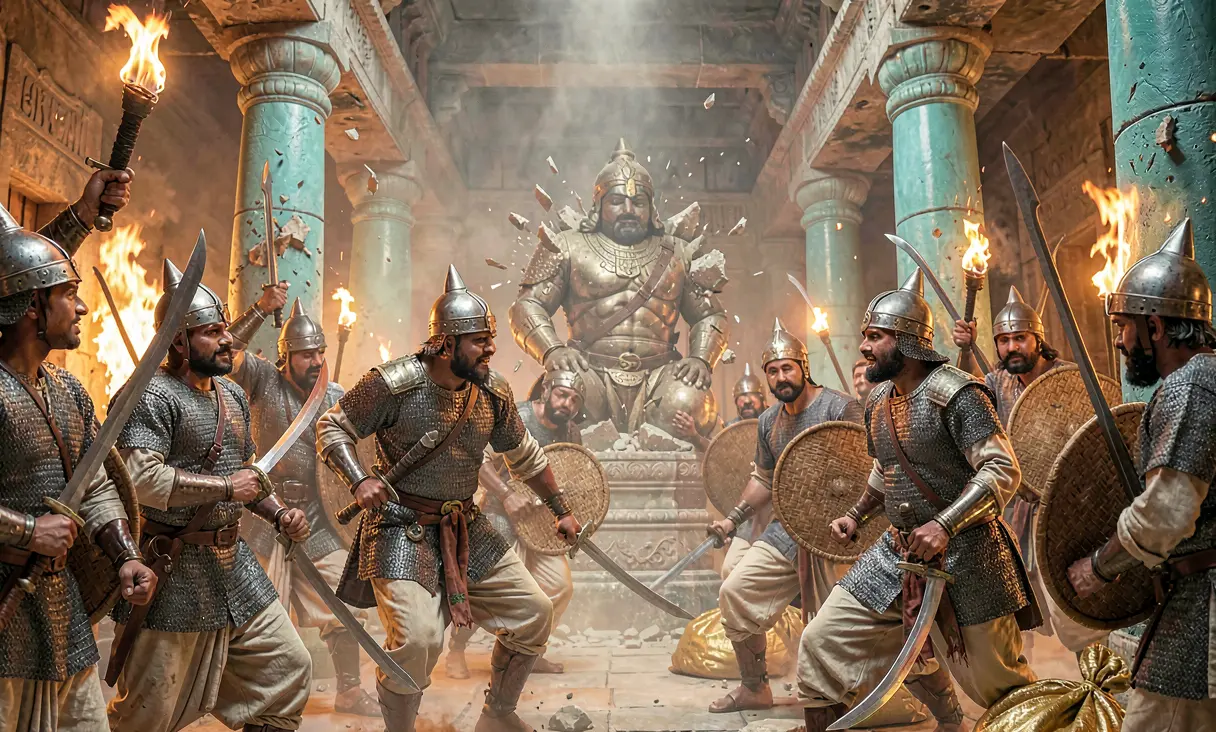
The battle for Somnath was fierce and prolonged. Persian accounts suggest that the defenders fought with desperate valor, but the Ghaznavid forces eventually breached the outer walls and stormed the inner sanctum. The climax of the raid occurred when Mahmud personally ordered the destruction of the Shiva Lingam. According to Utbi's *Tarikh-i-Yamini*, Mahmud struck the idol with his own mace, shattering it and revealing a cavity filled with rubies and diamonds, which he claimed proved the idol was not divine but merely a vessel for human greed. The temple complex was systematically looted; its gold plating was stripped, its statues smashed, and its treasures loaded onto carts. The sheer volume of loot was staggering, reportedly including 20 camel-loads of jewels and enough gold to mint millions of dirhams.
The Return to Ghazni
Following the sack, Mahmud withdrew his forces, leaving a devastated landscape in Gujarat. The return journey was marked by the heavy burden of the plunder and the threat of pursuit from local rulers who had regrouped. Upon reaching Ghazni, the Sultan paraded the spoils through the city, transforming the capital into a showcase of Indian wealth. He commissioned the construction of new mosques and palaces funded entirely by the Somnath loot. The event was immortalized in court poetry and official histories as a triumph of Islam over idolatry, cementing Mahmud's reputation as *Ghazi*, the warrior for the faith. However, the destruction also sowed deep seeds of resentment among the Hindu populace, altering the religious and political dynamics of the region.
Legacy and Historical Memory
The Sack of Somnath remains one of the most contested and significant events in Indo-Islamic history. In Persian chronicles, it is celebrated as a definitive victory of monotheism; in later Indian texts like the *Prabandha-Chintamani*, it is remembered as a tragedy of desecration that galvanized regional resistance. The physical temple was rebuilt by Bhima I and his successors within decades, only to be destroyed again in subsequent centuries, creating a cycle of ruin and reconstruction that defines the site's history. Modern historiography views the raid not just as a religious conflict but as a pivotal moment illustrating the vulnerability of wealthy, static agrarian societies to highly mobile, professionalized cavalry armies. The event fundamentally shifted the balance of power in northern India, paving the way for further Turkic incursions and the eventual establishment of the Delhi Sultanate.
The sack of Somnath marked the beginning of sustained Turkish incursions into North India, paving the way for future Sultanates.
Where it happened
Somnath, Gujarat, India — see it on the interactive map →
Explore related history
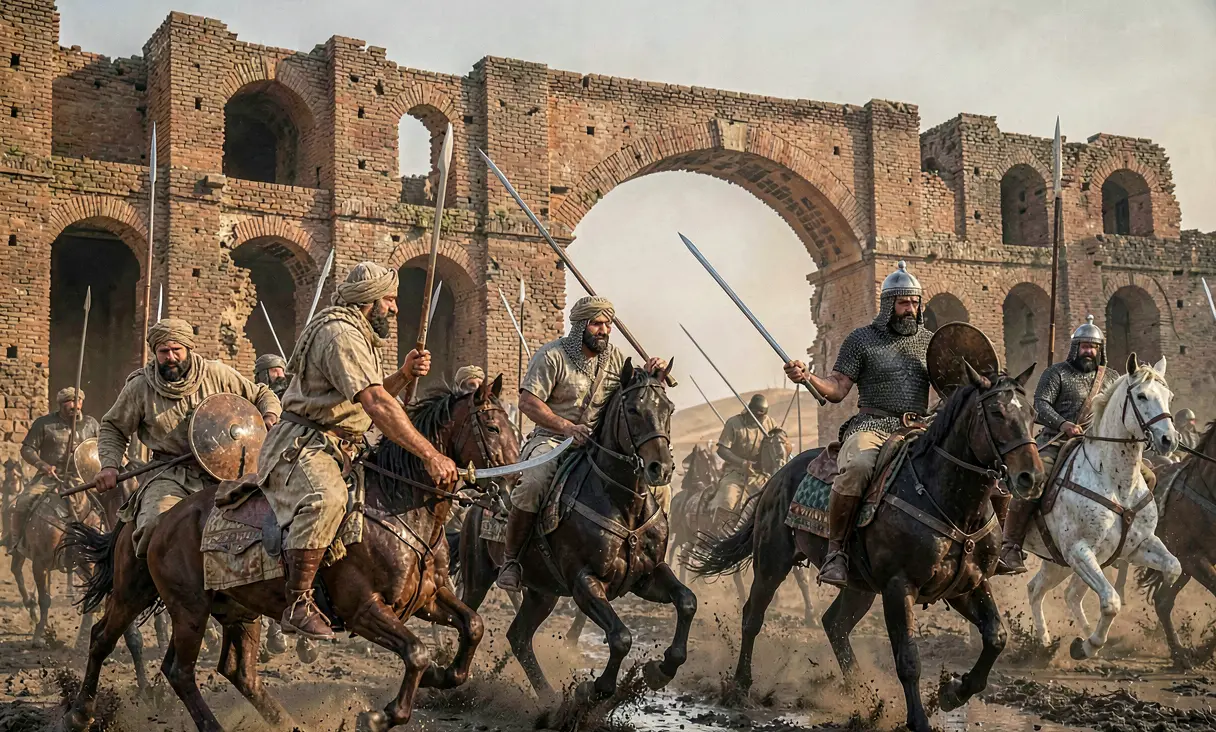 WarIslamic Conquest of the Sasanian Empire637 CE · Ctesiphon, Iraq (Persia)Arab Muslim forces defeat the Sasanian Empire at the Battle of al-Qadisiyyah, ending centuries of Persian rule.
 WarViking Siege of Paris885 CE · Paris, FranceViking raiders led by Sigfred besiege Paris for over a year, testing the defenses of West Francia.
 WarChola Conquest of Sri Lankac. 993 CE · Anuradhapura, Sri LankaRajaraja Chola launches a massive amphibious invasion of Sri Lanka, defeating the Sinhalese kingdom and annexing the island.
 WarRajendra Chola I's Ganges Expeditionc. 1025 CE · Bengal to Ganges Delta, IndiaRajendra Chola I leads a northern expedition reaching the Ganges River, defeating Pala kings and bringing holy water back to Thanjavur.
 WarChola Invasion of Srivijayac. 1025 CE · Palembang, Sumatra, IndonesiaRajendra Chola I launches a naval raid on the Srivijaya Empire, disrupting its control over the Strait of Malacca and securing trade routes.
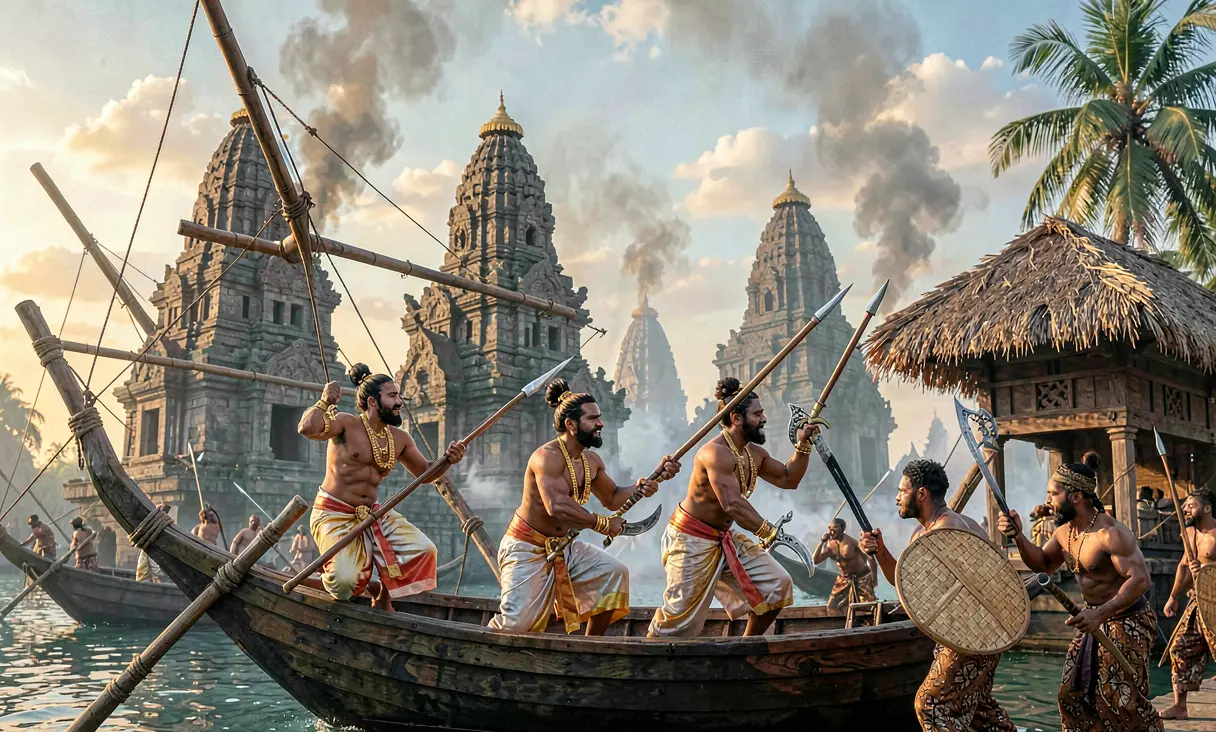 ExplorationChola Naval Expedition to Southeast Asia1025 CE · Java and Sumatra (Modern Indonesia)Chola fleet raids coastal cities across the archipelago.
Discussion
Loading…