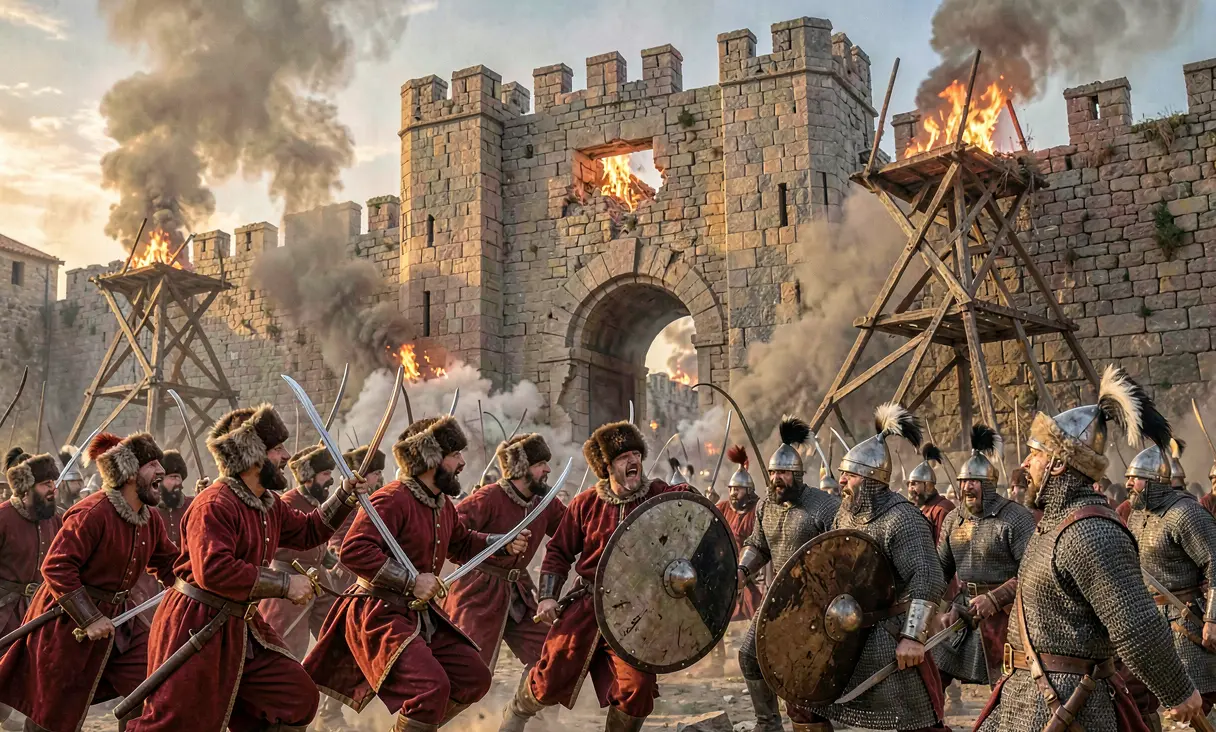
Fall of Constantinople
The 1453 fall of Constantinople ended the Roman Empire, shifted global trade routes to the Atlantic, and sparked the Renaissance by sending Greek scholars west with ancient knowledge.
The Last Bastion of Rome
By the mid-15th century, the Byzantine Empire had been reduced to little more than the city of Constantinople and a few scattered territories in Greece. Once the capital of a superpower spanning three continents, it now stood as a solitary island of Orthodox Christianity amidst a rising tide of Ottoman expansion. The city's legendary Theodosian Walls, which had repelled countless sieges for nearly nine centuries, remained its primary defense, yet the garrison was critically understaffed and demoralized. Emperor Constantine XI Palaiologos inherited a realm in terminal decline, facing an adversary who viewed the conquest of the 'Queen of Cities' as both a religious imperative and a strategic necessity.
The Architect of Conquest
Sultan Mehmed II, ascended to the Ottoman throne at age twenty-one in 1451, was determined to realize the prophecy that Constantinople would eventually fall. Unlike his predecessors, he approached the siege with a modernized military strategy and an insatiable appetite for technological innovation. He commissioned the Hungarian engineer Urban to cast the 'Basilica,' a colossal cannon capable of firing stone balls weighing over 600 kilograms, designed specifically to shatter the ancient fortifications. Mehmed also orchestrated a daring naval maneuver, dragging seventy ships overland on greased logs from the Bosphorus into the Golden Horn, bypassing the massive iron chain that blocked Ottoman access to the city's harbor.
The Fifty-Three Day Siege
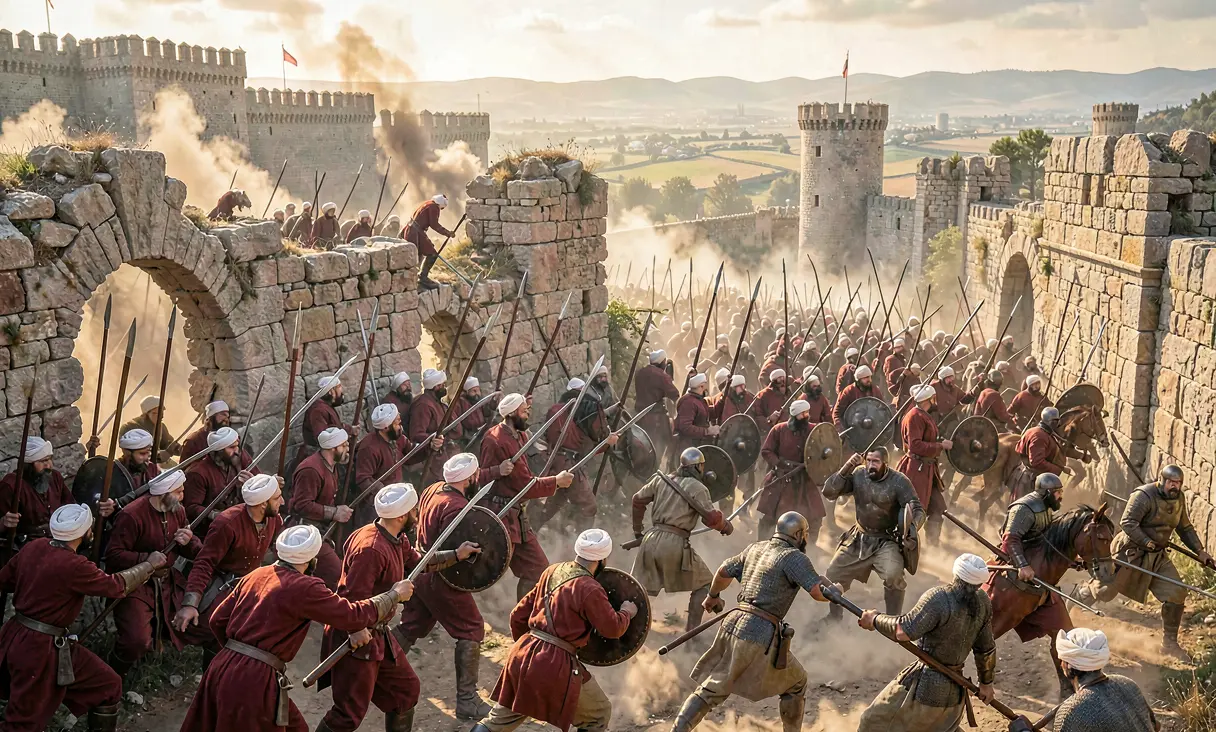
The siege began in earnest on April 6, 1453. For over seven weeks, the Ottoman bombardment pounded the walls day and night, while Byzantine defenders, bolstered by a small contingent of Genoese led by Giovanni Giustiniani Longo, fought with desperate valor. The city's population had dwindled to perhaps 50,000 souls, yet they held firm against an Ottoman army estimated at 80,000 men. Despite several failed assaults and the breach of minor sections of the wall, the defenders managed to repair damage overnight using wooden scaffolding and earthworks. The stalemate continued until May 29, when Mehmed ordered a final, coordinated general assault involving three distinct waves of troops: irregulars, Anatolian regulars, and finally, his elite Janissaries.
The Breach and the Fall
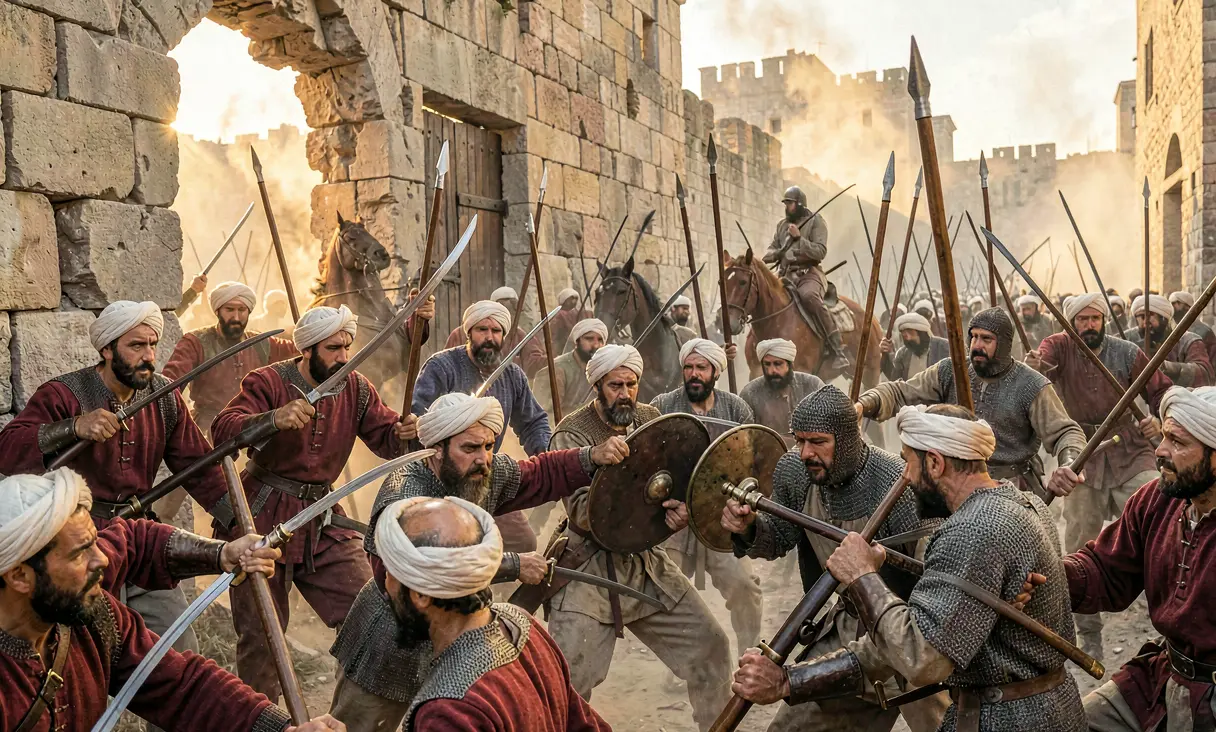
In the predawn hours of May 29, 1453, the Ottoman forces launched their climactic attack. A critical turning point occurred when a small postern gate, known as the Kerkoporta, was left unlocked or breached by a confused skirmish, allowing Ottoman troops to pour into the city's interior. Simultaneously, Giustiniani, the Genoese commander, suffered a severe wound and was evacuated from the walls, causing a collapse in morale among the defenders. Emperor Constantine XI, refusing to abandon his post, threw off his imperial ornaments and charged into the melee alongside his men, disappearing forever into the chaos of the fighting. By mid-morning, the Ottoman flag flew over the Hagia Sophia, signaling the end of organized resistance.
The End of an Era
The fall of Constantinople marked the definitive extinction of the Roman Empire, a political entity that had endured for 1,480 years since the founding of Rome. The city was subjected to three days of looting and slaughter before Mehmed II intervened to restore order, declaring it the new capital of his empire and renaming it Istanbul. The Byzantine aristocracy was dispersed into slavery or exile, while the Hagia Sophia was converted into a mosque. This event shattered the medieval world order, ending the centuries-long rivalry between Christendom and Islam in the Eastern Mediterranean and establishing the Ottoman Empire as a dominant global power that would threaten Europe for another four hundred years.
Ripples Through History
The geopolitical consequences of 1453 were immediate and profound. With the traditional overland trade routes to Asia now controlled by the Ottomans, European powers were forced to seek maritime alternatives, directly catalyzing the Age of Discovery; Columbus's voyage in 1492 was a direct response to this new reality. Culturally, the exodus of Greek scholars fleeing westward brought with them ancient manuscripts and knowledge of Classical Greek that had been lost to Western Europe for centuries. This intellectual migration provided the fuel for the Italian Renaissance, bridging the gap between antiquity and modernity while fundamentally reshaping the religious map of Europe as Russia began to claim the mantle of the 'Third Rome'.
It ended the last remnant of the Roman Empire and catalyzed the Age of Exploration by closing traditional land trade routes to Asia.
Where it happened
Constantinople (Istanbul), Turkey — see it on the interactive map →
Explore related history
 WarIslamic Conquest of the Sasanian Empire637 CE · Ctesiphon, Iraq (Persia)Arab Muslim forces defeat the Sasanian Empire at the Battle of al-Qadisiyyah, ending centuries of Persian rule.
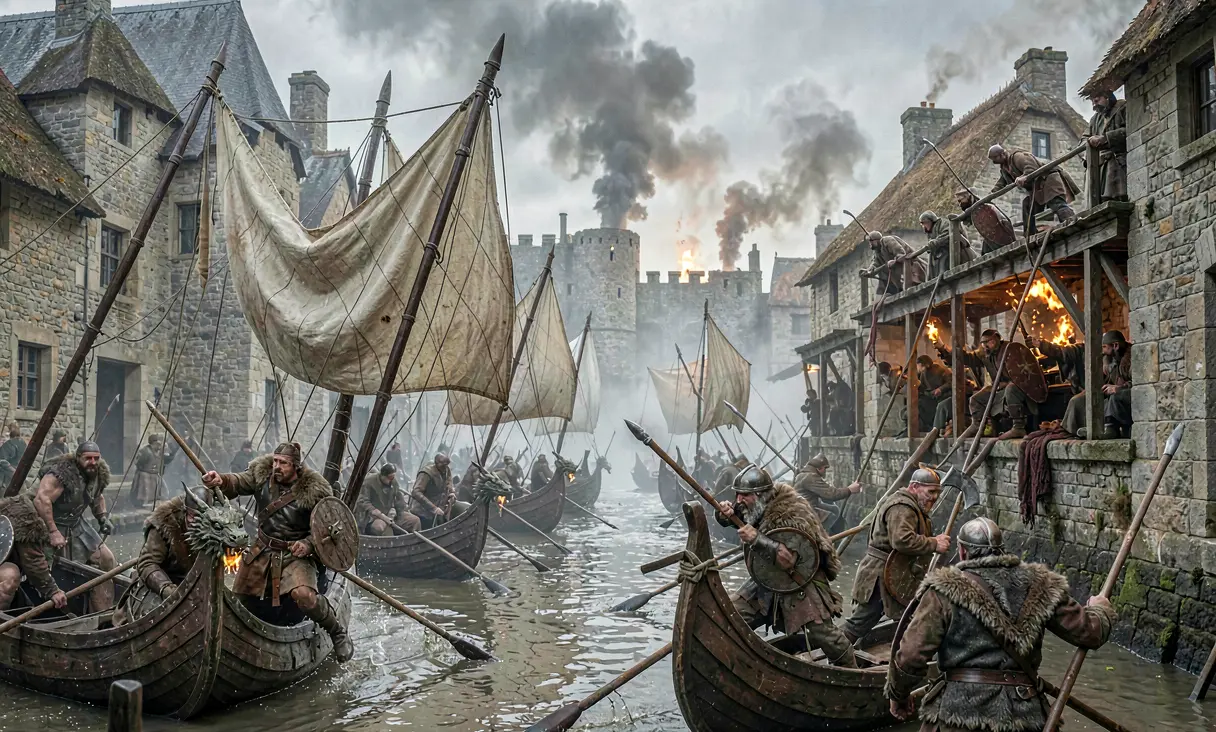 WarViking Siege of Paris885 CE · Paris, FranceViking raiders led by Sigfred besiege Paris for over a year, testing the defenses of West Francia.
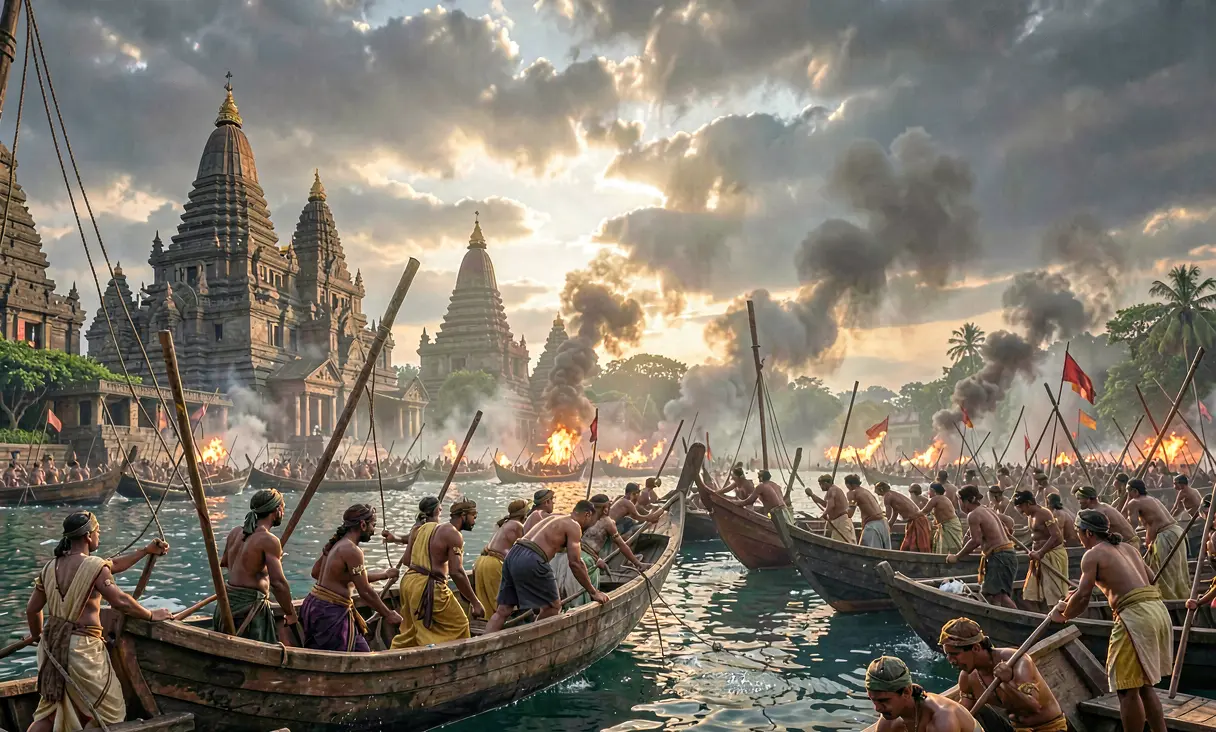 WarChola Conquest of Sri Lankac. 993 CE · Anuradhapura, Sri LankaRajaraja Chola launches a massive amphibious invasion of Sri Lanka, defeating the Sinhalese kingdom and annexing the island.
 TechnologyPrinting of the Gutenberg Biblec. 1455 CE · Mainz, GermanyJohannes Gutenberg prints the first major book using movable type.
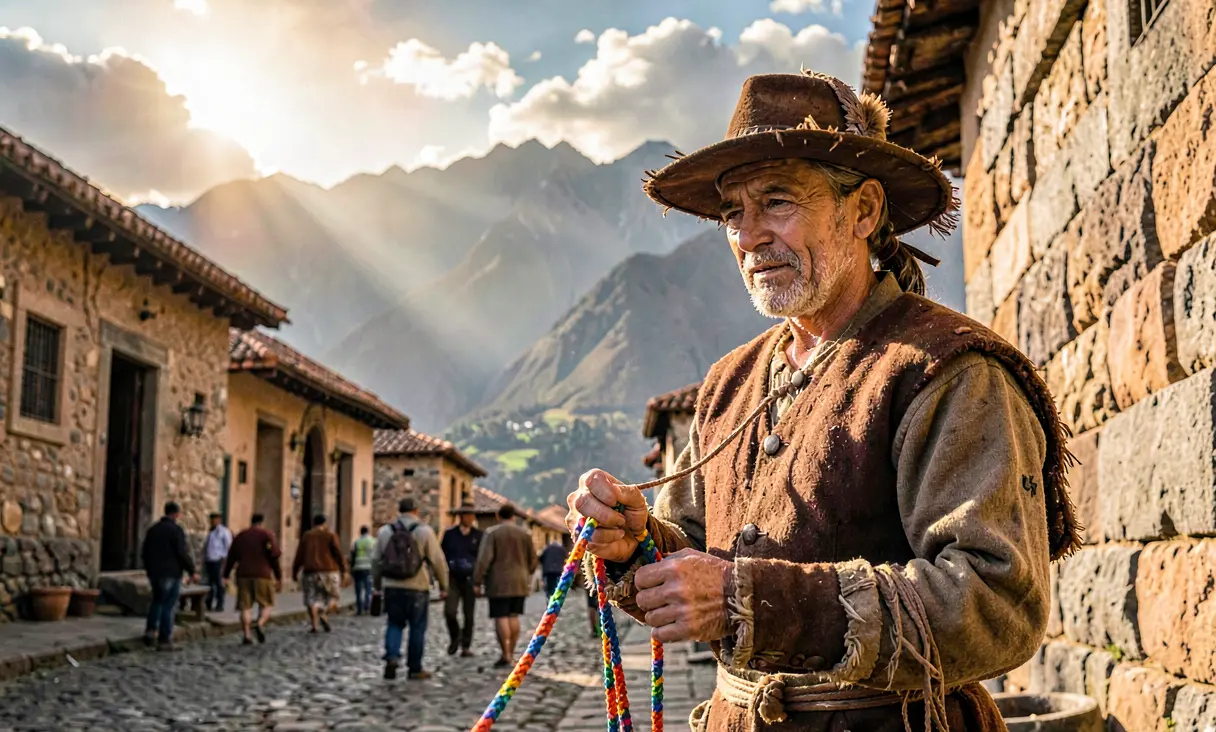 CivilizationUse of Quipu for Inca Record Keepingc. 1450 CE · Cusco, PeruInca administrators use knotted strings to record census and tax data.
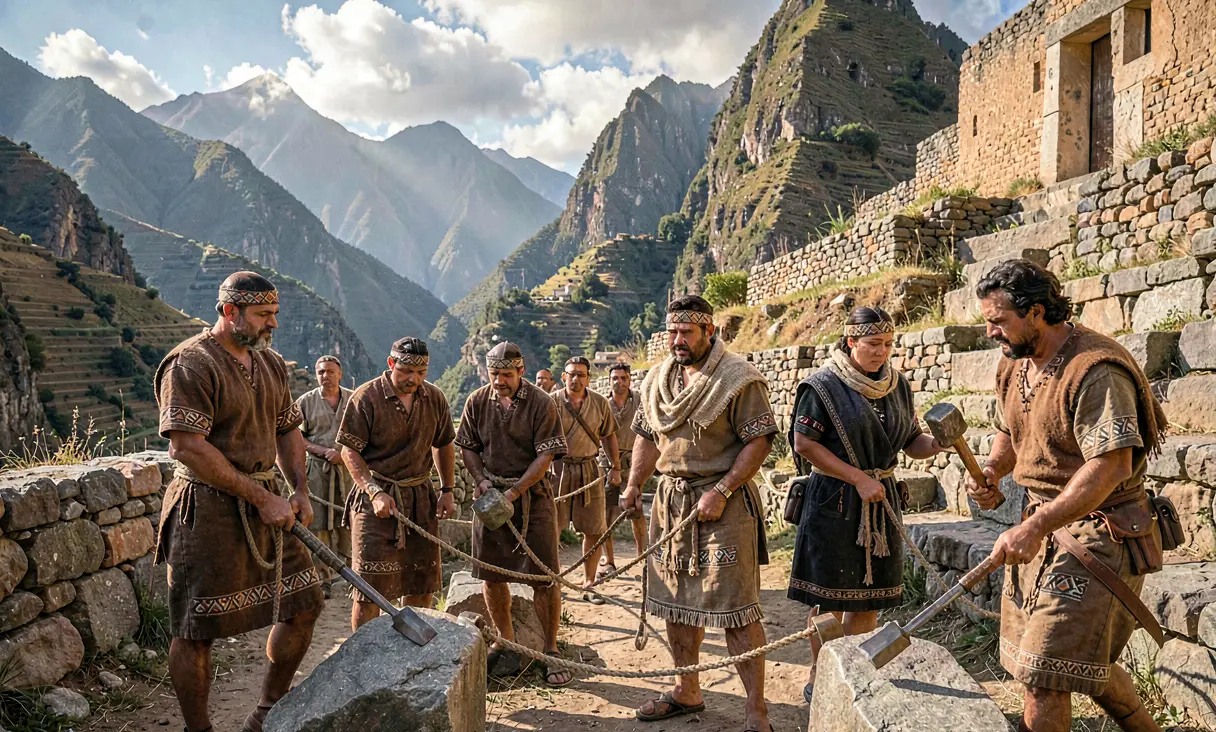 CivilizationConstruction of the Inca Road System (Qhapaq Ñan)c. 1438 CE · Cusco, Peru (Expansion Phase)Pachacuti initiates the expansion of the Qhapaq Ñan, a vast road network connecting the Inca Empire across the Andes.
Discussion
Loading…