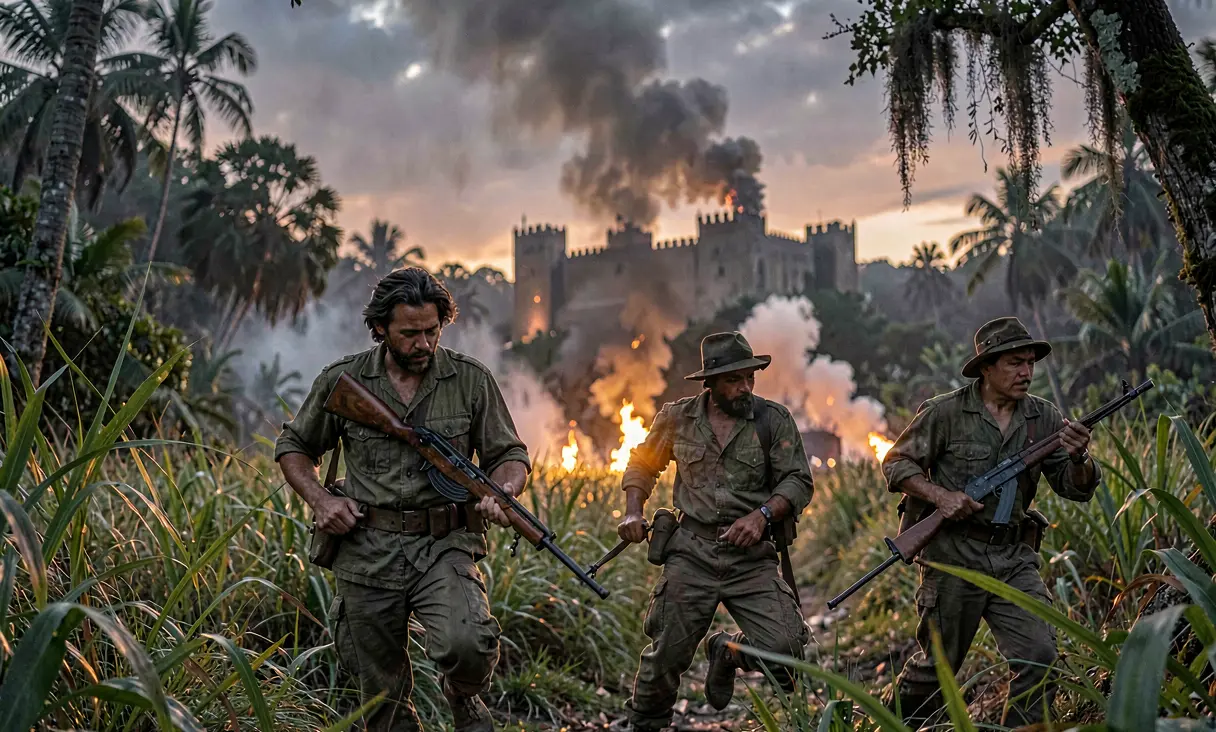
Start of the Cuban War of Independence
The 1895 uprising launched by Martí and Gómez ended Spanish rule in the Americas but ultimately invited US occupation, reshaping Cuba's path to sovereignty.
The Long Shadow of Colonial Rule
By the late 19th century, Cuba remained the last significant Spanish colony in the Americas, a status that fueled deepening resentment among its creole elite and enslaved populations alike. The Ten Years' War (1868–1878), an earlier failed uprising, had ended with the Pact of Zanjón, which promised reforms but delivered little tangible change or independence. While Spain attempted to modernize the island's economy through sugar exports, it maintained a rigid political hierarchy that excluded Cubans from meaningful self-governance. The abolition of slavery in 1886 further destabilized the social order, creating a class of freedmen eager for full citizenship and national sovereignty. Into this volatile mix stepped José Martí, an exiled intellectual who had spent decades organizing a unified front to end Spanish dominion once and for all.
The Montecristi Manifesto and the Call to Arms
On February 24, 1895, the Cuban War of Independence officially commenced with a coordinated uprising across multiple provinces. This date was chosen deliberately to coincide with the anniversary of the 1868 Grito de Yara, symbolizing continuity in the struggle for freedom. Simultaneously, in Montecristi, Dominican Republic, José Martí and General Máximo Gómez signed the eponymous Manifesto. This foundational document outlined the war's moral imperative: a race-blind republic where all citizens were equal under the law, explicitly rejecting racial division as a tool of colonial control. The manifesto called for a swift, decisive victory to avoid foreign intervention, emphasizing that the conflict was strictly between Cubans and Spain, aiming to secure an independent nation before external powers could seize the opportunity.
Architects of Revolution: Martí and Gómez
The revolution relied on a unique duality of leadership: the visionary statesman José Martí and the seasoned military tactician Máximo Gómez. Martí, often called the 'Apostle of Cuban Independence,' provided the ideological framework and diplomatic network that secured funding and support from the Cuban diaspora in Florida and New York. He believed the war was a spiritual necessity to forge a new national identity free from racial prejudice. Conversely, Gómez, a Dominican veteran of previous conflicts, understood the military reality. He rejected conventional European warfare, recognizing that the Spanish army's superior firepower could not be matched head-on. Instead, he championed a strategy of mobility and attrition, utilizing the island's dense terrain to outmaneuver Spanish columns.
The Strategy of Fire and the Fall of the Apostle
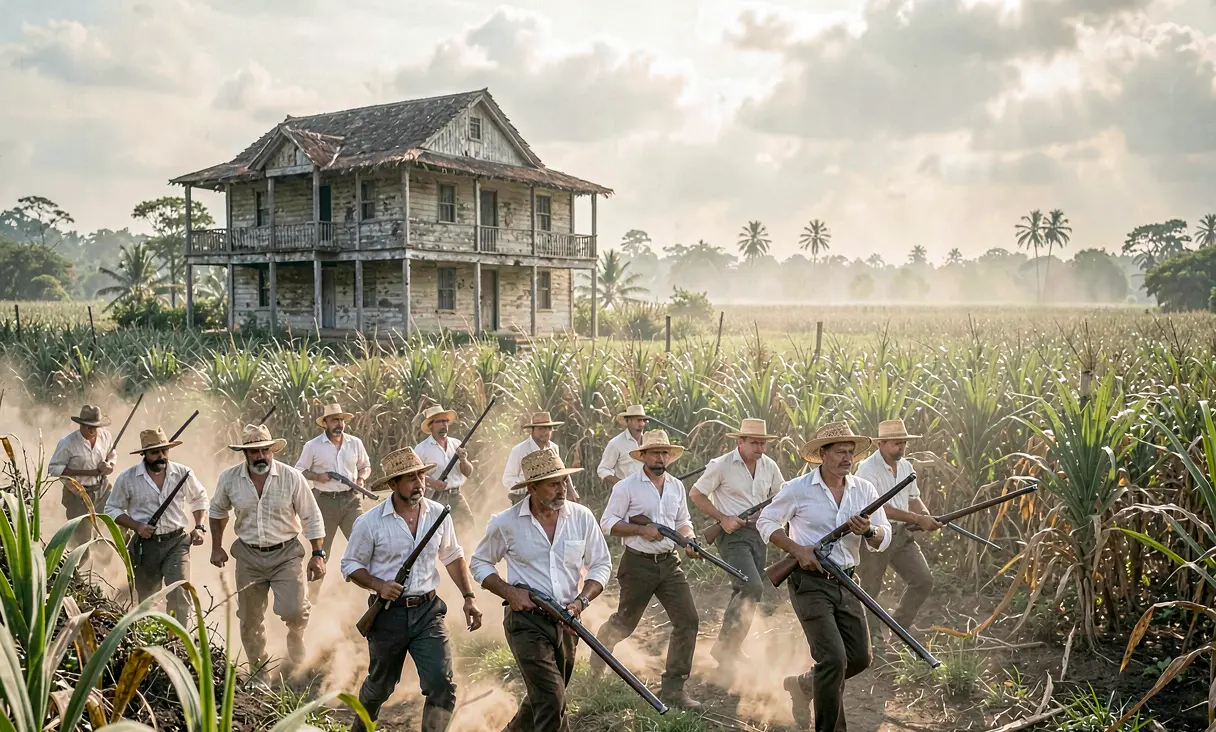
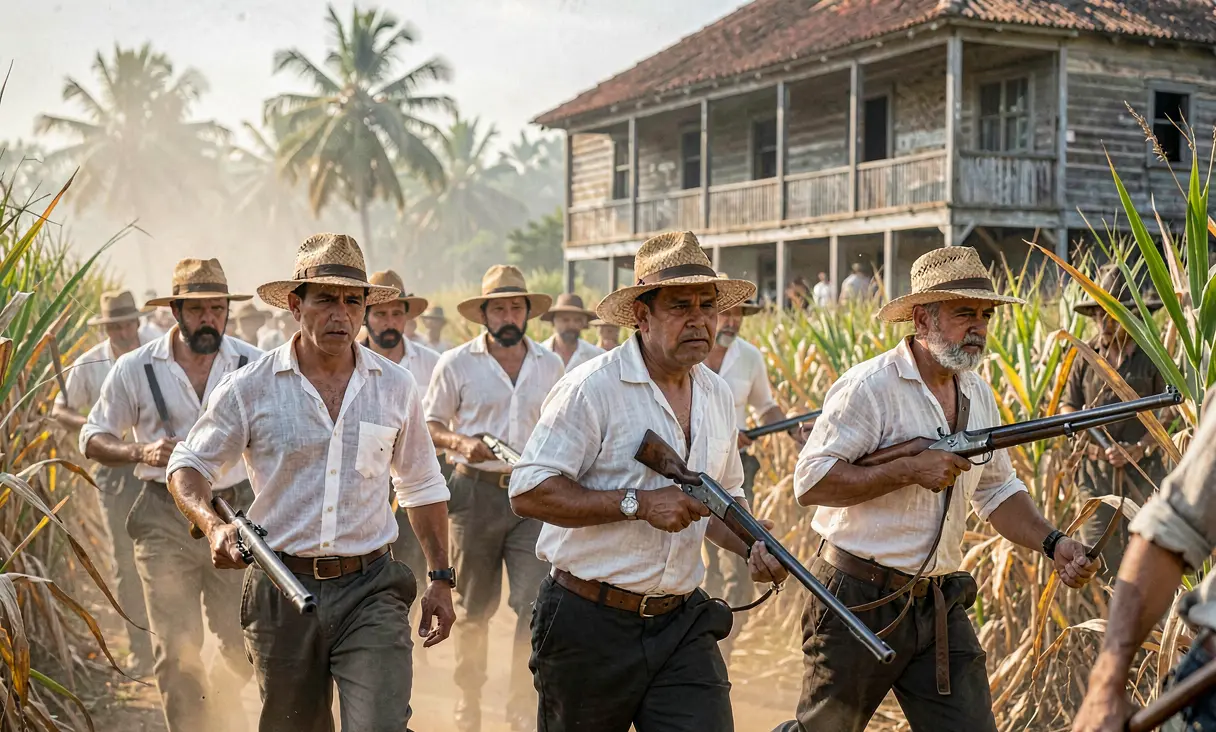
Gómez implemented a scorched-earth policy, ordering the burning of sugar plantations and mills to cripple the colonial economy, which funded the Spanish war effort. This tactic devastated the island's infrastructure but forced Spain to divert massive resources to protect its assets. The rebellion spread rapidly from Oriente province to the western heartland, with insurgents known as 'mambises' utilizing guerrilla tactics that frustrated Spanish generals. However, the movement suffered a catastrophic blow on May 19, 1895, when José Martí was killed in combat at Dos Ríos. His death left a leadership vacuum in the political sphere, though his martyrdom cemented his status as the soul of the revolution, ensuring that the ideological drive for a unified republic remained unbroken despite the loss.
The Brutal Counterinsurgency and US Intervention
In response to the escalating rebellion, Spain appointed General Valeriano Weyler as Captain-General in 1896. Weyler instituted a brutal 'reconcentration' policy, forcing rural civilians into fortified towns to cut off support for the rebels. This resulted in widespread famine and disease, killing an estimated 200,000 to 400,000 Cubans by 1897. The humanitarian crisis sparked outrage in the United States, fueled by sensationalist 'yellow journalism' that portrayed Spanish atrocities vividly. Although Cuban forces under Máximo Gómez and Antonio Maceo kept the rebellion alive for three years, the war reached a stalemate until the explosion of the USS Maine in Havana Harbor in February 1898. This event precipitated direct US military intervention, shifting the conflict from a colonial war to an international confrontation.
Legacy of Independence and Occupation
The Spanish-American War concluded with the Treaty of Paris in December 1898, ending over four centuries of Spanish rule in the Americas. However, the anticipated immediate sovereignty for Cuba was deferred; instead, the island fell under a temporary American military occupation that lasted until 1902. While the war achieved the primary goal of expelling Spain, it also introduced a new geopolitical reality where US influence heavily dictated Cuban affairs through the Platt Amendment. The revolution remains a defining moment in Latin American history, demonstrating the power of nationalist ideology and guerrilla warfare against an imperial superpower, while simultaneously highlighting the complex legacy of foreign intervention in post-colonial state-building.
The 1895 war was the final major anti-colonial struggle against Spain in the Americas, reshaping Caribbean geopolitics and ending centuries of Iberian dominance.
Where it happened
Explore related history
 WarAlgerian War of Independence BeginsNovember 1, 1954 · Algiers, AlgeriaThe National Liberation Front launches coordinated attacks marking the start of the Algerian War against France.
 WarMau Mau Uprising Begins in KenyaOctober 20, 1952 · Nairobi, KenyaThe Kikuyu-led Mau Mau rebellion begins against British colonial rule and white settler land ownership.
 WarTurkish War of Independence BeginsMay 19, 1919 · Samsun, TurkeyMustafa Kemal Atatürk lands in Samsun to organize resistance against Allied occupation and the Ottoman Sultanate.
 WarBattle of Adwa: Ethiopian Victory Over ItalyMarch 1, 1896 · Adwa, EthiopiaEmperor Menelik II decisively defeats Italian forces, securing Ethiopian sovereignty against colonial encroachment.
 DisasterCatastrophic Flooding at Mohenjo-Daroc. 1900 BCE · Mohenjo-Daro, Sindh, PakistanDevastating floods from the Indus River repeatedly buried and destroyed layers of Mohenjo-Daro, signaling the decline of the urban phase.
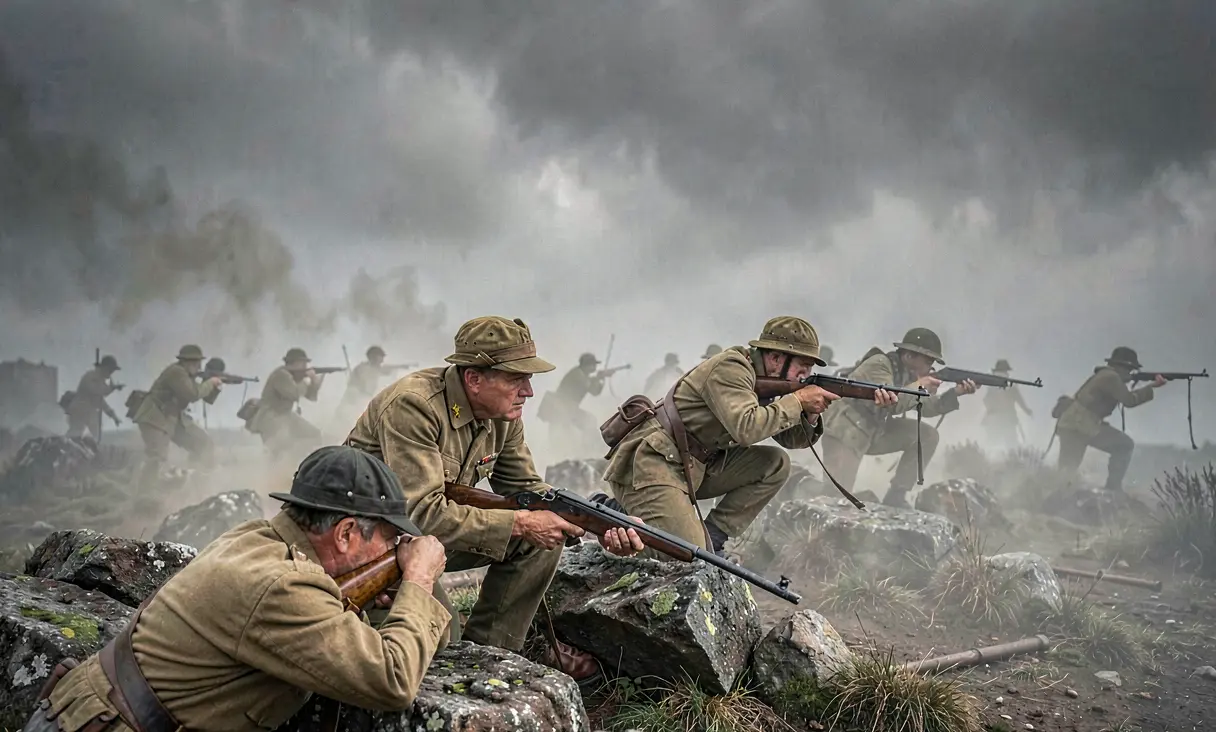 WarBattle of Spion KopJanuary 24, 1900 · Natal, South AfricaBritish forces suffer a disastrous defeat against Boer commandos in the Second Boer War.
Discussion
Loading…