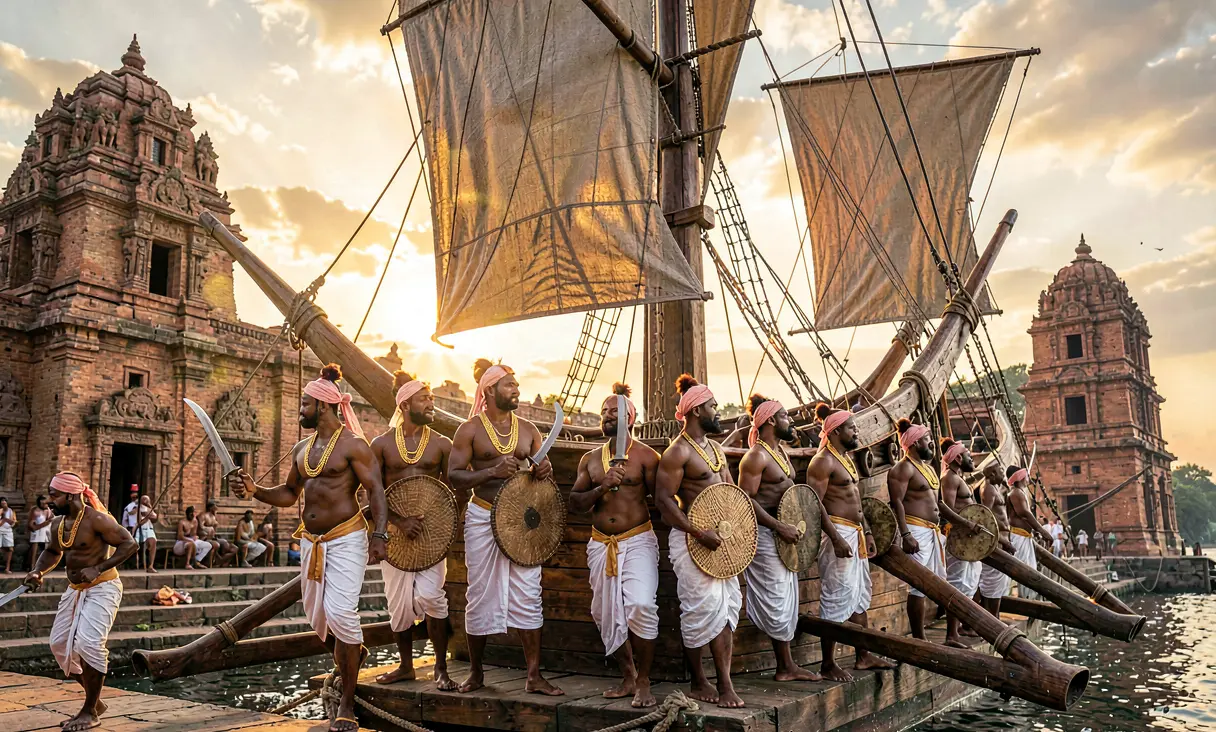
Rajaraja I's Naval Campaigns against the Cholas
Rajaraja I's creation of a professional navy around 985 CE transformed South India from a land-based kingdom into a maritime superpower, securing trade routes and enabling the conquest of Sri Lanka.
The Strategic Imperative of the Bay of Bengal
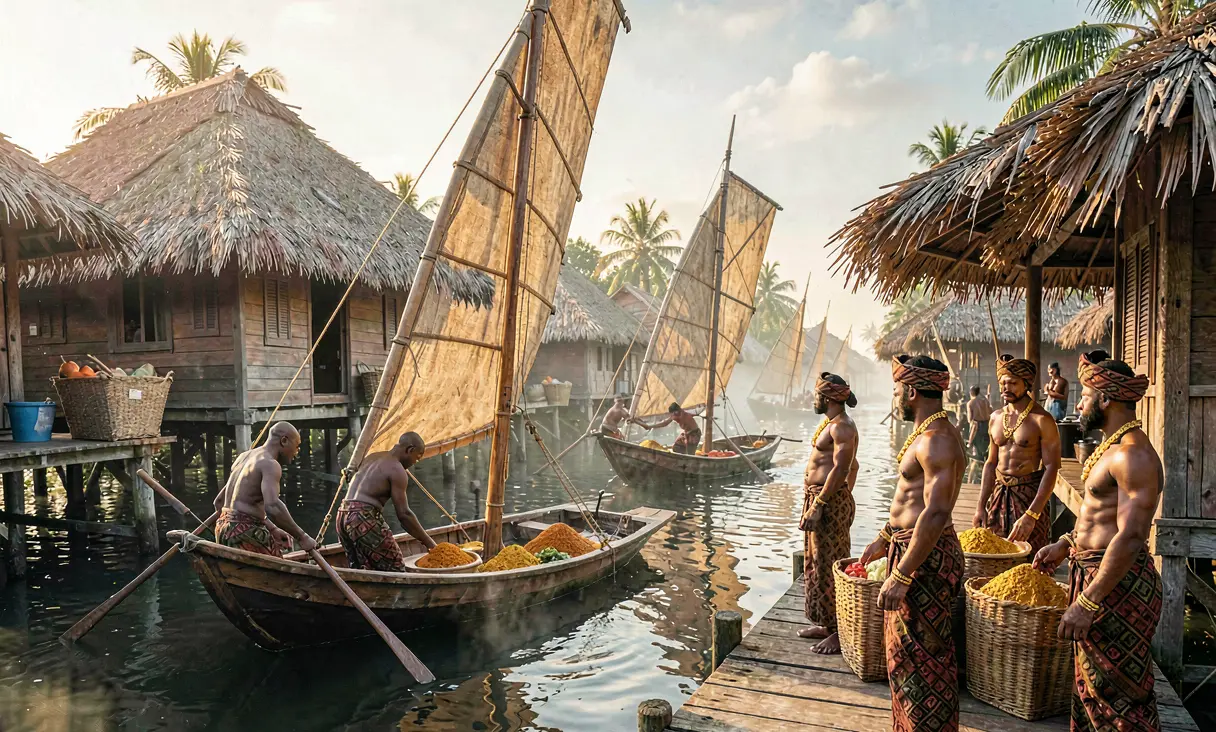
By the late 10th century, the political landscape of South India was dominated by the waning Pallava dynasty and the resurgent Pandya and Chalukya powers. Rajaraja I, ascending the Chola throne around 985 CE in Thanjavur, inherited a kingdom that was powerful but land-locked in its strategic vision. Recognizing that the future of Tamil prosperity lay not merely in agricultural surplus or terrestrial conquests, but in controlling the lucrative maritime trade routes of the Bay of Bengal, he initiated a radical transformation of Chola statecraft. The region's economy relied heavily on the export of textiles and spices to Sri Lanka, Southeast Asia, and beyond, yet these sea lanes were increasingly vulnerable to piracy and rival naval incursions from the Western Chalukyas and the Sinhalese kingdom.
The Unprecedented Naval Buildup
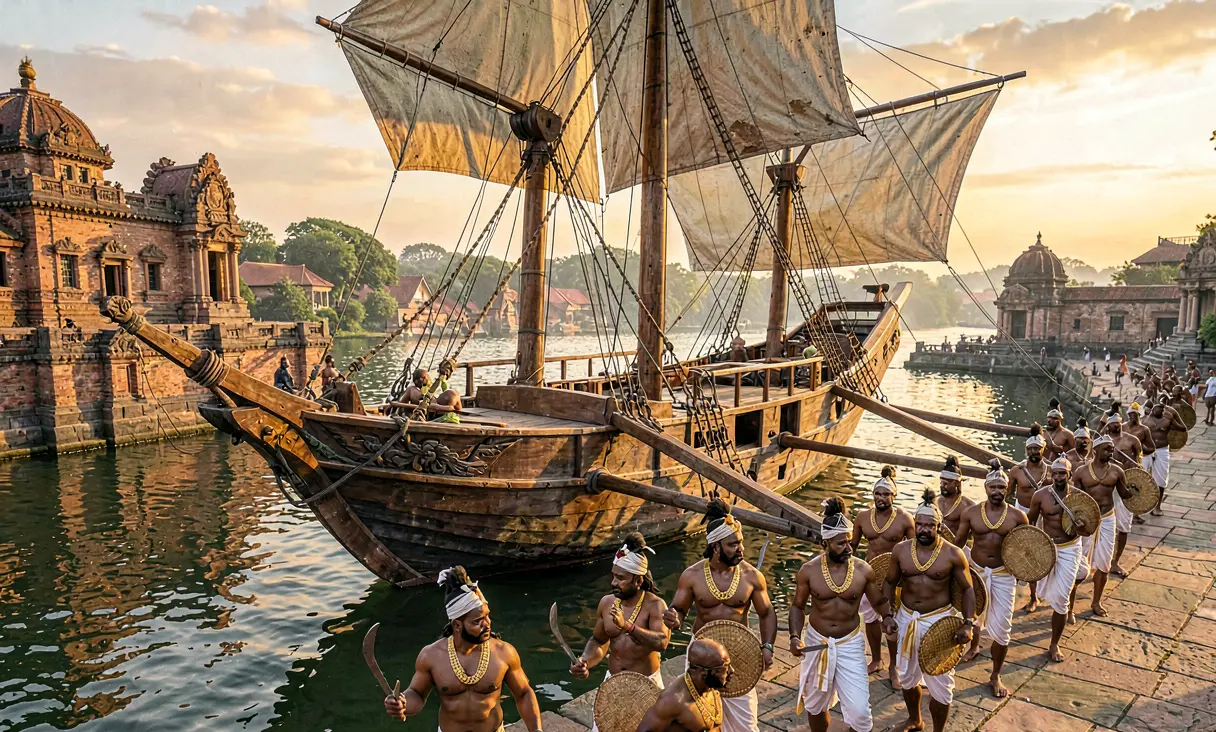
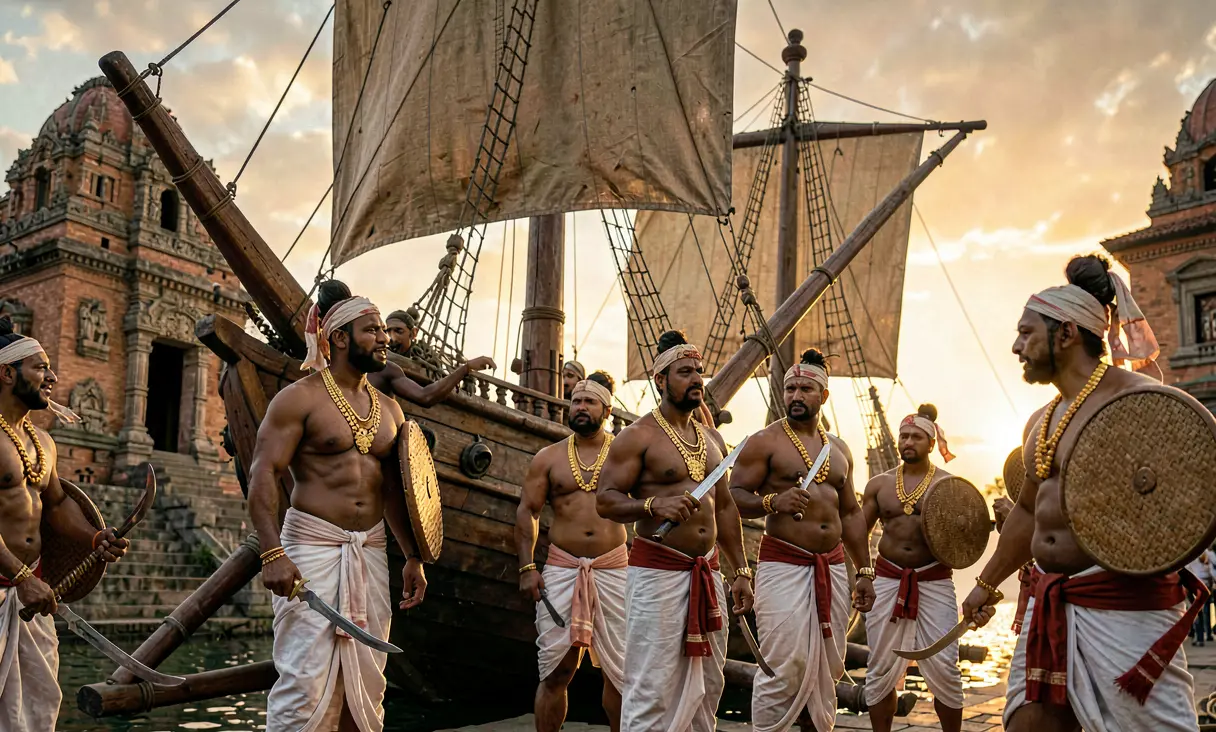
Rajaraja's most significant innovation was the systematic construction of a standing navy, an institution virtually unknown in South Indian history prior to his reign. Unlike previous dynasties that relied on ad-hoc riverine fleets or allied merchant vessels for defense, Rajaraja commissioned massive, purpose-built warships capable of carrying hundreds of troops and sustaining long-distance voyages. These vessels, often described in contemporary inscriptions as formidable floating fortresses, were constructed using advanced shipbuilding techniques that allowed them to navigate the open ocean with stability and speed. This naval expansion was not merely defensive; it was a projection of imperial power designed to secure Chola hegemony over the entire Indian Ocean rim.
Consolidation Before Expansion
Before turning his gaze outward, Rajaraja I first had to secure the Tamil heartland. His early campaigns were brutal and decisive, aimed at subjugating the Pandya dynasty in the south and checking the advances of the Western Chalukyas in the north. By defeating the Pandyas and reducing their capital, Madurai, he eliminated a major rival that had historically contested Chola dominance. Simultaneously, he neutralized the threat from the Chalukyas through strategic alliances and military pressure, ensuring a stable rear guard. This terrestrial consolidation provided the necessary resources and political stability to fund his ambitious naval projects, transforming the Chola kingdom into a unified, centralized state capable of mounting complex amphibious operations.
The First Amphibious Campaigns
With his navy operational by the early 11th century, Rajaraja launched his first major maritime campaigns against Sri Lanka. The invasion of the island kingdom was a masterclass in naval logistics and amphibious warfare. Chola fleets transported thousands of soldiers across the Palk Strait, bypassing traditional land routes and striking directly at the Sinhalese capital. The campaign resulted in the conquest of the northern part of Sri Lanka, which was annexed as a Chola province named Mummudi Chola Mandalam. This victory demonstrated the terrifying efficiency of Rajaraja's new military doctrine: the ability to project power across water barriers that had previously protected island nations from mainland invasions.
Aftermath and Administrative Integration
The success of these naval campaigns fundamentally altered the geopolitical map of South Asia. The annexation of Sri Lanka brought immense wealth, including control over the pearl fisheries and strategic ports, into the Chola treasury. Rajaraja did not merely loot; he integrated the conquered territories into his administrative framework, appointing governors and establishing a network of temples that served as both religious centers and nodes of imperial authority. The inscriptions from this period, particularly those at the Brihadisvara Temple in Thanjavur, meticulously record the donations made by naval commanders and merchants, highlighting the symbiotic relationship between the state's military might and its commercial interests.
Legacy of Maritime Dominance
Rajaraja I's naval campaigns laid the foundation for the zenith of the Chola Empire under his son, Rajendra Chola I. The infrastructure, shipbuilding expertise, and strategic doctrine established during this period enabled the later expedition to Southeast Asia, where the Cholas would challenge the Srivijaya empire in Sumatra and Java. This shift from a land-based agrarian kingdom to a thalassocratic power marked a turning point in Indian history, establishing India as a dominant force in the Indian Ocean trade network for centuries. The concept of an Indian navy projecting power across international waters can trace its direct lineage to the visionary reforms initiated by Rajaraja I in Thanjavur.
Rajaraja I's naval reforms transformed the Chola kingdom into a thalassocracy, reshaping the political landscape of the Indian Ocean.
Where it happened
Thanjavur, Tamil Nadu, India — see it on the interactive map →
Explore related history
 PoliticsRise of Srivijaya as Maritime Hegemon683 CE · Palembang, Sumatra (Modern Indonesia)Srivijaya emerges as the dominant maritime empire controlling the Strait of Malacca.
 PoliticsEmperor Xuanzong Ascends the Tang Throne712 CE · Chang'an, ChinaEmperor Xuanzong begins his reign, ushering in the High Tang golden age.
 PoliticsFounding of Heian-kyo794 CE · Kyoto, JapanEmperor Kammu moves the capital to Heian-kyo, beginning the Heian period.
 medicineEstablishment of the Bimaristan Hospital System in Baghdadc. 982 CE · Baghdad, IraqThe Al-Adudi Hospital introduces specialized wards and medical record-keeping.
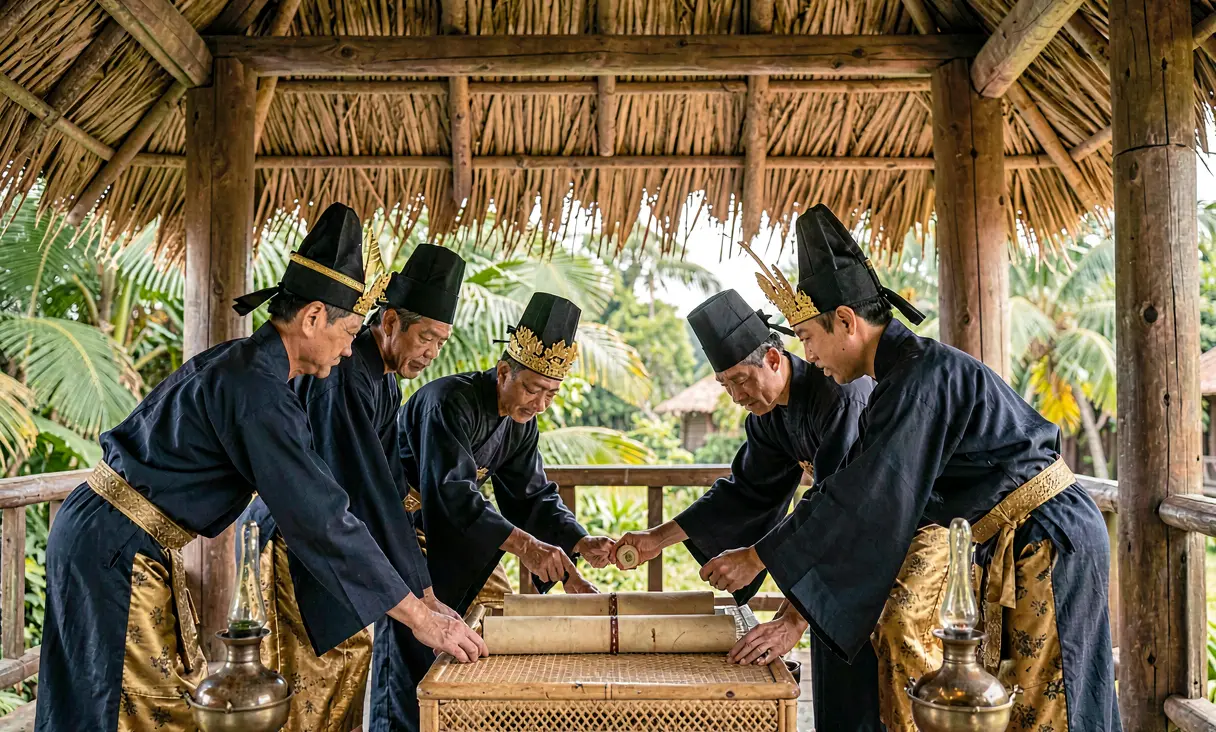 PoliticsSrivijaya-Song Peace Treaty990 CE · Palembang, Sumatra (Modern Indonesia)Formal diplomatic recognition between Srivijaya and Song China.
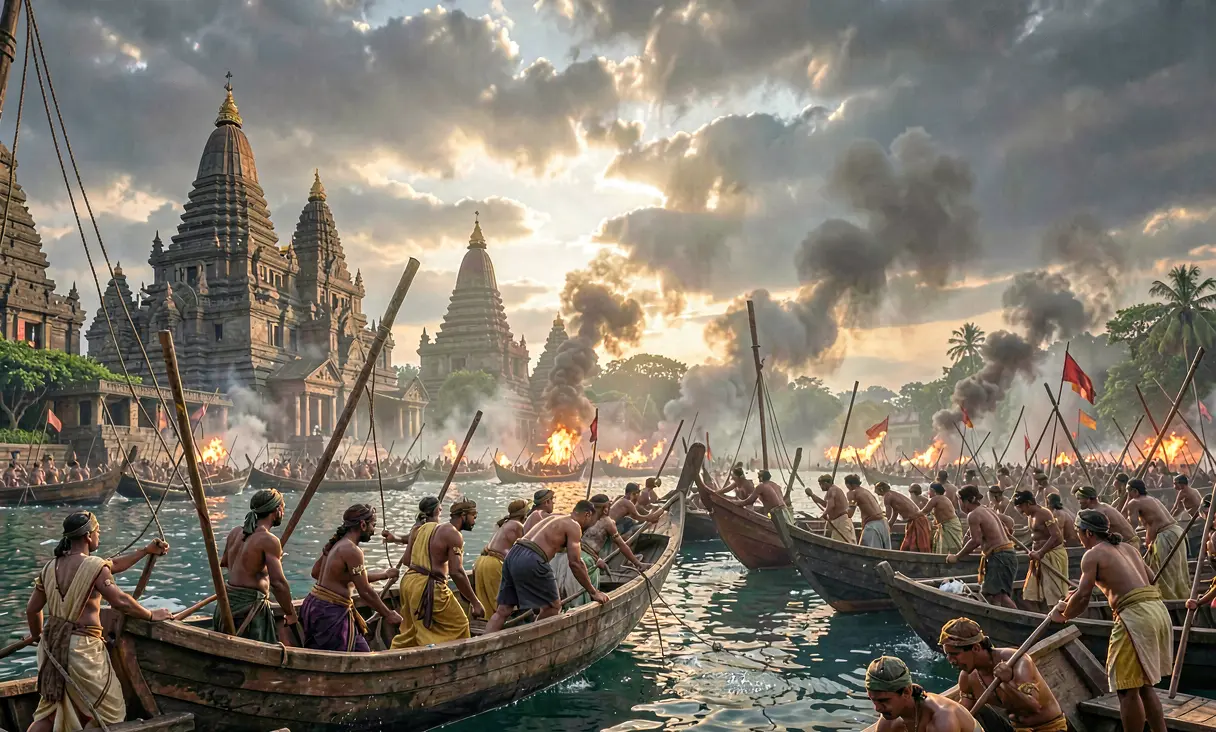 WarChola Conquest of Sri Lankac. 993 CE · Anuradhapura, Sri LankaRajaraja Chola launches a massive amphibious invasion of Sri Lanka, defeating the Sinhalese kingdom and annexing the island.
Discussion
Loading…